Who is the most incredible online creator you can think of? Picture them right now. Imagine them in their gorgeous house in a picturesque location, drowning in money.
Seems pretty sweet, right?
Here’s the good news: How influencers make money and grow their creator isn’t actually a secret. It’s a series of moves made to optimize revenue streams. And once you know the playbook, you can run through it yourself.
Want to make that happen? I thought so. Let’s go.
TL;DR
- Creators make money through brand deals, affiliate links, digital products, merch, fan funding, newsletters, and platform payouts. The most successful influencers stack at least three revenue streams.
- Earnings range wildly; nano creators (under 10K followers) might earn $50 per post, while mega creators can pull six figures for a single partnership.
- Your niche, engagement rate, and audience trust matter more than raw follower count when it comes to landing paid opportunities today.
Nano to Mega: The 4 Creator Tiers

Before we get into the money, let’s talk about how the new creator economy is actually structured.
- Nano creators (under 10K followers): These are the up-and-comers with small audiences, but often fiercely loyal. Brands love them for hyper-targeted campaigns because their followers actually trust their recommendations.
- Micro creators (10K–100K followers): The sweet spot for a lot of brand partnerships. Big enough to move the needle, small enough to feel authentic. This is where many creators start earning a consistent income.
- Macro creators (100K–1M followers): These folks have built real audiences and can command serious rates for sponsored content. They’re often juggling multiple revenue streams and treating their channel like a business.
- Mega creators (1M+ followers): The household names. They’re landing six-figure brand deals, launching their own product lines, and probably have a team behind them. The ceiling here is basically nonexistent.
Why follower count isn’t the whole story
Here’s the thing brands have figured out: Engagement rate (the percentage of your audience that actually likes, comments, shares, and saves) is often the metric that matters most. A creator with 5,000 engaged followers can drive more sales than one with 500,000 passive ones.
Micro and nano creators regularly see engagement rates of 3% to 6%, while mega creators often hover around 1% to 2%. That’s why smaller creators are landing brand deals that would’ve been unthinkable a few years ago. If your audience trusts you, your follower count is less important than you think.
What Creators Actually Earn (The Real Numbers)

Everyone wants to know: How much do influencers make? The honest answer is “it depends on a lot of things,” but here are some ballpark figures for sponsored posts across tiers.
Creator tier | Follower range | Typical rate per sponsored post | Common income streams |
|---|---|---|---|
Nano | <10K | $50 – $250 | Affiliate links, small brand deals, free products |
Micro | 10K – 100K | $250 – $2,500 | Brand partnerships, affiliates, and digital products |
Macro | 100K – 1M | $2,500 – $25,000 | Sponsored content, merch, courses, consulting |
Mega | 1M+ | $25,000 – $500,000+ | Major brand deals, product lines, licensing |
These numbers vary wildly by niche, platform, and how good you are at negotiating. But the takeaway is clear: You don’t need millions of followers to start earning. You need the right followers and the right approach.
Platform payouts, by comparison, are modest. TikTok’s creator fund pays roughly $0.02 to $0.04 per 1,000 views, which is why most creators treat platform payouts as supplemental income rather than their main revenue stream.
Who’s Actually Signing the Checks?
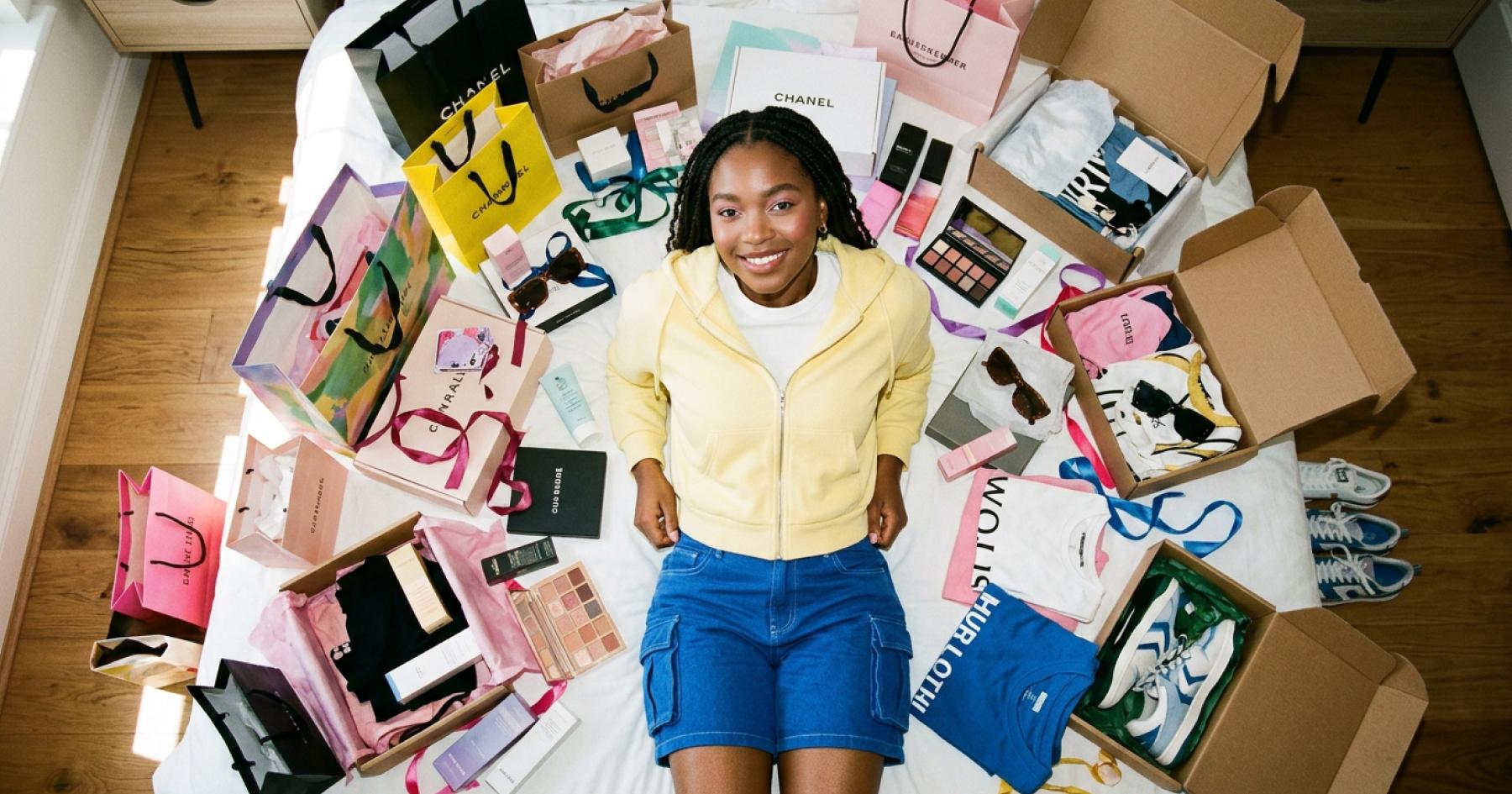
Creator income flows from four main sources, and understanding who’s paying helps you figure out where to focus your energy.
- Brands: The biggest source for most creators. Companies pay for sponsored posts, ambassadorships, and product placements because your audience trusts you more than a banner ad.
- Platforms: YouTube, TikTok, and Instagram all have creator funds or ad revenue-sharing programs. The payouts are real but rarely life-changing on their own.
- Fans: Through tips, memberships, subscriptions, and purchases, your most dedicated followers can become a direct income stream with no brand middleman required.
- Advertisers (indirect): Affiliate commissions and newsletter ad placements put money in your pocket when your audience takes action on a recommendation.
Most creators who are earning a living (not just pocket money) are pulling from at least two or three of these sources simultaneously.
The Money Menu: Every Way Creators Cash In

As a creator, you already know that every platform has options to monetize your content. But there are several other ways to earn income from your online efforts without relying solely on a platform’s generosity.
Influencer income growth is maximized through a combination of the following.
Brand deals and sponsored content
As you gain traction, brands will start reaching out to you to accept sponsored content offers. They may send a free product for your review or pay you directly.
But because you’re reading this, we know you’re serious about getting your bag, so know that you can also reach out to brands yourself.
One way to do this is to go to Canva, customize a Media Kit template, create a view-only shareable link, and write a compelling partnership pitch. Then, hit people up on LinkedIn (search for “Influencer Marketing Manager,” “Social Media Manager,” “Brand Partnerships Manager” at the companies you’re interested in).
Rate-wise, nano creators can expect $50 to $250 per sponsored post, while micro creators typically land $250 to $2,500. Numbers climb fast as your audience grows, but the key is knowing your worth; savvy creators negotiate a base fee plus 15% backend commission rather than accepting free product when they should be getting paid. If a brand is asking for a dedicated post with usage rights, that’s a paycheck, not a favor.
There are also influencer marketplaces where brands go to find creators for collaborations; they take a small cut, and your mileage will absolutely vary. Influencity, AspireIQ, and Collabstr are collab platforms worth checking out for this. And don’t sleep on building better brand partnerships by being proactive rather than waiting for the DM.
Affiliate marketing (getting paid to recommend stuff)
If you’re already promoting products and not getting a cut, affiliate marketing can change that. Earn commissions for sales generated through your affiliate links, because that’s what most creators who are hyping a product are doing.
What does this look like in practice? Pat-a-Cake, Pat-a-Click: How a Talented Baker Turned a Steam Cleaner and a Cakebook into a 5-Figure Amazon Side Hustle.
Payment models vary — you might earn per lead, per click, or as a percentage of each sale. Amazon Associates is the most common starting point (with commissions ranging from 1% to 10% depending on the category), but plenty of brands run their own affiliate programs with higher payouts. Here’s a quick primer on affiliate marketing if you wanna dig deeper.
Fan funding and memberships
Crowdfunding is a popular way among creators to rake in extra cash, and Patreon remains the leading platform for offering exclusive content to paying members.
Social platforms like YouTube, TikTok, and Twitch have also opened up this earning potential, particularly with live streaming. You’ve likely seen monthly memberships on Twitch, or YouTube’s Super Chats, and have probably witnessed TikTok Live gifts (virtual gifts that rack up into “diamonds” and can be converted into real money). Instagram also offers subscriptions and badges for creators who meet eligibility requirements.
Even with a smaller audience, fan funding can add up. A creator with 500 dedicated Patreon subscribers at $5/month is pulling $2,500 monthly — no brand deal required. If you’re not going live but have a strong following, this is a growing form of income that you can tap into.
Merch and physical products
Look, you don’t have to join some weird dropshipping cult and listen to some dude’s 28-hour podcast series about it, but if you create content that leads to people wanting to buy merch like shirts or bags, it’s worth exploring.
You can have someone handle production from start to finish via print-on-demand services like Printful or Spring (they take a larger cut), or make an investment and have products created in bulk, then sent to you to ship to folks. You’ll make a lot more money with the latter approach, but it requires more work and upfront investment.
Digital products and online courses
Digital goods are the revenue stream that’s been quietly exploding. If you’ve built expertise in your niche (whether that’s photography presets, workout plans, social media templates, or recipe ebooks), you can package that knowledge and sell it directly to your audience.
The margins are beautiful: no inventory, no shipping, no middleman eating your profits. Platforms like Gumroad and Stan Store make it easy to set up a storefront.
The trick is matching the product to what your audience already asks you about. If your DMs are full of “what camera do you use?” or “how do you edit your videos like that?” that’s your product idea staring you in the face. You can even use Manychat to automatically deliver digital products when someone asks you that same question in the future. Learn more in this video:
Coaching and consulting
Once you’ve built real expertise, charging for one-on-one or group coaching is a natural next step. Creators in niches like fitness, tech, beauty, and personal finance commonly go this route, and the rates can be significant. A single coaching session can run anywhere from $100 to $500+, and group programs can scale even higher.
You don’t need a massive audience for this to work. You need a reputation for knowing your stuff and an audience that sees you as a genuine authority. For example, Dalia Van Lom (@daliaforreels) is a nano creator with just over 3k followers. She supports herself as a creator by offering videography and personal brand consulting services.
Newsletters (your insurance policy)
Imagine you make the wrong joke on a platform tomorrow and are completely kicked off (or maybe just silently shadowbanned). If you’ve been building an email list on the side, all is not lost.
With newsletters, you can offer a free version supported by advertisers and a paid tier that’s ad-free for paying subscribers and supporters.
Newsletter sponsorships can pay anywhere from $25 to $50+ per thousand subscribers per issue, so a list of 10,000 subscribers could earn you $250 to $500 every time you hit send.
Get creative, but get going, because if socials go down or you get a slap on the wrist from Meta, an email list is a surefire backup with an audience that you “own” outright. And if you’re already using Manychat to collect emails through DM conversations, you’re building that list on autopilot.
Platform payouts and creator funds
Every major platform has some form of creator payout program. YouTube’s Partner Program (YPP) is the gold standard — once you hit 1,000 subscribers and 4,000 valid public watch hours in the last 12 months (or 10 million valid public Shorts views in the last 90 days), you can start earning a share of ad revenue. YouTube also offers an expanded YPP tier at 500 subscribers with lower thresholds for earlier access to fan funding features.
TikTok’s Creator Reward Program replaced the original Creator Fund and pays better, but the per-view rates are still modest. Instagram has offered bonuses for reels, carousels, and image posts over the years, though availability fluctuates.
The truth? Platform payouts alone rarely sustain a creator. Think of them as the base layer that’s nice to have, but you’re gonna need to stack some other streams on top.
Regardless of the direction you choose, the one thing every successful creator knows is that diversification of your income is critical. Any one of these sources can dry up overnight, but on the flip side of that same coin, any one of them can blow up at any minute. Ideally, creators should have at least three different revenue streams, and you should always be reviewing new ways to add to your money pile.
Learn more about how creators use Manychat
Is Your Brand Ready to Make Money?

You may already have a strong personal brand, but that doesn’t necessarily make it marketable. You might already have tons of followers, but that doesn’t always translate into cash.
So what exactly do all successful creators have in common that makes them marketable and attractive to sponsors? Three things: niche, notoriety, and content nuance.
Niche down, then niche down again
The more specific your personal brand is, the more memorable it is, and the more marketable it is. Imagine you have a media budget to spend, and you’re just sitting at your desk scrolling through Instagram to find your next partner. And let’s imagine that you work for a luxury hotel brand. Aren’t you much more likely to give cash to someone whose brand is all about luxury travel versus someone who focuses on all types of travel? Of course you are — you’ll get better reach out of your bucks.
Whatever your focus is, even if you have a niche, consider narrowing that down even more. The tighter your niche, the easier it is for the right sponsors to find you.
Notoriety is earned, not bought
How engaged is your audience? Are you earning shares and comments? Authenticity is extremely important today for building trust, which drives engagement and, in turn, income growth.
Depending on your niche, authenticity takes different forms. If you’re a real estate practitioner, TikTok dancing ain’t it, but talking through recent negotiations is. It encourages relevant trust, which creates relevant sponsorship potential.
Brands increasingly look at engagement rate before follower count. A 3% to 5% engagement rate on a 15K account will be more attractive to most brands than a 0.8% rate on a 500K account.
Nuance in your content quality
Is your content good enough to attract new audiences every day? If you’re not constantly improving your content practices, your growth will also stagnate.
One piece of advice: Spend 30 minutes studying the top-performing posts in your niche every week. How are the hooks structured? What’s the editing style? Apply one thing you noticed to your next piece of content. Small, consistent upgrades compound over time.
Keeping the Money Machine Running

So you know about the most common creator income streams and what to focus on to be marketable, but how do you keep the momentum building?
Pitch like a startup founder
Become an expert in your own personal brand. Your media kit and pitch should be updated and refined over time. Update your kit quarterly with fresh metrics because social media moves fast, so brands like to see recent numbers.
Network and collaborate
No matter how big you get, you’re never above a networking event. You’re not attending to gain new followers; you’re attending to secure new partners. One of the fastest ways to amplify your personal brand is through another established brand, but sponsor dollars don’t grow on trees; well-off creators have had to shake hundreds of hands just to get one to yield results.
Be boring with your money (seriously)
Don’t yawn or scroll away! Finances are the one area where you should be extremely boring. If you start hitting it big, you’re going to be tempted to buy a Huracán right away, but hire a financial advisor instead, like Shaq would want you to do.
Your Move, Moneybags
You’re officially in the club of people who have the playbook for influencer income growth.
The reality is that even if every single creator out there read this today, only a few will actually put the information to use. Be one of these few.
Now the only question is, which winning combination of these moves will you make bank on?
Frequently asked questions
Platforms pay very little per 1,000 views. (For example, TikTok pays roughly $0.02 to $0.04 per 1,000 views, and even that isn’t promised.) YouTube tends to pay more through ad revenue sharing, often $3 to $5 per 1,000 views, depending on the niche, which is one reason many creators prioritize long-form YouTube content.
Influencer income comes from four main sources: brands (through sponsored posts and ambassadorships), platforms (through creator funds and ad revenue sharing), fans (through tips, memberships, and purchases), and advertisers (through affiliate commissions and newsletter ad placements). Most full-time creators earn from at least two or three of these simultaneously.
The four creator tiers are nano (under 10K followers), micro (10K to 100K), macro (100K to 1M), and mega (1M+). Each tier has different monetization strengths: nano and micro creators often see higher engagement rates and land niche brand deals, while macro and mega creators command larger per-post rates and attract major partnerships.
There’s no magic number, but many creators start earning through affiliate links and small brand deals with as few as 1,000 to 5,000 engaged followers. Brands increasingly care more about your engagement rate and niche relevance than raw follower count, so focus on building a loyal audience first.
Yes, influencer income is taxable regardless of whether it comes as cash, free products, or affiliate commissions. Most creators in the U.S. need to report it as self-employment income and pay quarterly estimated taxes. Get a good accountant (future you will be grateful).


Originally published: Aug 29, 2024, Updated: Jun 17, 2026
More stories worth reading
More content that's too good to miss