Instagram has billions of monthly active users, and most of them are cruising the app, shopping, saving products, and commenting “where’d you get that?” on their favorite creators’ posts. If you’re the creator on the receiving end of those comments, that’s a lot of potential commissions just sitting there in your notifications tab.
Affiliate marketing lets you earn money by recommending products you already love — no inventory, no customer service, no creating anything from scratch. You share a link, someone buys, you get paid. And Instagram happens to be one of the best platforms on earth to do it.
Whether you’re a creator with 2,000 followers or 200,000, this guide covers everything you need to start earning affiliate income on Instagram, from picking your niche to placing links to automating the whole “send me the link!” conversation.
TL;DR
- Instagram affiliate marketing lets you earn commissions by recommending products to your audience.
- The most successful affiliate creators have a clear niche, join the right programs, and place links strategically across stories, reels, bio, and DMs.
- Commission rates typically range from 5% to 20%. Earnings scale with your engagement rate, not just your follower count.
- Automating your DMs (so you never miss a “where’d you get that?” message) can seriously multiply your affiliate revenue.
How Affiliate Marketing Works

Here’s how affiliate marketing typically works: You, the creator, partner with a brand that gives you a unique affiliate link or promo code. You share that link/code with your audience on Instagram. When someone clicks the link and buys the thing, you earn a commission — usually a percentage of the sale.
Tracking happens through cookies embedded in your affiliate link or through unique promo codes tied to your account. Most affiliate programs give you a dashboard where you can see clicks, conversions, and earnings in real time.
Instagram is especially well-suited for affiliate marketing because its users like to shop; they’re already browsing, discovering products, and seeking recommendations from people they trust. You’ve got access to a primed audience that knows and likes you, plus multiple content formats (stories, reels, DMs, feed posts) to share links through.
A reality check, though: Affiliate marketing on Instagram isn’t instant money. It’s highly dependent on your engagement and profile traffic. It can be time-consuming work for little return in the beginning. And you’re legally required to disclose your affiliate relationships; the FTC has clear guidelines on this (more on that later).
But once you’ve built an engaged audience that trusts your recommendations, the math starts working in your favor. Instagram has also launched native affiliate link tagging in reels, letting creators tag products, share them, and earn commissions directly within the app, confirming the platform is betting on affiliate commerce.
Know Your Niche Before You Start Selling

Before you sign up for an affiliate program, you need a solid understanding of your niche and how your content fits within it.
Your niche is the foundation of your entire affiliate strategy. A creator who posts about everything — skincare one day, power tools the next, crypto the day after — will have a much harder time earning affiliate income than someone who’s known for one thing. When your audience associates you with a specific topic, your product recommendations feel natural instead of random.
Fortunately, almost every niche has affiliate-friendly products. Beauty, fitness, tech, home decor, personal finance, parenting, cooking, fashion, and productivity all have brands actively looking for affiliate partners.
Is your niche affiliate-ready?
Ask yourself three questions:
- Does your audience regularly ask you questions like, “Where’d you get that?” or “What do you use for X?”
- Are there products you already use and recommend for free?
- Do affiliate programs exist in your space? (A quick search on any major affiliate network will tell you.)
If you answered yes to all three, you’re in a great spot. If you’re unsure about the third one, check the affiliate networks in the next section.
The Best Affiliate Programs for Instagram Creators

You know your niche; now you actually need to join an affiliate program. There are two main paths here, and most successful creators use a mix of both.
Affiliate networks vs. direct brand deals
Affiliate networks are platforms that connect creators with hundreds (sometimes thousands) of brands. You sign up once, browse available programs, and apply to the ones that fit your audience. Think of them as a marketplace for affiliate partnerships.
Direct brand deals are exactly what they sound like — you reach out to a brand (or they reach out to you) and negotiate an affiliate arrangement one-on-one. These often come with higher commission rates and more creative freedom, but they require more legwork.
Bryan Maniotakis, creator of Minimal Goods, is a big fan of the direct approach. “My best affiliate marketing campaign is the result of working with a company that I fostered a direct relationship with. They supplied me with product samples to create content with and coupon codes for my audience.”
Bryan earns a flat $20 commission in exchange for every sale he generates by promoting his product reviews and roundups on Instagram. He says, “I prefer these one-to-one relationships with brands, as they give me more opportunity to create compelling content, rather than sticking with a mass-market tool like Amazon.”
A quick look at the top networks
If you aren’t sure where to start, these networks have relatively low barriers to entry and cover a wide range of niches.
Affiliate networks at a glance | |||
|---|---|---|---|
Network | Notable brands | Typical commission range | Best for |
lululemon, Jenni Kayne, Agolde | 10% to 30% | Fashion, beauty, wellness creators | |
Better Homes & Gardens, No Boundaries, Mainstays | 1% to 4% | Lifestyle, interior design, and family content creators | |
DTC marketplace | 10% to 30% | Fashion, beauty, wellness creators | |
Home Depot, Blue Apron, J.Crew | 3% to 15% | Established creators with a professional site or portfolio | |
Etsy, HP, Under Armour | 5% to 15% | Creators who want access to brands not on other platforms | |
Major fashion and lifestyle retailers | 10% to 25% | Lifestyle, fashion, and beauty creators | |
Anything on Amazon | Beginners who want minimal friction and access to a massive product catalog | ||
Sephora, Macy’s, Nike | Cash back per referral | Creators who want a cash-back model alongside traditional affiliates | |
Canva, Lenovo, AppSumo | 5% to 20% | Tech and SaaS-focused creators | |
12,000+ programs across verticals | Varies widely | Creators who want maximum variety and real-time reporting | |
How to Make Content That Sells Without Feeling Salesy

Having affiliate links is one thing. Getting people to actually click them is another. The solution isn’t to post more links — it’s to create content that makes the recommendation feel like a natural extension of what you already share.
The types of affiliate content that tend to convert best:
- Honest reviews where you share what you genuinely like and don’t like about a product
- Tutorials and how-tos that show the product in action
- Favorites roundups, like seasonal must-haves or things you’ve been loving
- Day-in-the-life content where the product appears organically
What ties all of these together? Authenticity. Your audience can smell a forced recommendation from a mile away. If you wouldn’t genuinely tell a friend about the product, don’t promote it.
The content mix that keeps followers trusting you
Not every post should be an affiliate push. A good rule of thumb: For every one piece of affiliate content, post three to four pieces of pure value content (tips, entertainment, education, behind-the-scenes). This keeps your feed from feeling like a QVC channel and maintains the trust that makes your recommendations worth something in the first place.
When you do post affiliate content, weave the product into a story or a useful piece of content rather than making it the sole focus. “Here’s how I reorganized my kitchen” (featuring affiliate-linked storage containers) hits differently than “BUY THESE CONTAINERS.”
If you want to learn more about making affiliate content that works, check out this episode of Just Send It where Sal Farzin (@simplysalfinds) talks about the content strategy behind his full-time business as an Amazon Associate.
Every Place to Drop Affiliate Links on Instagram

Now that you’ve got your niche and your programs lined up, let’s talk about where to actually put your affiliate links on Instagram. You’ve got more options than you might think.
Stories and Story highlights
Stories are one of the best ways to share affiliate links, and thanks to the link sticker, anyone can add a tappable link directly to their Instagram Story today.
Learn more: How to Add a Swipe-Up Link on Instagram (and 3 Better Ways to Do it)
The key is to not just slap a link on a blank screen. Use creative Instagram Story formats: show the product, explain why you love it, then drop the link sticker. Brands like A Beautiful Mess constantly share their favorite products in Stories, using affiliate links that lead to the shop page.
Once your stories expire (after 24 hours), save the best ones to your Story Highlights. This creates a permanent, browsable archive of your top affiliate links. You can organize highlights by category — “Kitchen Faves,” “Skincare Routine,” “Office Setup” — so your audience can find exactly what they’re looking for.
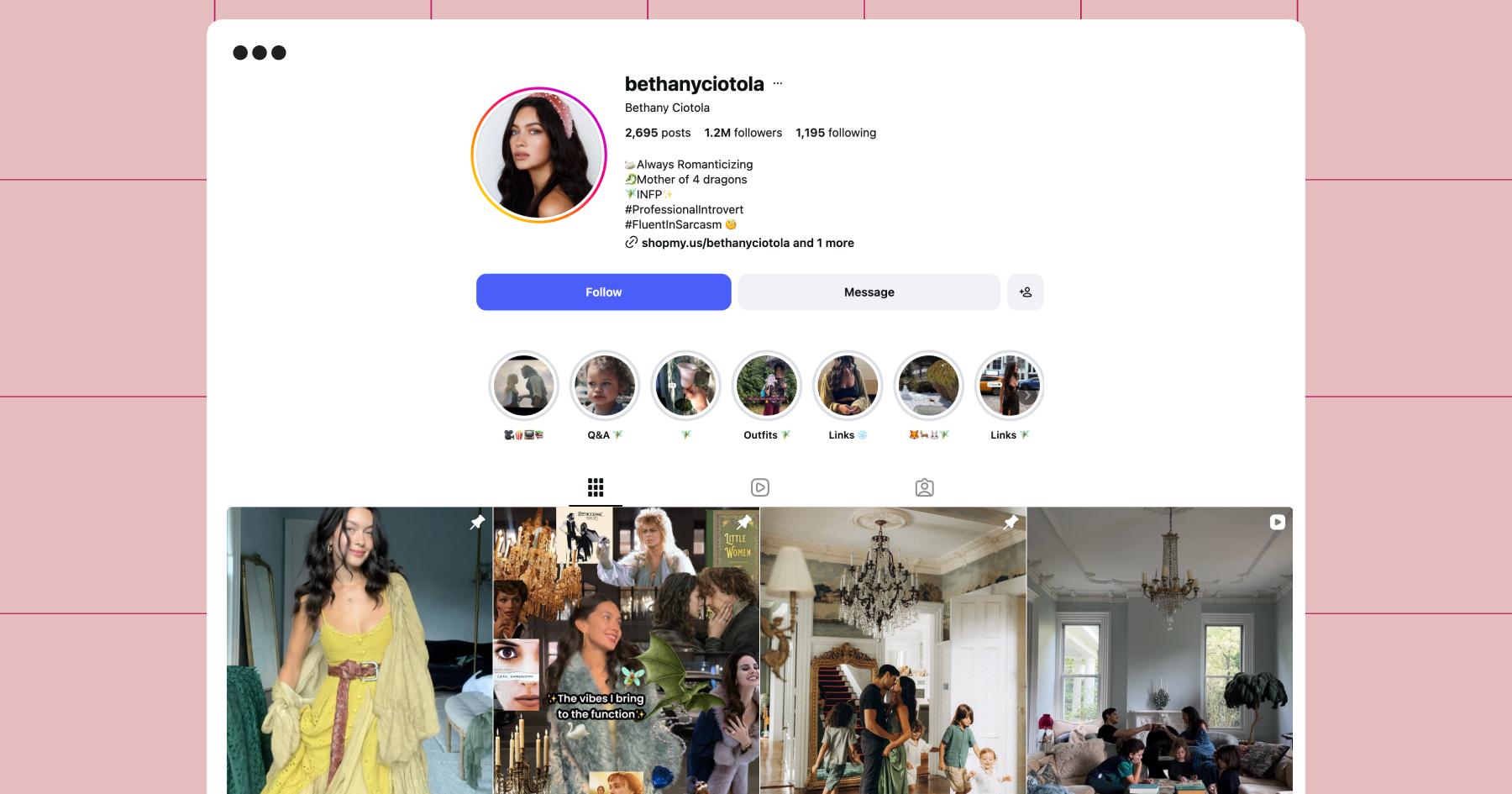
Creator Bethany Ciotola does this beautifully, with clearly labeled highlight covers that make it easy for followers to browse her recommendations.
Your Instagram bio
Your Instagram bio is prime real estate. A common route many creators take is to set up a landing page with a tool like Linktree or Stan Store and add the page’s link to their Instagram bio. They’ll feature their own offers (digital products, courses, etc.) as well as affiliate links on this page so their followers can find everything in one place — see the example from Ciara Strickland (@thenewmixx) below.
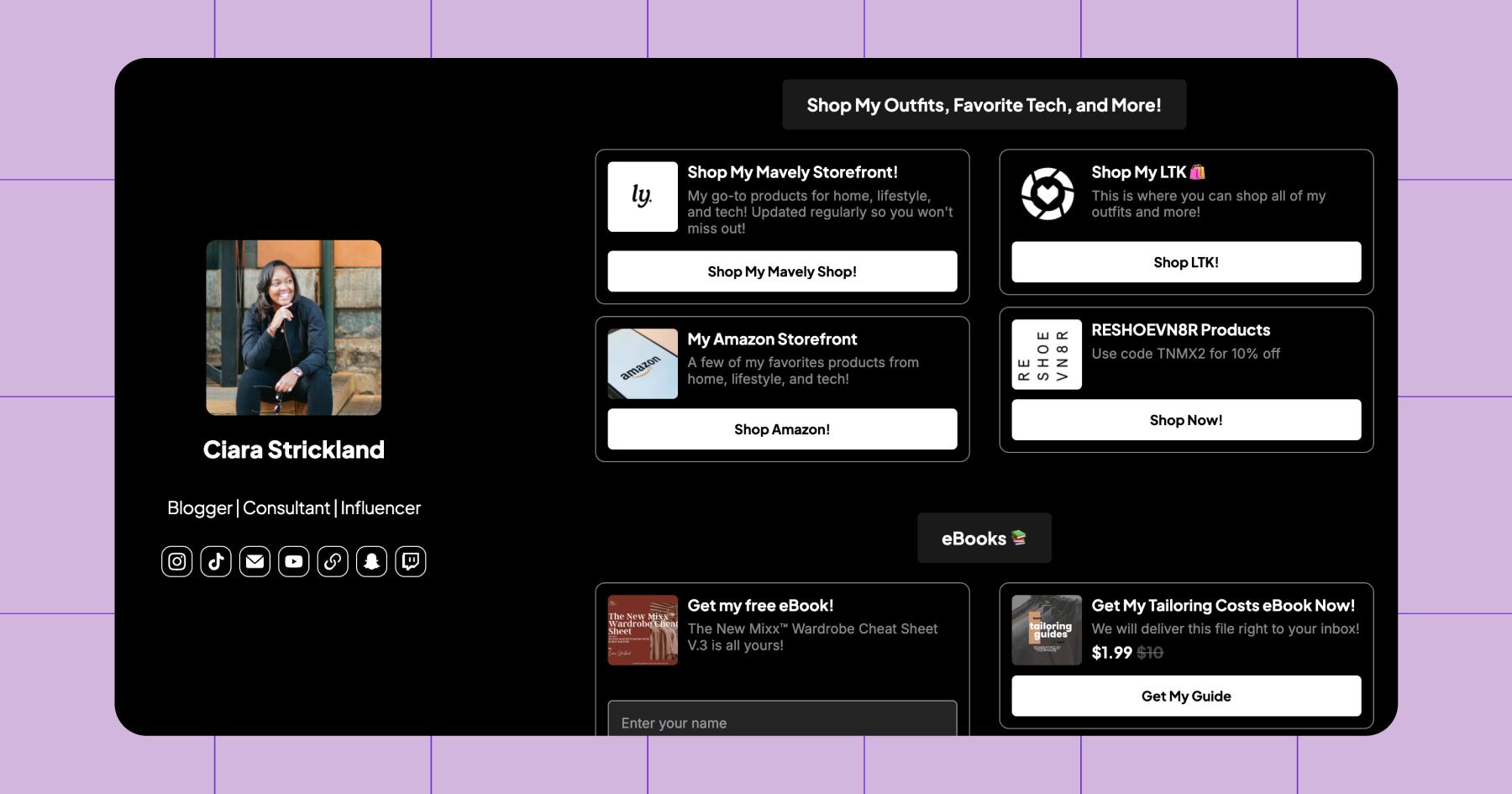
Having some sort of landing page is always a good idea for creators, but you can make the process of sharing links even more convenient and direct by sending them to users via the DMs — more on that in a bit.
Instagram Reels
Instagram Reels are the platform’s highest-reaching content format right now, and they’re ideal for affiliate content. For reels, you can post product demos/reviews, tutorials showing a product in action, or before-and-after transformations.
If you’re able to add product links directly in your video, great — according to Instagram’s help center, businesses with shops on Instagram can permit people to tag products in their Instagram Reels, Stories, and feed posts. That’s certainly the most direct way to go.
If you don’t have this feature available to you, you can use Manychat to automatically deliver links to people who are interested in whatever you’ve featured in your video. The best way to do this is to set up a Comment to DM flow. All you have to do is determine a trigger keyword and encourage followers to drop that keyword on your post. If you want to learn more about how it works:
Feed posts and carousels
Feed posts and carousels aren’t the most common place for affiliate links (since links in captions aren’t clickable), but they’re still useful. If you have a promo code to share, mention it in your caption so your audience can copy and paste it in at checkout. You can also set it up as a part of your comment to DM automation if you’re going that route.
The DMs
The DMs are the most direct path to affiliate conversions. When a follower messages you asking, “Which lipstick is that?” or “Link to your jacket pls?” that’s a person with their wallet practically open.
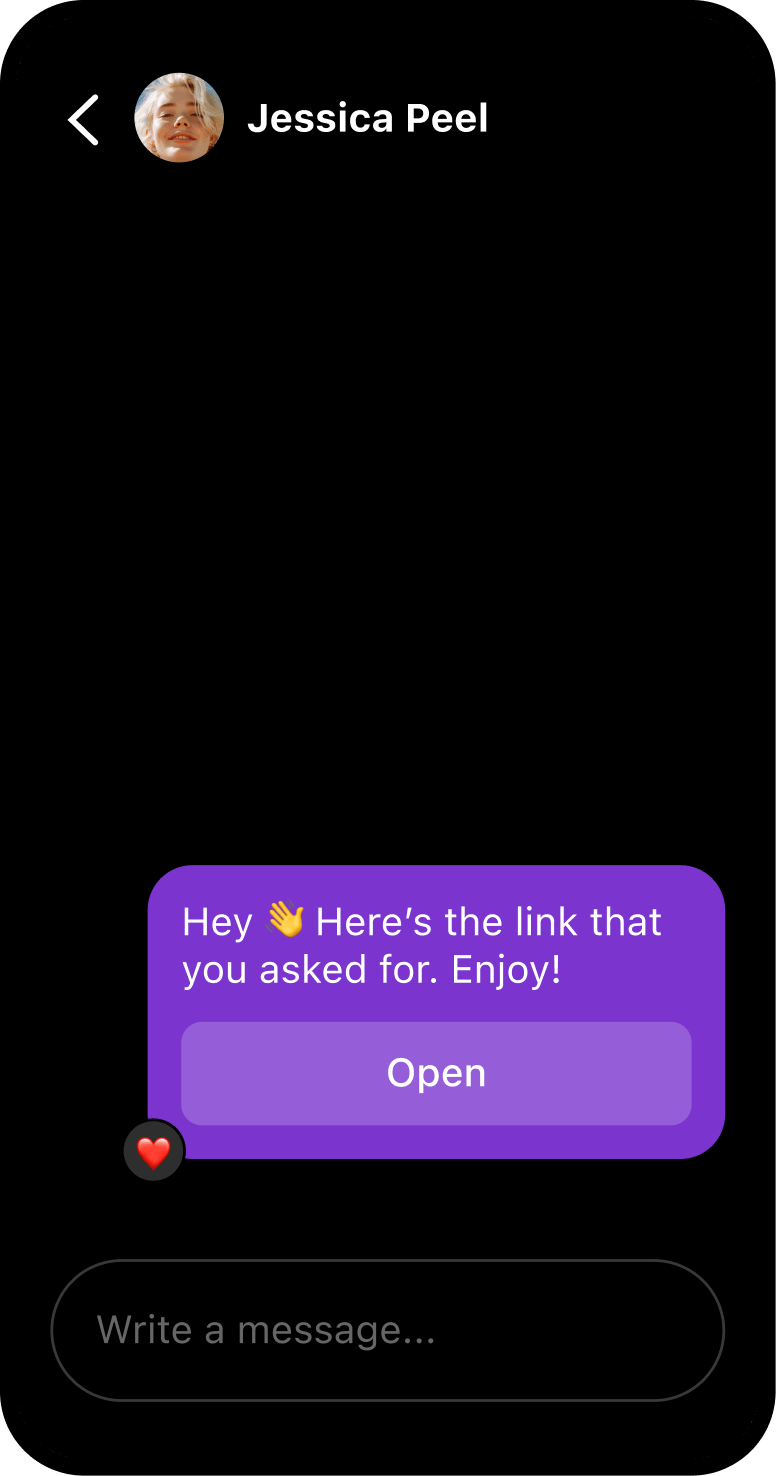
You don’t want to leave them on read, or worse, not open their message at all. Instead, you can set up a Story reply automation via Manychat that sends the link in seconds (and why not throw in a ❤️while you’re at it). It will keep your followers happy and lead to more money in your pocket.
Ready to give this affiliate business a try? Sign up for Manychat (it’s free)
Or watch this, so you know how easy it is:
Frequently asked questions
Pick a niche you genuinely care about, sign up for an affiliate program that fits your audience (Amazon Associates is beginner-friendly), and start weaving product recommendations into your content. Stories, reels, and DMs are your best channels for sharing affiliate links.
You don’t need a massive following. Nano creators (< 10,000 followers) earn decent affiliate commissions because engagement rate matters more than follower count. If you think your audience will trust your recommendations, it’s worth a try.
Yes. The FTC requires you to disclose any affiliate relationship clearly, and Instagram’s own policies require transparency as well. Use #ad, #affiliate, or the built-in “Paid partnership” label so your audience knows you may earn a commission.
With affiliate marketing, you earn a commission only when someone buys through your link. Sponsored posts are usually part of a brand deal. In this case, the creator gets paid a flat fee regardless of whether anyone purchases. Many creators do both: sponsored posts when opportunities arise and affiliate links for ongoing passive income.


Originally published: Feb 27, 2022, Updated: May 8, 2026
More stories worth reading
More content that's too good to miss