If you’re a creator looking for ways to monetize your following, partnering with brands is one of the best routes you can take. If you play it right, brand deals can open doors to financial freedom, creative collaboration, and long-term opportunities.
And with 80% of brands planning to maintain or increase their influencer marketing budgets, the opportunity for creators is stronger than ever. But at the same time, the competition is steep.
We wanted to know: How do you actually stand out and land that first deal?
To find out, I spoke with Jacob Andary, our very own influencer marketing manager, who has been helping connect creators and brands since TikTok’s early days.
The New Rules of Brand Deals
“When TikTok first launched, everyone was going viral. Now it’s such a saturated market that to stand out, you really need to know your brand,” Jacob says.
He’s right: The creator landscape is crowded today. CNBC reports that 57% of Gen Zers want to be social media influencers. But gone are the days when random virality guaranteed a paycheck. Brands don’t chase accounts with massive followings anymore; they look for creators whose content feels real.
“Brands want content that doesn’t feel like an ad. That’s what makes creators stand out — when the partnership makes sense and reflects their own personal brand.”
More on how to land your dream deal later, but for now, let’s talk about what brands are really after: engaged audiences.
Engagement > follower count
A small engaged audience beats a big, passive one every time. PR Newswire says the majority (73%) of brands now prefer working with micro and mid-tier creators because they deliver the strongest engagement-to-cost ratio.
“An engaged audience matters more than your follower count — it shows people actually trust your opinion, which means they’re more likely to take your recommendations,” says Jacob.
That’s not to say that followers don’t matter. Most brands won’t work with accounts that have fewer than 10,000 followers. Here’s how the main creator tiers stack up.
Influencer type | Followers | Best for | Jacob says… |
Nano | < 10,000 | Niche authority | “If they’re a complete subject matter expert and their content performs really well, I’d consider them.” |
Micro | 10,000 to 100,000 | Conversions and engagement | “Micro creators are great for highly engaged audiences — they’re the best for driving conversions.” |
Mid-tier | 100,000 to 500,000 | Reach and engagement | “If awareness is a big goal, mid-tier creators help increase reach while keeping engagement solid.” |
Macro | 500,000 to 5M | Awareness and impressions | “Macros and megas can act as the anchor for awareness campaigns.” |
Mega | 5M+ | Awareness | “Megas are great for driving impressions — use them as anchors and balance with smaller creators.” |
If you’re aiming to hit the 10,000 followers milestone or boost engagement before pitching to brands, bookmark these links:
- How to Get Paid Brand Deals (with under 10k followers)
- How to Grow Your Instagram Following (No Bots, No BS)
- Want More Likes, Comments, and Shares? Try These Instagram Engagement Strategies
How to Get On a Brand’s Radar

You don’t need a brand deal to get a brand deal. In some cases, it might even benefit you to have a clean slate. “No sponsored posts is a positive thing. Being the first is always great,” says Jacob.
Also, if you have a highly engaged audience, I find that they usually celebrate your first brand deal alongside you.”
If you’re looking to land that first offer for a sponsored post, here’s what to do:
- Research before you pitch.
That brand you’d love to work with? Do a deep dive into their content, especially any influencer posts they share.
Let’s say you want to work with Poppi (@drinkpoppi). It’s easy to see that all of the brand’s posts have a sense of color, fun, and style. When you look closer at its influencer content, you’ll see recognizable names like Alix Earle, Amaya Elizabeth, and Jake Shane of @passthatpuss fame.
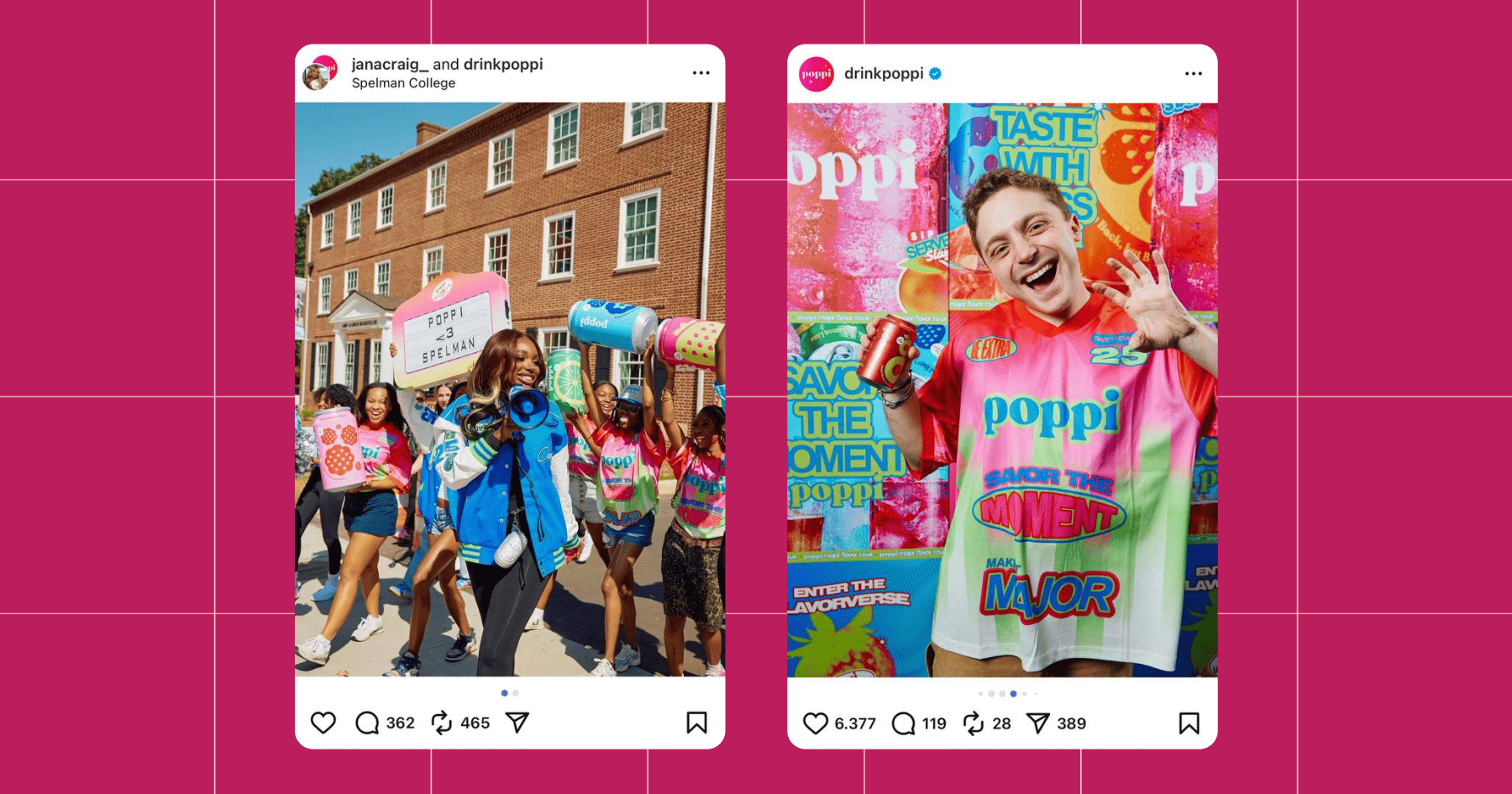
The good news: None of these creators fit into a specific archetype. The bad news: All of them have at least one million followers, so it might not be the best brand to go after if you’re still working on growing your audience.
Here’s the point: Make sure to do some research and set your sights on brands that work with creators who have content and an audience similar to your own.
“Always look at who the brand already partners with and what kind of influencer content they repost — it tells you exactly what they like,” Jacob says.
- Align your content with your dream brands.
If you want to work with a tech company, your content shouldn’t be “what I eat in a day.” Similarly, if you want to work with Poppi, you shouldn’t be posting about your tech stack. Your posts should reflect the kind of partnerships you want to attract.
Let’s use REI (@REI) as an example. REI partners with athletes and outdoor enthusiasts, but they don’t need to be pros. For example, Erin Bailey partnered with REI to produce a reel highlighting essential equipment for marathoners.
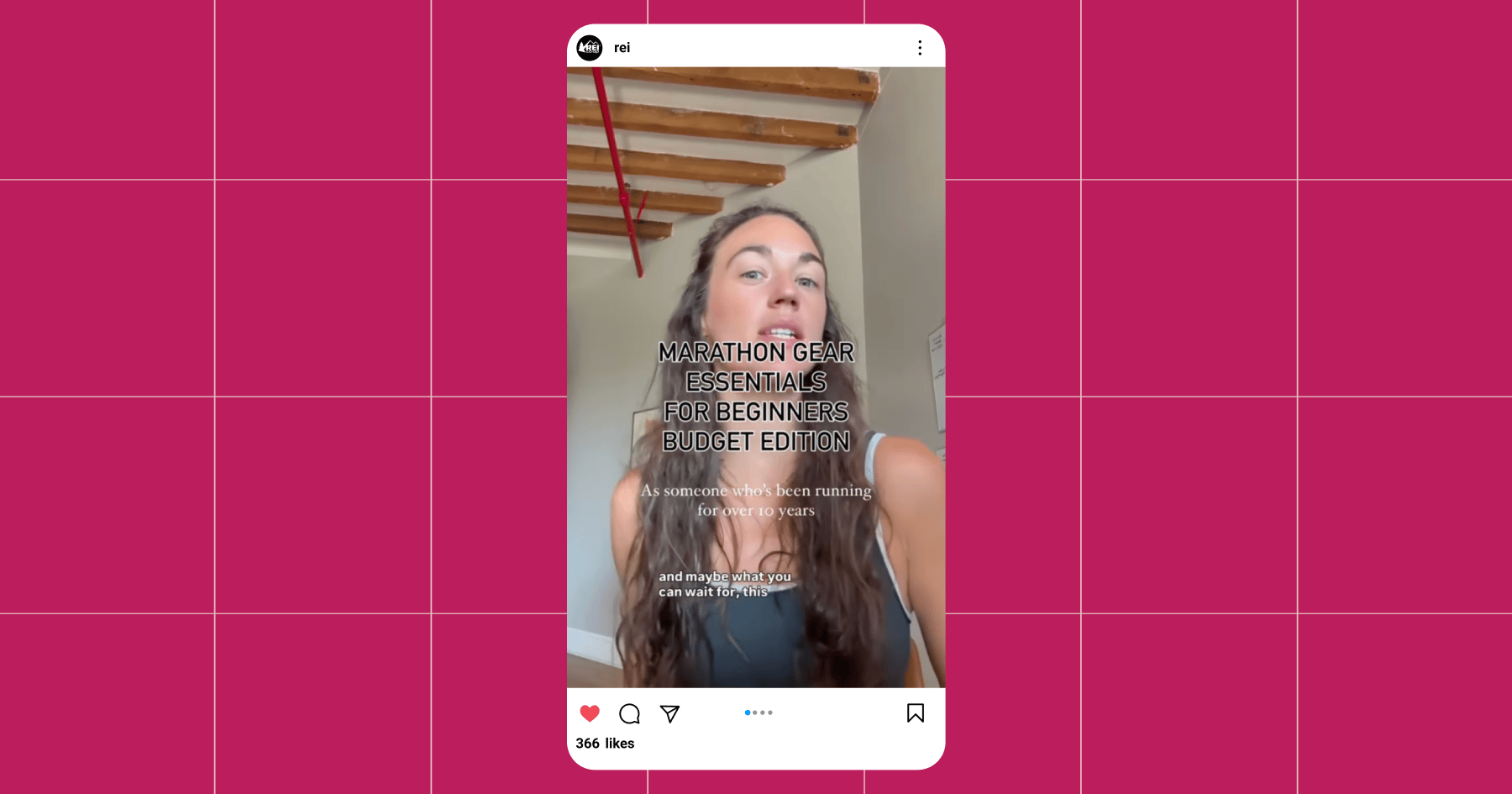
If you look at the content on her personal page (@erin.k.bailey), it’s of a similar nature: “5 race day tips,” “let’s watch the fastest people in the world,” “8 must-haves for new runners,” etc.
By showing up consistently in the space you want to be in, you make it easier for brands to see you as part of their story. The more aligned your content, the less you’ll need to chase opportunities — they’ll start coming to you.
- Show love to the brands you already use.
Post your favorite products, tag the relevant brand(s), and share your genuine experiences. “If we see you’re already a fan or user, we’re way more likely to want to work with you,” Jacob says.
Believe it or not, this strategy works: Skincare influencer Hyram Yarbro (@hyram) regularly posted reviews of CeraVe products before landing a deal with the brand. Be consistent (but not annoying), and someone is sure to notice.
Red flags to avoid
If you’re pitching to brands, your profile will be reviewed by someone — likely an influencer marketing manager, such as Jacob. There are a few potential red flags to be aware of:
🚩 Too many sponsored posts. “If every post is sponsored, followers stop paying attention,” Jacob says. Don’t take every deal that comes your way — that’s a quick way to lose followers’ trust.
🚩 Inconsistent posting. Brands want proof that your followers are engaged. “If you only post every so often, I don’t think I would consider you, because I don’t really know how engaged your audience is.” If you’re looking to attract brands, aim to post at least twice a week. Need help deciding when to hit post? ➡️ Stop Guessing: Here’s Exactly When to Post on Instagram
🚩 Category mismatch. Brands won’t reach out if your niche doesn’t align with their interests. There’s long been a “to niche or not to niche?” discussion in the influencer space. There are pros and cons to having a niche, but in general, you need to establish yourself in the space where your dream brands operate.
Turn One Deal Into Many

Your first brand deal probably won’t be a long-term partnership right away, and that’s okay.
“I prefer a short-term partnership first — one feed post and a few supporting stories,” Jacob says. “If it performs well, that’s when we’ll talk about a longer-term deal.”
Brands often test the waters before making a commitment. Treat that first deal like an audition. Deliver great content, communicate clearly, and make collaboration easy.
“Be a team player. Ask questions, follow the brief, and make sure the content feels authentic to you. Brands remember creators who make the process easy — that’s who gets called back.”
Ready to start putting yourself out there? Here’s where to go next: How to Negotiate Brand Deals Like a Pro (Even If You’re New)
Or, hit the play button for more advice: How to Land Long-Term Brand Deals with Dream Companies 💰 #branddeals #contentcreator
✋Frequently Asked Questions (FAQs)
1. How do I know if I’m ready for my first brand deal?
If you have an engaged audience (even a small one), you’re ready. Most brands start working with creators once they hit around 10,000 followers, but follower count isn’t everything. What matters more is engagement, so focus on creating high-quality content and encouraging comments.
2. Should I wait for brands to reach out, or can I pitch them myself?
“Shoot your shot.” That’s what Jacob says. Most creators assume brands do all the outreach, but many partnerships start because a creator took the initiative. Research the brand’s influencer activity, find the right contact (via LinkedIn, email, or Instagram), and send a short pitch highlighting why your audience is a great fit. Attach analytics, examples of previous collaborations (if you have them), and a few creative ideas.
3. What do brands actually look for in a creator?
It’s less about who has the biggest audience and more about who has the most influence. Brands look for creators who:
- Have strong engagement (comments, shares, saves)
- Maintain a consistent posting cadence
- Create content that feels authentic, not ad-like.
- Fit their brand identity and audience demographic
4. What’s the best way to turn one deal into a long-term partnership?
Treat every deal like a test run. Communicate clearly, deliver on time, and exceed expectations. After posting, share the results (engagement metrics, audience feedback, and screenshots) with the brand to demonstrate initiative and give them a reason to renew.

Originally published: Jan 6, 2026, Updated: Jan 6, 2026
More stories worth reading
More content that's too good to miss