How Much Do Amazon Affiliates Make? The Full Scoop from Real Affiliates

If you’ve ever wondered whether you could quit your job and live off Amazon affiliate links, the answer is technically yes (but let’s not). You can earn anywhere from basically nothing to thousands of dollars a month as an Amazon affiliate. The difference between the two is a lot of posts, followers, and consistency.
I talked to five Amazon affiliates (from bloggers to six-figure creators) to figure out exactly how the program works for them. Scroll on to hear how they scale affiliate income, from on-site videos to DM automation.
How to Get Started with Amazon Affiliate Marketing

Amazon’s affiliate program, AKA the Amazon Associates Program, allows creators, bloggers, and businesses to earn a commission by recommending products sold on Amazon.
When someone clicks your affiliate link and makes a purchase, you earn a percentage of that sale. It can be pretty great if you’re able to drive people to buy.
Let’s dig in.
The two types of Amazon affiliates
Not all Amazon affiliates are playing the same game. Some are creators looking to increase their income, while others are business owners or marketers seeking a value-added service for their business.
You probably know which camp you fall into, and I’ll talk about both ahead.
1. Amazon as a core monetization channel
Many creators use affiliate earnings as their primary source of income, often working with platforms like ShopLTK, Collective Voice, or Amazon Influencer.
At Instagram Summit by Manychat (IGSxM), Janesha Moore (@janesha.moore) shared that she earns roughly $40,000 per month in affiliate revenue. Frankly, that is not the average, but it is an example of what’s possible for established creators with a large audience.
2. Amazon as a value-add for your business
Some business owners use the Amazon affiliate program as a helpful extension of their main offer, not the centerpiece. People like:
- Doug Van Soest, founder of Storology Storage, uses affiliate links in educational content on the Storology blog.
- Hailey Rodaer, Marketing Director at Engrave Ink, uses Amazon links to help Engrave customers with tattoo aftercare.
How the sign-up process for Amazon’s affiliate program works
To join Amazon Associates, you’ll need:
- A website, blog, app, or social media presence
- Original content
- The ability to drive at least three qualifying sales within your first 180 days
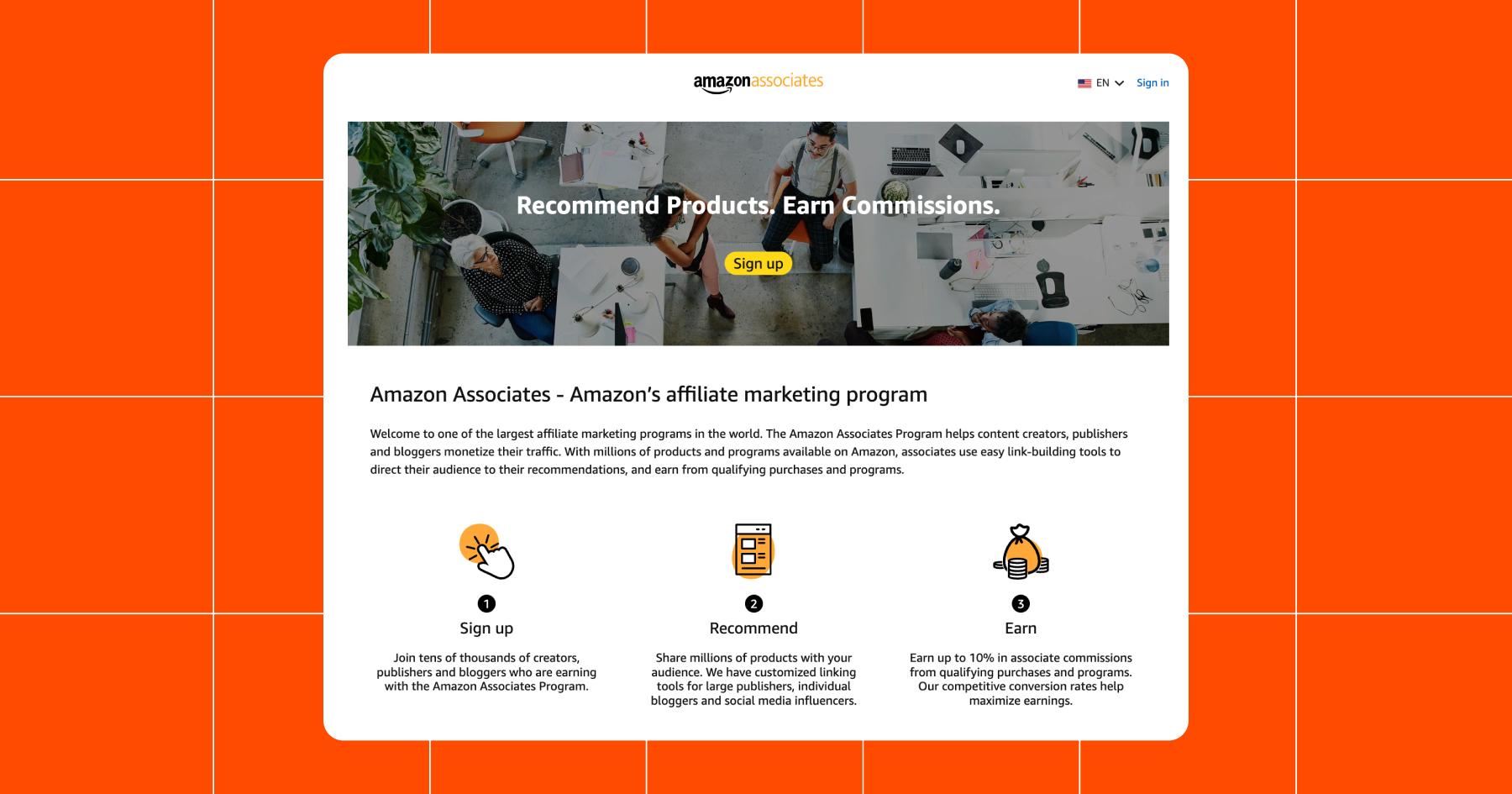
Once you’re officially an Amazon associate, you’ll get access to Associates Central, where you can generate affiliate links, create storefronts, and (if eligible) upload on-site video content. But that last requirement — being able to make three sales in 180 days — is one to pay attention to.
If you have an established online presence, like Michelle Jensen (@travelherstory), you should be fine. “If you don’t make those sales, you can’t continue,” she says. “For me, it wasn’t an issue, but for a brand-new blogger, that could be more challenging.”
She’s right. Hailey and Doug, who represent the “affiliate program as a value-add” group, had to be a lot more intentional about how they placed those first few affiliate links.
“Sign-up was not complicated, but the early activity requirement challenged me to be more purposeful with our content,” Doug explains. “I needed to make sure that all the recommendations were meaningful and matched how people search for things.”
How much do Amazon affiliates make on average?
Now, let’s answer the big question: What are Amazon affiliates making?
According to Authority Hacker, most Amazon affiliates earn less than $1,000 per month, with beginners earning between $50 and $300.
Of course, established creators like Janesha Moore can earn upwards of $10,000 per month, but that takes a lot of work and consistency. It’s not impossible, though, and you can work up to that if you’re a new creator — but you have to be determined.
Sal Farzin (@simplysalfinds) went from zero followers to a six-figure Amazon affiliate marketing business.
Not every affiliate is treating Amazon Associates like a full-time job. Some are just using it to bring in some side income, like Michelle from Travel HerStory, who shared that her monthly earnings range from $178 to $716, with occasional bonuses of up to $420.

How to Drive Amazon Affiliate Earnings

After you apply for the Amazon Associates program, you can maximize your affiliate earnings with a thoughtful strategy that considers:
1. Buyer intent (helpful > popular)
It’s easier to get a conversion when your audience arrives ready to buy. Amazon browsers are often primed to purchase (pun intended), so if your content answers specific questions, it’s likely to perform well. Questions like:
- What do I need for a carry-on-only trip?
- What equipment do I need to move things into a storage unit?
- What tattoo aftercare products are best for sensitive skin?
As Doug puts it: “Clarity is always better than volume.” He often sees steady returns from checklists and educational posts, because they align with how people already search and plan.
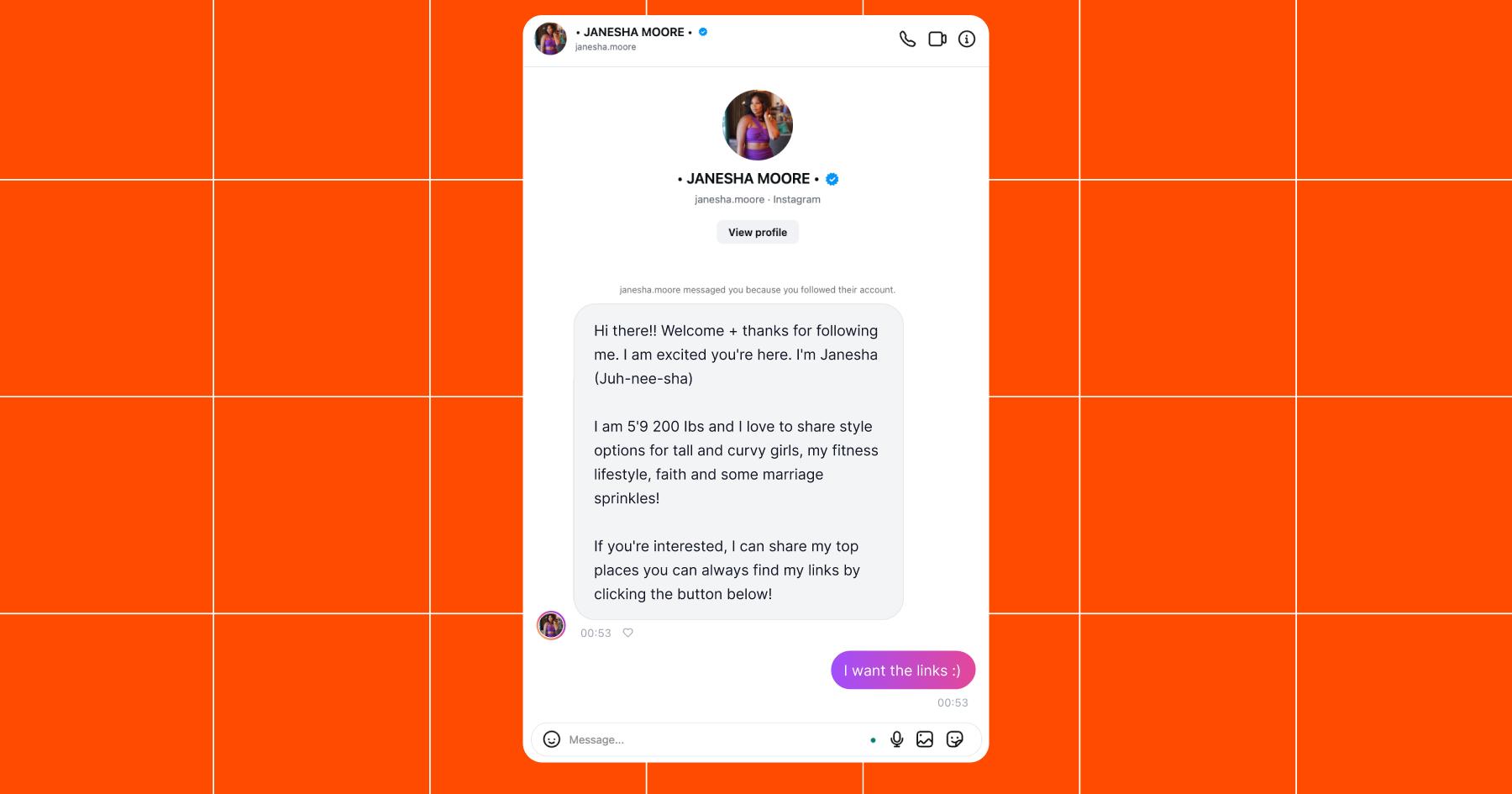
At IGSxM, Janesha Moore shared that one of her highest-converting tactics is radical specificity. In her outfit reels, she consistently posts her height, weight, and size, which many fashion influencers don’t disclose.
This approach changes how viewers react. Instead of “that outfit is cute,” they’re thinking: “that dress might fit me.” Boom. Sold.
2. Content format (on-site vs. external links)
The closer your content is to the moment of purchase, the higher the conversion rate.
As a best practice, use a mix of:
- Blog posts for search intent
- Resource pages for ongoing value
- Amazon Onsite videos for conversions
Here is one of my Amazon Onsite commission video examples. If you’re … | TikTok
Cristy Stewart-Harfmann (@happyfamilyblog) focuses heavily on the latter – on-site content.
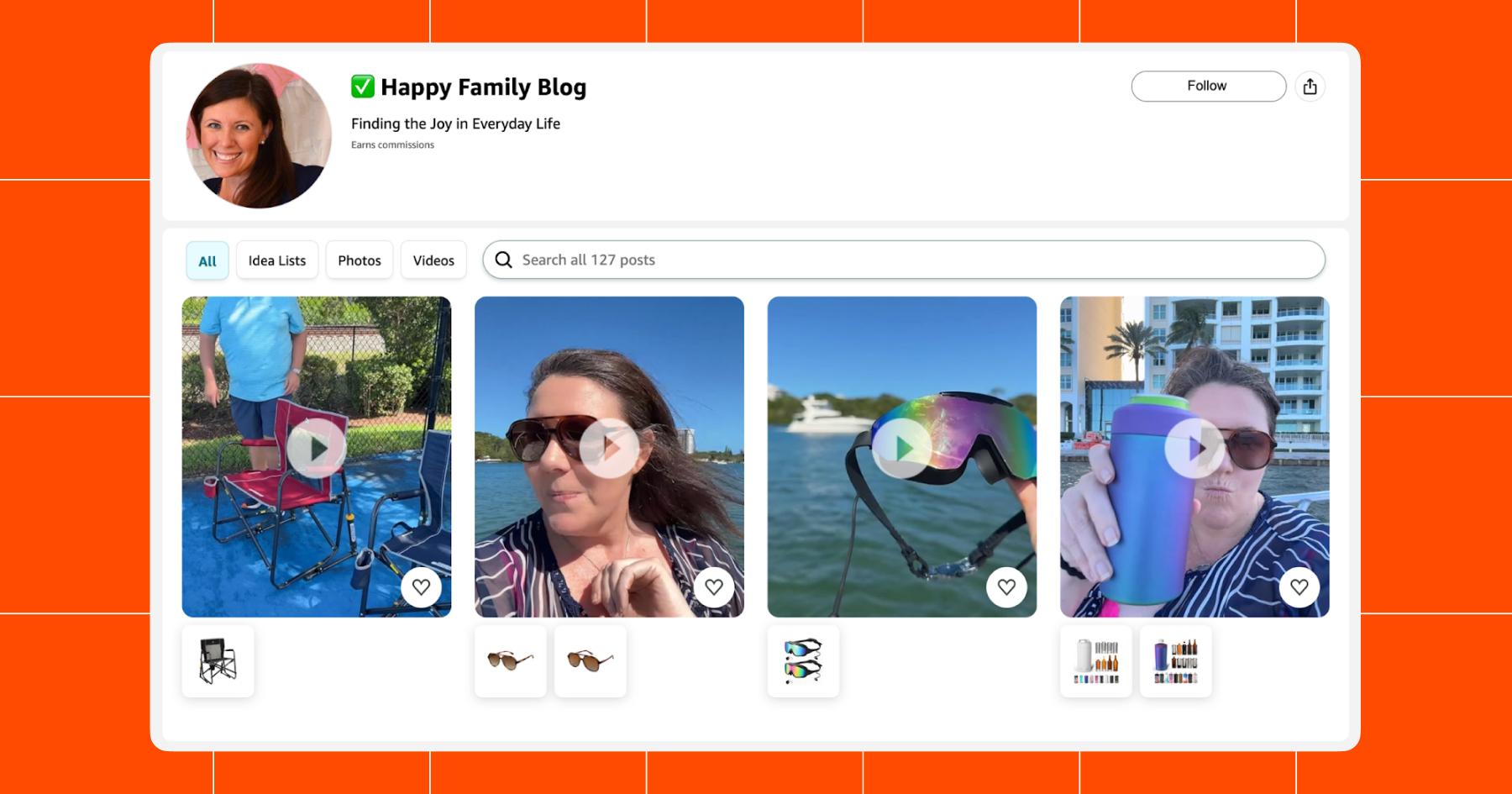
“Most people join Amazon Associates for the ability to link their favorite products. I prefer to focus on the Onsite Commissions,” she says.
“To be successful with external links, you need to constantly promote the products and have an audience that’s primed to purchase.”
With on-site content, your videos appear directly on Amazon product pages.
“You’re earning a commission from the traffic Amazon already paid to get there. It’s one of the few true ‘passive’ plays left in affiliate marketing,” Cristy says.
3. Trust signals 🤝
Amazon doesn’t reward hype (at least not in the Associates Program), but people do. If they trust you when you say you love that blow dryer, they’re more likely to buy it.
The most successful affiliates create original content. Use your own photos, show the products in real life, and give your honest opinion about them — pros and cons.
Michelle from Travel HerStory notes that she could improve at this. I should definitely take more photos of the products on my trips. I typically use the photos from Amazon, but I feel the posts with photos taken by me do better.”
And does this surprise anyone? Authentic, relatable content wins 99.99% of the time.
4. Distribution
If your affiliate strategy involves sharing external links in any way, here’s a lesson you’ll learn at some point (hopefully right now): Manually sharing those links isn’t going to get you very far.
Eventually, you will need to automate. But instead of waiting until you hit a breaking point, you can just sign up for Manychat for free. Affiliate creators like Janesha use Manychat to automatically respond to those “where did you get that 👀” type of comments, but even beyond that, they use it as a part of their distribution strategy.
For example, Janesha takes full advantage of the comment to DM feature, pairing it with Reels that show off some of her favorite looks.

I don’t know about you, but I’d much rather spend 10 minutes setting up a Manychat flow than an hour and a half responding to comments and DMs.
5. Compliance (play by the rules)
Non-compliant affiliate content puts your Amazon account at risk. And it doesn’t convert. (So don’t do it.) Cristy shared that when repurposing TikTok Shop videos, price-based hooks had to be re-recorded for Amazon, or the content would underperform or be flagged.
“Amazon strictly forbids mentioning prices or sales because they fluctuate constantly. If your video says $20 and the price changes to $22, it’s considered a poor customer experience,” she explains.
Follow the rules outlined in the Associates Program Operating Agreement closely.
- Don’t mention prices or discounts.
- Use proper disclosures.
- Avoid outdated or misleading claims.
- Plus a whole lot more that’s outlined in the operating agreement!
We Just Affili-ate That 😏

The global affiliate marketing industry is projected to reach over $27 billion by 2027, up from $17 billion in 2020. That means the opportunity is definitely out there.
And while most Amazon affiliates don’t make life-changing money overnight, many can build a reliable income stream with a solid marketing strategy.
To sum it all up, affiliates who
- focus on buyer intent,
- publish content consistently, and
- build trust with their audience
are far more likely to grow into higher earning brackets over time. Chasing virality or stuffing links into content won’t do it. So hit that sign-up link, grab your ring light, and get to business.
Frequently asked questions
Treating affiliate links like ads instead of solutions. New affiliates often fall into the trap of thinking they need to promote products constantly and chase trends or deals.
In reality, affiliates who consistently earn focus on trust and usefulness. They explain why a specific product appeals to them and let their content do the selling. Compliance matters too: Ignoring Amazon’s rules will limit your content’s performance and put your account at risk.
You can! Michelle (Travel HerStory) is an excellent example of this. If you have a smaller audience, focus on tailoring your affiliate content to their interests and needs. And if you need to grow, check out: How to Grow Your Instagram Following (No Bots, No BS).



Originally published: Jan 24, 2026, Updated: Jan 26, 2026
More stories worth reading
More content that's too good to miss