How to Make and Sell Digital Goods (Without Losing Your Soul or Sanity)

So, you want to be an entrepreneur? You’re in good company: 62% of American adults want to be their own boss. And while many of these people picture quitting their jobs, renting physical space, and investing in inventory, there’s a much easier way:
Sell something digital. 👩💻
E-books, courses, photos, memberships, templates — they’re all part of today’s booming digital goods economy. You create them once, deliver them instantly, and scale to infinity. If that sounds like something you’re interested in, keep reading.
The Down-Low on Digital Goods

Digital goods, AKA digital products, are intangible creations you build once and deliver online, like e-books, courses, design templates, photos, music, graphics, guides, or even plug-ins.
From Cassey Ho’s Blogilates to Brock Johnson’s The Last Amazon Course, there’s a reason so many creators are leaning into digital goods: You don’t need a warehouse — just strong Wi-Fi. And there’s more:
- They offer high profit margins. Once you’ve built the product, each new sale is mostly profit (no added production costs).
- They’re easy to scale. You can sell to dozens, hundreds, or thousands of people online.
- Overhead is extremely low-cost. No storage, no shipping, no returns. Your “inventory” is in the cloud. ☁️
- Finally, the key motivator: the potential for passive income. Pair marketing and automation with your product, and it will sell itself while you sleep.
Plus, the digital goods market is projected to reach $416.21 billion by 2030 (up from $124.32 billion in 2025). Why not grab a slice of that growth while you can?
A Breakdown of Digital Products | |||
Best for | Where to sell | Where to promote | |
Online courses | Coaches, trainers, and subject matter experts | Teachable, Kajabi, Thinkific | YouTube, LinkedIn, TikTok, Instagram |
Templates and tools | Photographers, designers, developers, and marketers | Etsy, Gumroad, Creative Market, Notion Market | Pinterest, TikTok, Threads, and niche Facebook groups |
E-books and guides | Writers and subject matter experts | Gumroad, Payhip, Amazon KDP, or a personal website | Instagram, Substack, Medium |
Digital memberships/ | Creators | Patreon, Instagram, Circle, Skool, Substack | Instagram, YouTube, Discord, newsletters, podcasts |
Music or podcasts (loops, sound packs, MP3s) | Musicians, comics, podcasters | Apple Podcasts, Bandcamp, Gumroad, Soundwise | TikTok, YouTube Shorts, creator Discords, |
Art (photography, wallpapers, etc.) | Photographers, designers, and digital artists | Etsy, Redbubble, Creative Market | Instagram, TikTok, Pinterest, Behance, DeviantArt |
Services (coaching/consulting sessions) | Coaches, trainers, and subject matter experts | Website, Stripe, Calendly, Kajabi | Instagram Stories, podcasts, webinars |
Decide Which Product Type is Right for You

You know what’s possible. Now it’s time to pick your lane. The best digital product for you depends on what you’re good at, what your audience actually wants, and how much time you can commit to creating.
For example:
- If you’re a content creator on TikTok, Instagram, or YouTube, consider launching a paid subscription or membership model that gives followers access to exclusive content.
- If you’re a service provider (designer, developer, consultant, lawyer, etc.), try packaging your expertise into a course or toolkit.
- If you’re a creative (artist, photographer, or musician), monetize your talent through digital downloads like wallpapers, presets, or sound packs.
The idea is to take the natural next step, rather than starting from scratch. Your audience already comes to you for something, and that’s exactly what you should sell.
Still building your audience? Check out How to Grow Your Instagram Following (No Bots, No BS).
Now, the Hard Part: Creating (Good) Digital Goods

Coming up with ideas is easy; actually making a digital product that people want to pay for? That’s the hard part.
Take it from the host of 9 to 5 Mom with a Pod, Francheska Stone. Francheska wanted to offer her audience a 90-day guide with concrete steps for launching a brand or business.
“I wanted to create something real; what I actually used to make progress,” she says. “It took about three weeks to create. The biggest challenge was managing my time.”
Francheska is a mom with a full-time job and a side business. If she can carve out time to create a digital product (that averages 250+ downloads a month, BTW), odds are you can too.
To help you get started, here’s a breakdown of where to begin based on the type of product you want to create.
Exclusive/membership content
If you’re a creator and you’ve got a loyal audience, offering paid content or access to an exclusive fan community is one of the easiest ways to scale income without making something entirely new. Several platforms make offering paid memberships simple, including Patreon, Substack, Circle, and Skool. All you need to do is keep creating content.
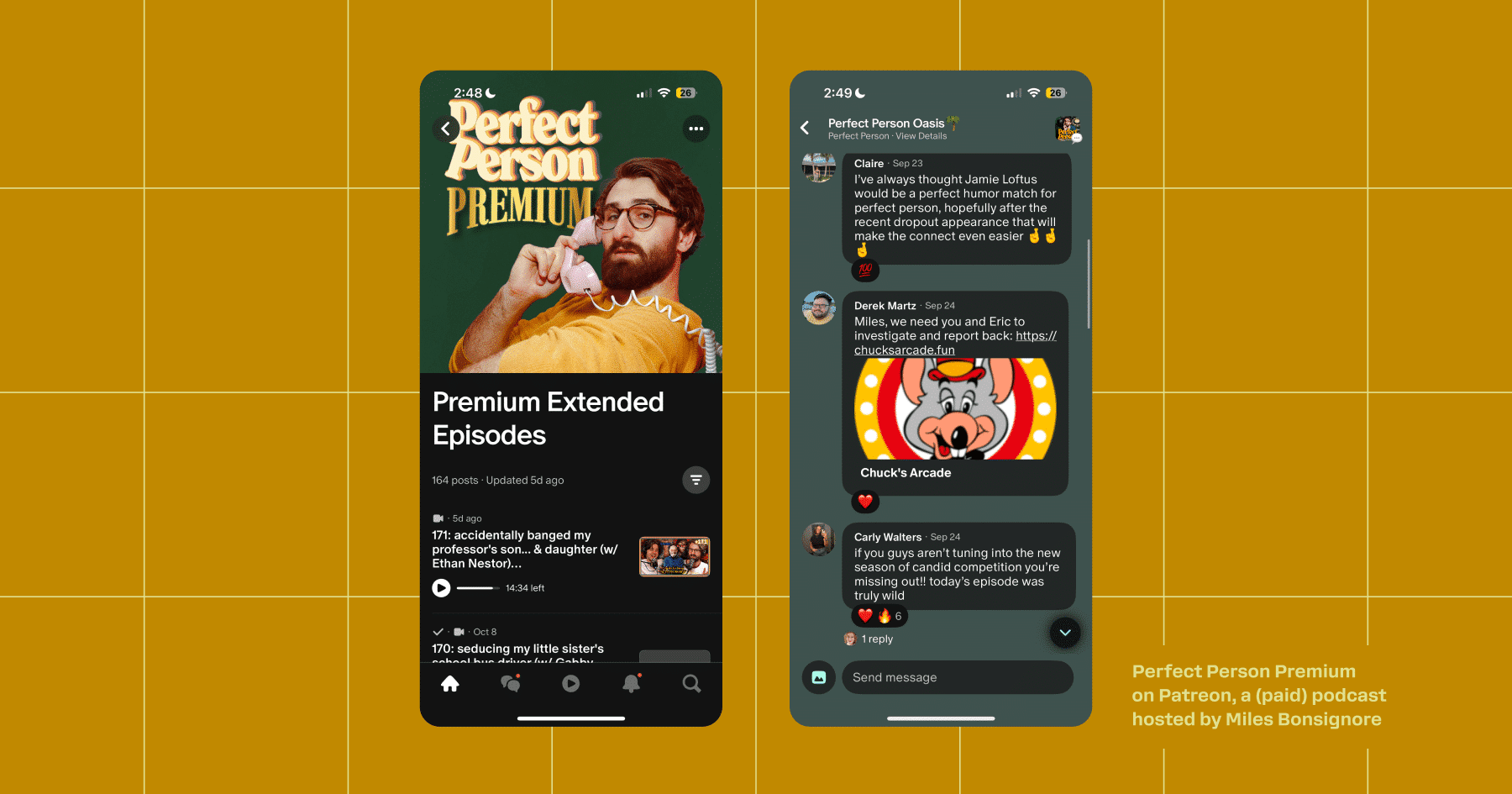
Perfect Person Premium on Patreon, a (paid) podcast hosted by Miles Bonsignore
Design-based goods
If you want to create a digital asset such as a template, preset, icon, or something similar:
- Start simple: Your first launch doesn’t need to be a 50-template bundle. It can be one highly useful resource (like Francheska’s 90-Day Brand Builder).
- Use the tools you already know. Canva, Figma, and Lightroom can take you far. Don’t overcomplicate it.
- Test before you list. Share samples with your followers or design communities to collect feedback before launching your product.
Clare Brown, founder of Homeschool of 1, has built a thriving business selling digital printables. All told, she’s created more than 1,000 designs, all made with Canva.
“I started creating them for my son when we began homeschooling, and it grew organically into a full-time business,” she says.
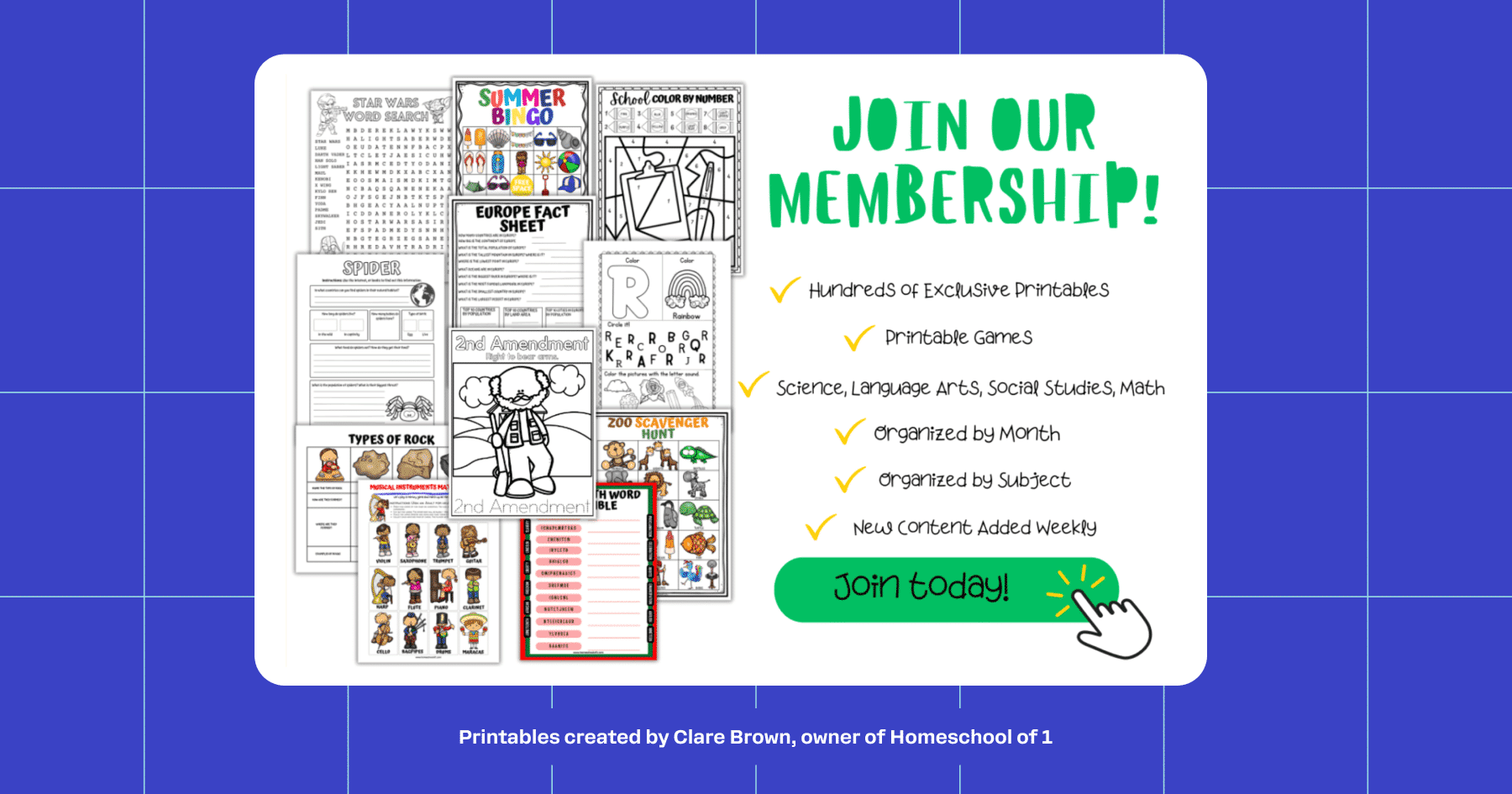
Printables created by Clare Brown, owner of Homeschool of 1
Clare relies on just a few tools to run her business — WooCommerce for her shop, Kit for automating tasks, Canva for design, and ChatGPT for brainstorming ideas. “These make it possible to run everything myself and stay consistent,” she explains.
Courses, workshops, and educational content
Courses, workshops, and video guides are the backbone of the digital goods world.
Think about Brock Johnson, who started with one “Instagram growth” webinar and evolved it into The Last Amazon Course — one of the top-selling online courses of all time.
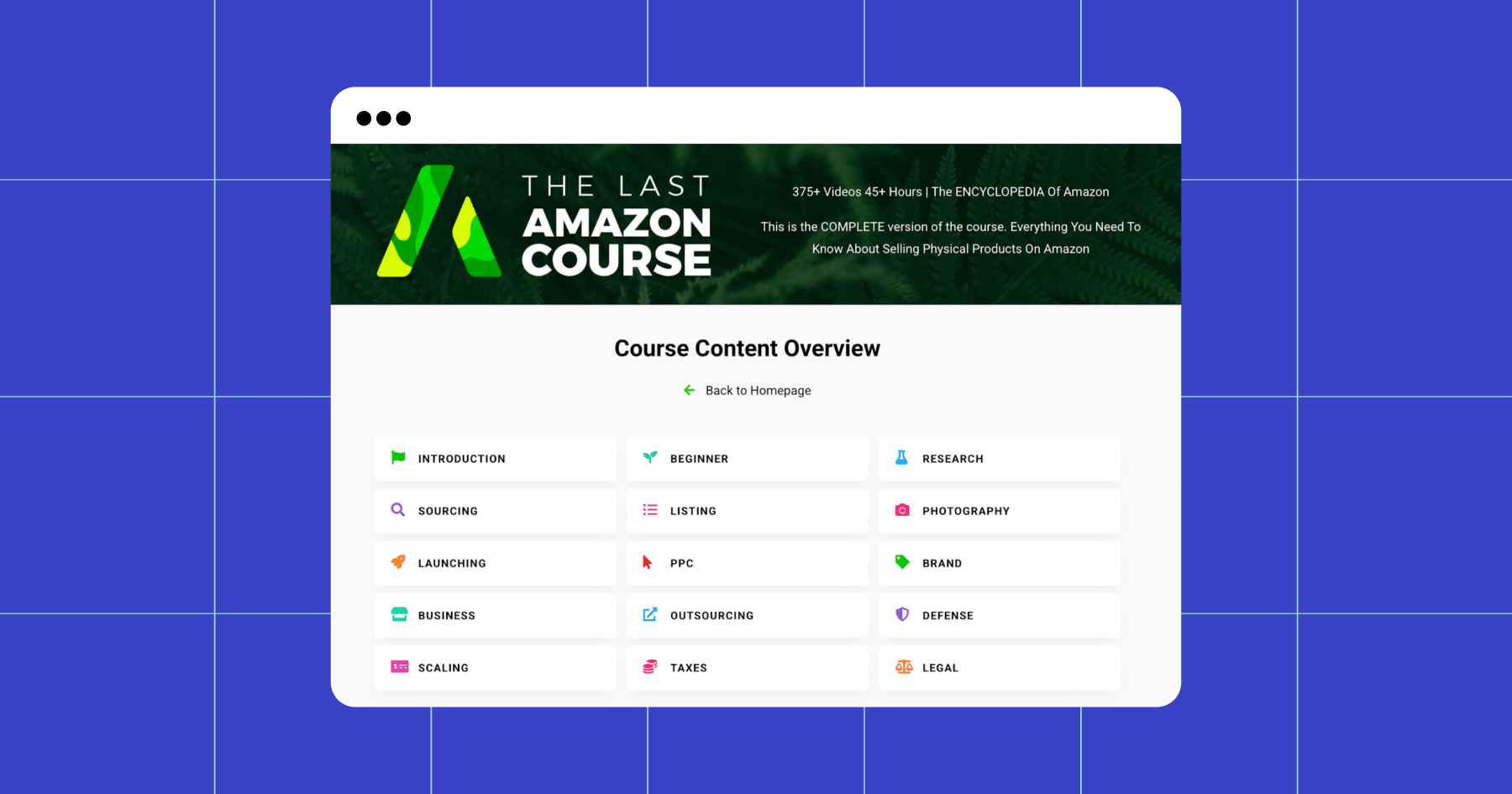
The landing page for Brock Johnson’s The Last Amazon Course
It’s a good option for anyone with expertise to share, but if you want to sell a course, you’re going to need to know a few things about creating content.
Filming content
Good news: You don’t need a studio or professional equipment to create polished content. Most creators start with what they already have, like a smartphone, ring light, and tripod. If you have budget available for a more advanced audio setup, try investing in a mic like the Blue Snowball or Rode SmartLav+.
Find more recs ➡️ The Best TikTok Tools for Editing, Engaging, Cross-Posting, and More.
Editing content
When it comes to editing, keep your workflow simple so you actually finish. Tools like CapCut, Descript, or iMovie make it easy to edit on desktop or mobile without pro-level skills. Batch your editing sessions and save branded templates (like intros, outros, or lower thirds) to keep your videos consistent and produce them faster.
Hosting content
Once your content is ready, you’ll need a home for it — somewhere people can browse, buy, and watch content easily. There are a few options for this:
- All-in-one platforms: Teachable, Kajabi, and Thinkific let you upload videos, set pricing, and even build sales pages.
- Membership-friendly options: Podia, Circle, or Skool are great if you’re offering ongoing access or community spaces.
- DIY route: You can also use a website builder (like WordPress or Squarespace), pair it with Vimeo or YouTube (unlisted), and automate delivery through Manychat or Kit.
Audio goods (podcasts, music, sound libraries, etc.)
If you’re a podcaster, tools like Riverside, Zencastr, or Audacity make it easy to record high-quality audio from home or on the go. Pair them with editing tools like Descript (for quick cuts and transcripts) or Adobe Audition (for pro-level polish), and you’re ready to launch.
If you’re a musician or sound creator, the same setup works, but you might want a few extras. Programs like GarageBand, Ableton Live, or Logic Pro X let you produce and mix your own loops, beats, or sound libraries. Once you’ve built your tracks, export and package them as downloadable files or sample bundles.
When it’s time to sell, platforms like Gumroad, Soundwise, and Bandcamp make hosting and distribution simple. Podcasters can also monetize directly through Apple Podcasts Subscriptions or Spotify for Podcasters, offering bonus episodes or ad-free feeds to paying subscribers.
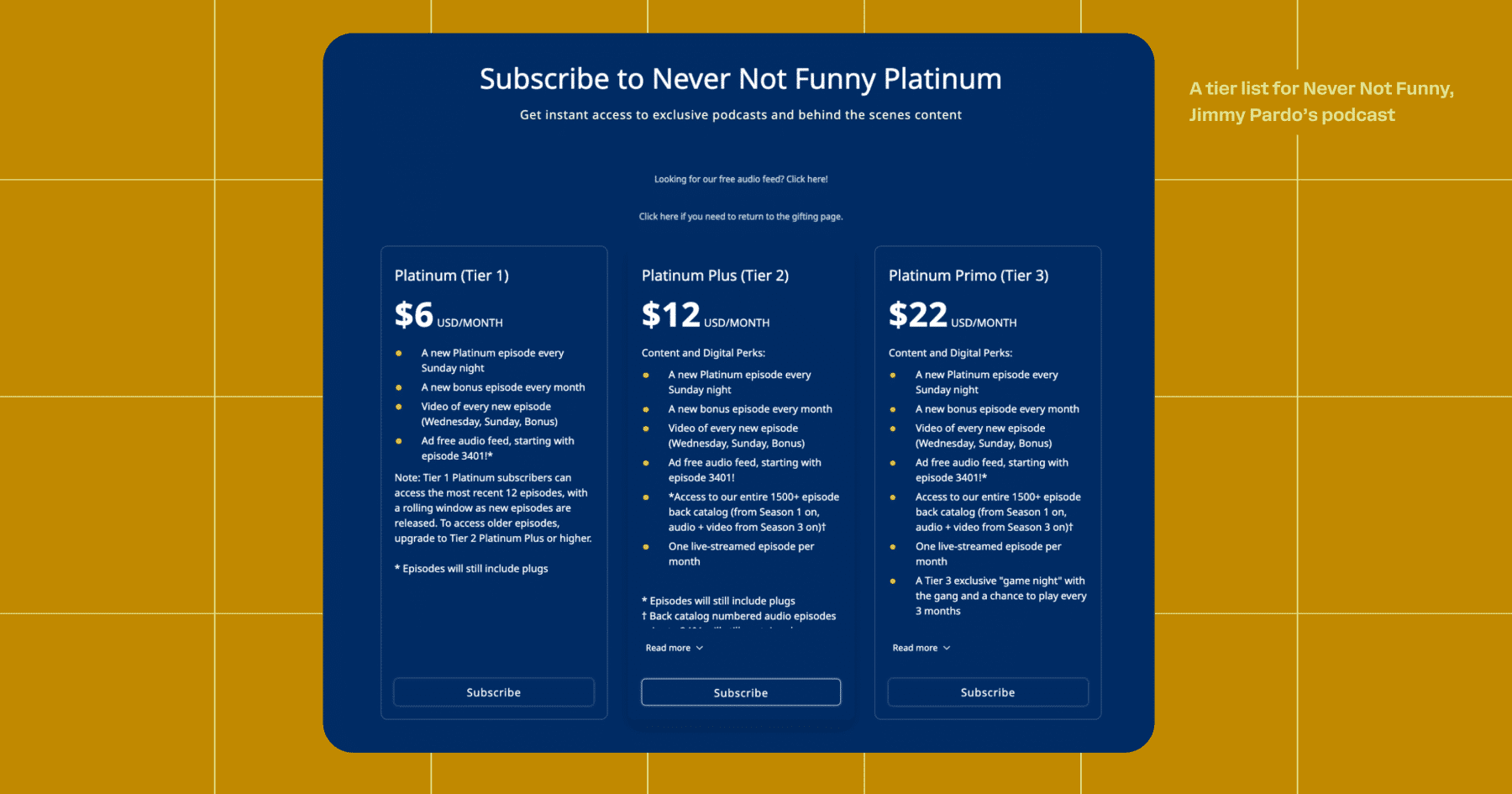
A tier list for Never Not Funny, Jimmy Pardo’s podcast
Virtual services
If you sell your time (as a coach, designer, lawyer, stylist — whatever), you don’t have to reinvent yourself to break into digital products. You just need to package what you already know into something people can access at any time.
That’s exactly what intellectual property attorney Nakia Gray did. After years of helping entrepreneurs protect their businesses, she realized most early-stage founders wanted legal protection but couldn’t afford the traditional attorney route.
So, Nakia transformed her most-requested services into self-paced courses, making legal guidance accessible and affordable. “Digital products are a powerful way to meet people where they are — especially when you’re offering real, practical solutions,” she says.
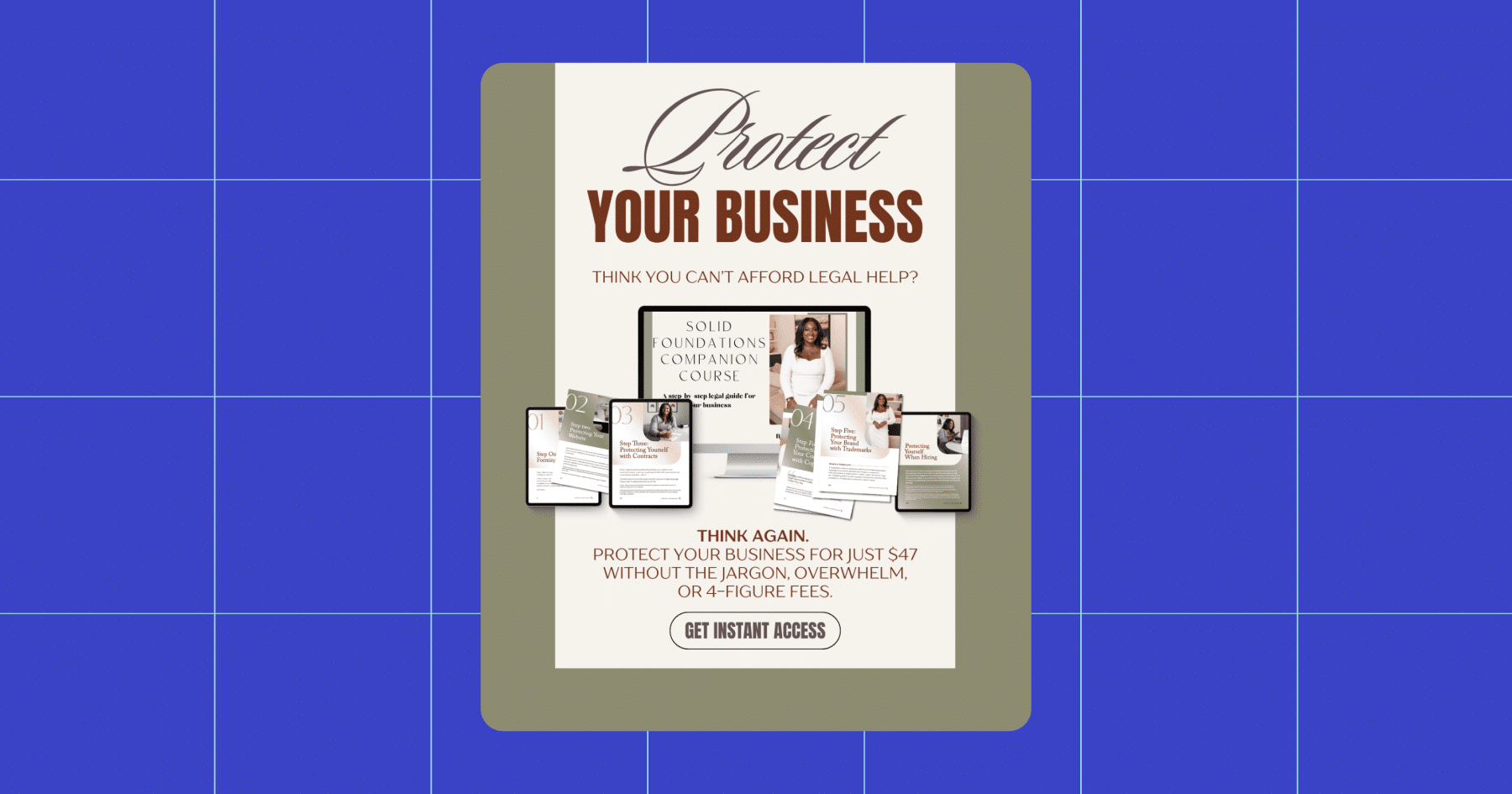
Her first product, Make It Official, is a course that walks entrepreneurs through the trademark registration process step-by-step. Thousands of business owners have used it to protect their brand names and intellectual property. She later created The Contract Vault, a plug-and-play library of over 18 customizable agreements, ranging from NDAs and client contracts to terms and refund policies.
Nakia built everything in Thrivecart Learn, repurposing lessons from client work into clear, easy-to-follow formats. Each product took her between four and six weeks to create.
Promoting and Selling Your Digital Goods

Once your product is ready, the next challenge is getting it in front of the right audience and giving them a reason to click “buy.” To do this:
Make it easy for people to find and buy your product
If you’re launching a podcast, it should live where people listen to podcasts (like Apple Podcasts or Spotify). If you’re selling a course or membership, host it on a platform designed for learning and community building, such as Teachable or Skool. You get the gist: Make sure your product is hosted somewhere that makes sense.
Communicate the value
Ever notice how a free sample at Costco suddenly convinces you to buy the whole box? That’s the power of a preview.
Give your audience a taste of what you’re selling: a quick tip from your course, a sneak peek of your template, or a mini lesson they can use right away. When people experience the value, buying becomes a no-brainer.
Integrate it into your content ecosystem
Newsflash: Your content ecosystem is your sales engine. Each platform has a role to play in getting your digital product in front of the right people and guiding them toward making a purchase.
- Discovery platforms like TikTok, Pinterest, and YouTube introduce new audiences to your product. Share short, snackable content here that highlights the problem your product fixes.
- Connection platforms like Instagram, newsletters, and podcasts build trust and context. Use them to share success stories, behind-the-scenes peeks, or quick wins from your product.
- Conversion tools like Manychat, email, and landing pages turn interest into income. When someone engages with your post or signs up for a freebie, send a follow-up that connects their curiosity to a paid offer — more on that next.
Get to “Add to Cart” Faster with Manychat

You knew the pitch was coming, but I’ll keep it brief.
Manychat makes it ridiculously easy to promote and sell your digital products on social media. Instead of relying on “link in bio” clicks or hoping someone remembers your story post, you can automate your entire sales flow inside Instagram, TikTok, or WhatsApp.
When someone comments on your post (“Send me the recipe!” or “I want that template!”), Manychat can automatically send them a DM with the product link, capture their email, and even follow up if they don’t check out. This means you can offer a freebie, grow your email list, and nurture those new leads toward paid content — all within a single DM thread.
Convinced? Sign up for Manychat and start selling.
Or keep reading, nerd:
- Want to Make Sales on Instagram? Build Real Relationships First
- Stop Losing Leads in the DMs: Build a Funnel That Follows Up for You
✋ Frequently Asked Questions (FAQs)
1. Do I need a website to sell digital products?
No, you can start selling on platforms like Gumroad, Etsy, or Teachable without a website. But if you want more control, having a simple site or landing page helps (especially if you’re collecting emails or running ads).
2. What types of digital products sell best?
Anything that saves time or makes someone’s life easier. Templates, online courses, toolkits, and digital memberships are all strong performers.
3. How do I protect my digital products from being copied or stolen?
Use download limits, watermarking, or licensing tools built into your sales platform. If you’re selling high-value materials, consider adding a basic terms of use or digital product license agreement (Nakia Gray’s Contract Vault is a great resource for this 👀).
4. How can I automate the selling process?
This is where Manychat shines. You can use automation to deliver freebies, nurture leads, and sell products right inside Instagram or TikTok DMs. It turns your content into a low-lift, high-converting sales funnel (and you can sign up for free!).


Originally published: Nov 13, 2025, Updated: Nov 13, 2025
More stories worth reading
More content that's too good to miss