
Around 61% of marketers say generating traffic and leads is their biggest headache, and here's the kicker: most of the leads they do manage to scrape together are “meh” at best. The problem usually isn't effort. It's the system they’ve built (or…haven’t, oops).
If the term “lead generation process” makes you imagine a landing page with a form and some paid traffic pointed at it, keep scrolling. Because that's not a strategy, that’s a free-for-all, and the only thing it’ll get you is a small pile of unqualified leads.
Ahead, everything you need to build a step-by-step lead generation process that prioritizes quality and intention over raw volume. Let's get into it.
TL;DR
- A lead generation process is a repeatable system you use to attract potential customers, capture their info, qualify them, and move them toward a sale.
- The best processes prioritize qualified leads over volume, using automation to nurture and score leads so nothing slips through the cracks.
- When it comes to collecting leads, conversational channels (DMs, WhatsApp, Messenger) beat static forms.
- Automation keeps your process moving by automatically collecting and qualifying leads on different channels.
What Qualifies As a Lead?

Before we get into the lead generation process, let's clarify what a lead actually is. A lead is a person who's shown interest in what you sell — maybe they clicked something, replied to a DM, downloaded a guide, or signed up for your newsletter. They're not a customer yet, but they've shown some level of interest in becoming one.
Leads exist on a spectrum.
- A cold lead barely knows you exist; maybe they liked one post.
- A warm lead has engaged a few times and is paying attention.
- A hot lead is basically waving cash at you, asking about pricing or next steps.
The whole point of a lead generation process is to move people from cold to hot.
Beyond the temperatures, there are two lead acronyms you need to know: MQL and SQL.
- A marketing-qualified lead (MQL) is someone who's engaged with your content but isn't ready to buy yet, like a person who downloaded your free guide and opened your last three emails. (They're interested, but they're still kicking the tires.)
- A sales-qualified lead (SQL) is further along. They've signaled real buying intent, like replying "yes, I want to book a call" or asking what your pricing looks like.
The difference between MQLs and SQLs matters because it tells you who needs more nurturing and who's ready for a real conversation. Good lead qualification is just sorting one from the other before you spend time chasing.
6 Steps to a Lead Gen Process That Actually Converts

If lead gen feels like a slog, you're not alone; a big chunk of marketers admit they lack the data, budget, or tools to run an effective process. But the usual culprits are predictable.
Most broken processes share the same flaws: leaning entirely on paid traffic (the priciest way to operate), having no follow-up system so leads go cold within hours, and treating every lead the same regardless of fit. All of this results in an inefficient pipeline and sky-high customer acquisition costs.
The fix is to build an automated process that filters for quality, so everyone gets acknowledged with a message tailored to their interest level. Here's what that looks like.
- Figure out who you're actually looking for
- Attract leads (inbound vs. outbound)
- Capture their info (without the boring form)
- Qualify before you chase
- Nurture and score them
- Close the deal
Let's break each one down.
1. Figure out who you're actually looking for
Before you post any content or run a single ad, you need to define your target audience. We have a whole guide on defining your target audience on Instagram worth checking out, but at the very least, find a few common threads among your best current customers.
Are they parents? Pet owners? Founders? What problem or need do they all share?
These patterns tell you who to chase and, just as importantly, who to ignore. Skip this step, and you'll spend your whole budget attracting people who were never going to buy.
2. Attract leads
There are two broad ways to collect leads.
- Inbound lead generation: With inbound lead generation, you create content that people like and eventually learn to come straight to you for things like blog content that ranks on Google, Instagram reels and stories, TikTok videos, lead magnets, etc. The less you rely on paid traffic (which is by far the most expensive way to get leads), the more you can invest in making better lead magnets and showing up in other channels that bring in warmer leads.
- Outbound lead generation: Outbound is what it sounds like; you go to the leads instead of attracting them to you. Think paid ads (especially as platforms like Meta move toward fully automating the ad buying cycle), cold outreach, and partnerships. It's faster and more scalable, but the leads are usually cooler since you interrupted them.
Inbound lead generation | Outbound lead generation | |
|---|---|---|
Cost | Lower over time | Higher (paid ads, outreach) |
Lead quality | Warmer — they found you | Cooler — you found them |
Time to results | Slower to build | Faster out of the gate |
Scalability | Compounds as content grows | Scales with budget |
Best channels | Content, social, SEO, giveaways | Ads, cold outreach, partnerships |
Most businesses use a mix of both inbound and outbound lead generation strategies.
3. Capture their info
Whether you're capturing leads on your website, Instagram, or TikTok, here's the truth: no one wants to fill out a form anymore. They're not interactive, and they're definitely not exciting.
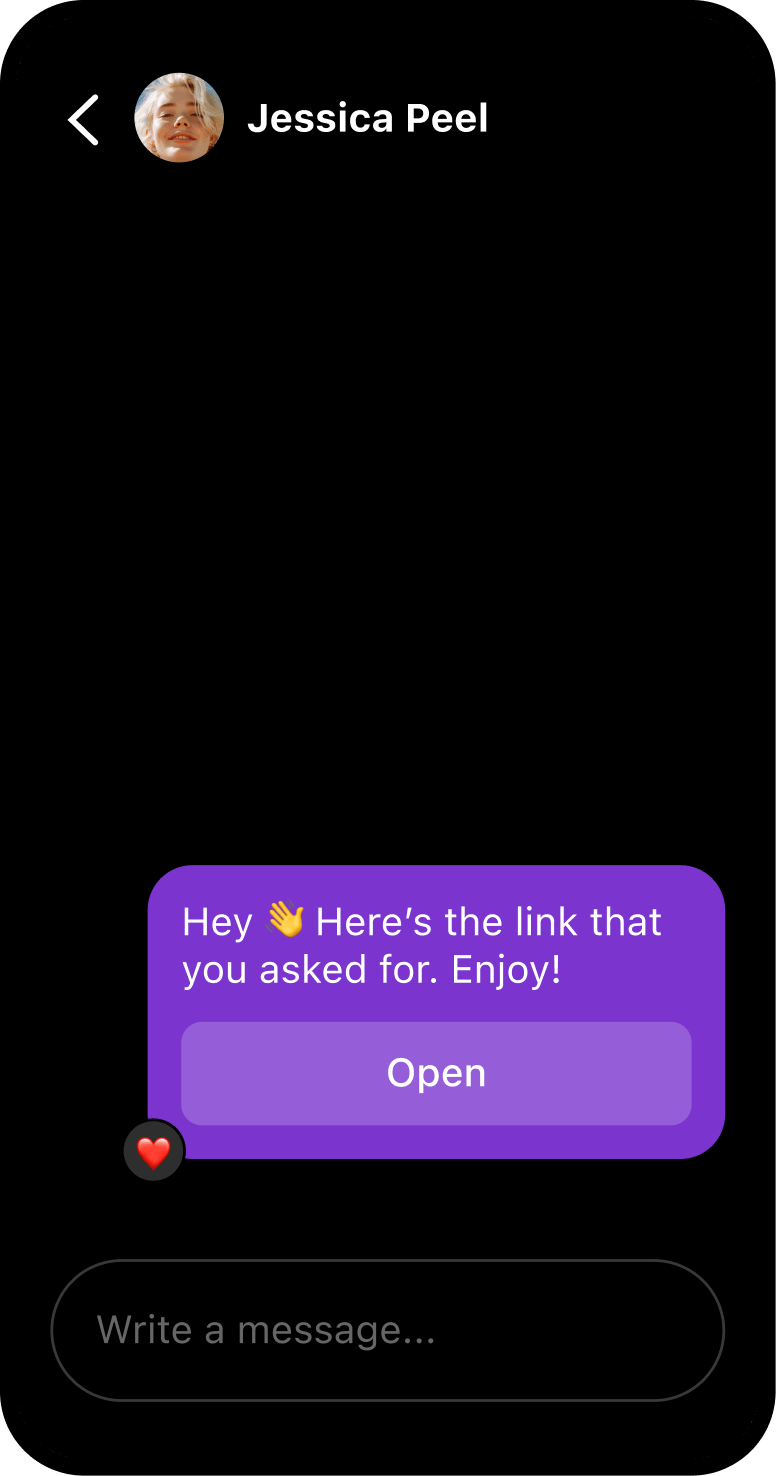
So, instead of a static form, use DM automation to capture leads right where they already are.
A comment-to-DM flow on Instagram, a chat trigger on WhatsApp, a TikTok lead form, a Messenger entry point — any of these can drop someone straight into a conversation. Even features like Instagram's reveal sticker can funnel viewers into your DMs by blurring content until they interact.
4. Qualify before you chase
Once leads come in, the next step is to figure out whether they're actually ready to buy. This is where you build a lead-qualification funnel by asking the right questions early after an initial interaction.
Earlier is better because speed matters: the 5-minute rule says leads contacted within five minutes of reaching out are dramatically more likely to convert than those who wait even half an hour. Automation is how you actually hit that window every single time.
You can build simple lead qualification automations that serve this purpose in Manychat if you want to learn how to do that, check out How to Let Your DMs Qualify Leads While You Sleep.
5. Nurture and score (the patience step)
Qualified leads rarely buy on the spot. Reigniting their interest (a.k.a. nurturing) is how you close the sale.
Simple example: Let’s say you run a comment-to-DM automation with a link to a lead magnet. You capture everyone who gets the lead magnet’s email, then move them into an email sequence to follow up a week later with a promo code for your actual product or service.
While you nurture, you can also practice lead scoring, or assigning points based on positive and negative actions, so you know who's ready to buy. Lead scoring is widely cited as one of the biggest revenue contributors among lead gen techniques.
Here's what a simple scoring model might look like:
Action | Points |
|---|---|
Downloaded your guide or lead magnet | +10 |
Replied to a DM | +15 |
Opened a nurture email | +5 |
Clicked a pricing link | +20 |
Didn't share a phone number | −2 |
No engagement in 30 days | −10 |
In short, scoring tells you which leads are sales-ready and which need more nurturing. So, with the table above, anyone with a score over 30 would be considered a piping-hot lead, and those with a score under 20 would be considered cold leads.
6. Close the deal
If you qualify your leads correctly, you’ll end up with people who genuinely want what you sell, which will make the final pitch feel natural — no arm-twisting required.
To go above and beyond, you jump in personally here with a promo code or a product recommendation based on what you know about the lead. With automation, this can be done by using tags to segment users (in Manychat, that means using Condition Blocks).
Lead gen metrics to track
To know whether your lead generation process actually works, track metrics that tie to revenue, like the conversion rate at each stage of the funnel. If leads are entering but stalling before qualification or sale, you've found a bottleneck. Also, pay attention to:
- Cost per lead
- Lead-to-customer rate
- Time to conversion
- Channels that produce buyers
Most automation platforms surface these numbers for you, so you're not piecing together the picture from 5 different tools.
🚩Red flags to look out for
What looks like a solid process can sometimes result in dud leads (or no leads at all). Here are four common reasons why this happens:
- Chasing volume over quality: 10 hot leads are better than 1,000 cold leads. Qualify leads early in the process so you only invest in good fits.
- No follow-up system: Leads go cold within hours when nobody replies. Automated multi-channel nurturing that responds instantly solves this.
- Treating every lead the same: Blasting identical messages to everyone is not a good strategy. Segmenting and scoring each lead helps ensure the right people receive the right message.
- Manual processes that don't scale: Hand-typing every DM works until it doesn't. DM automation helps you scale once you hit that wall.
Get More Leads with Automation

Here's the thing about a great lead generation process: you can’t handle every step, channel, and handoff between the two on your own. Automation is how you keep things moving along; by replying to DMs, asking qualifying questions, sending follow-ups, and scoring leads even when your fingers need a break.
And guess what? Manychat is free and easy, so you can start building automations that generate and qualify leads on Instagram, Messenger, and TikTok today. Your email list is about to get so yolked.
Frequently asked questions
The six stages of a lead generation process outlined in this guide are: identifying your target audience, attracting prospects, capturing their contact info, qualifying leads, nurturing and scoring them, and converting them into customers.
The 5-minute rule says you should respond to a new lead within five minutes of their first interaction. Leads contacted within that window are dramatically more likely to convert than those who wait even 30 minutes.
ChatGPT can assist with lead generation by drafting outreach messages, writing lead magnet content, and brainstorming a strategy, but it can't capture, qualify, or follow up with leads on its own the way an automation platform can. Use a tool like Manychat for the actual capturing and nurturing.
Lead generation is the process of attracting and capturing new prospects, while lead nurturing is what happens after — keeping those leads engaged and moving them closer to a purchase through follow-ups, content, and conversations. One fills the funnel; the other moves people through it.
Track your conversion rate at each stage of the funnel — if leads are entering but not progressing to qualification or sale, you've found the bottleneck that needs fixing. Pair that with cost per lead and lead-to-customer rate to get the full picture.


Originally published: Dec 1, 2019, Updated: Jul 31, 2026
More stories worth reading
More content that's too good to miss