
Quick question for all the creators and brand managers running an Instagram account out there:
Who is your target audience? 🤔
If you don’t have an answer to that question, you’re basically the social media equivalent of a street performer, just putting on a show and hoping those who walk by like it. (Hope you liked that one, I’m here all workweek.)
This guide will teach you how to define and reach your ideal audience on Instagram to grow your following and drive conversions.
Level 1: Define Your Target Audience

Your target audience is the specific group of users most likely to engage with your content or buy whatever you’re selling.
Typically, target audiences are defined by demographics (location, age, and gender), interests (hobbies, culture, and lifestyle), and behavior (purchasing habits and app usage).
If you haven’t defined your Instagram target audience yet, ask yourself who your content is for and what it provides them (entertainment, advice, inspiration, etc.).
Need some thought starters? I’ve got you.
Who would most relate to and find value in your content?
Where are they in life? College students? Parents? Retirees?
What kind of interests do they have? Celebrity culture? DIY? Fitness? Birds?
What are they doing when they’re online? Scrolling through reels? Tapping through Stories? Shopping?
By answering these questions, you’ll build a clear depiction of your ideal audience. Jot this information down somewhere, then adjust your content strategy so you reach them.
And on that note…
Level 2: Reach Your Target Audience

Truthfully, there is no magical way to reach your ideal scroller directly; we’re all posting to the same Instagram algorithm(s) and therefore, at the mercy of them to show our content to the people we want to see it.
Even so, using hashtags, writing SEO-optimized captions, and interacting with other, relevant accounts can all help get your content in your ideal viewer’s feed.
Optimize your posts
Optimizing your posts is the most impactful way to reach your target audience. This means crafting hooks, captions, CTAs, and hashtags with your audience members in mind.
Topics: It’s best to stick to your niche, but you can explore different subniches within it. For example, if you’re a food creator, stick to food content, but get more specific by focusing on gluten-free food or restaurant reviews.
Hooks: The first few seconds of your reels should immediately capture your audience’s attention. A good hook hints at what the video is about without giving away the punch line; that’s the idea after all — to make people want to keep watching.
Content formats: Prioritize formats that match how your audience consumes content; On Instagram, reels and carousels are typically the best formats for discovery.
Carousel, Reel, or Feed Post? When to Use Each Instagram Content Format
CTAs: Your post should tell the viewer exactly what to do next. Whether it’s a simple engagement prompt like “save this for later,” or a full-on conversion grab like “DM me ‘pizza’ for the recipe,” there needs to be a clear next step for the viewer to take.
Captions: Instagram uses the text in captions to categorize content, so you should consider what kind of words your ideal viewer might be typing into the search bar when writing captions. For example, “How to make pizza dough” is better than “This dough is SO good,” because there’s a chance someone could actually be looking for a video that will help them make pizza dough.
Hashtags: Adding three to five relevant hashtags is another way to help Instagram understand what your content is about. Continuing with the pizza example, you could add hashtags like #recipes, #pizza, and #homemade.
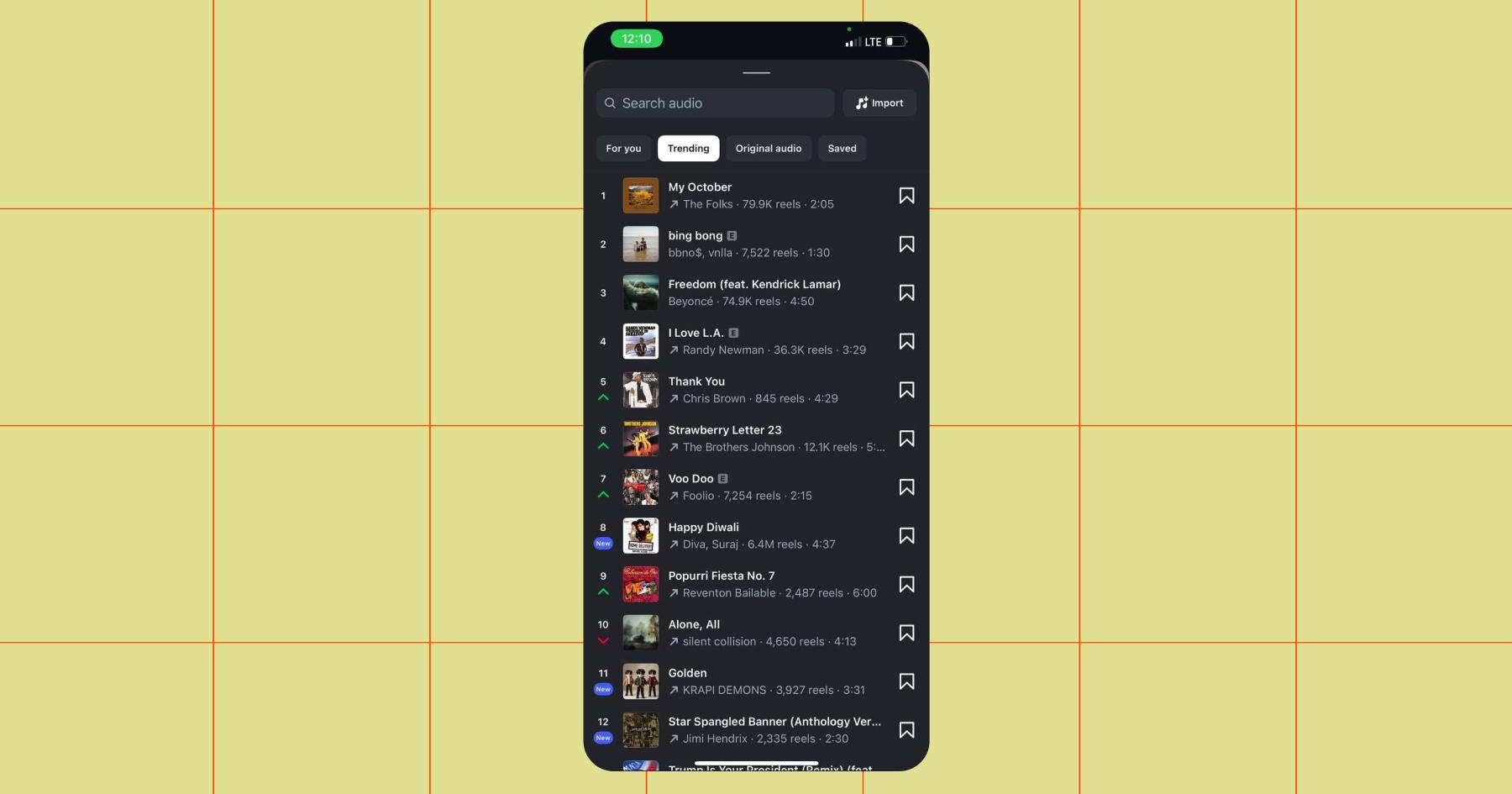
Sounds: Trending or relevant audio can help boost reach, especially on reels. Trending sounds are designated by an upward-trending arrow in the app (stonks style).
Timing: Make sure you post when your audience is actually online and active. You can use Instagram Insights to find peak times, then test and refine your content based on when it gets the most engagement.
Interact with relevant accounts
Here’s an idea: show up where your audience is. That way, you’re not waiting around for them to find you.
Follow creators and brands in your niche so that you’re plugged into what’s trending and what kind of content resonates with your target audience.
Don’t just lurk — engage. Commenting on relevant accounts’ posts is a great way to get in front of the people you want to reach.
The goal should be to add to the conversation in a way that makes people curious enough to check out your profile. (Maybe try being funny?)
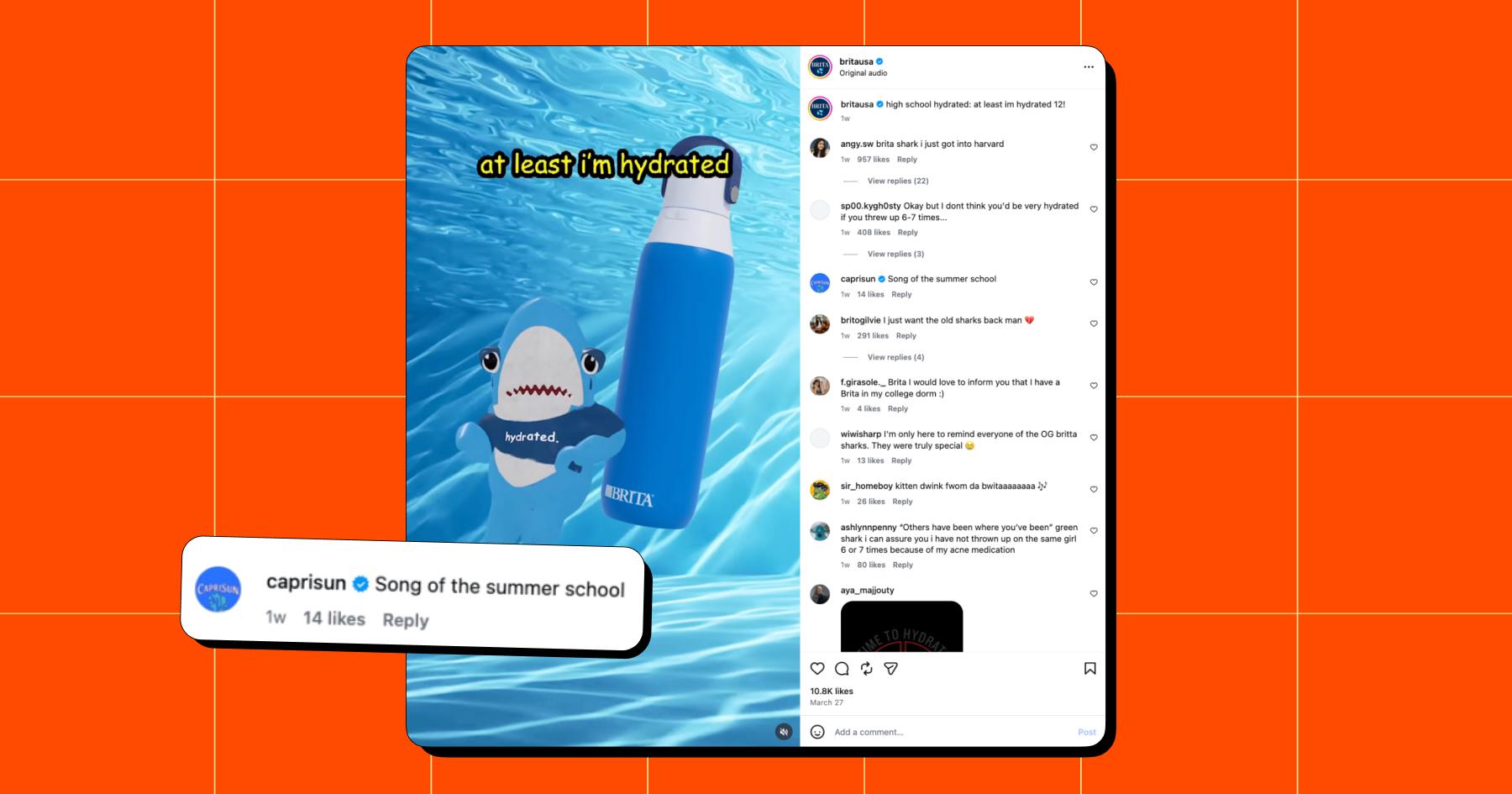
Here’s an example where Capri-Sun commented on a post from Brita, which is relevant because…both brands want people to drink something, I guess?
Boost a post
If you have a budget, you can boost an Instagram post to increase its reach.
This is where all of that information you noted about your target audience in level one comes into play. When you boost a post, you can define a custom audience based on age, gender, location, and interests.
For example, if you’re targeting small business owners, you can select interests related to entrepreneurship, marketing, or e-commerce to narrow in on that group.
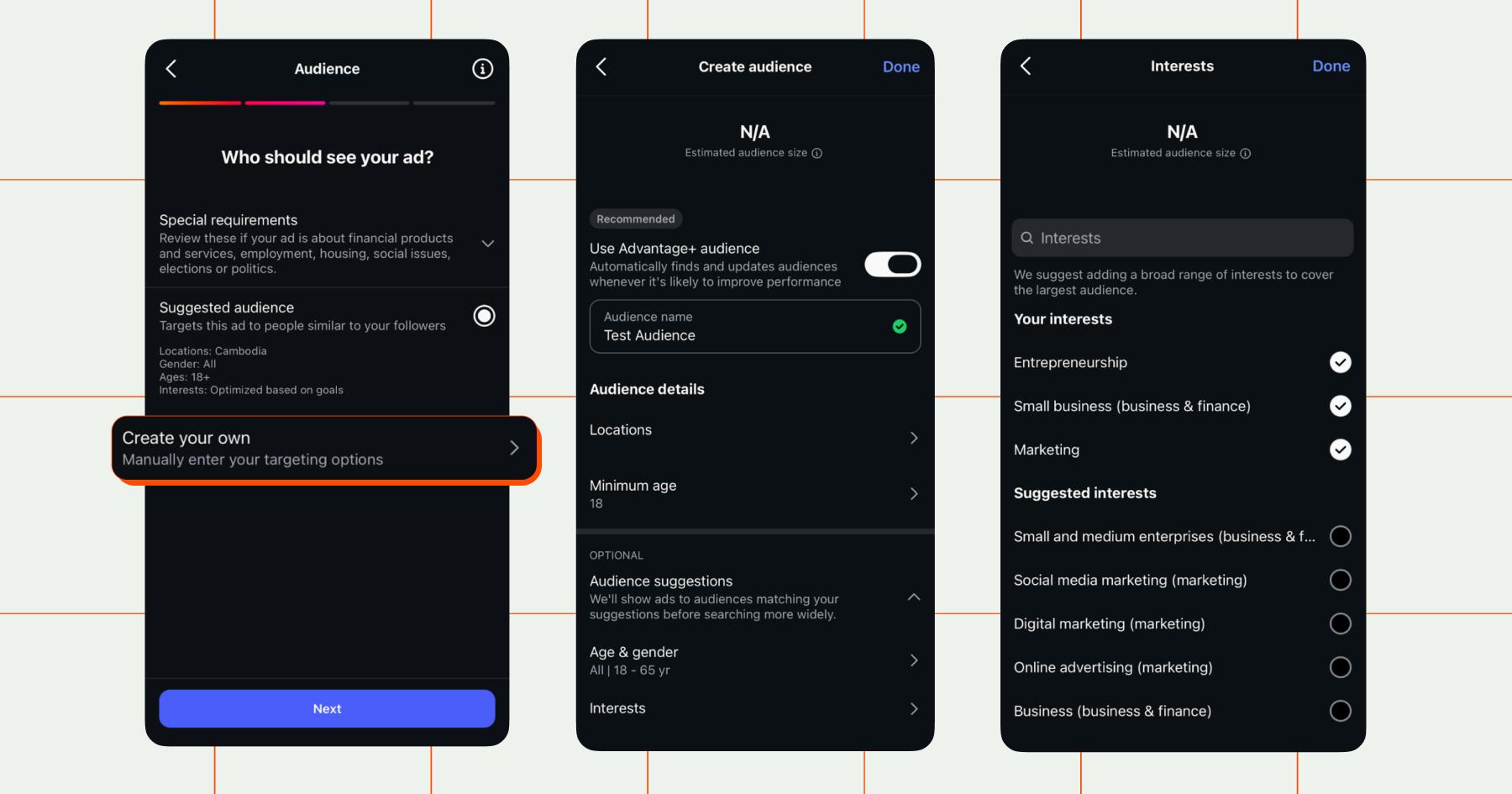
While boosting is a great way to amplify posts that are already performing well, it doesn’t offer the same level of complex targeting as Meta Ads Manager.
So if you want to A/B test creative or get even more specific about your target audience, you’ll have to use Meta Business Suite.
You’re not reaching your target audience if
There are a couple of warning signs to look for that suggest you’re not reaching your target audience, including:
🚩Your content isn’t getting engagement
If you’re not getting views, likes, comments, and/or shares, something about your content isn’t working. This is usually due to the content itself; you need to optimize your posts so that your hooks, captions, and hashtags get it in front of the right people.
🚩You’re not getting new followers (or sales 🫠)
If your content is getting views, but people aren’t converting to followers or buyers, that either means:
- You’ve optimized it for discovery, but your target audience isn’t specific enough, or
- You haven’t included a clear next step for them to take — i.e., “follow me for more content like this.”
If you’re experiencing either of these red flags, take it back to the top and try to rework your content so it better reaches your people.
Level 3: Validate Your Target Audience

So, thus far we’ve covered:
Level 1: Define your target audience.
Level 2: Reach them.
Now, here we are at Level 3: Determine whether your strategy is actually working.
After a few weeks of posting consistently, there should be enough data in Instagram Insights to spot real patterns.
Is anyone seeing your content? Are the people seeing it the ones you intended to reach?
And more importantly, are they doing anything juicy, like buying something from you or subscribing to your newsletter?
These are all signs that you’re reaching your target audience:
New followers who stick around instead of dropping off after one post.
Engagement that feels relevant, such as comments, DMs, and shares from people in your niche.
Conversions like sales, leads, or email sign-ups.
If you don’t see any of these signs, make small, focused adjustments (like testing new hooks and experimenting with different content formats) instead of overhauling everything. If you start from scratch every time something flops, you won’t really be able to tell what’s working and what’s not. Minor adjustments are where it’s at.
And stay the course — so many creators give up when success is just a matter of showing up consistently and making minor adjustments until you break through.
Want more hot, fresh advice on growing and monetizing on Instagram?
Frequently asked questions
A target audience on Instagram is the specific group of people you want your content to reach, defined by shared characteristics like interests, behaviors, demographics, and needs. Instead of trying to appeal to everyone, you focus on the users who are most likely to engage with your posts, follow your account, and take action (like buying a product or subscribing to your email list).
To figure out your target audience, start by identifying who your content or product is meant to help and what problem it solves. Think about the type of person who would benefit most from encountering your content. Consider their goals, challenges, interests, and behaviors, not just basic demographics like age or location.
You can use Instagram Insights to understand who is already engaging with your content and refine your target audience from there. In the Insights tab, look at your audience data (age range, gender, top locations) to see who your followers are, then compare that to who you intended to reach.
Next, analyze your content performance — check which posts get the most reach, saves, shares, and comments. Patterns will start to emerge around what topics, formats, and messaging resonate most. You can also review when your audience is most active to optimize timing.
Your niche should be specific enough to clearly attract the right audience, but not so narrow that you run out of content ideas or growth opportunities. A good rule of thumb is: if someone lands on your profile, they should instantly know who you are, what you post about, and whether they connect with it.
Instead of targeting something broad like “fitness,” narrow it down to a clear group with a specific goal or problem — like “workouts for busy moms.” As you grow, you can expand your niche over time, but starting focused makes it easier to build traction, engagement, and a loyal audience.


Originally published: Apr 15, 2026, Updated: Apr 20, 2026
More stories worth reading
More content that's too good to miss