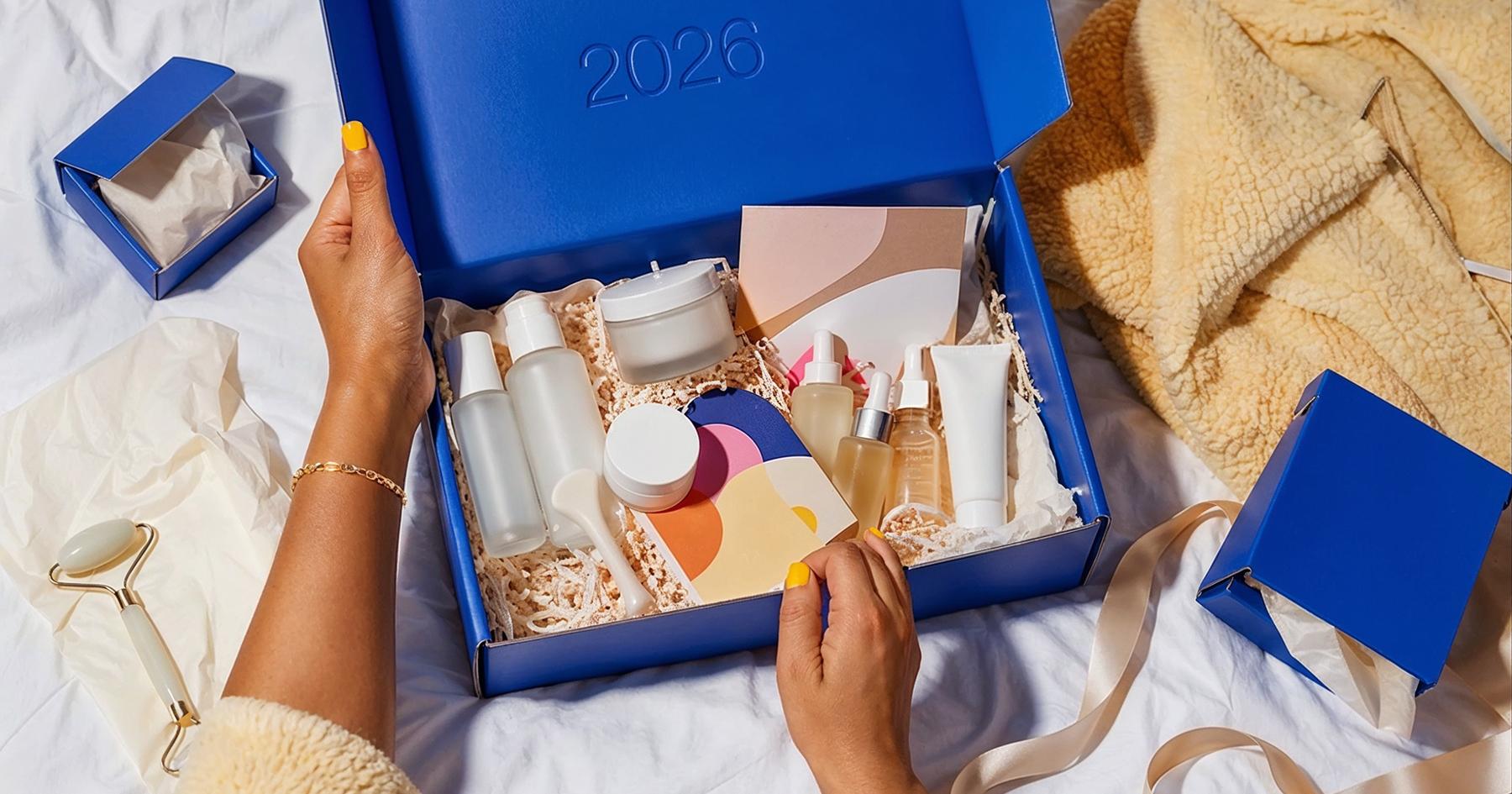
If you’ve ever scrolled through social media and seen a video of a creator excitedly unboxing a brand gift, you’ve witnessed a PR box moment unfolding. This kind of content is fun to watch but even more fun to experience firsthand, because who doesn’t love receiving a little gift in the mail? (No one, that’s who.)
There are a lot of creators and influencers out there who want to receive PR boxes. Mady Lanni, Manychat’s head of integrated comms and PR, knows this all too well.
“We get emails from people requesting collaborations in the form of PR boxes, and people asking to get added to PR box lists, all the time. We also get a lot of creator partnership requests in the same inbox.”
But do those emails actually help people get a PR box? No. “When we build these lists, we’re looking at social profiles, not the inbox,” says Mady.
You’re here because you want to know what will actually help you get one of those boxes, and there are some things you can do to make it happen, so don’t stop scrolling just yet.
What Determines Who Gets a PR Box?
At one point, who got a PR box was decided only by PR teams. But it doesn’t work like that today. “There's this shift right now where PR teams are working with influencer marketing and creator partnership teams. So, it’s kind of a shared responsibility now," says Mady.
On that note, let me introduce you to Jacob Andary, Manychat’s influencer marketing manager, who also stars in How to Land Your First Brand Deal (And Keep ‘Em Coming).
When there’s an opportunity to do a PR box initiative, Mady works with Jacob to create a list of creators to send boxes to. Jacob says the creators who end up on this list are chosen based on each campaign's goals.
Example: Earlier this year, Manychat hosted an event during SXSW, The Creator HUB | CLUB. Mady wanted to get the word out about the event, so she put together some PR boxes with invitations in them.
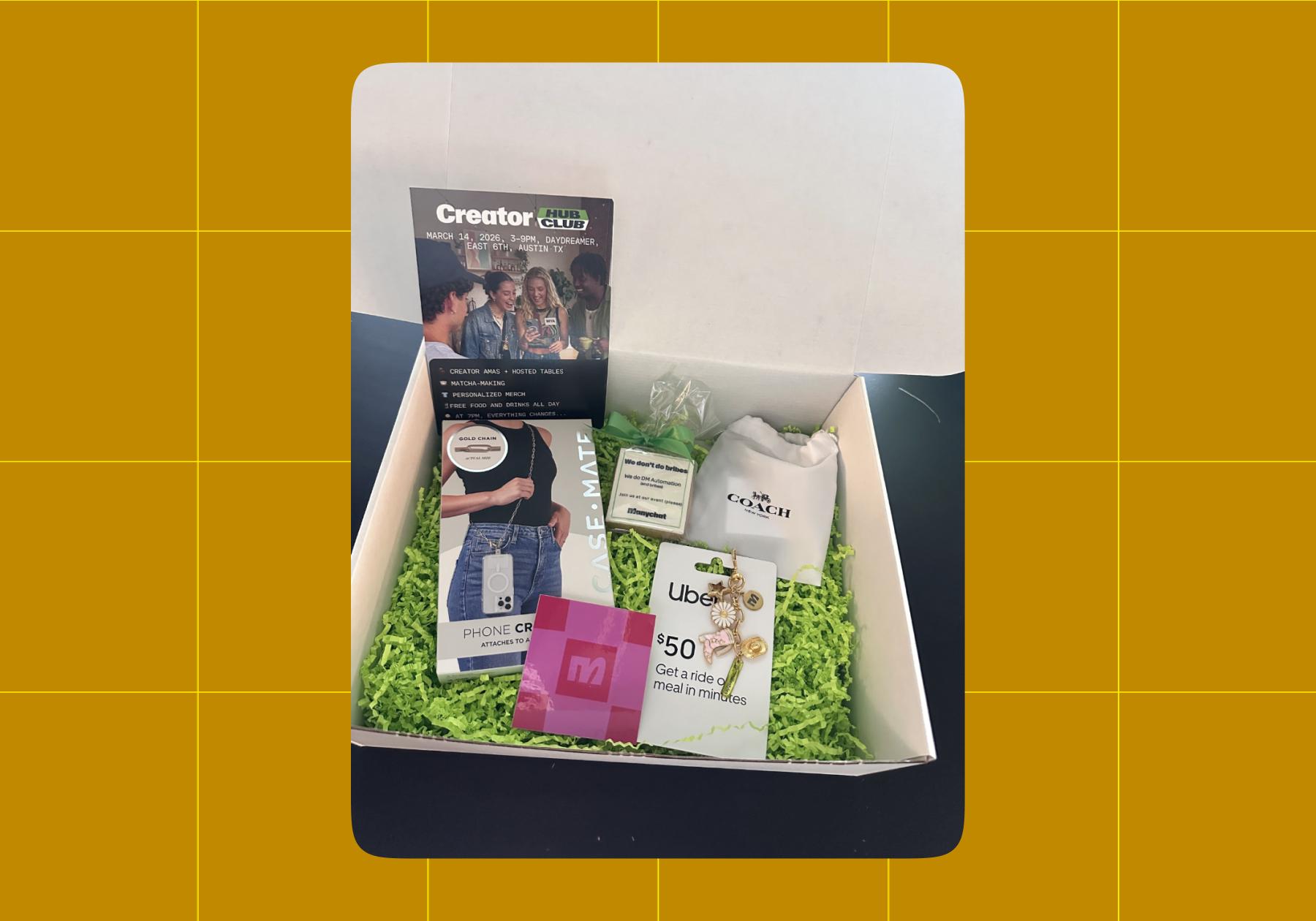
“When we were looking for people to send the box to, we ended up with a mix — some bigger names, some creators who share things to do in Austin, and some people who had been guests on our podcast,” says Mady.
To put it bluntly, location had the most to do with who got the HUB | CLUB box. Since this was an Austin-based event, the best recipients of the boxes would be Austin-based creators.
But for most other brands and campaigns, niche and following size are the most important factors.
“The main things I consider are following, niche, and if it actually makes sense for them to receive the gift we are sending. Will they like it? Is it aligned with their brand?” says Jacob.
How to get on the PR list (spoiler alert: you can skip the email)
Alright, so you want to get on that PR list, right? The best way to make that happen is to focus on your social profile.
“What we are looking for is the audience that you're curating on social,” says Mady. “We are building the lists in a campaign-specific way, so the best thing you can do is focus on your profile.”
The same advice goes for landing brand deals. And when it comes to your profile, influencer marketing managers like Jacob are usually looking at three things:
- Niche: Your “thing” — the topic or interest you typically post about, whether that’s food, fitness, skincare, or 17th-century antiques. It should be super clear from your bio, pinned posts, playlists, and/or highlights what your niche is.
- Following count: Anything goes these days. Nano and micro-influencers can land brand deals and receive PR boxes. But different campaigns have different budgets and goals.
- Engagement: The likes, comments, reposts, and shares on your posts. If no one’s engaging with your content, brands will assume your followers are either checked out or fake.
If your profile is looking good, there is one other thing you can do: post about the brand(s) you want to work with. “Make sure they know you're a fan. The influencer team will see it,” says Jacob. Mady agrees: “I think it's good advice in general, and it could have an effect on how we are curating these lists as well."
Bottom line: Direct pitches won't get you on the list. Building an authentic, niche-specific social presence will.
What Brands Really Want in Exchange for a PR Box
The primary purpose of a brand gift or PR box is typically to inspire user-generated content (UGC), but that’s not the only reason why brands choose to gift creators.
Before joining Manychat, Mady worked for an agency leading PR strategy for clients ranging from Fortune 500 companies to small businesses. Back then, most of her gifting campaigns were for D2C brands that could send products to influencers as gifts.
“I worked on a beauty brand at the time, so we would send boxes of self-tanner to people,” she says. “We were sending these gifts with the hope that they’d try out the product and maybe make a video about it — that sort of thing."
Here’s an example of the kind of content brands pursuing this strategy are after:
However, UGC is not the only goal of a PR box, especially for companies that don’t sell something you can physically send to someone (like us, Manychat). In this case, building brand awareness and brand affinity are usually the goals.
“In the era of everything being found on social, it's becoming more important for us to do things like PR boxes. That personal touch just means so much more now,” Mady says.
“It’s how we show support to creators and let them know that we understand them and we see them — no strings attached. If they remember Manychat later on, when they’re researching systems to grow their business, then great.”
PR boxes are gifts, not part of a transaction. Unlike a brand deal, there is no contract. So, they’re sent to start or maintain a relationship with a creator. “Sometimes, we’ll use them to catch the attention of a creator we may not have the budget to work with directly and introduce them to our brand,” says Jacob.
And then there are situations where the box's goal is even more specific, such as the Creator HUB | CLUB box, which was sent to encourage Austin creators to attend the event. It worked, BTW. Mady says that about 80% of the box recipients showed up at the HUB | CLUB, and those creators encouraged their followers to go by posting about the event.
“Some of these creators showed up at our event, and they were wearing the bag charm that I made for them and put in the box. Just seeing that what I helped curate is actually something that is being used now — it's such a little proud moment for me," says Mady.
Think Outside The Box
There’s no secret form to fill out or magic email that guarantees you a spot on a brand’s PR list. The best way to catch the attention of brands you’d like to work with is to focus on the things you can control: making your niche clear, creating content people actually engage with, and posting authentically about the brands you already love.
You don’t need millions of followers, but you do need to give influencer marketing managers a reason to think “Yep, this creator and our brand belong together.”
On that note, if you want to find the perfect match for your page, check out 19 Brands That Work with Micro Influencers (and How to Connect With Them).
If you’re a Manychat user, you can also join the Official Manychat Partner Program.
Not a Manychat user? Let’s fix that. Sign up for Manychat.
Frequently asked questions
The best way to get on a brand’s PR list is to build a clear, active social media presence that makes you easy to discover. Brands typically consider factors such as your niche, audience, engagement, location, and whether the product or campaign fits your content. Your bio, pinned posts, playlists, and highlights should quickly show what you create and who your content is for.
You can also improve your chances by creating authentic content about brands you already use and love. While some companies accept PR list applications or creator pitches, many PR and influencer teams discover creators directly through social media or creator platforms. A generic email requesting free products is unlikely to be as persuasive as a strong profile demonstrating genuine brand alignment.
There is no universal follower requirement for receiving PR packages. Brands increasingly send products to nano and micro influencers, and some creators receive gifts with fewer than 1,000 followers. What matters most depends on the campaign, but brands may value an engaged, niche-specific audience more than a large following that rarely interacts with the creator’s content.
Follower count can still affect which campaigns you qualify for, but it is only one part of the decision. Brands may also consider your engagement, content quality, audience demographics, location, and how naturally their product fits your platform. Different campaigns have different goals, so there is room for creators of many sizes.
Usually, no. A traditional PR package is a gift rather than a contracted brand deal, so receiving one does not automatically obligate you to create content. Brands often send these packages hoping that creators will post an unboxing, review, or product mention, but unless you agreed to specific deliverables beforehand, there may be no formal posting requirement.
That changes when the brand asks you to accept the product in exchange for a guaranteed post. In that case, the arrangement is closer to a gifted collaboration, and you should confirm the expectations before agreeing. You should also disclose the relationship when posting about a free product: the FTC says creators must clearly disclose any compensation or other consideration they receive in connection with an endorsement.
A PR package is generally a product or gift that a brand sends to a creator with no guaranteed payment and, in many cases, no contractual requirement to post. Brands use PR gifting to generate awareness, inspire organic content, introduce creators to the brand, or strengthen an existing relationship.
A paid brand deal is a formal partnership in which the creator receives money in exchange for agreed-upon content or services. It usually includes specific deliverables, deadlines, messaging requirements, content usage rights, and a contract. A creator may receive free products as part of the deal, but the product alone is not their full compensation. Gifted and paid collaborations can look similar on social media, but the expectations and commitments behind them are different.

Originally published: Jul 14, 2026
More stories worth reading
More content that's too good to miss