19 Brands That Work with Micro Influencers (and How to Connect With Them)

If you’ve spent any time on TikTok or Instagram lately, you’ve probably noticed that creators with a few thousand followers are landing brand deals that used to be offered exclusively to much bigger names.
As we covered in our roundup of the latest influencer marketing trends (which I know you read, right?), brands have shifted their budgets toward nano- and micro-influencers in recent years.
Why? Because smaller creators have more connected audiences than mega influencers. In fact, nano influencers have average engagement rates of nearly 5%, several times higher than those of mega influencers. Their followers are quick to engage with their content, so when they partner with a brand, it actually goes over well…unlike a Kardashian posing with a weird bottle of gummies.
Nano and micro influencers are also more affordable to work with, allowing brands to partner with a few at once instead of pouring their entire budget into a single person. Because of this, brands across nearly every niche have been looking to smaller creators to participate in their campaigns.
If that’s you (a nano or micro creator), you don’t need to wait for an offer to land in your inbox. There are things you can do to get the ball rolling, like applying to affiliate programs or sending them a pitch.
Let’s dive in.
How to Find Brands to Work with as a Micro Influencer
Finding brands to work with as a small creator is easier than you think. You don’t need to go viral or hire an agent to make it happen.
Sarah Gavilla (@sarahgavilla), Manychat’s social media manager, broke down how to get paid brand deals with fewer than 10,000 followers over on our YouTube channel:
Her walkthrough is worth a watch, especially if you want to learn how to create a media kit and pitch yourself. But that’s not what we’re here for today. Instead, let’s talk about how to find brands to pitch to, including which ones are currently working with small creators today.
1. Scroll on Instagram or TikTok
It sounds like fun, but it’s actually research. Follow creators in your niche and look through their content for sponsored posts (they’ll usually have #ad, #sponsored, #gifted, or paid partnership labels). If you notice the same company name popping up again and again, that’s a strong sign the brand actively works with creators like you and is open to pitches.
2. Join influencer marketplaces
Many brands find creators through influencer marketplaces, platforms where creators create profiles and showcase their content, and where brands host campaigns and look for influencers to participate.
Collabstr, Cohley, and JoinBrands are all popular influencer marketplaces. There are also some native ones, like Instagram Creator Marketplace and TikTok One. Opportunities that come from platforms like these are often paid, while others offer free products, affiliate commissions, or long-term ambassador partnerships.
If you’re just getting started, creating a profile on a few different influencer marketplaces can help you land your first collaboration.
Learn more: Influencer Marketplaces: How They Work, Top Options, and More Things to Know
3. Sign up for affiliate programs
Many brands (including Amazon, Costco, Walmart, Etsy, and Sephora) offer affiliate programs. Affiliate programs allow creators to earn commissions on sales generated through unique links or discount codes. Brands often use affiliate marketing to discover creators they may want to work with on larger campaigns later.
If there’s a certain brand you’re looking to work with, visit the website and look for phrases like “affiliate program,” “creator program,” or “ambassador program.” Applying to these opportunities is another great way to get started working with brands.
19 Brands That Work With Nano and Micro Influencers
Now, what you’re probably here for: a list of brands that actually work with micro influencers.
The companies below have creator programs, affiliate programs, ambassador opportunities, gifting initiatives, or a documented history of working with nano and micro-influencers. I’ve organized them into sections by niche, so you know which are most relevant to you.
Beauty and skincare
1. Glossier
Glossier is a brand known for minimalist skincare and makeup products. Long before influencer marketing became mainstream, Glossier was experimenting with user-generated content, affiliate programs, and sponsored posts featuring creators who genuinely loved their products.
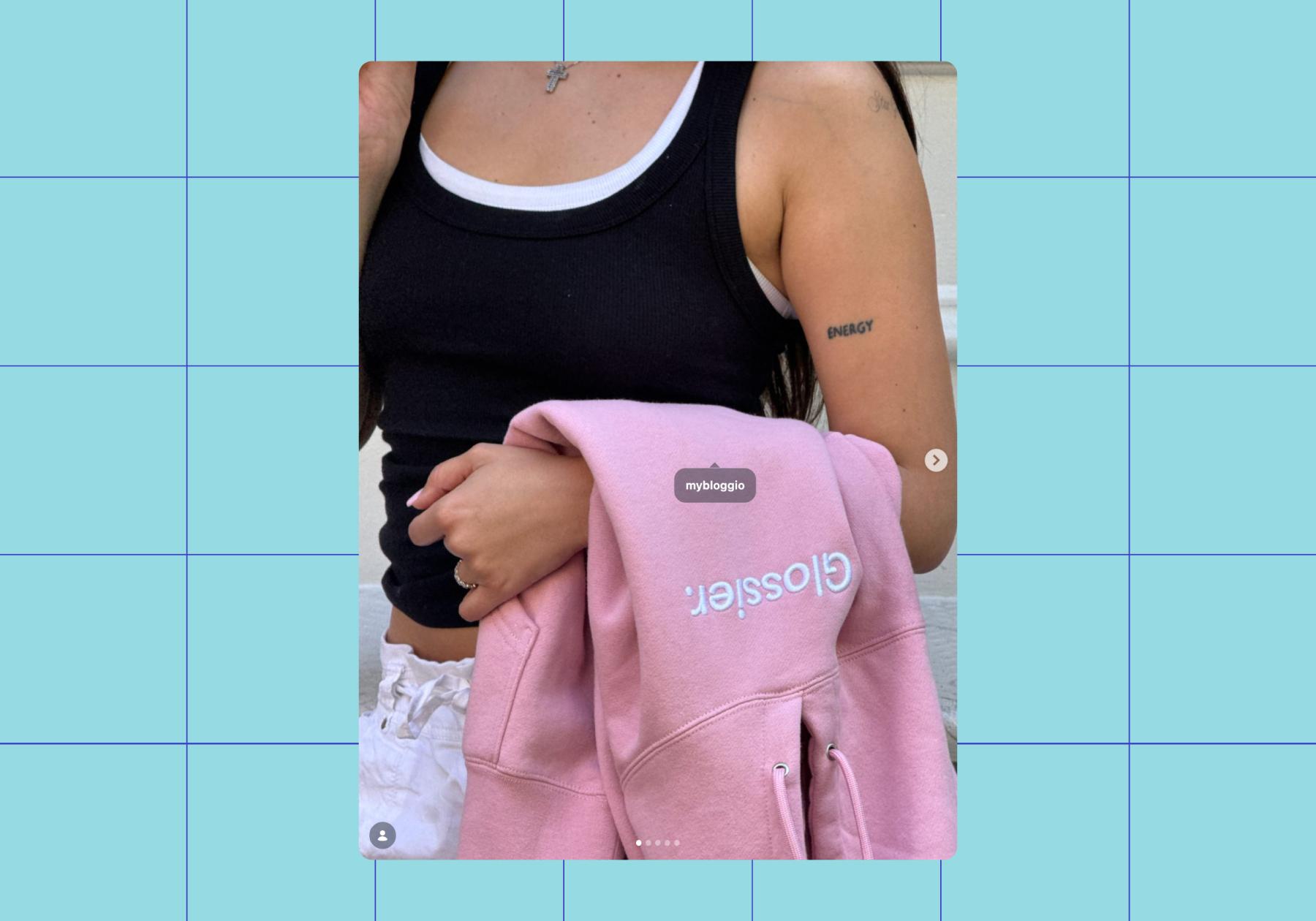
Even today, Glossier continues to prioritize authentic mentions over highly polished celebrity endorsements. If you take an aesthetically pleasing picture with one of their products and tag them, there’s a good chance you’ll end up in a carousel on their grid:
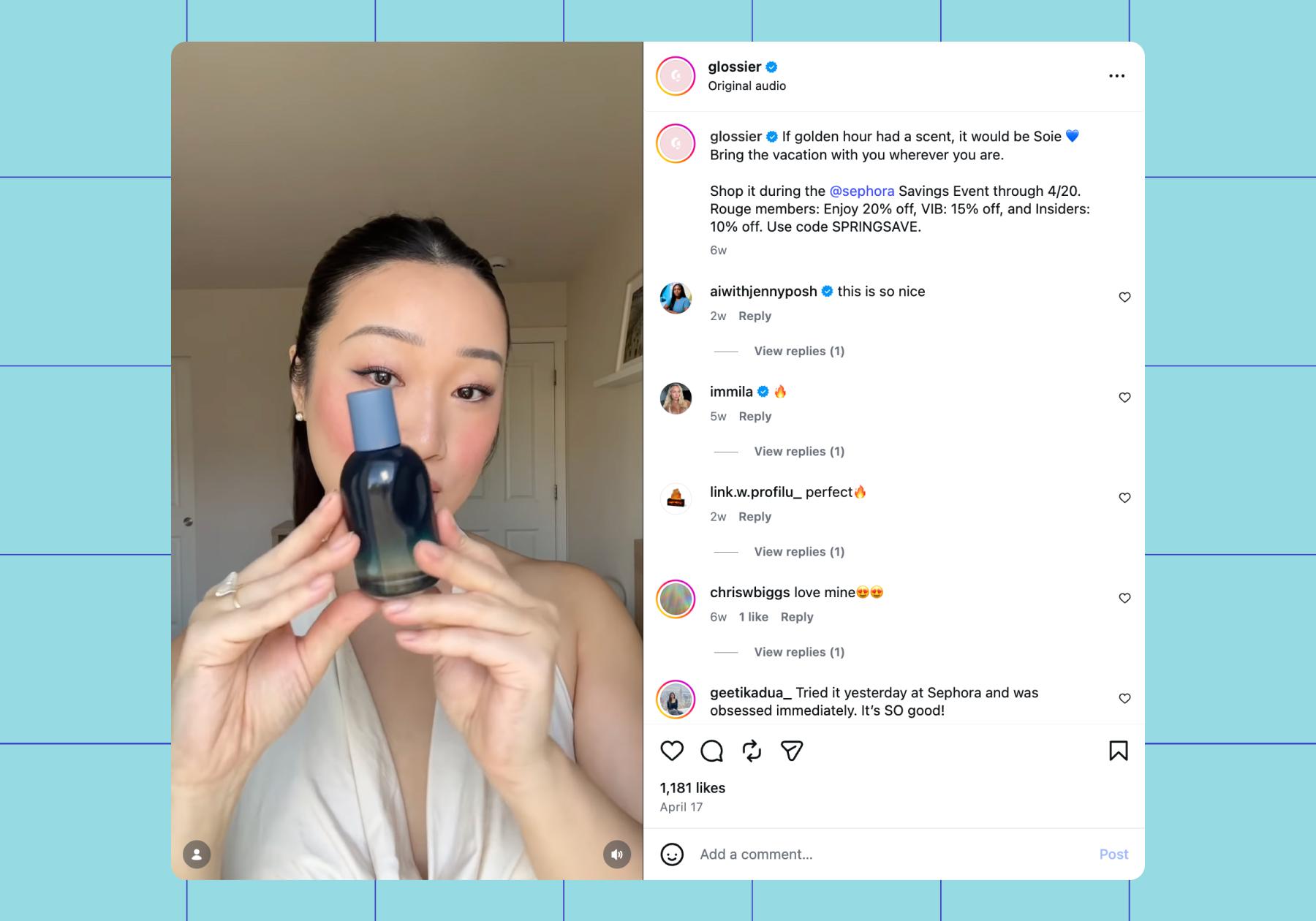
Recently, Glossier featured Angela Park (@realangelapark), a Seattle-based beauty creator with 15k followers, on its page, which is a great sign for any micro creators interested in pitching themselves to the brand.
2. Supergoop
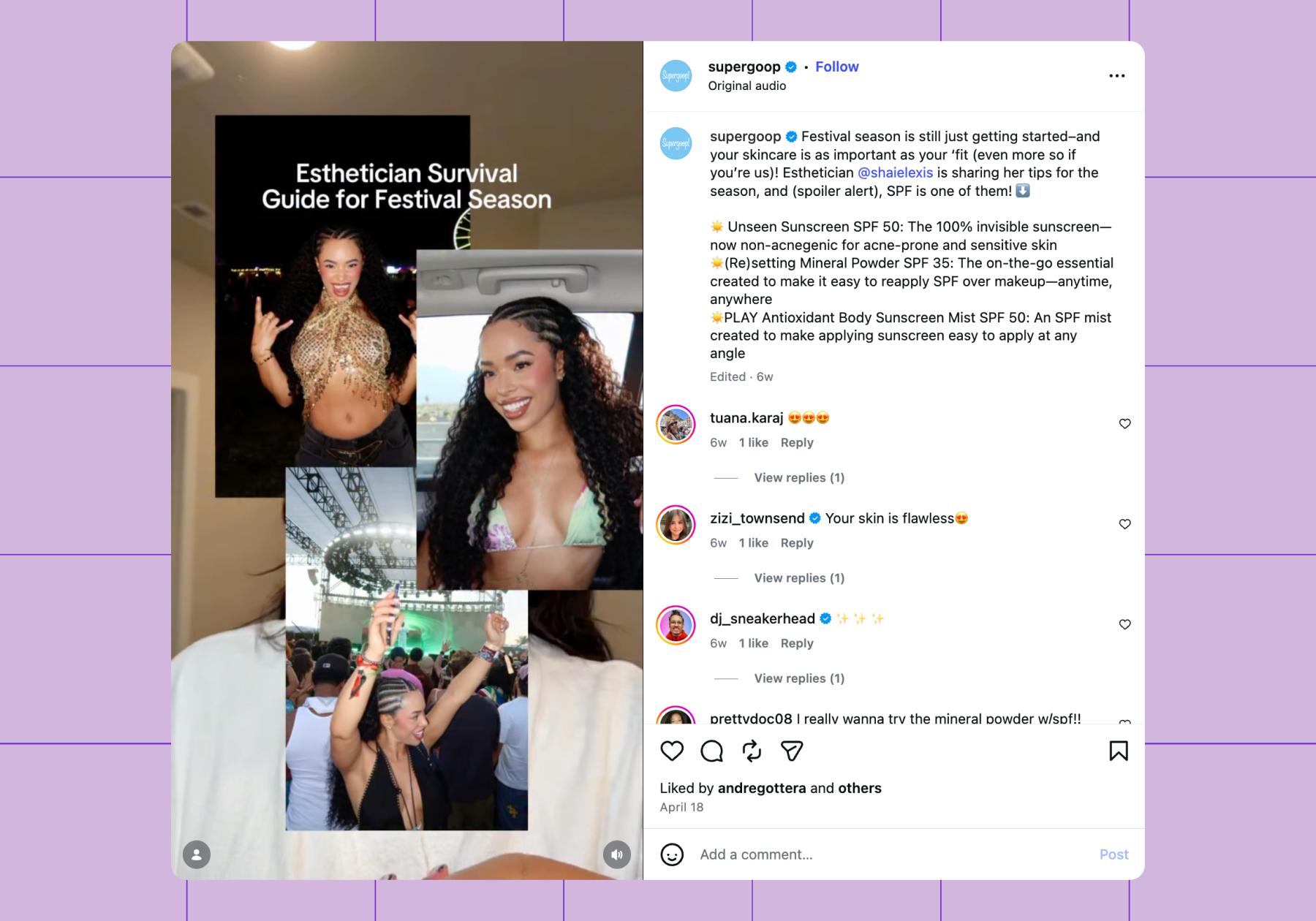
Supergood is a cosmetic brand best known for its sunscreen products. Supergoop uses influencer marketing by partnering with dermatologists, estheticians, and skincare creators. The brand regularly sends products to creators for review and has built a strong affiliate ecosystem around sunscreen education.
Example: Supergoop recently partnered up with esthetician and micro creator Elexis Willingham (@shaielexis) for a video explaining how to care for your skin during festival season.
If you’re interested in working with Supergoop and you’re a college student, you can apply for their campus ambassador program, Supergoop Superstars. Otherwise, you can reach out to them on social or by email at [email protected].
3. Rare Beauty
Rare Beauty is Selena Gomez’s makeup brand. Rare Beauty’s messaging emphasizes accessibility, self-expression, and mental health advocacy. Obviously, Rare Beauty benefits from Selena Gomez’s celebrity appeal. And while she is often featured in social content, she’s not the only person repping the brand.
One recent example of Rare Beauty’s influencer marketing is its “Every Story Belongs” campaign, which featured 48 women from all across Latin America. Instead of focusing exclusively on major influencers, the campaign mixed creators across audience sizes, including mega influencers like Desi Perkins, macro creators like Pili Montilla, and micro creators like Franchela Ulises and Jen From the Block.
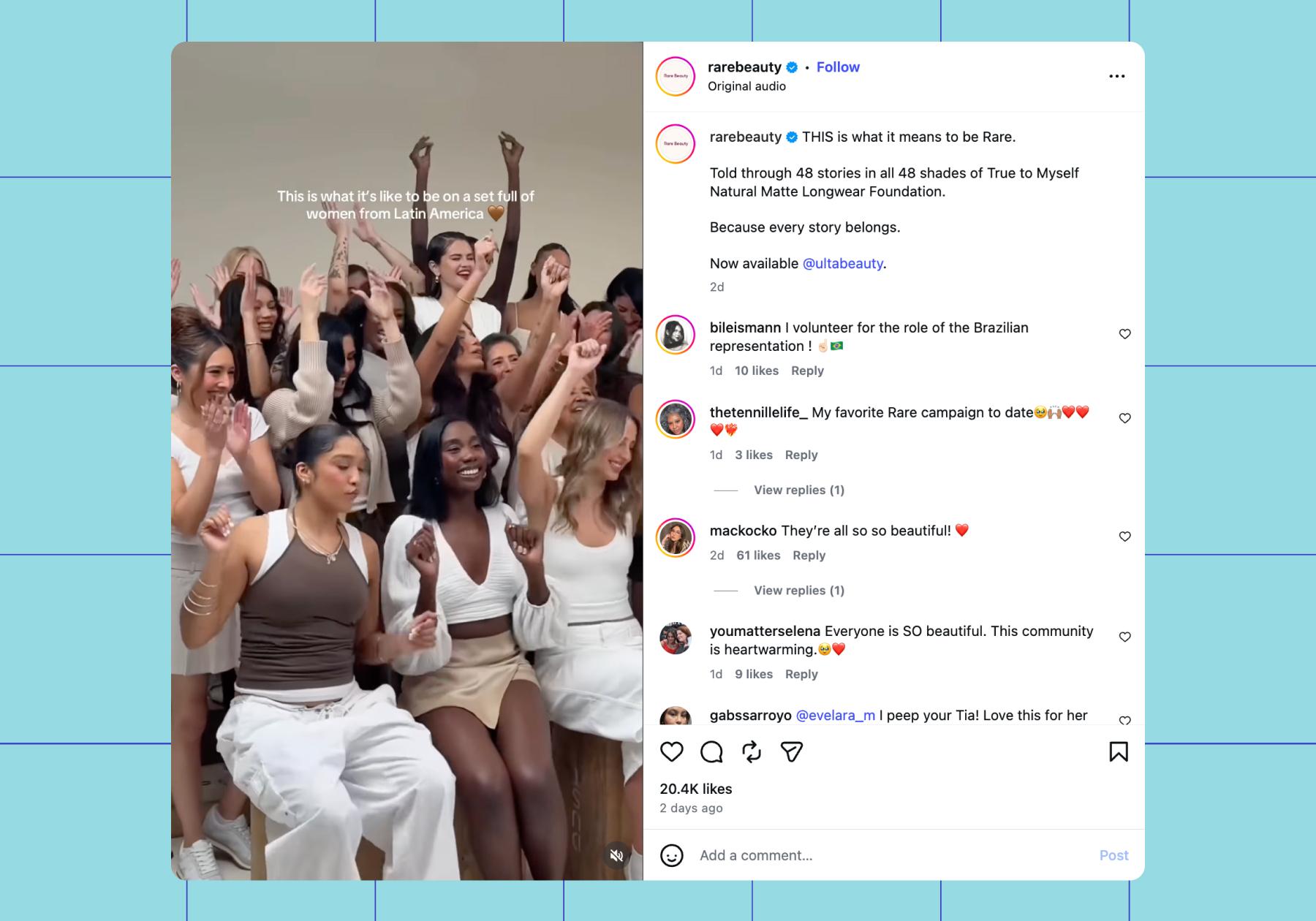
Rare Beauty does not offer a traditional affiliate program. The brand primarily connects with creators through invite-only influencer marketing platforms. That said, you can join Sephora’s affiliate program and rep the brand, since Sephora is an official retailer of Rare Beauty products.
4. e.l.f. Cosmetics
e.l.f. is a makeup and skincare company often lauded as one of the most creator-friendly beauty brands on social media. They frequently partner with influencers across all audience sizes, from viral TikTok stars to nano creators sharing simple makeup routines. Their campaigns often focus on trends, challenges, and user-generated content.
Over on TikTok, e.l.f. (@elfyeah) often posts GRWM or review content featuring its products. Here’s one example from a micro creator in the beauty space, Vanessa Chamberlin (@silverliberation).
e.l.f. has a contact form on its website that you can use to get in touch with them. You can also just start posting and tagging them.
Fitness and wellness
5. Gymshark
Gymshark is a fitness apparel company and one of the most famous influencer marketing success stories in existence. The brand built much of its early growth through creator partnerships long before the rest of us had an influencer marketing budget.
Today, Gymshark continues to work with creators through its ambassador program, Gymshark Athletes. While the brand has partnered with many major fitness personalities over the years (mostly macro and mega influencers), it also occasionally recruits trainers, coaches, and fitness creators with smaller audiences.
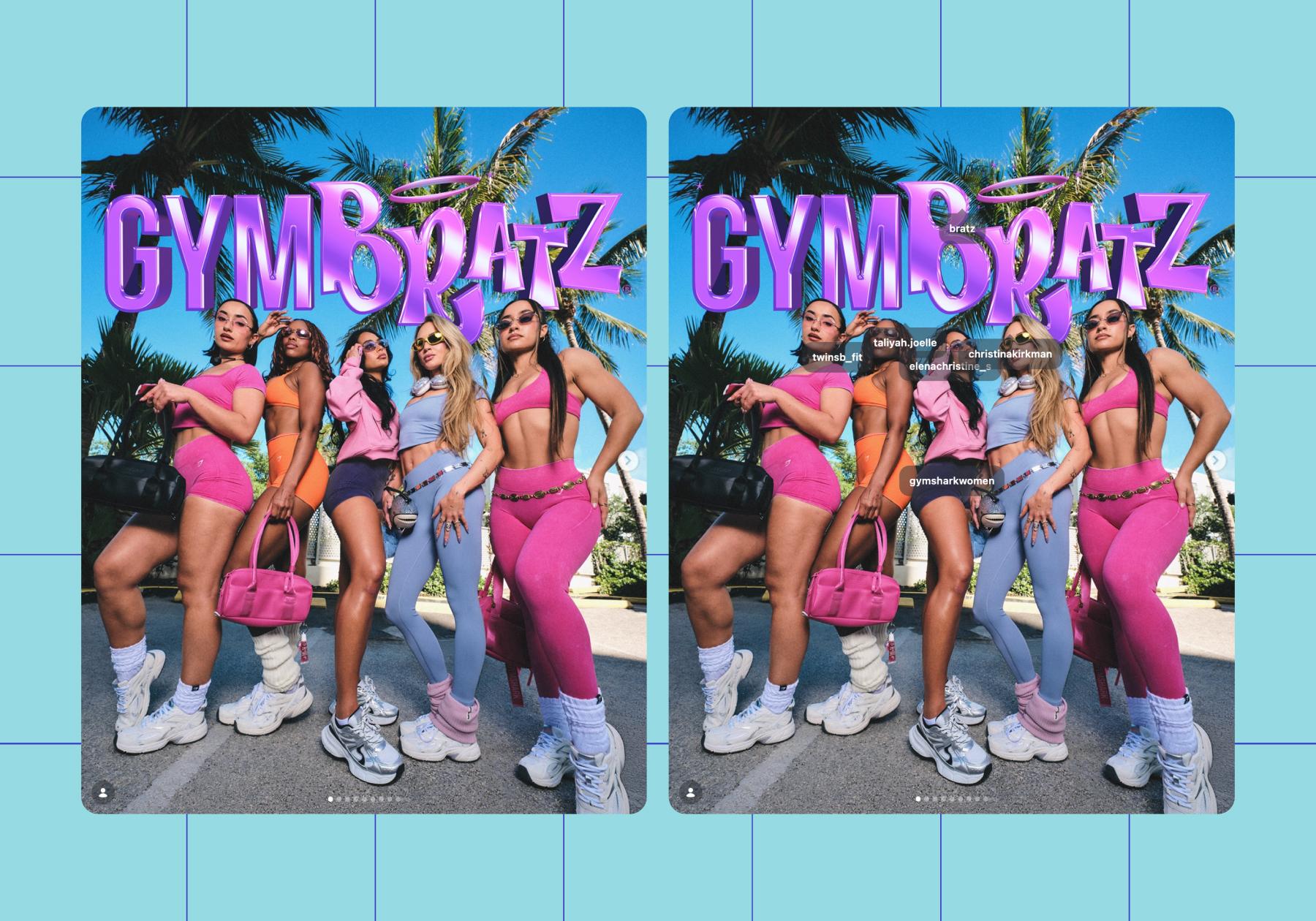
If you’re interested in becoming a Gymshark Athlete, check out this page on their website: Gymshark Athlete.
6. Bloom Nutrition
Bloom (@bloomsupps) is a wellness brand best known for its green powders and supplements. The company has become one of the most creator-driven brands in the wellness space, relying heavily on affiliate partnerships, TikTok Shop creators, and sponsored content for marketing.
Instead of investing its entire budget in celebrity endorsements, Bloom has built an enormous network of fitness, lifestyle, and wellness creators. These people create all kinds of content, including morning routines, supplement reviews, and “what I eat in a day” posts. Many of these can be found by typing #bloomspartner into the search bar of Instagram or TikTok.
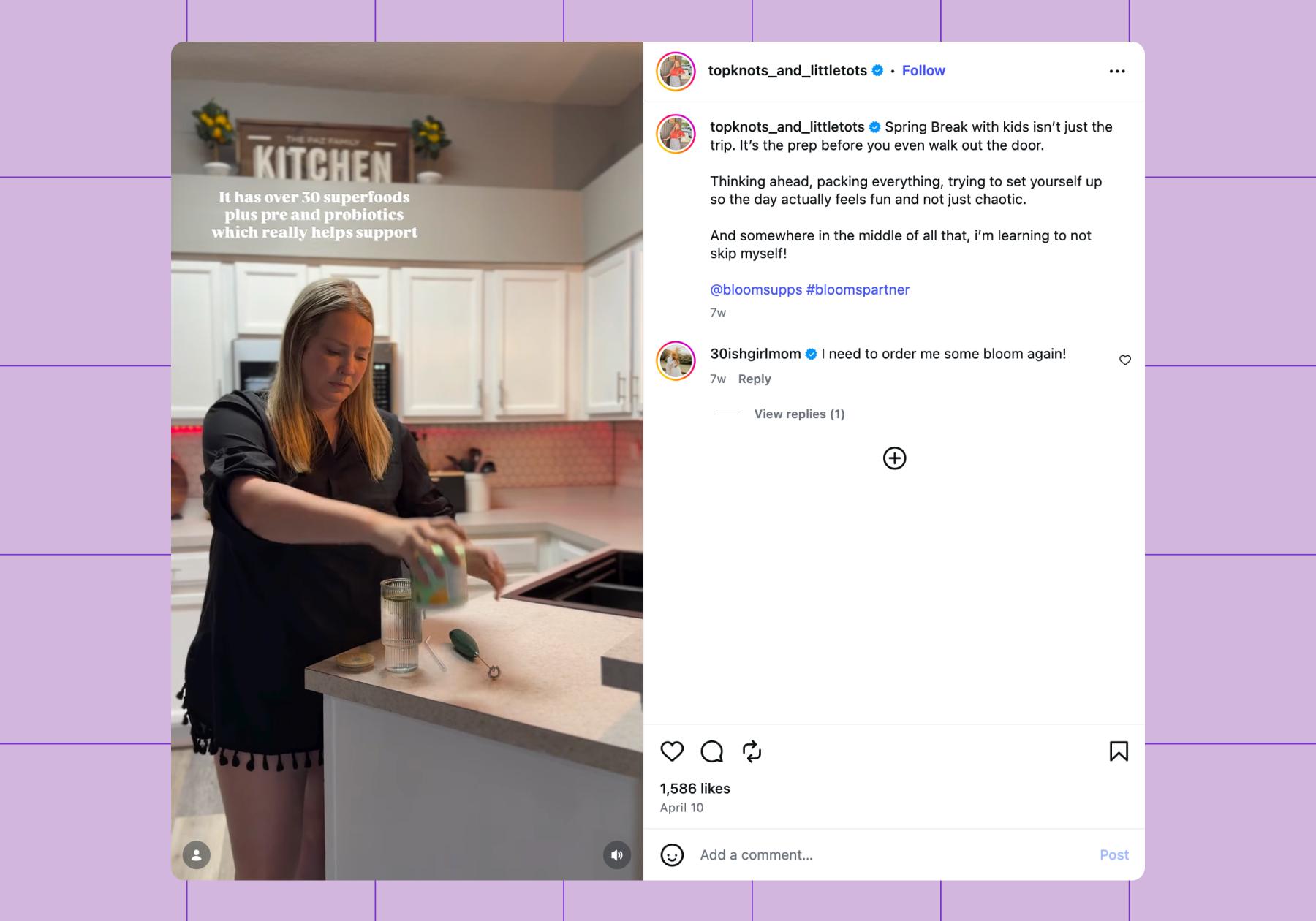
If you’re interested in partnering with Blooms, there’s a form you can fill out on the partnerships page of their website.
7. Hers
Hers (ForHers) is a telehealth and wellness company that offers products and services related to skincare, mental health, haircare, and weight management.
Hers’ influencer strategy tends to focus on education rather than traditional product promotion. The company frequently partners with creators who share personal experiences related to wellness, confidence, skincare, and self-care. This approach allows the brand to build trust while reaching audiences through creators they already follow.
Recently, Hers has collaborated with creators who discuss topics that have traditionally been considered taboo online. In the example below featuring @rootedinspice, the creator debunks the myth that Indian food is hard on your stomach.
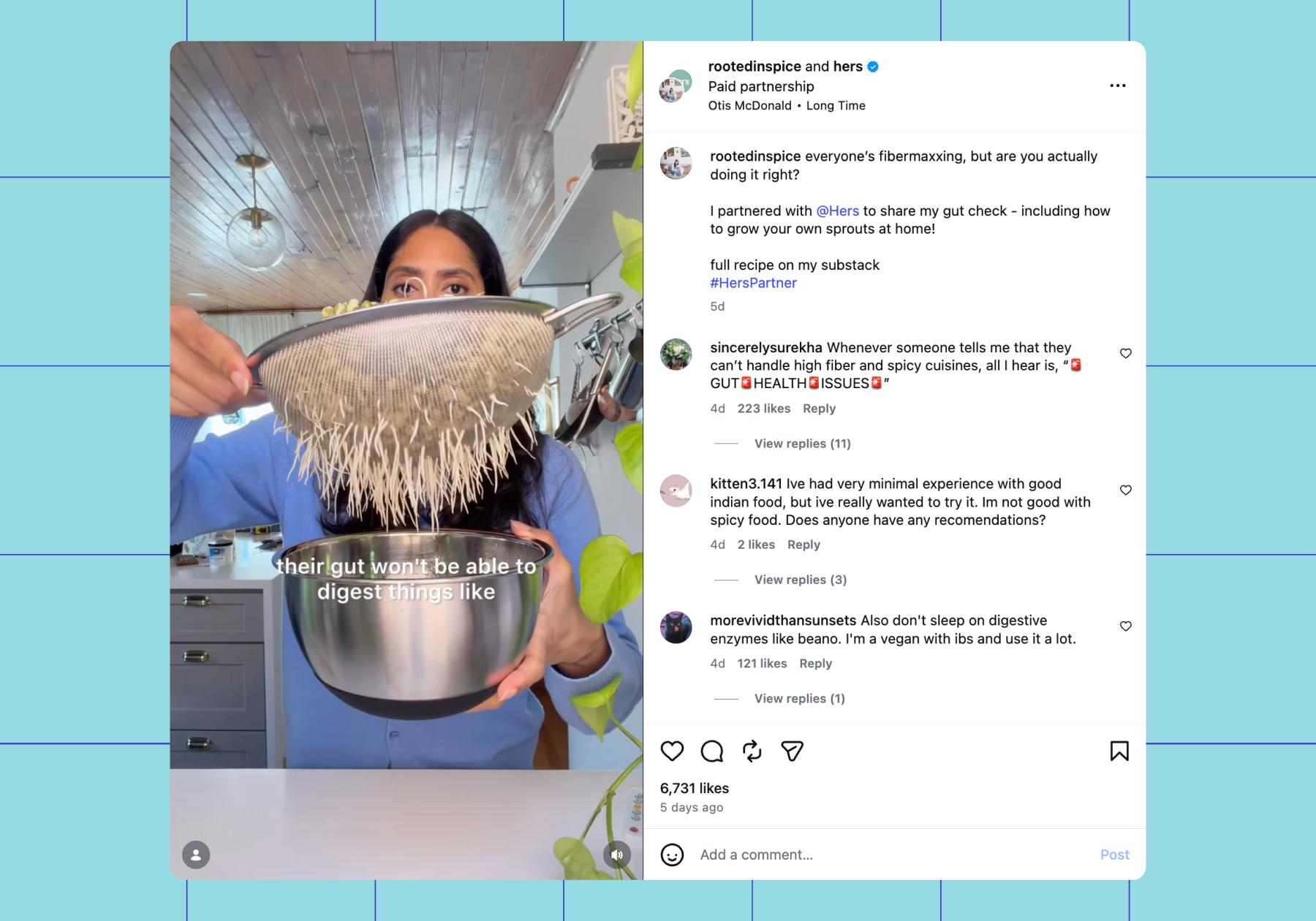
Hers has an always-on influencer marketing strategy. Opportunities are often available via affiliate platforms like Skimlinks.
Fashion and style
7. Aerie
Aerie is a clothing and intimates brand known for its body-positive marketing and commitment to using minimally retouched imagery in advertising.
Over the years, Aerie has partnered with creators, athletes, and body-positive advocates who align with its messaging. While the brand certainly works with larger influencers (recently, Ashley Alexander @aaashleyk and Serena Page @serenaapagee), it also regularly posts collaborative content with smaller creators.
Here’s an example featuring micro creator Marisa Menist @marisamenist.
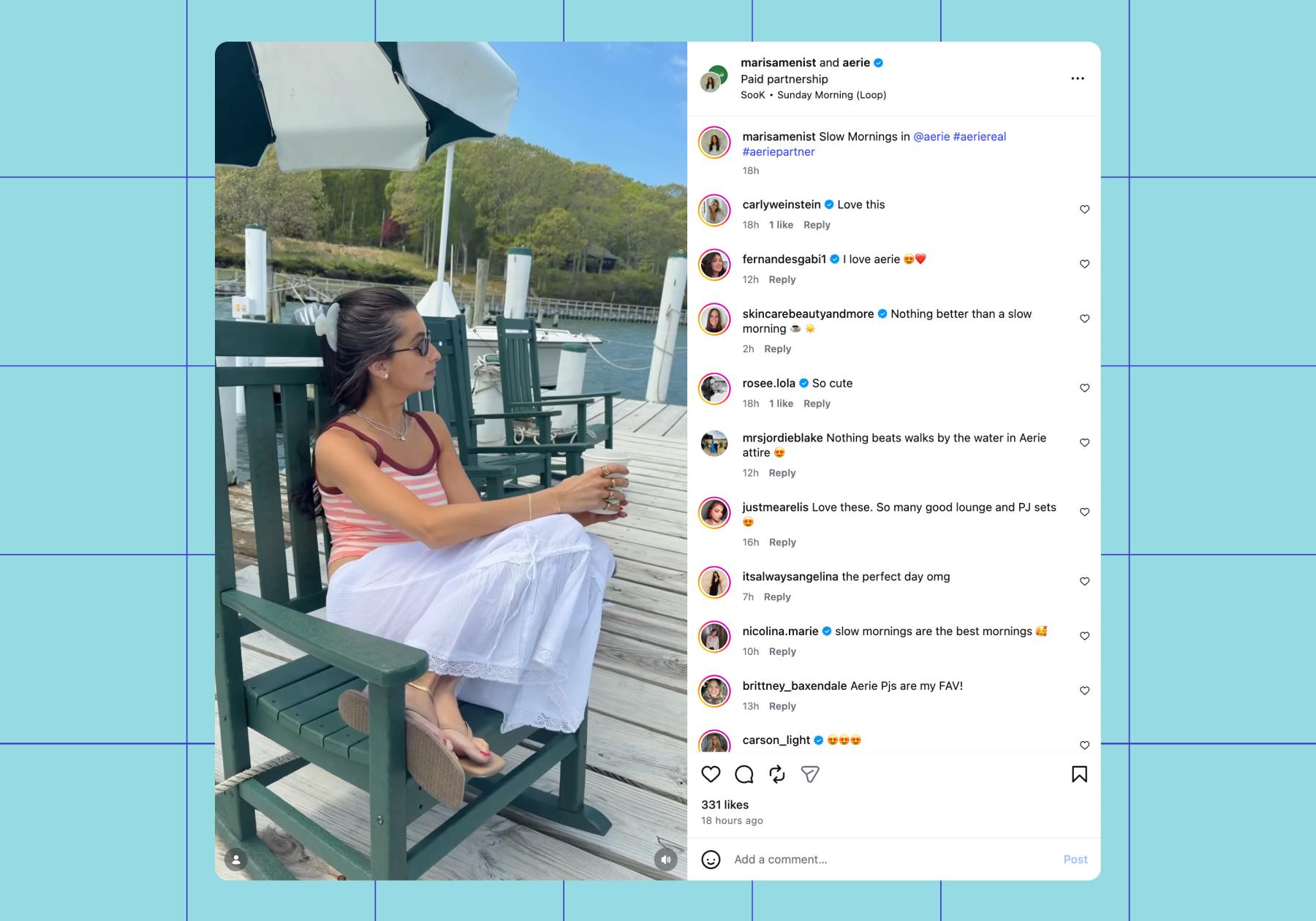
One of the easiest ways to get on Aerie’s radar is to create content featuring the brand and tag them on Instagram or TikTok. The company frequently reposts content, which is a realistic starting point for smaller creators.
8. Princess Polly
Princess Polly is a fashion brand that has grown significantly through influencer marketing, particularly among Gen Z creators on TikTok and Instagram.
The brand often partners with fashion, lifestyle, beauty, and college creators, sending them products in exchange for content or offering affiliate opportunities. If you’ve ever watched a haul video on TikTok, you’ve probably seen Princess Polly make an appearance.
If you want to work with Princess Polly, the good news is that the brand has an affiliate program and regularly recruits influencers through creator platforms. Their website also includes a dedicated collab application page you can visit to get started.
9. White Fox Boutique
White Fox Boutique is an Australian fashion brand known for trendy clothing, matching sets, swimwear, and activewear. Like Princess Polly, White Fox has embraced influencer marketing as a core growth strategy. The brand regularly works with creators across audience sizes, from mega influencers to smaller lifestyle and fashion creators who produce outfit inspiration, styling videos, and GRWM content.
White Fox is particularly active on TikTok, where creators frequently feature gifted products and affiliate discount codes. Here’s a recent example where two micro creators (Charlotte Bossi @charlottebossii and Bella Spence @bella_spence_) visit White Fox Boutique in person and style the pieces they pick out:
If you’re hoping to work with the brand, you can send them a pitch at [email protected].
10. Daniel Wellington
Daniel Wellington is a watch brand that originally gained traction by sending products to thousands of creators. In many ways, Daniel Wellington helped establish the influencer marketing playbook brands still use today: gifting products, encouraging creators to share discount codes, and building awareness through a large pool of creators rather than a handful of big names.
Today, Daniel Wellington still features nano- and micro-influencers on its page. Here’s a recent post featuring nano creator @lenny.am:
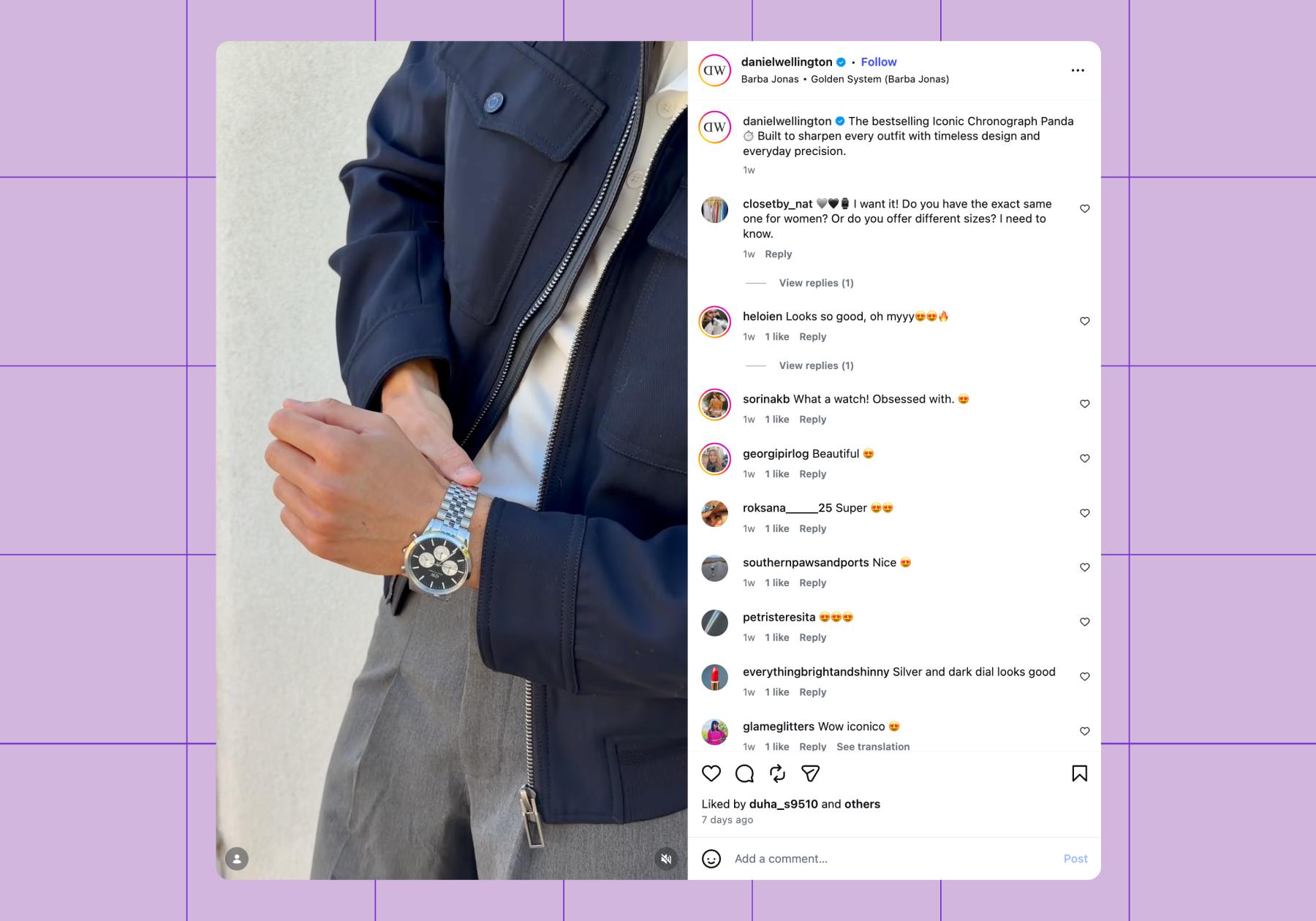
If you’re interested in working with Daniel Wellington, you can apply for the brand’s global ambassador program.
Food and beverage
11. Dunkin’
You know Dunkin’. It’s one of the most recognizable coffee brands in the world (I guess donuts are part of the business too).
Over the years, Dunkin’ has partnered with creators ranging from mega influencers like Charli D’Amelio to smaller food, lifestyle, and college creators who share their daily routines online.
Here’s an example of a recent collaborative post on Dunkin’s Instagram featuring micro creator @goldynaps:
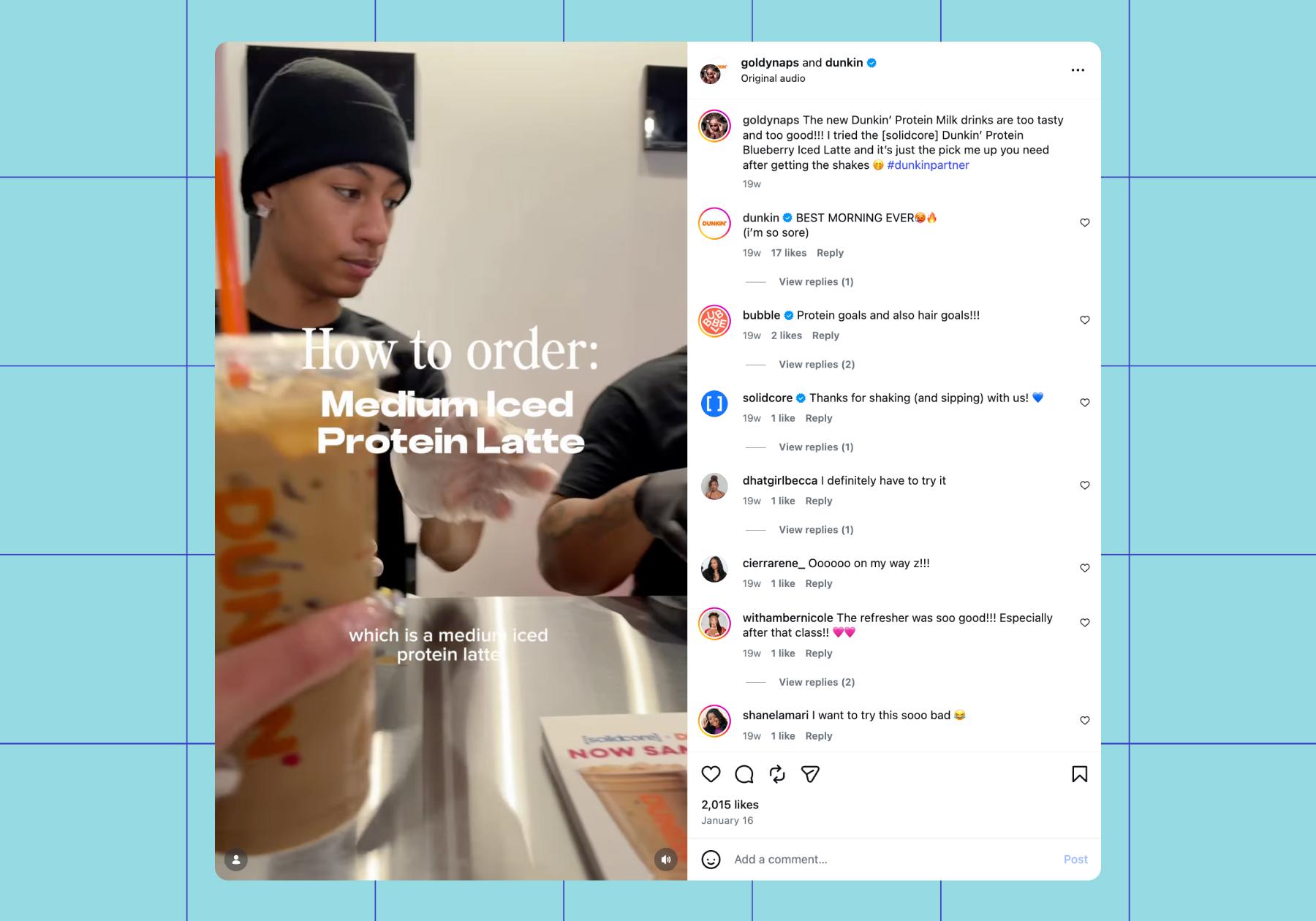
Dunkin’ frequently runs creator-focused campaigns around seasonal menu launches, limited-time beverages, and local store activations. And unlike many legacy brands, Dunkin’ tends to understand internet culture and isn’t afraid to participate in trends (and post memes).
If you’re interested in partnering with Dunkin’, keep an eye on influencer marketplaces and affiliate marketing platforms. Creating content around seasonal drinks and tagging the brand can also help get you on their radar.
12. Olipop
Olipop is a prebiotic soda brand. Much of the company’s growth has been fueled by creator marketing, particularly with wellness and nutrition-focused creators. It works because creators can easily incorporate Olipop into their content without making it feel like an advertisement. (Scroll through TikTok, and you’ll find countless “healthy swaps,” grocery hauls, and taste-test videos featuring Olipop.)
This recent post on Olipop’s grid featuring micro creator Conner Chant (@chant_photography) proves that making content about brands is one of the best ways to end up actually collaborating with them:
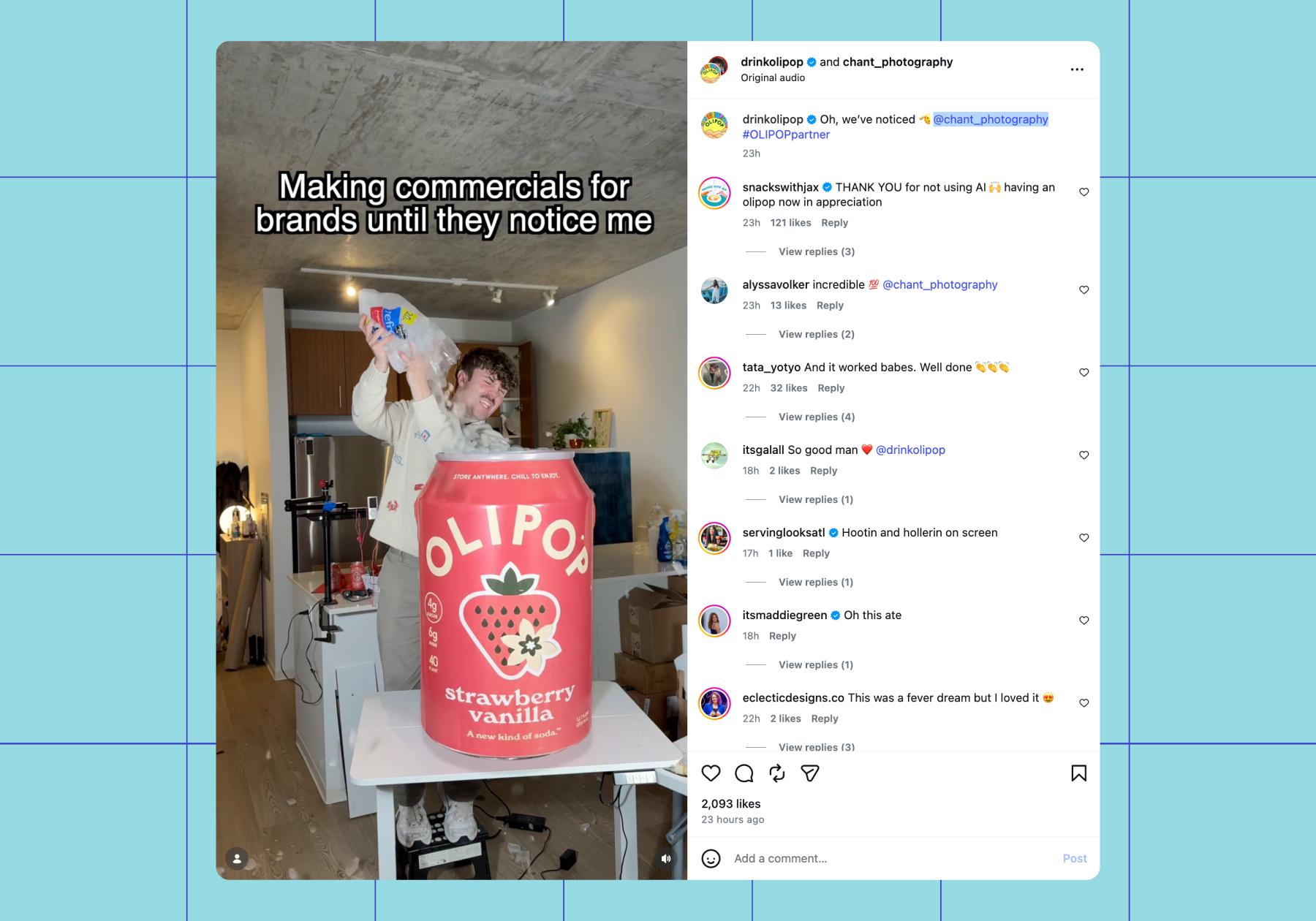
Olipop operates both an affiliate and an ambassador program and frequently works with creators through influencer campaigns, making it one of the more accessible brands for smaller creators to work with.
Tech/creator economy
13. Manychat
Oh, hey, that’s us! And if you don’t know us, Manychat is an automation platform that works across Instagram, TikTok, WhatsApp, and Facebook Messenger. We are officially Meta and TikTok Business Partners, which is part of why creators love (and trust) us.
Manychat has a strong influencer marketing strategy, partly because the product is designed primarily for creators. Manychat collaborates with creators in different niches who are familiar with our product to help educate those who are not about what it can do for them (send links, answer questions, close sales, etc.).
For example, we recently featured Anoosha Syed (@anooshadraws), a creator and artist, on our Instagram (@manychat). Anoosha talked about her career as a professional artist and how Manychat helped her manage the tasks that became overwhelming as she grew her business.
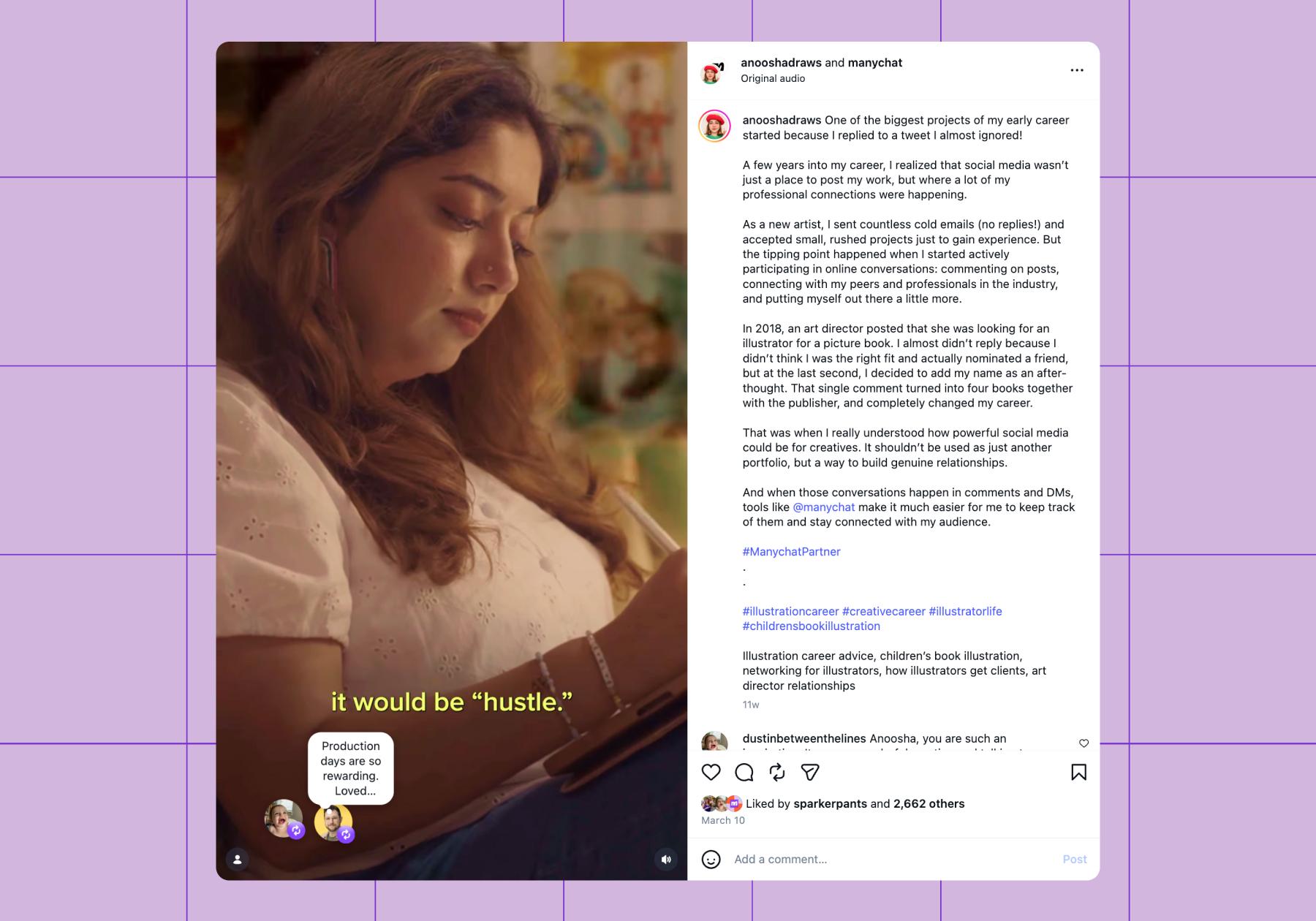
If you use Manychat and you’re interested in working with us, check out the Manychat Partner Program page.
14. Shopify
Shopify is one of the most popular e-commerce platforms in the world. It’s the infrastructure behind millions of online stores. In the past, Shopify has partnered with entrepreneurs, creators, educators, and small business owners who teach everything from dropshipping and e-commerce to branding and digital marketing.
Shopify’s content is inherently educational, so many of its strongest creator partnerships revolve around tutorials and business-building content. Here’s an example from the brand’s TikTok page featuring artist Nashid Chroma (@nashid.chroma).
Shopify operates an affiliate program (so check that out if you’re interested in partnering with them) and frequently collaborates with creators who produce educational business content.
15. Adobe
Adobe is the name behind popular creative tools like Photoshop, Illustrator, Premiere Pro, Lightroom, and Adobe Express. The company has a long history of working with creators, specifically artists, photographers, designers, video editors, and content creators who use its products in their daily work.
Adobe is particularly active in community building. Through creator challenges, ambassador programs, educational content, and creator spotlights, they consistently put emerging talent in front of larger audiences. In fact, its Instagram page is almost entirely populated with creator content:
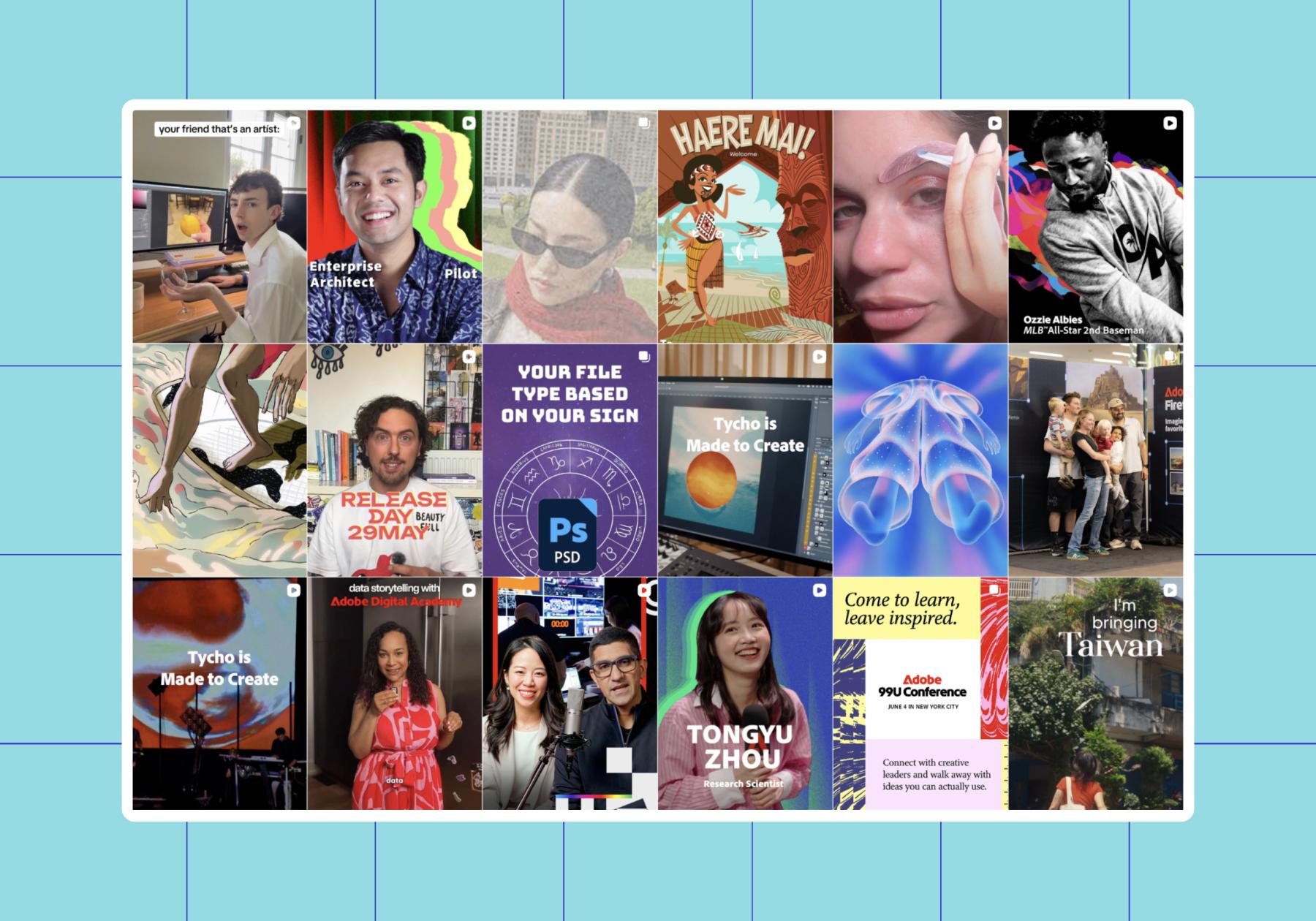
If you’d like to work with Adobe, you’ve got a couple of options. There’s the Adobe Creative Residency program, which connects creatives to museums around the world for collaboration opportunities. You can also apply to the Adobe Express Ambassador program, which gives you early access to new product features and paid opportunities.
14. Canva
Canva is a graphic design platform that’s popular with content creators, marketers, teachers, students, and small business owners. Because Canva makes design accessible to people who aren’t professional designers, its influencer strategy focuses heavily on education. Trends and memes are also a part of the formula.
One of the company’s influencer initiatives is Canva Creators. This global program allows designers, photographers, illustrators, educators, and other creatives to contribute templates, graphics, photos, and design elements directly to Canva’s library. When Canva users incorporate those assets into their projects, the creators earn royalties. This model means Canva doesn’t just market through creators; it creates opportunities for them to earn income.
In addition to Canva Creators, the company also collaborates with educators, marketers, and content creators who teach others how to use the platform. If you’re interested in working with Canva, applying to the Canva Creators program is one of the most direct ways to get involved. You can also explore their Canvassadors Affiliate Program.
Home and lifestyle
15. CASETiFY
CASETiFY is a tech accessories brand best known for its customizable phone cases, AirPods cases, and device accessories. CASETiFY has grown significantly through influencer marketing, regularly partnering with lifestyle influencers, students, and fashion creators.
Because phone cases are relatively affordable and highly visual, they’re easy for creators to incorporate into content without making a post feel overly promotional, like in this example from micro creator and artist Jobey Hon (@jobeyhon).
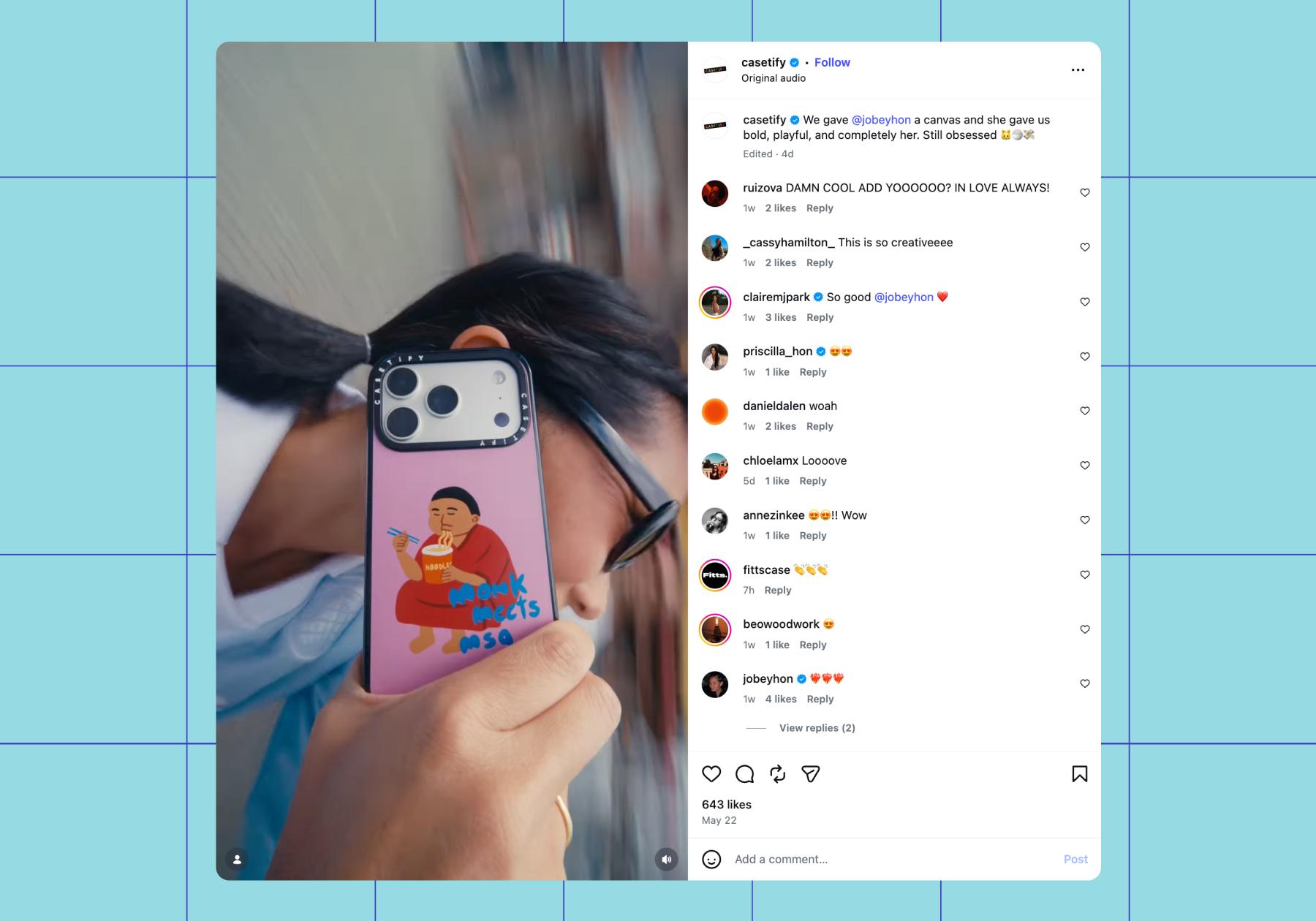
If you’re interested in working with CASETiFY, look into the brand’s affiliate opportunities and creator campaigns. The CASETiFY affiliate program lets creators and marketers earn a commission (typically around 10% per sale) by promoting custom phone cases and tech accessories. You can also join via affiliate networks like FlexOffers or MyLead.
Posting lifestyle, tech, travel, or productivity content and tagging the brand can also help you get on their radar.
16. Brooklinen
Brooklinen is a home goods company known for its bedding, towels, loungewear, and other home essentials. Brooklinen’s influencer strategy focuses heavily on lifestyle content; the brand frequently partners with creators who share home decor inspiration, apartment makeovers, routines, hosting tips, and cozy day-in-the-life content.
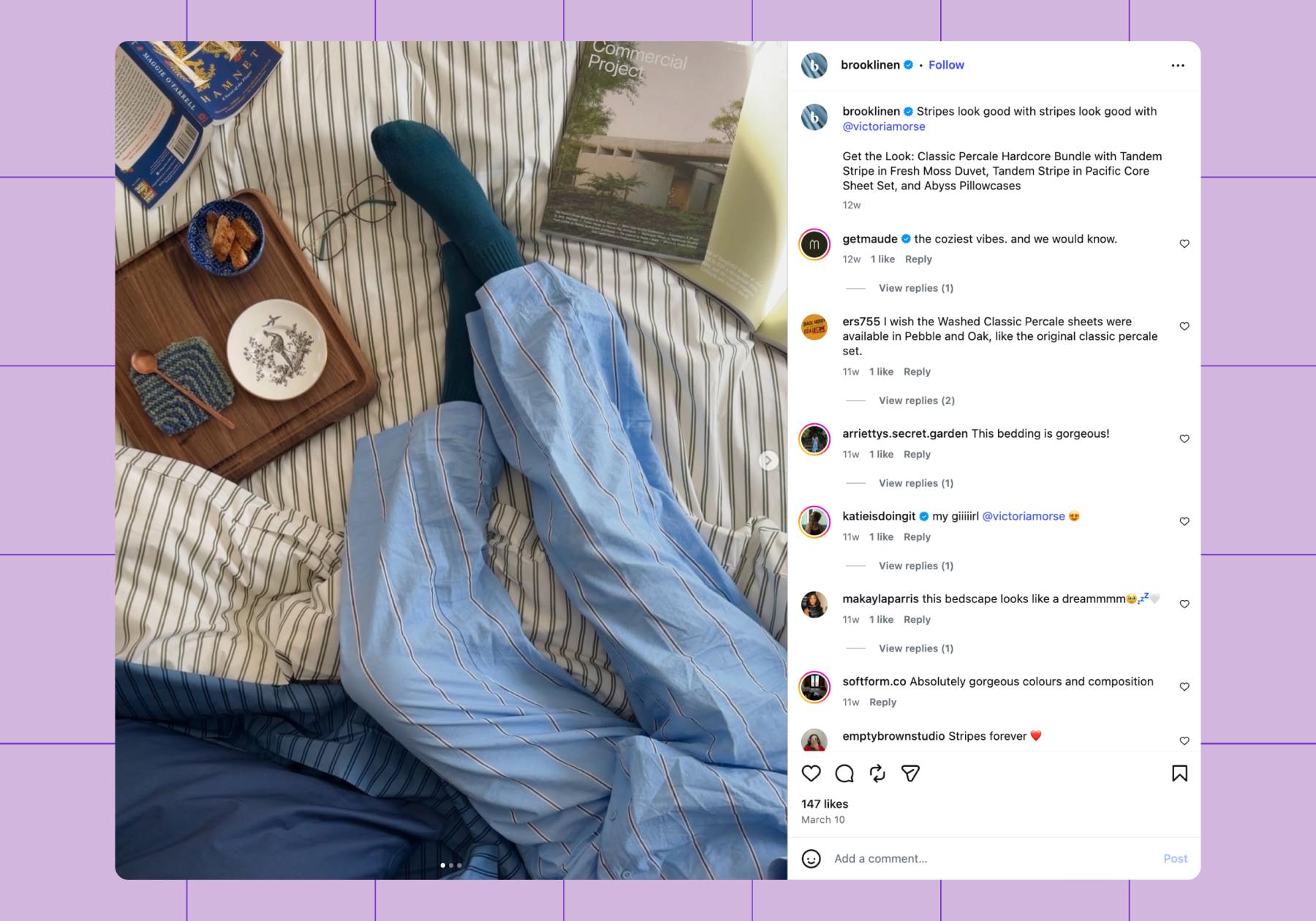
Brooklinen has worked with creators across a range of audience sizes, from mega creator Quenlin Blackwell (@quenblackwell) to Victoria Morse (@victoriamorse, featured above). This makes the brand a realistic option for nano and micro influencers in the home, lifestyle, interior design, and family content spaces.
Creating high-quality home and lifestyle content is often the best way to attract attention from brands like Brooklinen, but you can also try cruising sites like FlexOffers for affiliate opportunities or pitching yourself to them directly at [email protected].
Go Get That Brand Deal
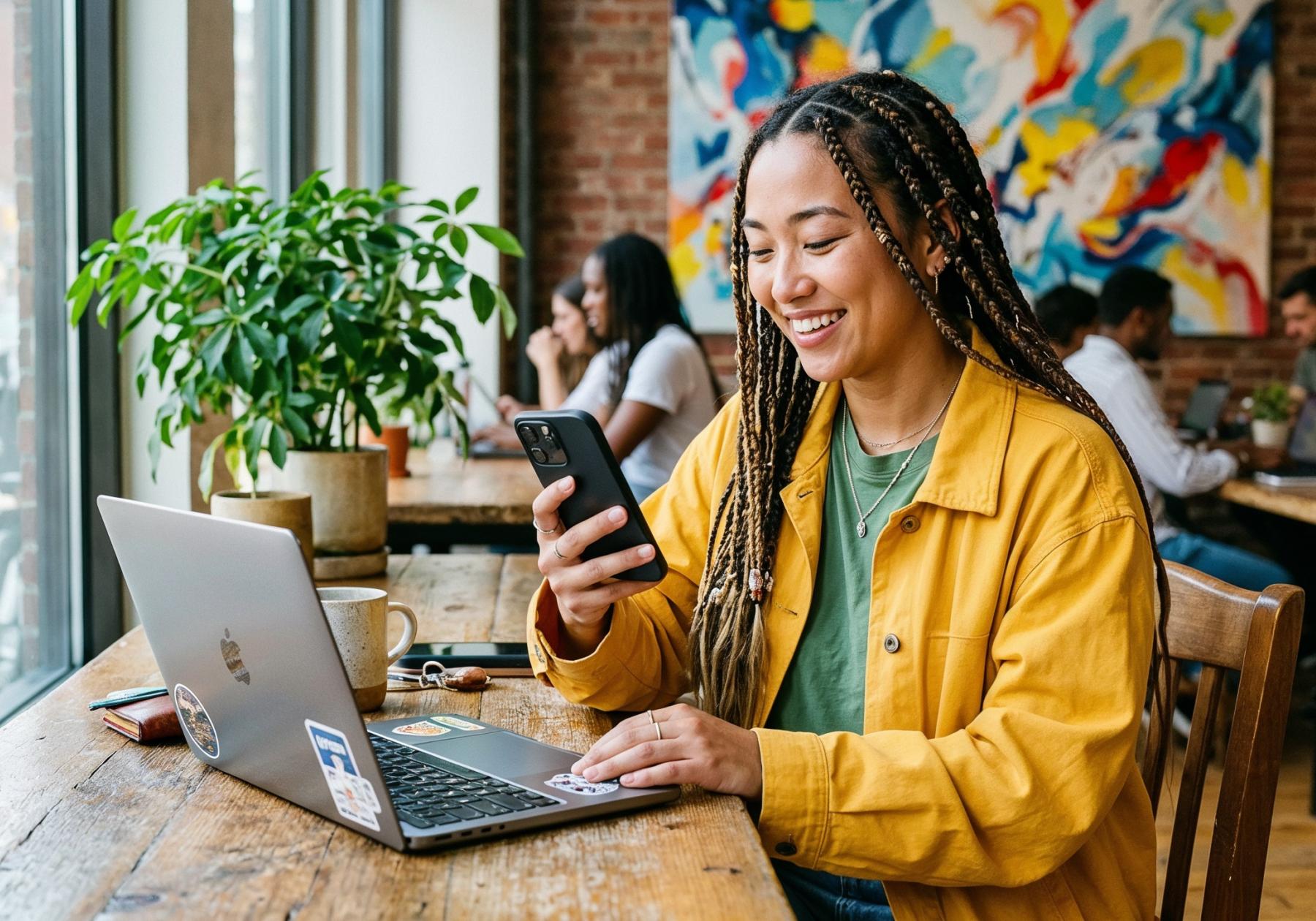
The thing all 19 of these brands have in common is that they don’t exclusively work with creators who have millions of followers. Many of them are actively working with nano and micro influencers through affiliate/ambassador programs and social media campaigns.
In other words, you don’t need to wait for a brand to discover you. Remember: brands aren’t just looking for massive follower counts and virality anymore. They’re looking for creators who have an engaged audience and high-quality content.
Start by identifying a few companies (on this list or otherwise) that fit your niche. Follow them, engage with their content, create posts featuring their products, and look for opportunities to join their creator programs. And when you do get that first affiliate marketing opportunity or sponsored post deal, sign up for Manychat so that the link ends up in your followers’ DMs before you even open your notifications tab.
Want to learn more about growing your audience and landing brand deals? Check out our guide to How to Land Your First Brand Deal (And Keep ‘Em Coming).
Frequently asked questions
Many brands work with micro influencers, including beauty brands like Glossier, Rare Beauty, Supergoop, and e.l.f. Cosmetics; fitness and wellness brands like Gymshark, Bloom Nutrition, and Hers; and creator brands like Shopify, Canva, Adobe, and Manychat. Most of these companies use a mix of affiliate programs, ambassador programs, influencer marketplaces, and direct partnerships to find creators.
There’s no universal minimum, and many creators start landing brand deals with fewer than 10,000 followers. Brands are increasingly working with nano influencers (1,000 to 10,000 followers) and micro influencers (10,000 to 100,000 followers) because they have stronger relationships with their followers than larger creators.
Micro influencers typically find brand partnerships through influencer marketplaces, affiliate and ambassador programs, and direct outreach.
Yes, brands pay micro influencers for sponsored content, product reviews, user-generated content (UGC), event appearances, and long-term ambassador partnerships. Compensation varies based on factors such as audience size, engagement rate, niche, and campaign requirements. Some partnerships may also include free products, affiliate commissions, or performance-based bonuses in addition to payment.

Originally published: Jun 5, 2026, Updated: Jun 8, 2026
More stories worth reading
More content that's too good to miss