Conversion Rates by Marketing Channel: How DM Automation Compares to Email, Ads, and More

As marketers, we’re used to pivoting. Every year, there’s a hot new channel, new strategy, and new tool to try. But strip away the hype, and what’s actually happening in marketing right now? What is really working? And by working, we mean what is converting? We consulted the best research we could find to answer that question.
TL;DR
- TikTok ads and emails have lower conversion rates (both < 2%), while landing pages sit right in the middle at 6.6%.
- Google and Meta ads both convert well, at 8.18% and 8.54%, respectively.
- Automated messages convert best, with a CVR between 12% and 20%.
- In reality, your best-converting channels will depend on your target audience’s behavior.
Conversion Rates by Marketing Channel in 2026

Ahead, a deep dive into conversion rates by channel, including TikTok ads, emails, landing pages, Google ads, Meta ads, and automated DMs.
TikTok conversion rates
AI-powered e-commerce platform Triple Whale recently published a report based on 5k+ brands using its platform. In it, TikTok’s ad conversion rate is listed at 1.5% (down from 2.5% in 2025). TikTok’s click-through rate (CTR) also dropped in 2026; it’s now just 0.6%. So basically, TikTok scrollers are clicking and converting less than they were last year.
In an interesting twist, TikTok's return on ad spend (ROAS) and average order value both rose this year, while cost per acquisition fell by 31% in 2025. Brands are paying meaningfully less to acquire new customers in 2026, even though a smaller share of clickers convert.
Verdict: TikTok is notably cheaper for advertisers than Meta or Google, but you're also getting a colder, less convertible audience for that price.
Email conversion rates
Email marketing brand Klaviyo analyzed data from over 183k of its e-commerce customers and found that the average conversion rate for one-off email campaigns is just 0.16%.
But automated flows (welcome series, cart abandonment, post-purchase emails, etc.) have a higher conversion rate at 2.1%. While automated flows of this type account for just 5.3% of total email sends, they generate nearly 41% of total email revenue.
The reason is simple: timing. Let’s say a shopper gets to the checkout page of your e-commerce store and suddenly bails. Later, they check their inbox and find an email from your brand with a discount code for the exact items they were about to buy.
Makes sense that would convert better than a randomly timed email related to a campaign you’re managing, right? Even so, most marketers send far more campaigns than flows. According to Klaviyo’s research, 94.7% of email sends are tied to campaigns.
Verdict: Campaign emails are notoriously bad at converting, but that’s not the case for automated flows based on user behavior, which have a conversion rate competitive with paid social and paid search.
Landing page conversion rates
Unbounce analyzed over 57 million conversions across 41k+ landing pages and found the median conversion rate for landing pages across all industries is 6.6%. Individual industries range from 3.8% to 12.3%.
Where traffic to those landing pages comes from has a notable impact on conversion rates, though. Email-referred visitors convert at 19.3% on average, while paid social converts at 12% and paid search at 10.9%.
This makes sense when you consider that landing page traffic from email recipients is pre-qualified in a way: they’ve already opted in to your email list.
Verdict: Landing pages convert well by channel standards, but the page is doing less work than marketers give it credit for. The traffic source is pre-qualifying visitors before they ever land.
Google ad conversion rates
Digital marketing platform WordStream stated in its 2026 benchmarks report that the average Google Ads conversion rate is 8.18% across all industries. The variance in conversion rate by industry is pretty big, though. The animals/pets industry converts at 16.2%, while finance/insurance sits at 2.6% and furniture at 2.9%.
For context, Google ad conversion rates rose last year in 87% of industries, even as cost per click has more than doubled over the past decade ($2.32 in 2016 to $5.42 in 2026).
This means that Google Ads have gotten both more expensive and more effective over time, and one of the main ways they’ve improved is targeting precision. Google has had a decade to test and improve on performance-enhancing features like Smart Bidding, Performance Max, and AI Max. So today, your Google ad dollars are better spent reaching people already searching with intent, rather than being spread across a broad audience, hoping some portion converts.
Verdict: Google Ads converts better than most other channels, but that's largely because search ads intercept people already looking for whatever you’re selling.
Meta ad conversion rates
WordStream also reviewed 452 Meta lead-generation campaigns across industries and found the average conversion rate for Facebook lead campaign ads to be 8.54%. Of course, conversion rates vary by industry: education and instruction lead at 15.87%, with arts and entertainment following at 15.31%. On the low end, you have automotive at 4.15%.
Facebook Lead Ads are a big factor here. Lead ads let someone submit a contact form without leaving the app. Meta auto-fills their info from their profile, so they don’t have to wait for a landing page to load or type in a bunch of information themselves.
It's a low-friction approach to lead collection, which is likely why Facebook ads tend to convert better than TikTok ads. Then again, Meta has a few years of experience on TikTok.
If you’re wondering about the average conversion rates for Instagram ads, we hate to disappoint, but there’s no reliable research on that. Facebook and Instagram ads are managed through Meta Business Suite, which automatically runs them on both platforms. Most advertisers don't run Instagram-only campaigns, and Meta's own reporting doesn’t separate placement-level conversion rates, so it’s very difficult to pinpoint the conversion of an Instagram ad.
Verdict: Meta converts about as well as Google, and you're getting a double platform deal (Facebook and Instagram).
DM conversion rates
According to CommuniPass, automated messages sent through apps like Instagram, TikTok, and Facebook Messenger have conversion rates between 12% and 20%.
There's a reason for this: DM automation helps grow the pool of people who can potentially reach the point of conversion. A HypeAuditor study of 6,000 creators found that accounts running DM automation saw up to 140% faster audience growth and up to 150% more comments per post than a matched cohort that did not use it.
More comments mean more visibility, but in the case of a comment-to-DM automation, it’s also a sign that someone is a warm lead. You’ve told them how to get a link, promo code, or something else they want (e.g., “Comment ‘SWAG’ for early access to my new merch drop!”), and they’ve decided to engage with it. This is way different than them seeing an ad in their feed, because they made an active choice to interact with your brand.
Verdict: DM automation helps you grow a pool of qualified prospects at the top of the funnel, which is why its conversion rates are higher than ads, landing pages, and emails.
Finding Your Best-Converting Channel

These benchmarks are useful for setting expectations, but they’re still just averages. Real-world conversion rates exist on a spectrum around them. Some campaigns will underperform, some will land close to the benchmark, and some will become outliers.
The best-converting channel for your business may look nothing like the all-industry averages in this article. Your results will depend on your audience, offer, creative, price point, funnel, and what you count as a conversion.
As a next step, think about where your audience already spends time and looks for information. If they discover products on TikTok, prioritize TikTok. If they use Google to research and compare options, invest in search and landing pages.
Build your strategy around the channels that reflect your audience’s behavior, but keep the rest of your presence covered so people can find and validate your brand wherever they look.
And if you’re already investing time and money in ads on Facebook, Instagram, or TikTok, don’t make interested people search for a link, leave the app, or fill out a long form before they can get the information they want.
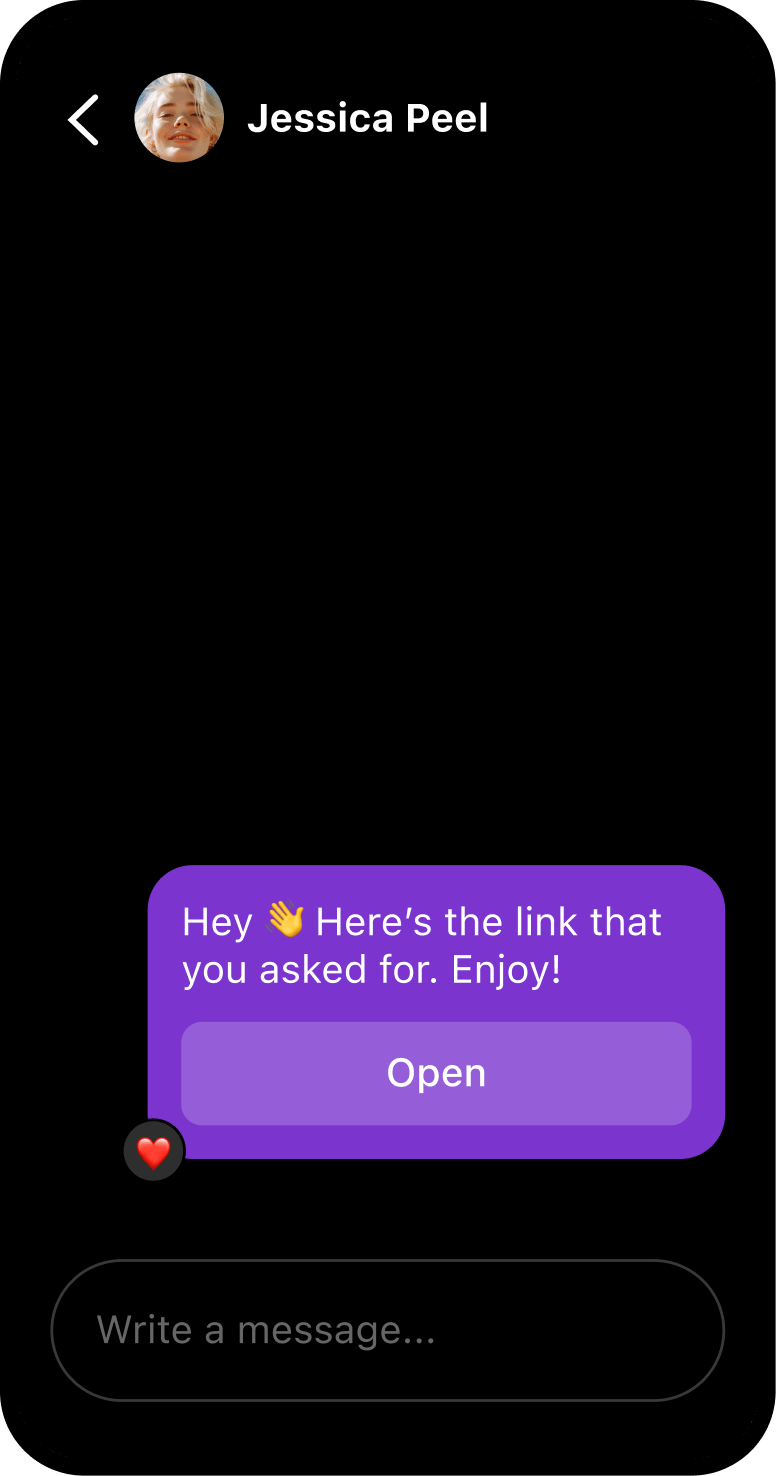
Make it easy for them (and yourself) and use Manychat to deliver product links, offers, and answers automatically. You already know from the benchmarks above that DMs convert well, so why not use automation to get more out of your social investment?
Sign up for Manychat — it’s free.
Frequently asked questions
There is no single average conversion rate across all marketing channels because each benchmark measures something slightly different. Based on the data we found, one-off email campaigns convert at 0.16%, while automated email flows convert at 2.1%. TikTok ads have a 1.5% conversion rate, landing pages have a 6.6% median conversion rate, Google Ads convert at 8.18%, Facebook Lead Ads convert at 8.54%, and automated DMs convert at 12% to 20%.
These numbers are useful for setting expectations, but they are not a perfect reflection of reality. Conversion rates vary by industry, audience, offer, campaign objective, and definition of conversion.
There is no universal winner, but DM automation has the highest reported conversion rate range we found in our research, at 12% to 20%. Email-referred landing page visitors also convert at a high rate of 19.3%, likely because they have already opted in to hear from the brand.
A good conversion rate for social media ads depends on the platform, industry, campaign objective, and conversion event you are measuring. In general, a good conversion rate meets or beats the relevant benchmark for your campaign while producing qualified leads or customers at a cost that makes sense for your business.


Originally published: Oct 2, 2026, Updated: Oct 6, 2026
More stories worth reading
More content that's too good to miss