
The size of the creator economy has exploded over the last few years. As of early 2026, over 200 million people worldwide identify as content creators, and 25% consider themselves pro or semi-pro creators.
It’s no secret why the industry is taking off. Content creation is one of the best paths to entrepreneurship, and there are many different ways you can monetize as a creator (digital products, subscriptions, brand deals, UGC, platform payouts, etc.).
If you’re thinking of becoming a content creator — more specifically, an Instagram creator — this guide is for you. Sarah Gavilla, Manychat’s social media manager, broke down exactly what she’d do to grow a brand-new Instagram account today. Her advice is distilled below, with extra input from other creators along the way.
How to Become an Instagram Influencer
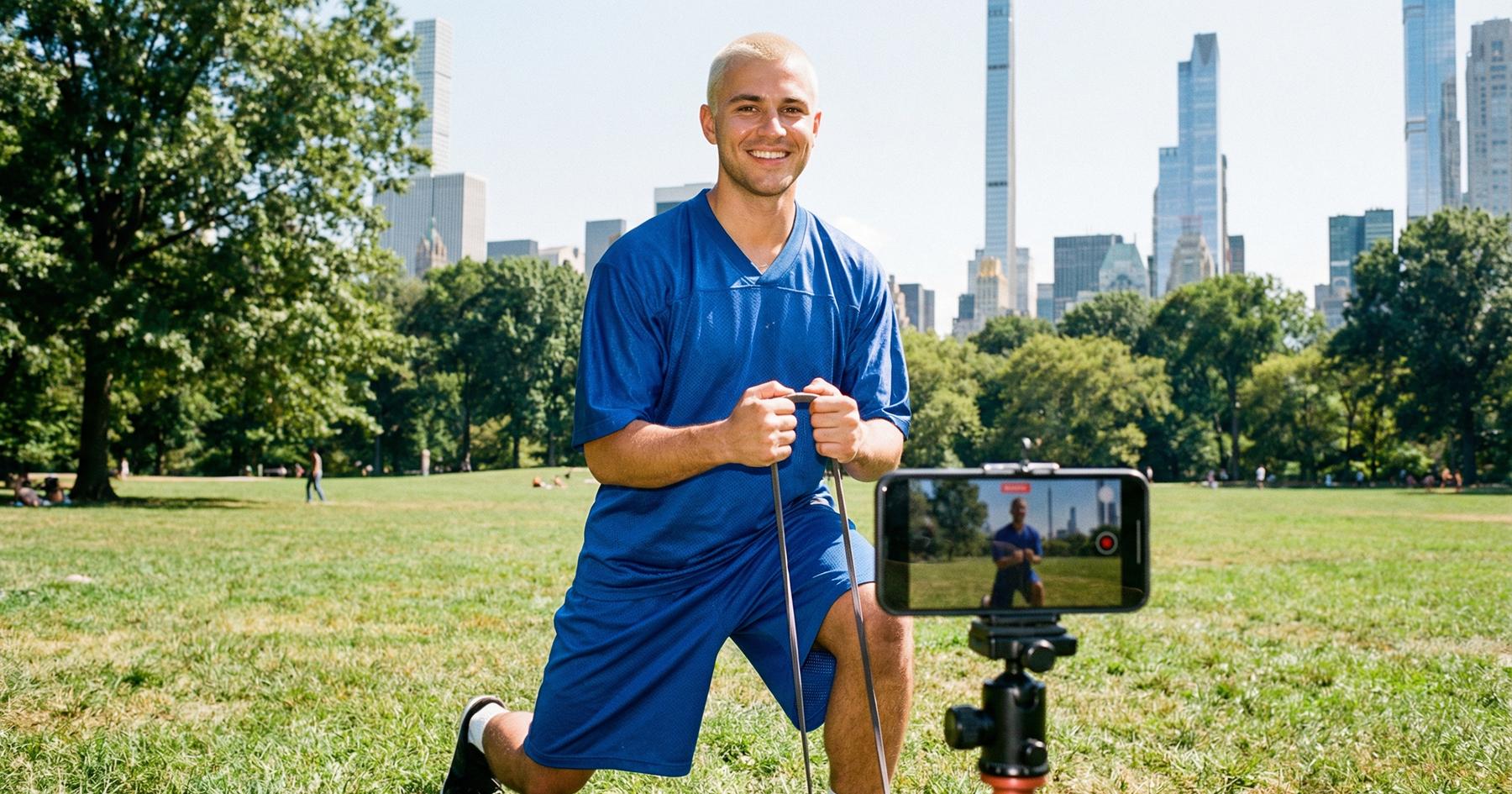
Sarah is a full-time social media manager, but she’s also a creator with over 35k Instagram followers. Here is her blueprint for becoming an Instagram content creator.
1. Choose a niche
When you set out to become a creator, you need a vision. What do you want your account to be known for? What kind of people do you hope will follow it?
- Know your niche: Having a niche helps scrollers and the Instagram algorithm understand who your content is for — you need that understanding to find and connect with them. The most popular niches on Instagram today are lifestyle, health and fitness, beauty and fashion, travel, and entrepreneurship/finance. When deciding on your niche, think about the topics you could talk about for hours.
- Identify your target audience: Sarah says the first thing she’d ask herself when starting a new account is this: “Who am I talking to? And I don’t mean ‘I’m talking to moms’ or ‘I’m talking to creators.’ I mean, who is the exact person that I want my content to reach? What do they want to achieve?” The idea is to have clarity around who you’re trying to reach so you can create content that resonates with them.
Sarah points out that even if you want to be a lifestyle creator, you should have an angle to your account. “Maybe you’re documenting your move to a new city, your life as a working mom, or your daily routine in your corporate job. Whatever it is, there’s still a very subtle niche there, and that’ll definitely help you grow,” she says.
Libby Amber Shayo provides an excellent example of how to have a niche while being a lifestyle creator. Libby started posting during COVID after graduating with an acting degree. Most of her early videos were skits of her pretending to be her Jewish mom.
“It was a creative outlet that unexpectedly resonated with people, and I realized I could turn it into a full-time path,” says Libby.
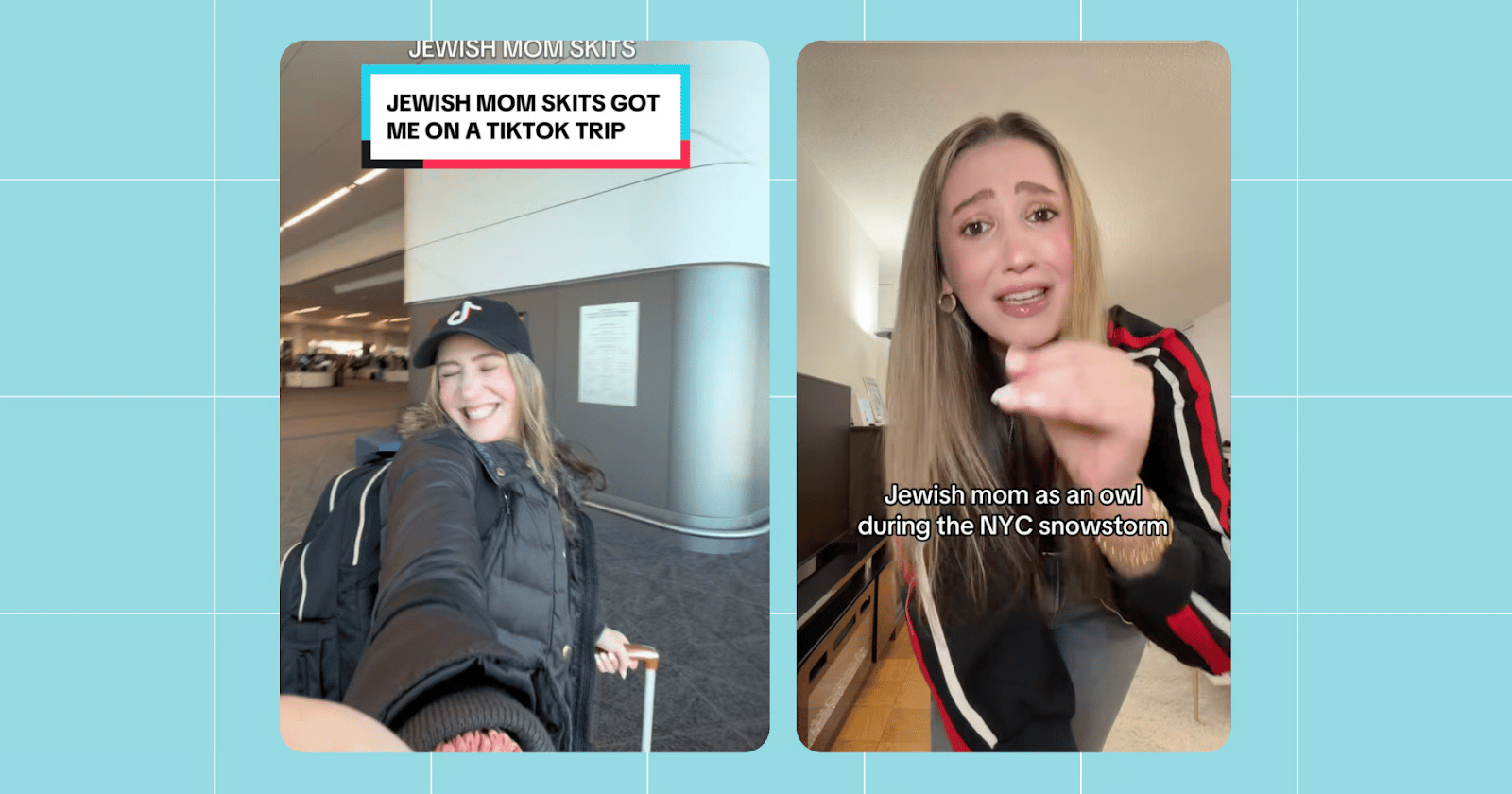
Libby still posts skits in this style, but her content has evolved based on her interests and what’s going on in her life. Today, she posts about being a creator, weddings (she offers wedding consulting services), food, and more.
“I focus on creating content I genuinely love because authenticity is what resonates most with audiences,” she says.
2. Build your profile
Once you’ve decided on a niche, it’s time to set up your Instagram profile so that users will know exactly what you’re all about when they land on it. “People usually don’t follow you based on one single reel. They follow you based on multiple reels and what they see on your profile,” says Sarah.
- Choose a username. Something simple is fine. “I usually just suggest using your first and last name, especially if you’re not sure if you’re going to stick with the same niche forever,” says Sarah.
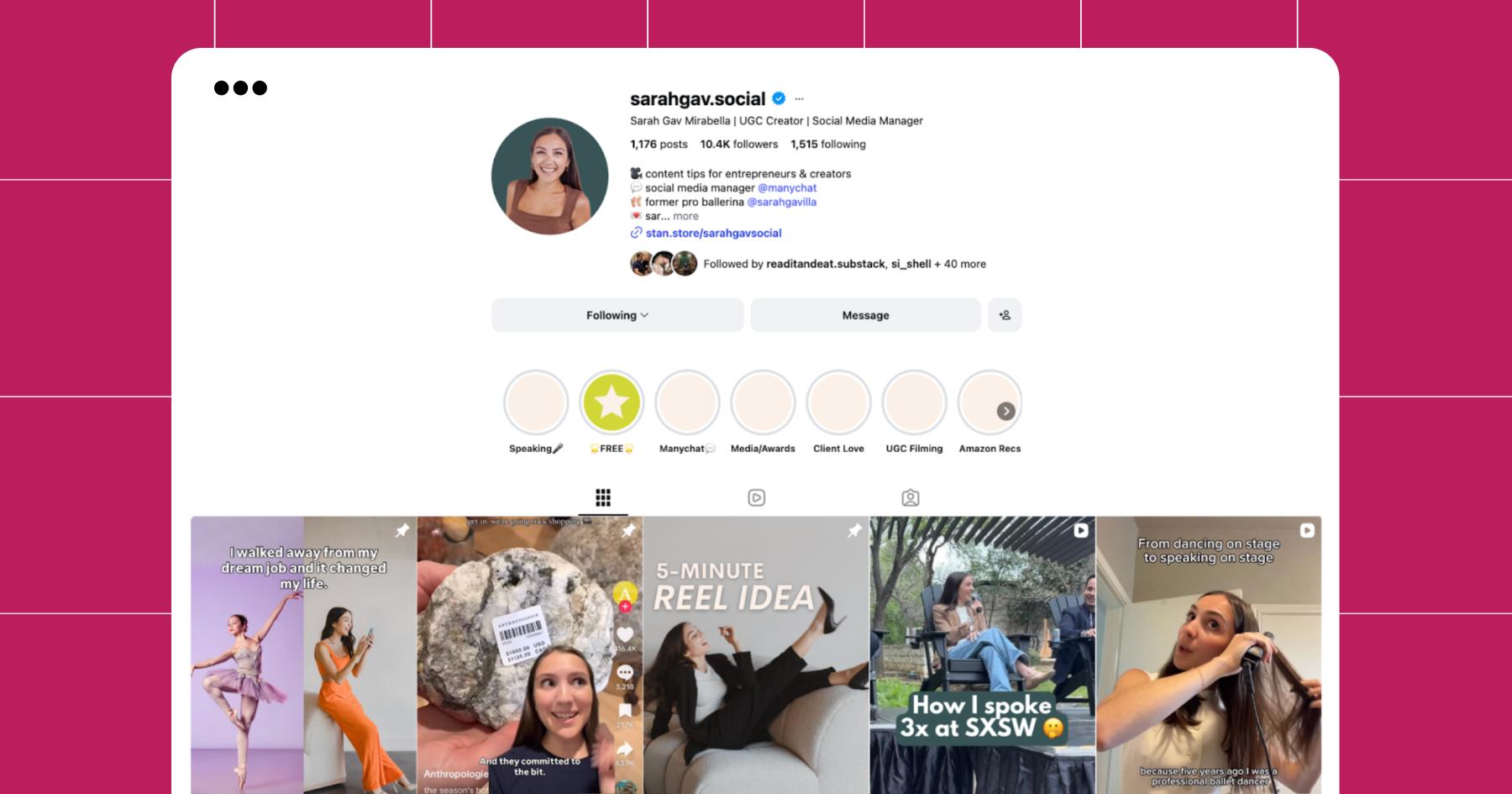
- Write a good bio. Sarah suggests adding keywords to your bio to help your profile show up when people search for relevant terms. For example, Sarah’s profile says:
- 🎥 content tips for entrepreneurs & creators
- 💬 social media manager @manychat
- 🩰 former pro ballerina @sarahgavilla
Similarly, Libby’s bio describes her as a social media consultant and creator who posts about comedy, food, and family. There’s also the ✡️ emoji as a nod to her ties to the Jewish community.
- Pin your best posts. When someone visits your profile, they’re going to see your profile picture, bio, highlights, and pinned posts. The latter (pinned posts) are where to show off the best content you’ve got.
“Keep in mind that you actually have two sections of pinned posts: one on your main grid and one on your reels tab,” Sarah says.
Your main grid is what most people will see when they search for your profile or tap on your username in their feed. But if someone discovers your profile through the Reels explore feed, Instagram will bring them right to your reels tab.
“In both of these spots, I would suggest pinning three posts that represent your content the best.”
3. Create a content plan
Libby says one of the biggest mistakes new creators make is failing to stay consistent. Having a content plan — maybe even a content calendar — helps with that.
When it comes to what to post, Sarah has some thoughts. “If I’m starting a brand new account, my content is never going to be random,” she says. Instead of just doing whatever comes to mind, Sarah suggests creating a content plan that centers around three different kinds of content:
- Discovery content: This is the content that gets you seen by new people (who hopefully turn into followers). “When you’re thinking about discovery content, think reels with very shocking hooks, trends, or even rage bait if that’s your style. You want someone to stop scrolling within three seconds of seeing your post,” says Sarah.
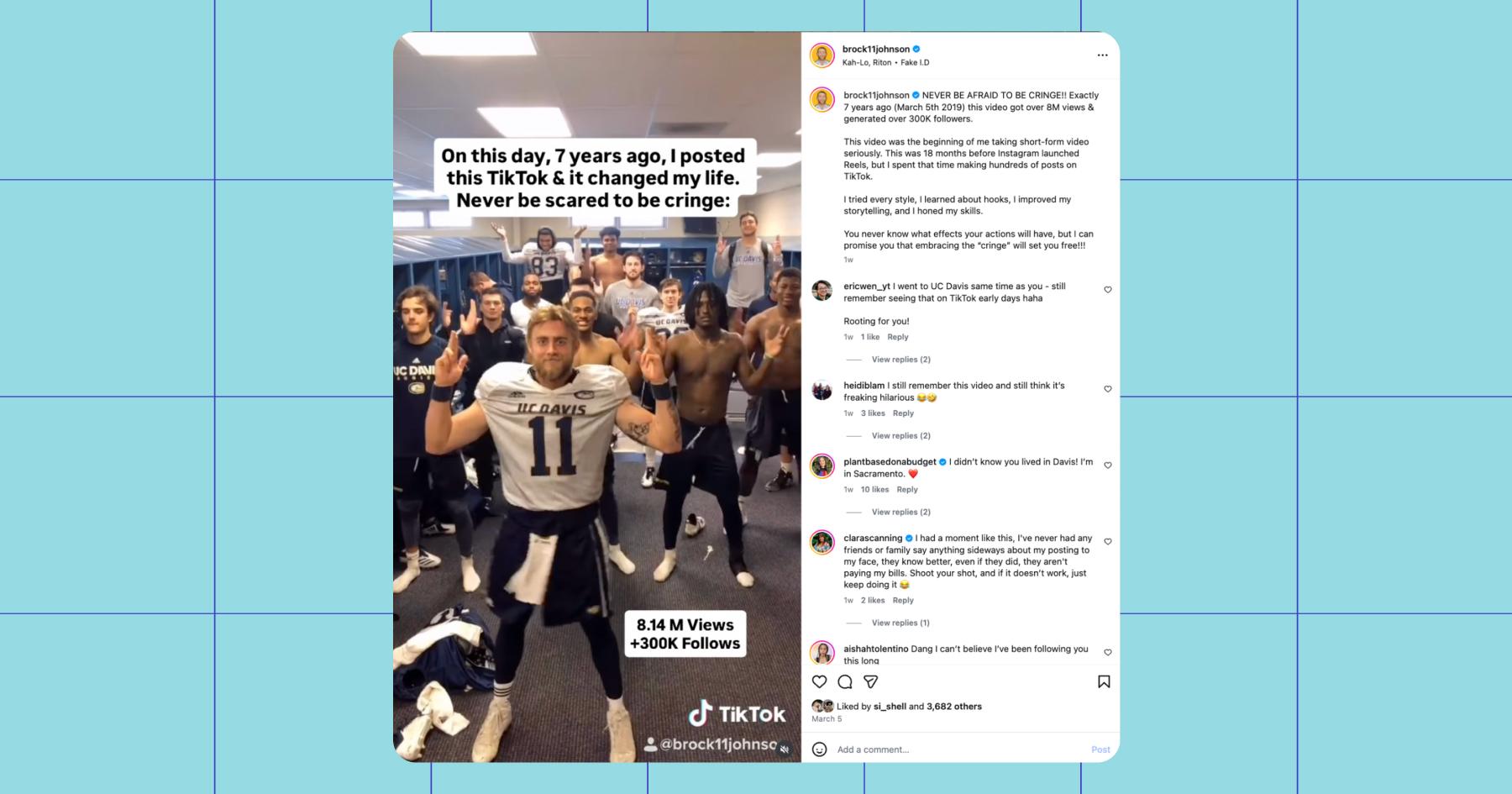
- Trust content: This is where you go a little deeper about who you are as a creator. The idea is to share in a way that builds trust with your followers. Testimonials, deep dives, and even reflective posts (like the one below from Brock Johnson) fall into this category.
- Community content: This is the type of content that keeps people around. It’s also very easy to make — you can just share about your interests and parts of your life. Just be sure to make it engaging: use Instagram polls, jump on trends, and invite your audience into the content.
“Every once in a while, you can do an ask me anything or maybe share an opinion that you have, and ask your audience to weigh in as well,” says Sarah.
4. Batch film and schedule content
Now for the fun part: making content. And we’ve got a formula that will make it as efficient as possible, so you don’t wake up thinking, “oh no…I need to post again.”
- Batch film content. Set aside a few hours during the week just to film. Jot down post ideas and outline scripts ahead of this filming block.
“Every Wednesday, I like to block off around two to three hours in my schedule to film seven or so reels. I’ll film face-to-camera talking reels, trends, maybe a storytime,” says Sarah.
- Film b-roll when you can. When inspiration hits throughout the week, film. It doesn’t need to be polished shots — slice-of-life content actually does really well.
“So, I’ll film things like making coffee, walking my dog, or my trip downtown. I’ll make my husband take a video of me walking down the street. Then I slap some text on it and voilà, a reel created in five minutes.”
- Edit and schedule content in blocks. Editing takes a significant amount of time, so it’s best not to leave it until right before you want to post. Carve out a few hours during the week to edit and schedule posts for the next few days (maybe the next week if you’re crazy).
If editing intimidates you, keep it simple — that’s what people want anyway. Also, I guarantee you’ll get better at it over time.
“When I first started making content, I didn’t have a tripod, I didn’t have a ring light, I didn’t even know what app I would use to edit my video,” says food creator Alfredo Garcia.
“I had one of my cousins hold the phone so I could make the recipe with two hands. The video was bad, the lighting was horrible, and overall, it was not a great start.”
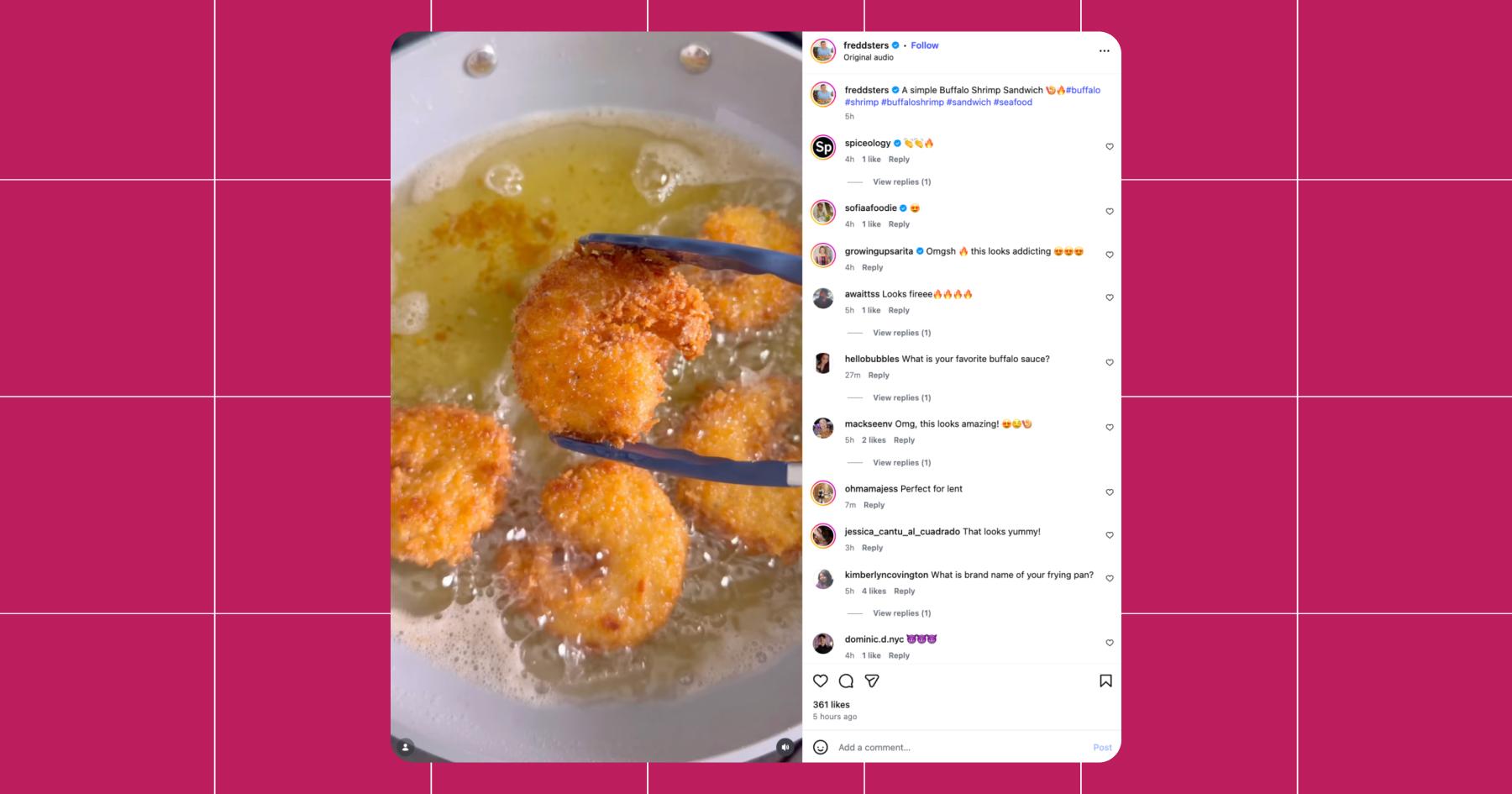
“But the next day I bought a cheap tripod and a ring light and kept going.”
Alfredo has 800k followers on Instagram today, and most of his reels get hundreds (sometimes thousands!) of likes.
The point? Don’t let inexperience keep you from starting. Everyone starts somewhere.
5. Use Trial reels
Trial reels are only shown to non-followers. Instagram introduced the trial reel feature to let creators test concepts without worrying about their grid or engagement rate. But since they’re specifically shown to people who don’t follow you yet, they’re a great tool for growing your account.
“If you’re starting a new account, or you’re trying to kickstart growth on an older account, I would definitely use the trial builds feature to explore different content styles,” says Sarah.
6. Optimize for Instagram SEO
Since 2025, Instagram posts have appeared in Google search results. That means the potential for someone to find your post has expanded outside the Instagram app. But to get that visibility, you need to optimize your posts for Instagram SEO.
- Use keywords: Instead of writing super casual short captions like ‘Monday mood’ or ‘photo dump,’ write something with keywords.
“For example, a caption could be ‘If you’re looking for an easy 5-minute workout to tone your arms, make sure to save this post,” says Sarah.
“Not only does it have a call to action, but it also includes keywords like ‘easy workout’ and ‘tone your arms.’”
These keywords help the algorithm understand what your content is about, so it can suggest it to people who might be interested.
- Add (relevant) hashtags: Hashtags help with content categorization, so they’re still worth including in posts. The limit is now 5 hashtags per post, down from 30 previously.
Here’s an example to tie this section together: Alfredo shared a reel showing how he makes green tortillas for St. Patrick’s Day.
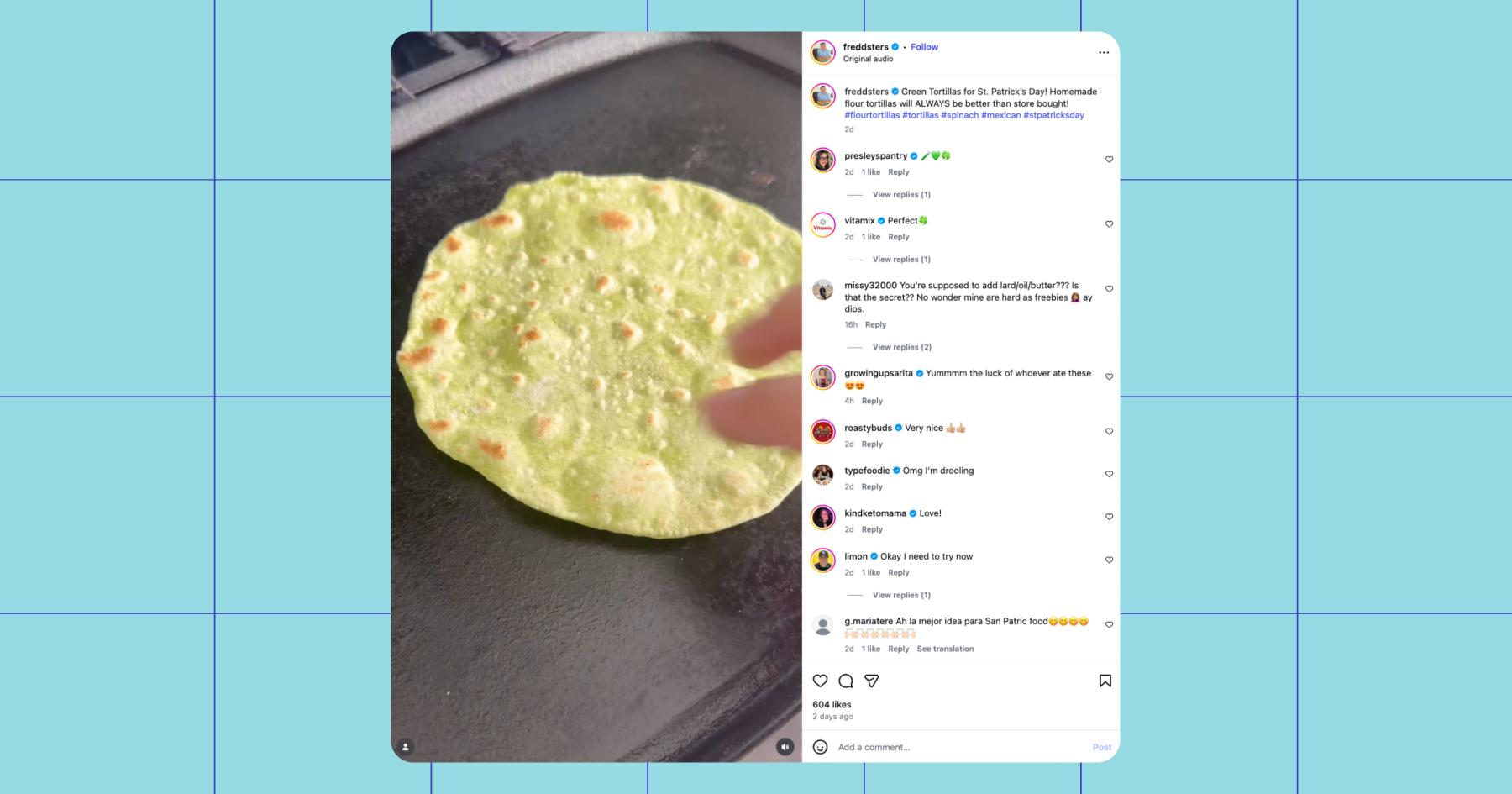
His caption is:
Green Tortillas for St. Patrick’s Day! Homemade flour tortillas will ALWAYS be better than store-bought! #flourtortillas #tortillas #spinach #mexican #stpatricksday
This caption has keywords (“homemade flour tortillas” and “St. Patrick’s Day”), and relevant hashtags (#flourtortillas, #stpatricksday, #spinach, etc.), making it a great example of subtle Instagram SEO.
7. Automate
Another mistake creators make? “Not engaging with their community early on,” says Libby. “Commenting, responding, and building real connections is key.”
She’s right — responding to comments within the first few minutes after a post goes live will give you a boost in the algorithm. But answering every comment in your notifications tab gets harder as you grow. So, the best way forward is to automate (with Manychat, preferably 😉).
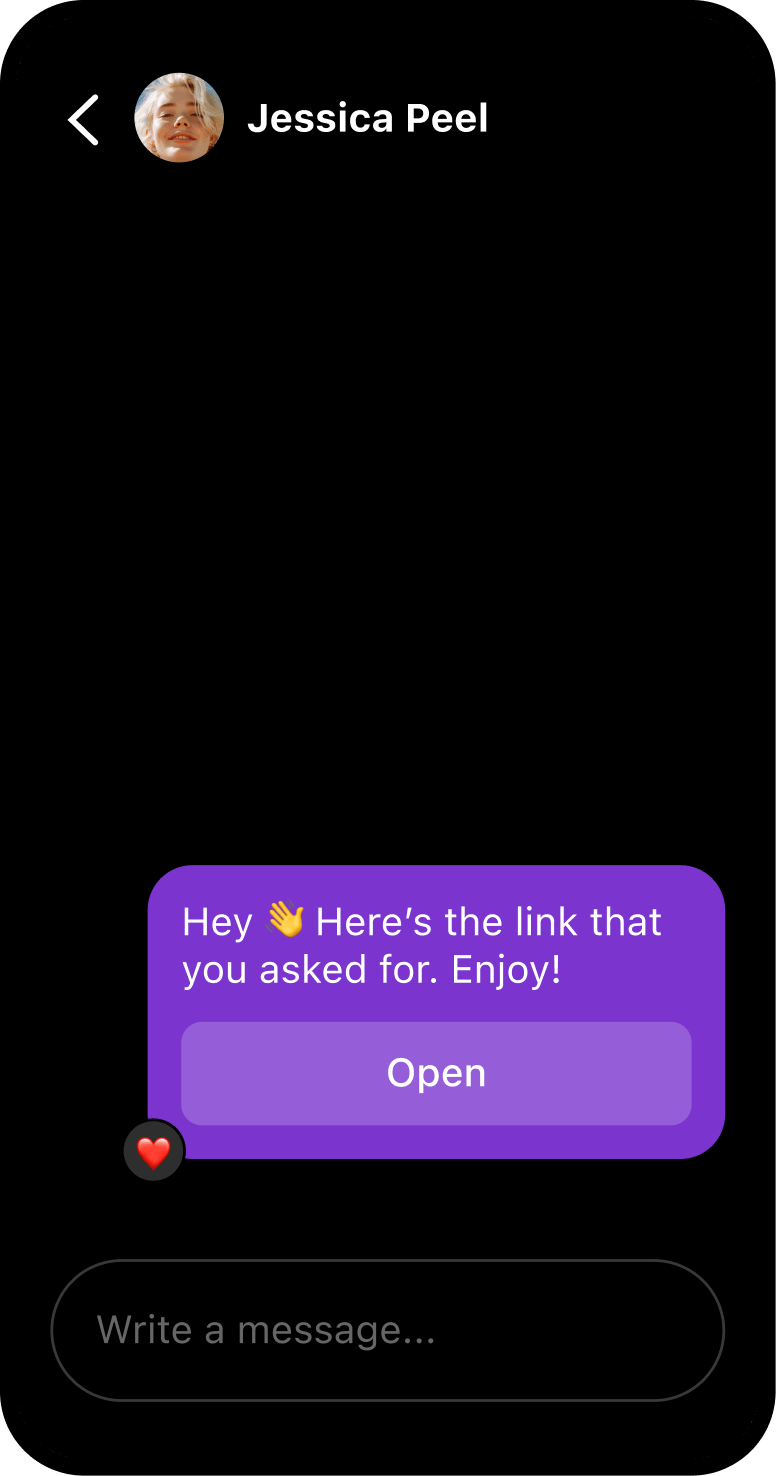
- Send links: Most creators have something they need to send to followers (affiliate links, product listings, booking pages, etc.). With Manychat’s Comment to DM template, you can make sure that everyone who wants the link gets it automatically. All they need to do is comment a specific keyword.
- Welcome new followers: The best time to start building a relationship with them is when they hit the follow button. With Follow to DM, you can do exactly that — write a custom welcome message to greet every new follower.
Learn more: How Follow to DM Welcomes Every New Follower for You
- Answer frequently asked questions: Those DMs you always get? The ones asking for the link to your website or YouTube channel? You can use Manychat to answer them automatically without ever having to open your inbox. All you need to do is set up trigger keywords (“website,” “YouTube,” “support,” etc.) and connect flows to them that guide users in the right direction.
On that topic: Instagram Keywords 101: How to Use Automation to Drive Engagement, Leads, and Sales
You know what to do. Sign up for Manychat.
8. Measure and adjust your strategy
At some point in your journey, you might go viral (yay!). Don’t worry if that win is followed by a period of low views and lost followers. That’s the classic virality trap.
“New creators often have a video that gets millions of views, and they think they’ve suddenly hit the content jackpot,” says Sarah. “Then, like a week or two later, they’re stuck in 200 views jail.”
If you want to build something sustainable (an audience, actual income), you have to run your Instagram like a business. And every successful business runs on data.
- Review your Instagram Insights weekly. Find out which posts worked and which ones didn’t. And whatever kind of content is getting saved and shared, make more of that.
Then push it further: can you turn it into a series? Test a new format? Add a different hook or editing style?
“Especially in the first three to six months of a new account or strategy, your job isn’t just to post — it’s to learn,” says Sarah. “Every post is a lesson. Every comment, message, or viral moment is data you should be analyzing.”
Learn more: Mastering Instagram Analytics: Transform Your Content with Post Insights
Frequently asked questions
Most new creators make the mistake of quitting too early or pivoting when things don’t take off.
It’s okay to pivot if your content truly isn’t working, but don’t judge performance on a single post — look for patterns across 10 to 20 posts. If nothing is getting saves, shares, comments, or follows, something needs to change (your hooks, topic, or format). But if a few posts are clearly outperforming others, you’re on the right track. You just need to double down on what’s working.
This is normal — dips often follow big spikes. Instead of chasing virality, ask: what specifically made that post work? Was it the hook, the topic, the format, or the relatability? Then test variations of it.
Use trends to attract new followers (discovery content), but make sure your personality and niche are still clear. If someone follows you after a trend video, they shouldn’t be surprised by the rest of your content.
The best posting schedule is one you can stick to. That said, you need to post more often than you think. If you can, aim for four to seven posts per week early on. Volume drives growth, but each post will also teach you what works.
Views are the most misleading metric for beginners. Instead, focus on signals of real interest:
– Saves (people want to come back)
– Shares (people think it’s worth sending)
– Comments (people have something to share)
– Follows (people want more from you)
A post with fewer views but high saves and follows is often more valuable than a high-view post that doesn’t convert.


Originally published: Mar 26, 2026
More stories worth reading
More content that's too good to miss