Ever since I was a little girl, all I’ve ever wanted is to make money by posting about someone else’s products. (If you’re chronically online like us, you probably get that reference. If you don’t, don’t worry — it’s just a meme.)
Goofs aside, getting paid to post about brands you love is kind of the dream. Luckily, you don’t need a massive following to make it happen today. If you’re a creator with some traction, you’re already in a good spot.
This guide will show you how to position yourself so that you appeal to brands and how to pitch to them in a way that actually gets a yes. Ready? Let’s go. 🏁
What it Means to Be a Brand Ambassador Today
Brand ambassadors are creators who post about how a brand’s products or services fit into their lives in exchange for money, free product, or both.
Brand ambassadors can have one-off deals with brands (like an agreement to post a single Reel featuring a specific product for payment) or ongoing relationships that involve multiple campaigns and platforms.
Examples:
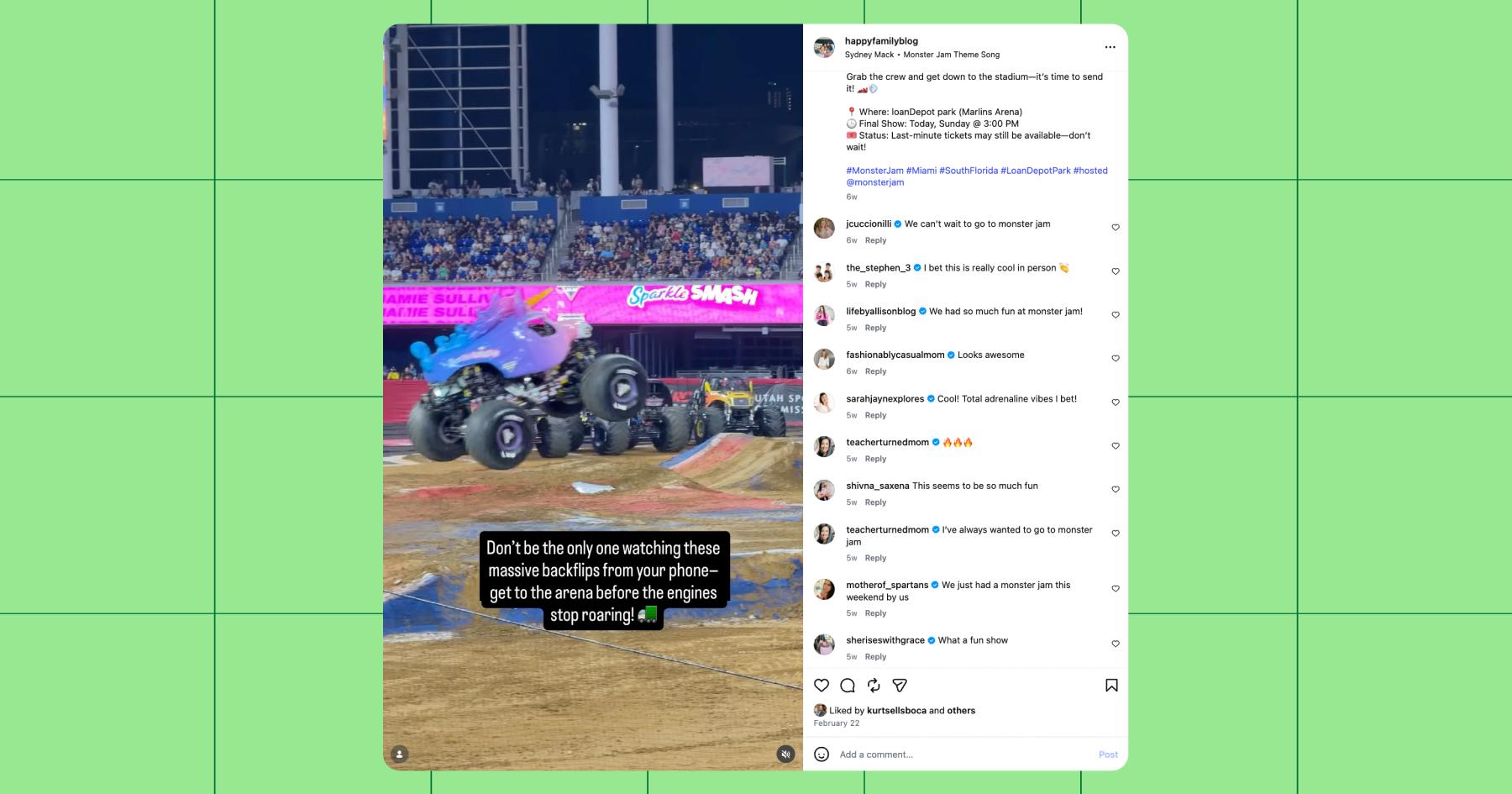
- One-off: Cristy Stewart-Harffman, a marketing professor and creator (@happyfamilyblog), often posts about experiences, hotels, or short-term rental homes in exchange for the experience itself.
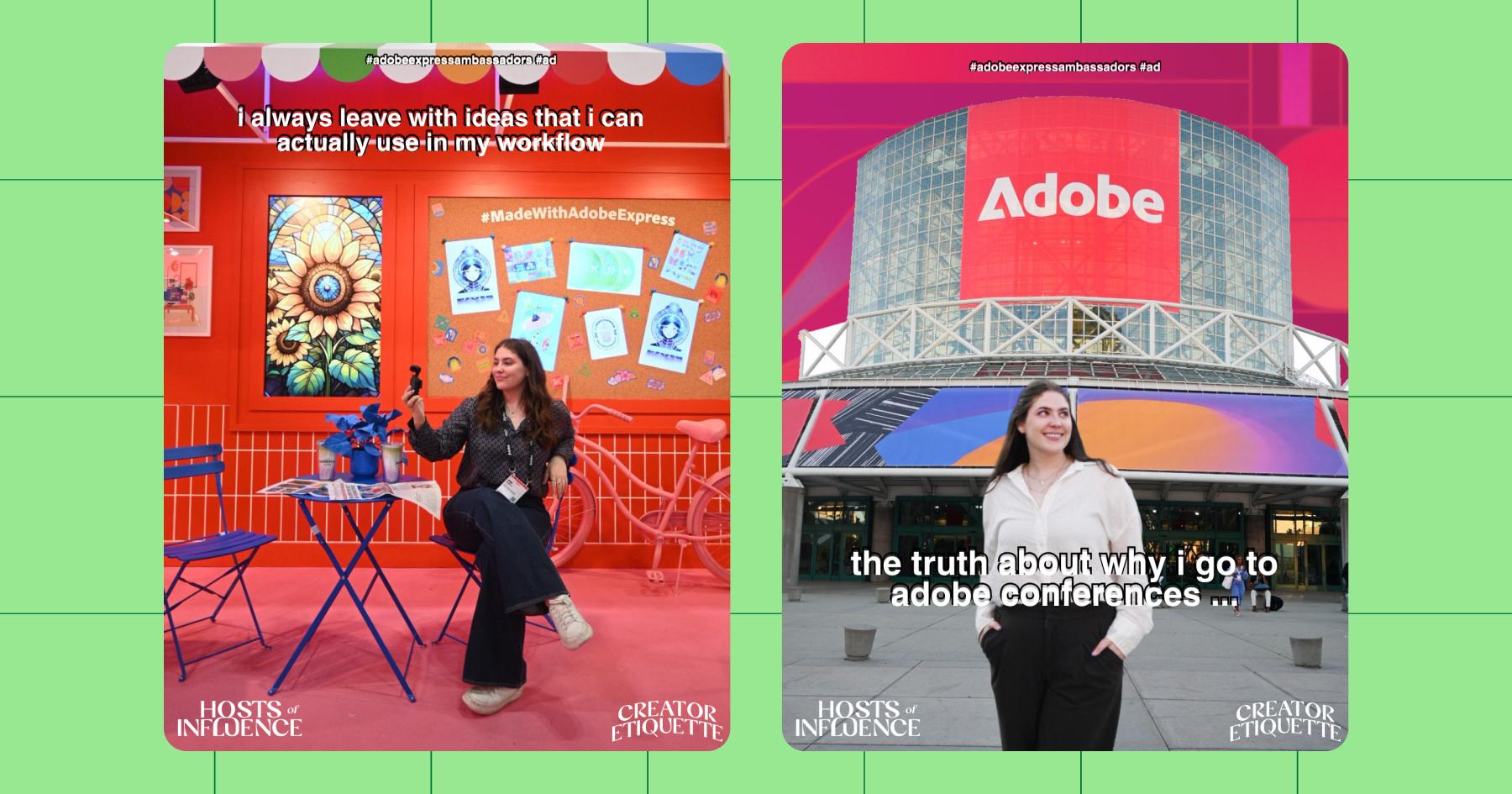
- Long-term: Gigi Robinson, a creator, entrepreneur, and author, has been an Adobe brand ambassador for years. She is compensated for content featuring Adobe and has free access to the Adobe suite.
If you want to learn how to become a brand ambassador on Instagram, keep reading.
How to Become a Brand Ambassador

If you’re already creating content and growing your following, this section is for you.
(If you’re not yet ready to start pitching yourself, check out How to Become a Content Creator on Instagram, which covers the basics.)
1. Position yourself for brand deals
Before you reach out to a brand, set up your profile so it looks like someone they’d want to work with.
Start with niche clarity: When someone lands on your page — say, an influencer marketing manager — they should be able to know what your content is about and who it’s for within a few seconds. Having a niche (fitness, skincare, tech, food, etc.) makes it easier for them to determine how your content relates to their products or offerings.
- Instagram bio: Clearly communicate who you are and what kind of content you create.
- Highlights: Use your highlights like a portfolio. If you’ve worked with brands before, you create a Highlight for branded Stories.
- Grid: Design your grid so that it’s scannable and includes consistent topics and content formats.
Optimizing your profile makes it as easy as possible for someone to get a feel for your content and determine whether you’d be a good fit for a collaboration.
Create content about the brands you love
Once you’ve got all of that in order, the next thing you should do is create brand-friendly content. You can try reviewing products you already use, creating tutorials, or even just tagging a brand whose product you use every day.
If you want more advice on making yourself appealing to brands, check out this episode of the
“Just Send It” podcast, which features Manychat’s influencer marketing manager, Jacob Andary.
2. Find and vet brands to work with
There’s no reason to wait for brands to find you. Instead, start building a list of brands you want to work with. (You’ll be thankful for this when you’re ready to pitch.) Consider:
- Brands you already use and like
- Smaller or DTC brands (more likely to say yes to newer creators)
- Brands with ambassador programs (easy entry point, even if perks are limited at first)
- Brands that work with creators similar to you
Once you have a list of brands, vet them. Determine whether the brand aligns with your niche and audience. Would you genuinely recommend this brand to one of your followers? If not, don’t do it — jeopardizing your audience’s trust isn’t worth it.
3. Pitch brands (and actually get a yes)
If pitching yourself to a brand sounds intimidating, don’t worry; you can find success with a short and simple email.
- Introduce yourself (provide a link to your social profile)
- Share why you like the brand/product
- Explain why your audience is a good fit (following size, engagement rate, niche)
- Include a clear idea of the kind of content you want to create
Example pitch
Subject line: Partnership pitch: [your name] & [brand name] on [social network name]
Hi there,
My name is [your name], and I’m [describe yourself, but keep it short]. Over the past [insert number of years], I’ve grown my following on [social network with link to your profile] to [number of followers]. My average engagement rate is [insert %].
I’m reaching out because I’m planning content for [insert time period]. In particular, [describe content in more detail].
Would [brand] be open to partnering with me to create this content? My audience is highly interested in [something about the brand/products that your followers connect to] and would love to learn how [brand] can improve their [benefit, such as workout routine, creative process, etc.].
If you’re interested in working together, I’d love to set up a time to discuss this further.
Until then, thank you for your time, and have a great day!
[Your name]
Advanced: Create a media kit
If you have the time and motivation to create a media kit, go for it. A media kit can be a huge help in getting brand deals — Gigi Robindon credits her media kit for helping her land 13 (!!) college ambassador roles with brands like Amazon, TikTok, Best Buy, and Tinder.
You can scroll through Gigi’s full 17-slide media kit on Business Insider; it’s basically a resume in presentation form. Gigi’s media kit includes a brief bio, her “why” (the reason she became a creator), a list of brands she’s worked with and press outlets that have featured her, and examples of past sponsored content she’s created.
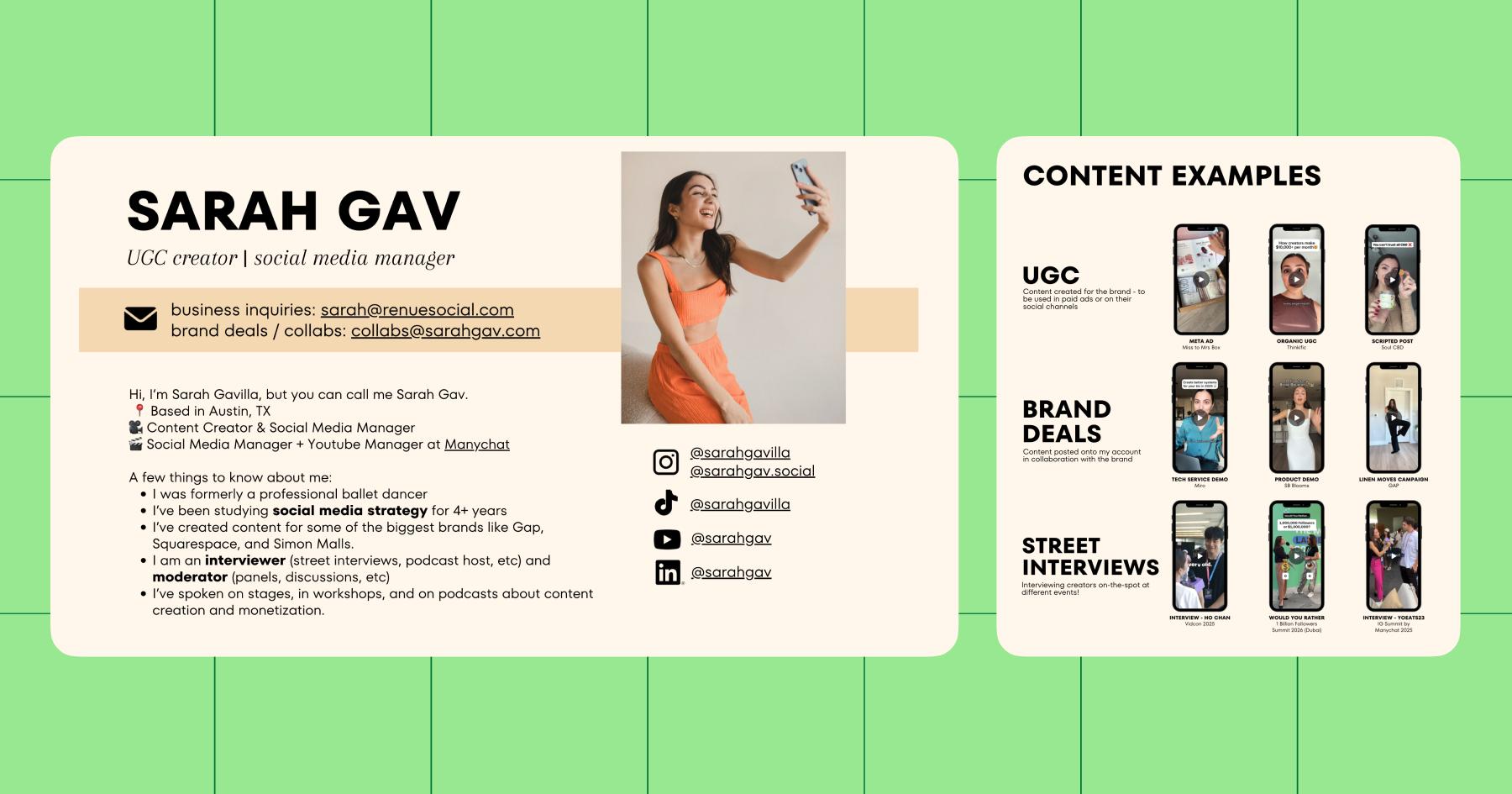
Creator Sarah Gavilla, who works as Manychat’s social media manager, also has a media kit. Her kit is hosted on a website so she can easily share it, and includes many of the same things as Gigi’s (a bio, past work, content examples, contact information, etc.).
Read this next: How to Land Your First Brand Deal (And Keep ‘Em Coming)
Other Monetization Avenues for Creators to Consider

Even if you haven’t landed a brand deal yet, you can start making money from your content. In fact, building some form of monetization early can make you more attractive to brands because it shows you understand how to drive conversions, not just views and engagement.
Here are a few ways to start earning while you work toward your first few brand partnerships.
Affiliate marketing
Affiliate marketing is one of the easiest ways to start working with brands. You don’t need to establish a formal partnership to be an affiliate; in many cases, you can just apply.
With affiliate marketing, you earn a commission when someone buys something using a link or code you’ve shared. Some of the most popular affiliate marketing programs include Amazon Associates, LTK (LikeToKnow.it), and ShopMy. You can also try joining a platform like ShareASale or Impact to gain access to affiliate links for hundreds of brands.
He Built a Business Selling Amazon Products | Just Send It Ep. 6 with Simply Sal Finds
Premium content
If you have an engaged audience, you can monetize directly. Platforms like Patreon, Substack, YouTube Premium, and TikTok Series all let you offer exclusive content in exchange for a monthly fee or one-time purchase.
This works especially well if you teach something (fitness, business, creative skills, etc.) or have a loyal following that wants more content. Even a small group of paying subscribers can generate consistent income, and as an added benefit, it signals to brands that your audience has cash to spend.
Digital products
Digital products give you the most control over your income. Instead of promoting someone else’s product, you’re selling your own, whether it’s an ebook, template, preset, or course you’ve made.
If you regularly get DMs with questions or advice requests, that’s a strong signal that there’s something you can package and sell.
There are many benefits of selling a digital good, including:
- Higher margins (brands aren’t taking a cut)
- You own the relationship with your audience
- Income isn’t tied to brand approvals or deals
Of course, this monetization method does require some upfront investment — for starters, you have to spend time creating the good, and then you’ll probably have to pay for a tool like Stan Store, Kit, Kanjabi, or Teachable to host it.
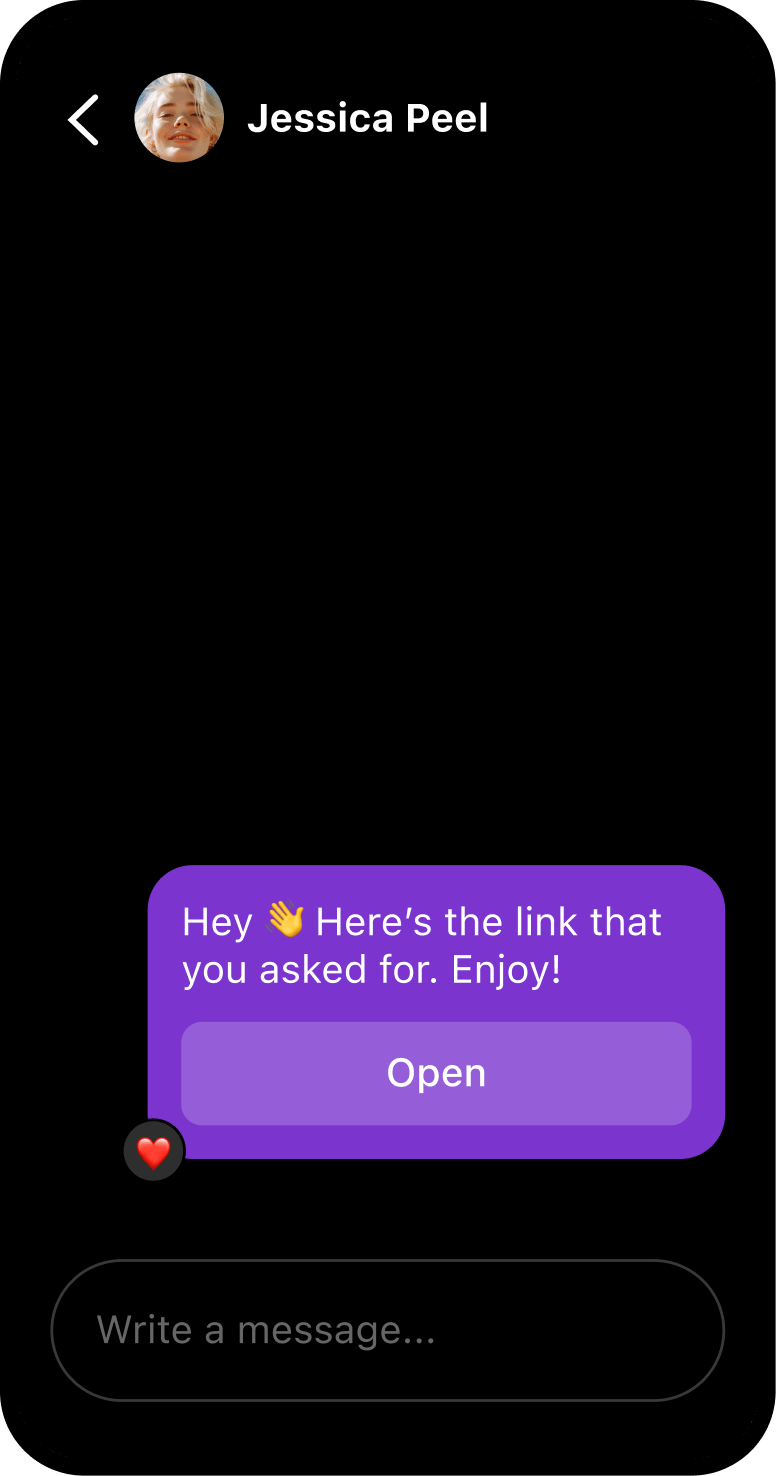
💡Pro tip: Once you have a digital good to sell, you can use Manychat to deliver it. For example, let’s say you post a reel about an ‘Investing for Beginners’ course you’ve created. Then, you set up a Comment to DM automation so that anyone interested can comment a specific word — say ‘invest’ or ‘money’ — and get a DM with a link to the course.
Looking for more advice? Check out our monetization playlist on YouTube.
Frequently asked questions
You don’t need a large following. Many brands work with nano-influencers (< 10,000 followers) because they often have higher engagement rates and niche audiences. Some creators start landing brand deals with as few as 5,000 followers if their audience is engaged and relevant.
Brands look for creators who post consistently, have a clear niche, and have strong engagement. Engagement rate matters more than follower count at this point. Nano creators can average around 2% to 3% engagement, significantly higher than larger accounts, which average around .7%. Tagging brands, creating content featuring their products, and maintaining an active community increase your chances of being noticed.
Both, but proactive outreach usually leads to more immediate results. Many creators secure partnerships by pitching brands directly with a clear value proposition (audience, engagement, niche). Waiting for inbound offers usually requires an established track record or a larger audience.
Brands prioritize audience fit, engagement, and authenticity over follower size. High engagement indicates real influence, while niche alignment ensures the audience matches the brand’s target customer. They also evaluate content quality, consistency, and whether followers actively interact (comments, saves, shares).
Both. Early-stage ambassadors are often compensated with free products. Paid deals depend on audience size and engagement. For example, nano-influencers may be compensated a few hundred dollars (or even less) per post, while larger creators can charge upwards of $10,000. Compensation typically increases once you demonstrate consistent results.

Originally published: Jan 7, 2022, Updated: Oct 31, 2025
More stories worth reading
More content that's too good to miss