Where are your people? The ones who will enjoy your content and buy your stuff?
It’s a good idea to find out, so you don’t end up in a ‘pitching hot dogs to a vegetarian’ situation. (Oops! 😅)
Luckily, answers aren’t far — just a scroll away, in fact. So, keep reading to see who’s on each social media platform today and how they use it.
Key Demographics to Know, Broken Down by Social Platform

To put together this guide, we reviewed extensive data from companies like Hootsuite, Sprout Social, HubSpot, and the Pew Research Center. You’ll also see some references to Algorithm Fatigue: 2026 Creator Report on Breaking Through the Scroll (a Manychat original).
Jump to the platform(s) you want to know about, or enjoy the steady drip of stats.
📸 Instagram: The people’s favorite place to post
Instagram has a large active user base; 3 billion people use the app every month. It’s one of (but not the) most popular social platforms around, and it’s evolved a lot since it hit the App Store in 2010.
Today, millennials and Gen Zers make up the most significant chunk of users, and they mainly use the app to post, watch Stories and Reels, and discover new brands and creators.
Nearly half of all U.S. adults use Instagram
According to Hootsuite, 47% of American adults use Instagram, and within that group, the majority (76%) are between the ages of 18 and 29 — Gen Zers and millennials. Adults aged 30 to 49 (Gen Xers) are the next-largest group of users.
Globally, men and women use Instagram pretty evenly (50/50). However, the gender demographics vary by country.
In the U.S., the user base splits 55% women and 45% men. In India, it’s the opposite: 67% of users are men versus 33% women.
This is true for most social platforms; the global demographic has an even gender split, but things look slightly different when you drill down into a specific country’s user base.
Instagram’s audience is massive and diverse
Instagram is worldwide. India has the largest Instagram user base by far (472 million people), followed by the United States (179 million) and Brazil (149 million). It’s used in nearly every country in the world, save a few where it’s restricted, including China, North Korea, and Iran.
People use Instagram to post, scroll, and discover brands
Hootsuite reports that the top activity Instagram users like to do is post (70%). Aside from that, people open Instagram to scroll through funny or entertaining content (67%) and to interact with brands (60%).
When it comes to the latter, you’d be amazed at how many people use IG to shop and vet brands. Forbes says that 92% of Americans who use Instagram follow a business, and among those users, 26% visit business profiles every day.
So…if you’re a brand, make sure you’re on Instagram.
👤 Facebook: Still a powerhouse for selling and running ads
It’s 2026, and somehow, Facebook is still the most popular social media platform in the world. Its active user base matches Instagram; about two billion people log in daily.
Facebook still dominates in visits
Facebook is the third-most visited website in the world, just behind Google and YouTube. Even so, daily usage is down. On average, American users spend just over 30 minutes a day on Facebook, which is less than that of TikTok, Instagram, and even the artist formerly known as Twitter.
Facebook’s audience skews older than most social platforms
Compared to Instagram, TikTok, and Snapchat, Facebook’s users are older. It’s most heavily used by Gen X, followed by baby boomers and millennials.
Facebook users like to shop and discover products
Facebook (60%) comes in second to Instagram (61%) as the most popular platform for product discovery, mainly due to Meta’s ad capabilities — more on ads in a bit.
On top of that, there’s also Facebook Marketplace, where 40% of the platform’s user base actively shops. In fact, 16% of active Facebook users log on solely for its Marketplace features.
Aside from shopping, Facebook users like to watch video content
Despite the popularity of TikTok and YouTube Shorts, video still accounts for a large share of time spent on Facebook (40%). Keep in mind that creators can post reels to both Instagram and Facebook, so a lot of this video content is likely cross-posted.
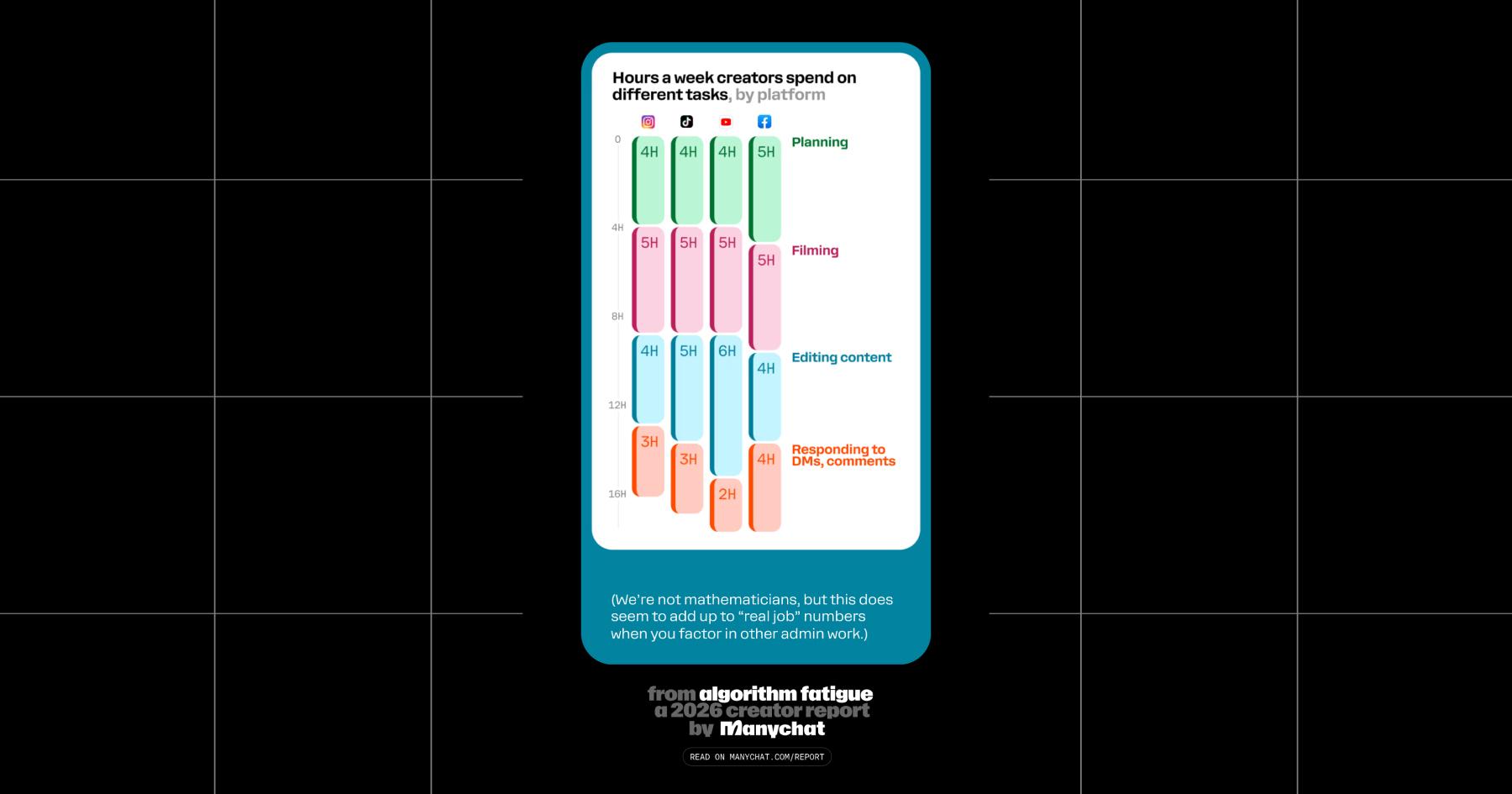
Manychat’s creator report found that creators spend more of their week on Facebook-related tasks than on any other platform — aside from YouTube, which requires equal effort.
Most of that time is spent planning content and responding to DMs and comments.
If that rings true for you, you can take back some of that time by signing up for Manychat and automating your Messenger chats.
Facebook is a must for marketers
Facebook remains a reliable marketing channel that’s hard to ignore. In fact, 40% of marketers say Facebook is one of their top three drivers of ROI among social media platforms.
Between relatively low ad costs, strong conversion rates, and consistent ROI, advertising on Facebook is more affordable than you might think. And on average, advertisers see a conversion rate of 8.78% across industries, with particularly strong performance in sectors like dental services, industrial and commercial businesses, and real estate.
You might like: How to Create Facebook Ads That Sell
🤳 TikTok: Where trends take off, and the entertainment never stops
TikTok’s total user base is around 1.9 billion, which is smaller than those of Instagram and Facebook. It also has fewer daily active users (around 90 million) than other platforms, and the recent change in ownership has also contributed to a dip.
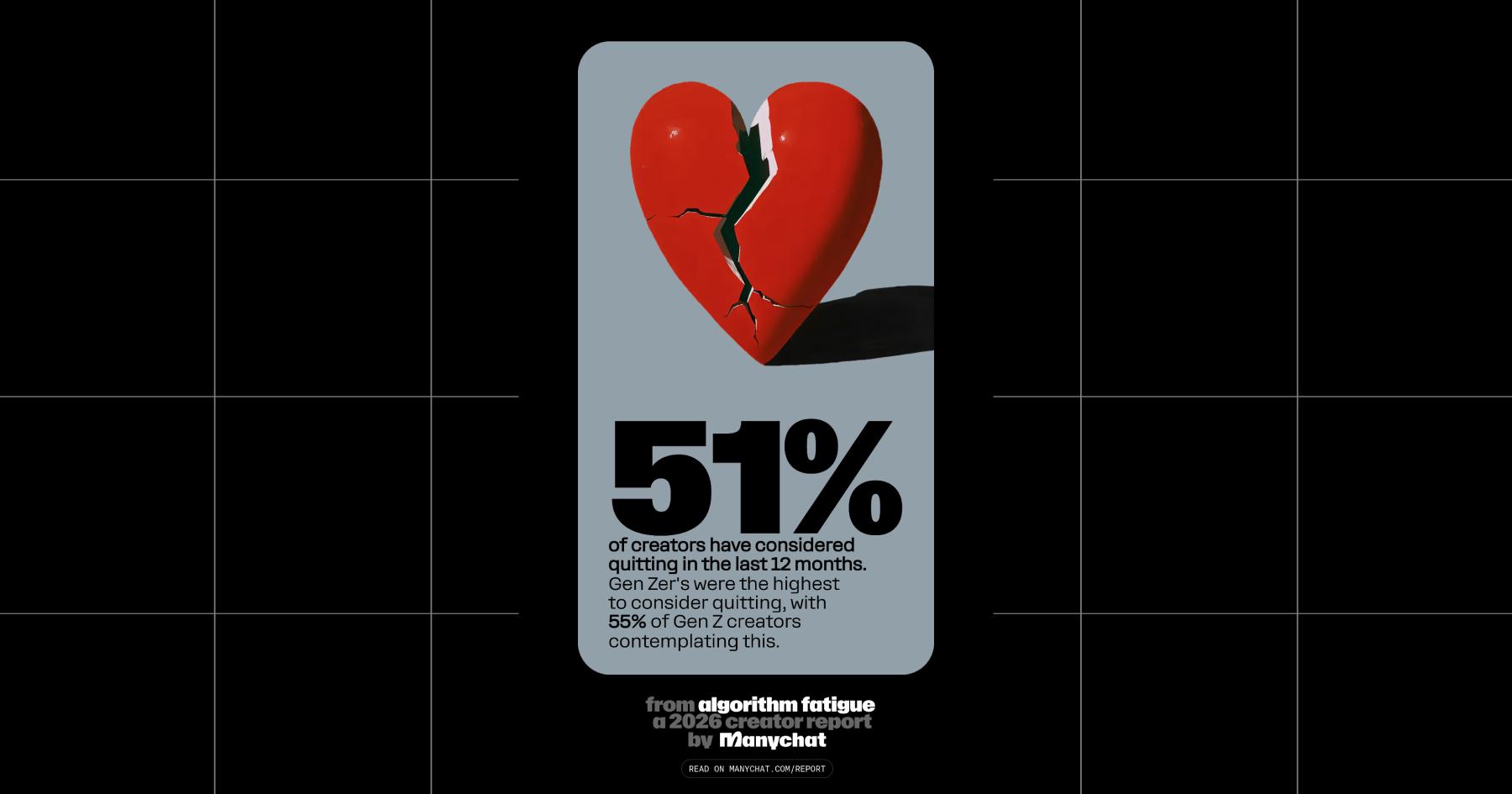
Creator burnout is also a problem (especially among Gen Zers) due to its frequent algorithm updates.
Scrollers spend more time on TikTok than anywhere else
Globally, the average time spent on TikTok is 95 minutes per day, more than on any other social network. In the U.S., adults spend about 52 minutes a day on TikTok, compared to 33 minutes on Instagram.
TikTok’s audience is young
Gen Z and millennials primarily use TikTok. More than half (55%) of the platform’s active weekly users are between 18 and 34 years old. Only 14% are aged 55 or older.
TikTok is used like a search engine
According to House of Marketers, 62% of Gen Z use TikTok as a search engine, and one in 10 of them is more likely to rely on TikTok than Google for everyday answers. Basically, TikTok is Gen Z’s go-to place for product recommendations, travel ideas, tutorials, and entertainment.
Trends, duets, and challenges are part of the platform’s draw
TikTok has an especially strong participatory culture compared to other platforms. Duets, stitches, reaction videos, dance challenges, and trends all contribute to this. TikTok’s #dance category alone has over 340 billion (!!!) views and counting.
Almost half (43%) of total TikTok users have uploaded a duet, and 41% have uploaded a video reacting to another video. And while there’s no way to measure the sheer number of people who have replicated a TikTok trend, I imagine it’s a lot.
TikTok delivers higher engagement than most platforms
Engagement rates on TikTok consistently outperform Instagram and Facebook, especially for smaller creators. For instance, TikTok creators with 100k followers can achieve an engagement rate as high as 5%, compared to Twitter (0.3%) and Instagram (1.10%).
ICYMI 👀 Manychat x TikTok: The Future of Creator Conversations is Finally Here (Now Live in the U.S.)
💬 WhatsApp: The most popular messaging app in the world
WhatsApp is different from Instagram, Facebook, and TikTok. You can’t really post or scroll on the app. Instead, people use it to stay in touch, and brands use it as a channel for MMS marketing and customer support.
WhatsApp is the most widely used messaging app in the world
With over 3 billion monthly active users, WhatsApp is the world’s most popular mobile messaging app. It’s used in over 100 countries, and more than 100 billion WhatsApp messages are sent each day.
Its growth has been especially strong over the past few years, with one billion users joining the platform since 2020. Basically, WhatsApp is going nowhere soon.
WhatsApp usage is strongest outside the U.S.
WhatsApp has the largest user base in countries such as India, Brazil, Indonesia, Russia, and Mexico (in that order). In other words, if you’re building a global brand, it’s a good idea to use it.
WhatsApp is built for direct communication and marketing
Users spend close to an hour per day on WhatsApp, mainly to chat with friends, family, and businesses. This is part of what makes WhatsApp an ideal platform for conversational marketing and customer support.
And it’s something that consumers want, too. In one survey, 66% of respondents said that they made a purchase after communicating with a brand on WhatsApp.
🎥 YouTube: Part streaming service, part search engine
Oh, YouTube. Personally, it’s my favorite social media platform. It’s got everything: educational content, entertainment, news, music, documentaries, and on and on and on.
Considering that, it’s no wonder that it’s thought of as the second most popular social media platform in the world.
Its user base is diverse, from parents who want to play Mrs. Rachel and Cocomelon for their kids to people like me who’ve fallen in love with YouTube-first creators and channels (Emma Chamberlain, Brittany Broski, Smosh, Dropout, Good Mythical Morning, Second Try, etc.).
YouTube reaches more people than almost any other platform
YouTube rivals Facebook in overall reach and surpasses platforms like Instagram and TikTok in total traffic. 62% percent of internet users in the U.S. report using YouTube every day; 92% use it weekly.
YouTube users are diverse in age
YouTube also has the most age-diverse audience; the largest share of YouTube’s user base falls between the ages of 25 and 34, followed by 35 to 44, then 18 to 24.
YouTube is more of a streaming service than a social platform
Unlike other social platforms, YouTube functions as a content discovery engine and an entertainment hub. The most popular channels on YouTube are music and children’s content (Baby Shark remains the most-viewed YouTube video of all time).
And it’s also used for news: 35% of U.S. adults say they regularly get news on YouTube.
🫥 Snapchat: The youths’ preferred way to chat
Snapchat remains a mystery to me. It’s been around for a while (2011), but today, it has a young user base — even younger than TikTok’s.
You can post content on Snapchat as Stories. In fact, Instagram’s Stories feature is modeled after Snapchat’s. But posting isn’t the biggest draw for those on Snapchat. It’s chatting.
Snapchat is mostly used by Gen Alpha, Gen Z, and Millennials
Snapchat is one of the best platforms for reaching younger generations. Snapchat for Business claims that Snapchat reaches 90% of the 13 to 24-year-old population and 75% of the 13- to 34-year-old population.
Snapchat is built for private interactions
Unlike platforms that encourage passive scrolling, Snapchat’s most popular features (camera, chat, and Stories) cater to privacy. And that’s part of why people open the app: Sprout Social reports that users open Snapchat nearly 40 times a day to connect with friends, check on an interest, or make purchase decisions.
Snapchat has evolved into a creator platform
On Snapchat, ads and creator content often blend seamlessly into Stories, making them feel more personal and organic than, say, a sponsored Facebook ad. This is why creator activity on Snapchat has grown significantly in recent years, with creator posts up 40% since 2023. Users are enjoying the shift too: 52% of Snapchat users view creator content every day.
Snapchat influences purchasing decisions, especially for Gen Zers
A significant percentage (61%) of Gen Z users report making purchases influenced by Snapchat content, and many (56%) have shared an ad with a friend.
Across the board, it’s clear that creators influence scrollers’ purchasing decisions:
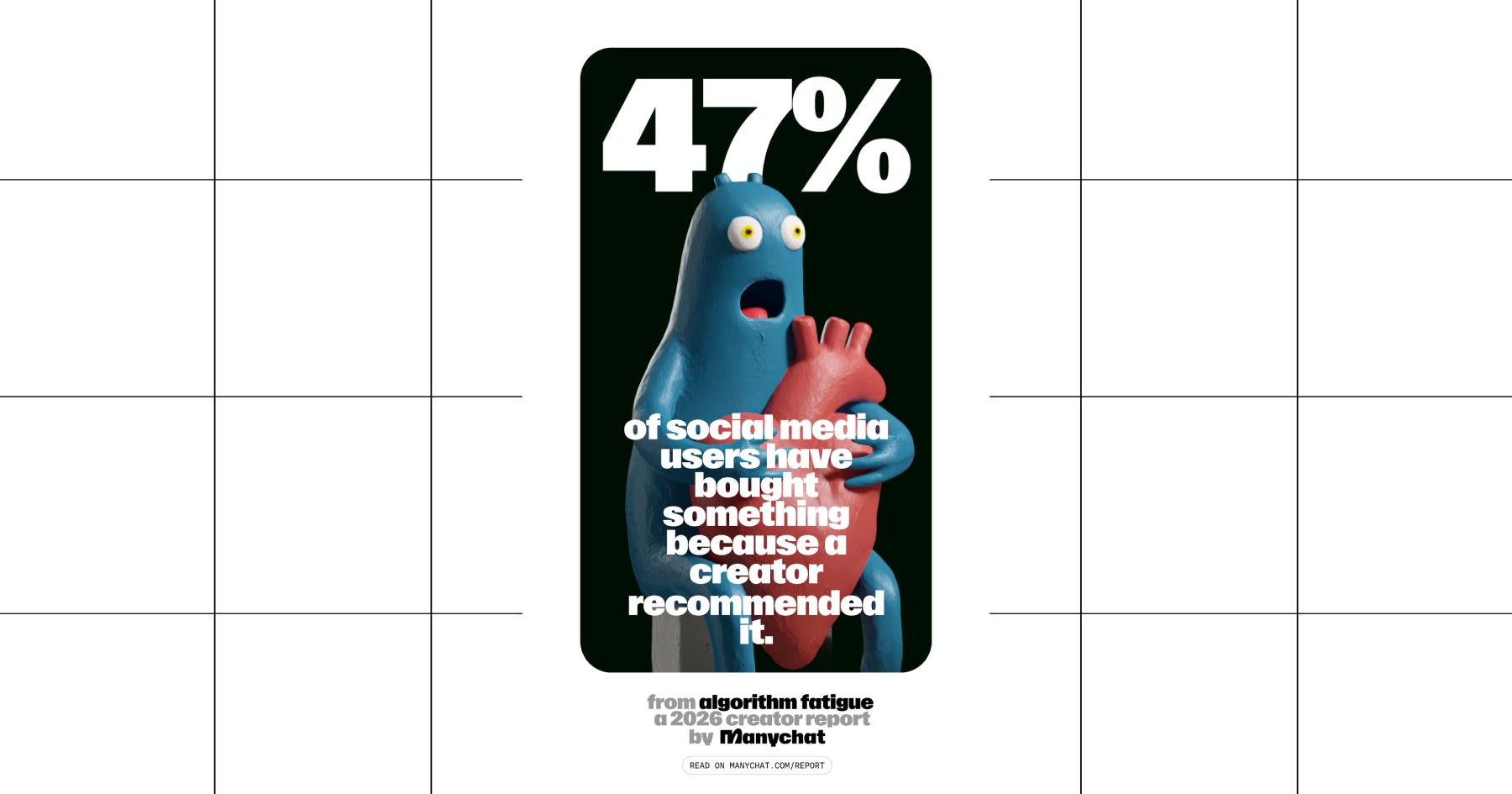
So, if you’re a UGC creator, Snapchat could be a great platform to experiment with (and also, TikTok!).
Data Making You Dizzy? Here Are the Takeaways

Bottom line: Don’t be everywhere. You don’t need to be. Just focus on the platforms that make sense for you based on who you’re trying to reach and what you’re trying to do.
And as a final treat: a chart!
TikTok | YouTube | Snapchat | ||||
User base (total) | 3 billion | 3 billion | 1.9 billion | 3+ billion | 2.7 billion | 800 million |
Average user age | Gen Z, millennials, Gen X | Gen X, Boomers, Millennials | Gen Z, millennials | Gen Z, millennials | Gen X,millennials | Gen Alpha, Gen Z, Millennials |
What users do | Post content, watch videos, discover creators/ | Shop, watch videos, join groups, interact with brands | Watch videos, post, and research | Message friends, family, and businesses | Watch videos, research | Chat with friends, watch Stories |
Use this channel if | You create content and want to grow an audience and monetize | You want to run ads or build an online community (Facebook groups) | You create short-form content, and that’s culturally relevant | You need a new channel for marketing/customer support | You create long-form content | You’re targeting a young audience via personal content |
Creatorfriendly? | Yes | Yes | Yes | No | Yes (Stories) | |
Brand-friendly? | Yes (brand building, ads, collabs) | Yes (ads) | Yes (UGC, collabs, ads) | Yes (MMS marketing, customer support) | Yes (ads) | Yes (UGC, collabs, ads) |
If you liked this and your brain hasn’t melted yet, there’s a whole lot more to discover — Manyblogs, if you will. How about you start with these:
- So You Wanna Be a Creator?
- The TikTok Starter Kit: Essential Steps for Getting Your TikTok Together
- Algorithm Fatigue: A Look At Being A Creator in 2026
Frequently asked questions
No, and trying to is one of the fastest paths to burnout. Each platform attracts different audiences and behaviors, and success comes from choosing the channels that actually align with your content style and goals. It’s far more effective to go deep on one or two platforms than to spread yourself thin trying to keep up with all of them.
High engagement doesn’t always equal sustainable growth or income. TikTok is incredible for visibility, but creators often struggle to turn TikTok views into owned relationships. Platforms like Instagram and Facebook make it easier to move followers into the DMs, where real monetization happens.
Not at all. Many creators successfully monetize with smaller, highly engaged audiences by focusing on direct conversations and clear next steps. Automation can help by getting the right people (your ideal customers) the information they need, even when you’re offline.

Originally published: Nov 3, 2020, Updated: Feb 13, 2026
More stories worth reading
More content that's too good to miss