We Asked Creators at IGSxM How They’re Monetizing — Here’s What They Said

Did you miss Instagram Summit by Manychat? Don’t worry; we’ll be back at it next year with even more inspiration and insights for you. In the meantime, we’ve rounded up the biggest highlights from this year’s event right here on the blog (and over on Instagram, too).
On that note, if you’re looking for tips related to monetization, you’re in the right place. Ahead, we’ve organized the best takeaways from the creator roundtables at IGSxM IRL and the virtual sessions streamed around the world (literally).
Whether you’re a content creator or just creator-curious, this recap distills the advice, Aaha! moments, and proven playbooks you’ll want to carry into your next chapter.
The Most Popular Paths to Monetization Today

Views and followers might look impressive, but they don’t pay the bills. Today’s top creators know that real growth comes from strategy — not virality — which is why the conversations at IGSxM focused on monetization systems that keep working long after your post goes live.
Headliner Vivian Tu (@your.richbff) said it best: “Building wealth through content creation isn’t about getting rich quick — it’s about getting rich smart, and staying rich for the long haul.”
With that in mind, let’s talk about some of the monetization paths creators are finding success with today.
1. Brand collaborations: The bread and butter of the creator economy
Beyond the Single Stream: Building Multiple Revenue Engines That Work Together was one of the most anticipated sessions at IGSxM this year. Across the panel, the message was clear: The future belongs to creators who think like brand owners, not ad slots.
At the top of the session, Brock Johnson (@brock11johnson) made the point that brand collaborations need to be reframed as sustainable partnerships, not one-off sponsorships.
“Making money as a creator used to be simple — you land a brand deal, post some content, and hope another one rolls in before rent’s due. But that game is over,” he said.
Brock described the modern creator business model as stacked revenue streams that work together (brand partnerships, affiliate sales, digital products, subscriptions). He made the point that in a crowded industry, diversifying how you monetize is one of the best ways to “…grow without burning out or selling out.” We’ll get to each of these paths, but for now, let’s keep talking about brand deals.
Karen Civil (@karencivil) pointed out that the new creator economy operates on trust, not transactions, saying, “I want to get paid to be myself.”
For Karen, brand partnerships only work when they extend her personal identity instead of distorting it. She’s built a career by turning alignment into equity, choosing long-term, values-driven relationships over quick cash. “I’ll never step over a dollar to pick up a nickel,” she said, reflecting on how discernment sustains both income and integrity.
Hannah Wilson (@ihannahwilson) echoed the importance of relationship depth, not deal volume. Early in her career, she said yes to anything; now, she only works with brands she’d “…die on a cross for.” Rather than chasing every $5K sponsorship that comes her way, she prioritizes loyalty and long-term collaboration. “When a little birdie offers me a bit more, I stay loyal — because relationships pay off longer than one post.”
From the agency side, Can Ahtam (@canahtam), head of creator relations at Viral Nation, reminded the audience that credibility is built on consistency. “If I work with you today on a diaper brand, I hope you don’t work with another diaper brand next month,” he said.
The point: Creators must protect their brand narrative the same way marketers do. “Your audience can sniff inauthenticity from a mile away. Build a relationship with one brand and upsell — that’s how trust compounds.”
2. Affiliate income: The everyday earner
After being laid off, Janesha Moore (@janeshamoore) built a six-figure affiliate income stream in under six months. During her session at IGSxM, she shared her tips for scaling income without waiting for brand approval. “It’s not about being chosen — it’s about you sharing things that are authentic to you,” she said.
Janesha posts her height, weight, and size in her outfit reels, something that helps her content stand out in a crowded feed.
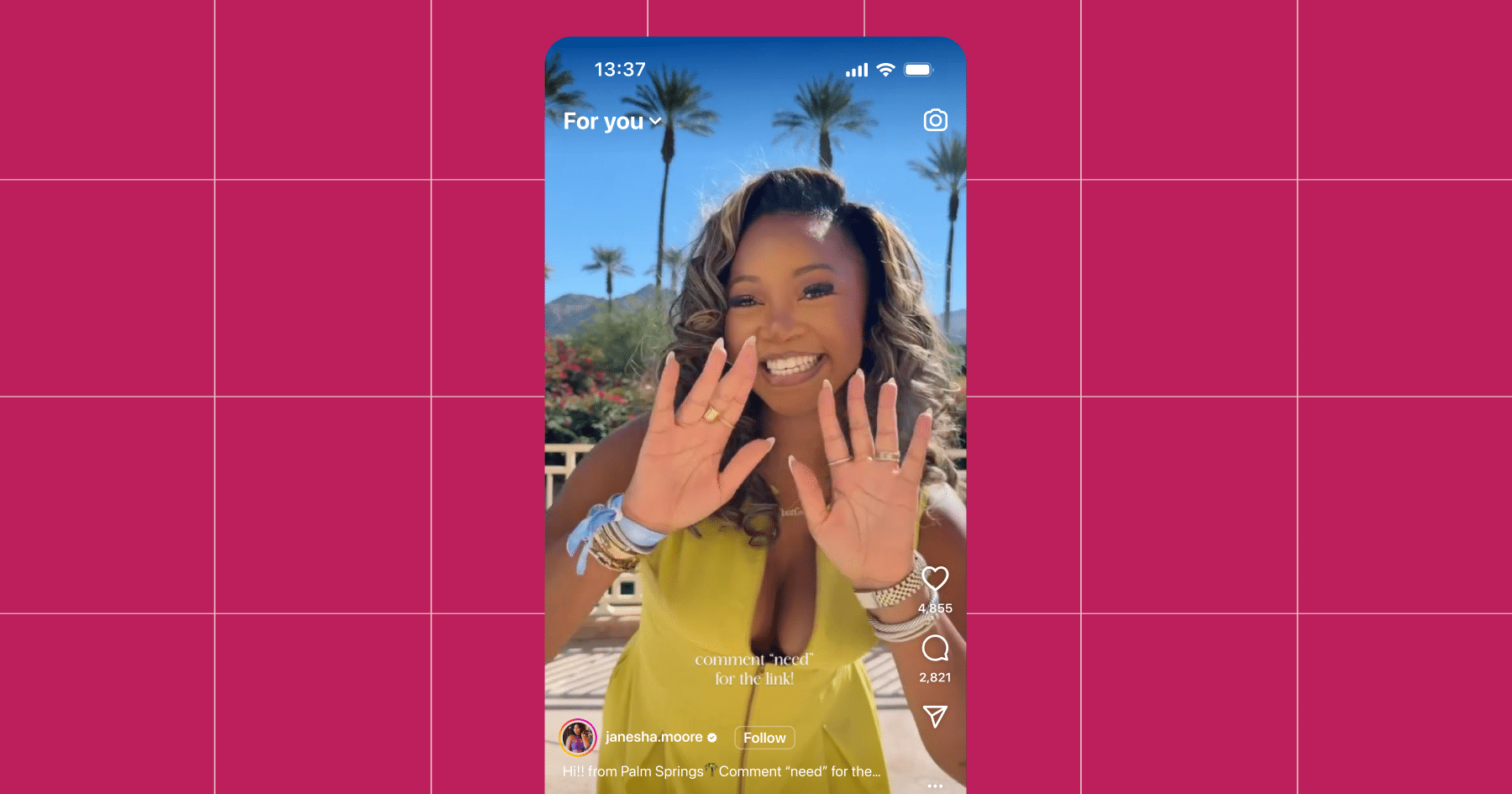
“When I put my business out there, it drove my business up. People see me as a solution instead of just a mood board.”
Janesha also stressed the importance of consistency, calling it the differentiator between amateurs and creators earning six figures. Then, she gave away her formula for financial freedom:
Consistency + Community + Affiliate Links + Manychat = Financial Freedom 💸
If you’re looking to get into affiliate marketing, Janesha’s formula is a great, creator-tested approach to start with. Here’s how Janesha puts it into action:
- She posts often (at least every other day).
- She builds community with her followers by responding to nearly every comment on her posts.
- She links products through platforms like ShopLTK, Shop My, Collective Voice, and Amazon Influencer.
- She includes a clear CTA in every post — something like “Comment ‘need’ for the link.”
- She sets up a Manychat automation for each post to deliver those links. “If my post is live, that means my automation is already live,” she says.
3. Digital products: Make it once, sell it forever
Many creators are turning to digital products as a way to avoid trading hours for income. Instead of relying on one-off brand deals or gigs, they can package their expertise into a digital asset (such as a course, template, or eBook) and open themselves up to limitless sales opportunities.
When paired with an effective marketing engine, this can generate consistent, passive income, which brings us to Conar Fair, co-founder of @OnePeakCreative, who turned a digital course into an eight-figure business with an ad shot on an iPhone.
In his IGSxM session, The $10 Million Video Ad Funnel Formula, Conan talked about how his team created an online course to teach creators how to make viral TikToks and Reels. To sell it, they developed one video ad (shot on an iPhone) that perfectly mirrored what the course promised: engaging, relatable video storytelling that converts viewers into fans.
That ad became the front door to the funnel — it ran across Instagram and Facebook, driving cold traffic to a landing page where people could purchase the course. The results?
- $2.5M in course sales
- 150K new leads
- A system that runs 24/7 with no extra manual work
Already have a digital good to offer? Learn how to sell it: How to Create Facebook Ads That Sell
4. Memberships and subscriptions: The long game
The public feed is fading, and with it, the illusion that reach equals stability. Engagement is down, attention is fragmented, and 78% of users now prefer private communities over public feeds.
During his session, “Surviving the Era of Unsocial Media,” Eugene Healy (@eugbrandstrat) put it this way: “We’ve entered a social media recession.” Eugene called this shift “…the move from coliseum to the library.” In other words: a transition from loud, performative marketing to quiet, intentional spaces built on trust and belonging.
In the library, brands don’t shout; they sit beside people. They build what Eugene calls brand intimacy by showing up “quietly, respectfully, and purposefully.”
Natalie Franke (@nataliefranke), Head of Marketing at Flodesk, sees the same pattern from the creator side. Her “creator-to-CEO” model reframes success as ownership: move followers on platforms you rent, like Instagram and TikTok, to spaces you control — email lists, private groups, and memberships.
In these owned spaces, you can nurture trust, sell products, and build a business that doesn’t disappear with the next algorithm update. “Followers don’t equal security, but email — and owned access — unlock your freedom and your future,” she says.
Memberships and subscriptions are the next evolution of that ownership model. They turn followers into a community, and a community into recurring income. In Eugene’s terms, they’re the antidote to the attention economy: a return to chosen connection.
Make Those Money Moves 🤑

Ready to take the next step toward a stable income stream? Or two? Or three?
Here’s what to do now:
- Turn free content into a funnel. Use posts and Reels to educate or entertain your audience, then once you have their attention, lead them toward something paid.
- Experiment with digital products. Bundle your top-performing content into a course, template, or guide to maximize its impact. Test different pricing models, and remember that your audience’s willingness to pay will grow with their trust in you. (For inspiration, visit The Creator Economy Is the New Indie: Zines, Blogs, and Substack.)
- Choose long-term growth over quick cash. I know it’s hard, but it’s best to pass on brand deals that don’t align with your values or interests. Your followers don’t want to feel like you “sold out,” so focus on relevant opportunities with longevity.
- Lead your community without doing it all. Create spaces (group chats, private communities, or memberships) where followers can connect, even when you’re not present. Patreon, Substack, Discord — there are plenty of platforms out there that make it possible to do this on a budget.
- Invest in owning your audience. Build your contact list on channels you control — like your email, membership hub, or subscription platform — so your income isn’t tied to algorithms or app updates. For help with this, check out The Instagram Creator’s Guide to Collecting Emails.
And if you still need more ideas, we’ve got you covered:
Or, explore more recaps from Instagram Summit by Manychat:


Originally published: Oct 28, 2025, Updated: Nov 13, 2025
More stories worth reading
More content that's too good to miss