The internet is alive with hot takes about what AI will do to humanity. One minute, it’s robots stepping on our skulls like The Terminator, and the next, some dudes are hoping those robots will be their girlfriends.
Lately, it feels like every news story is either some nefarious political death trap or someone demonizing the use of AI, pitchforks fully extended. I’m not here to take sides in the dominant hysteria of the day.
But there is a question worth asking — especially within the purview of social media: What happens when AI becomes the better creator? (And what do we mean by “better”?)
Playing Against the House (Simulation)

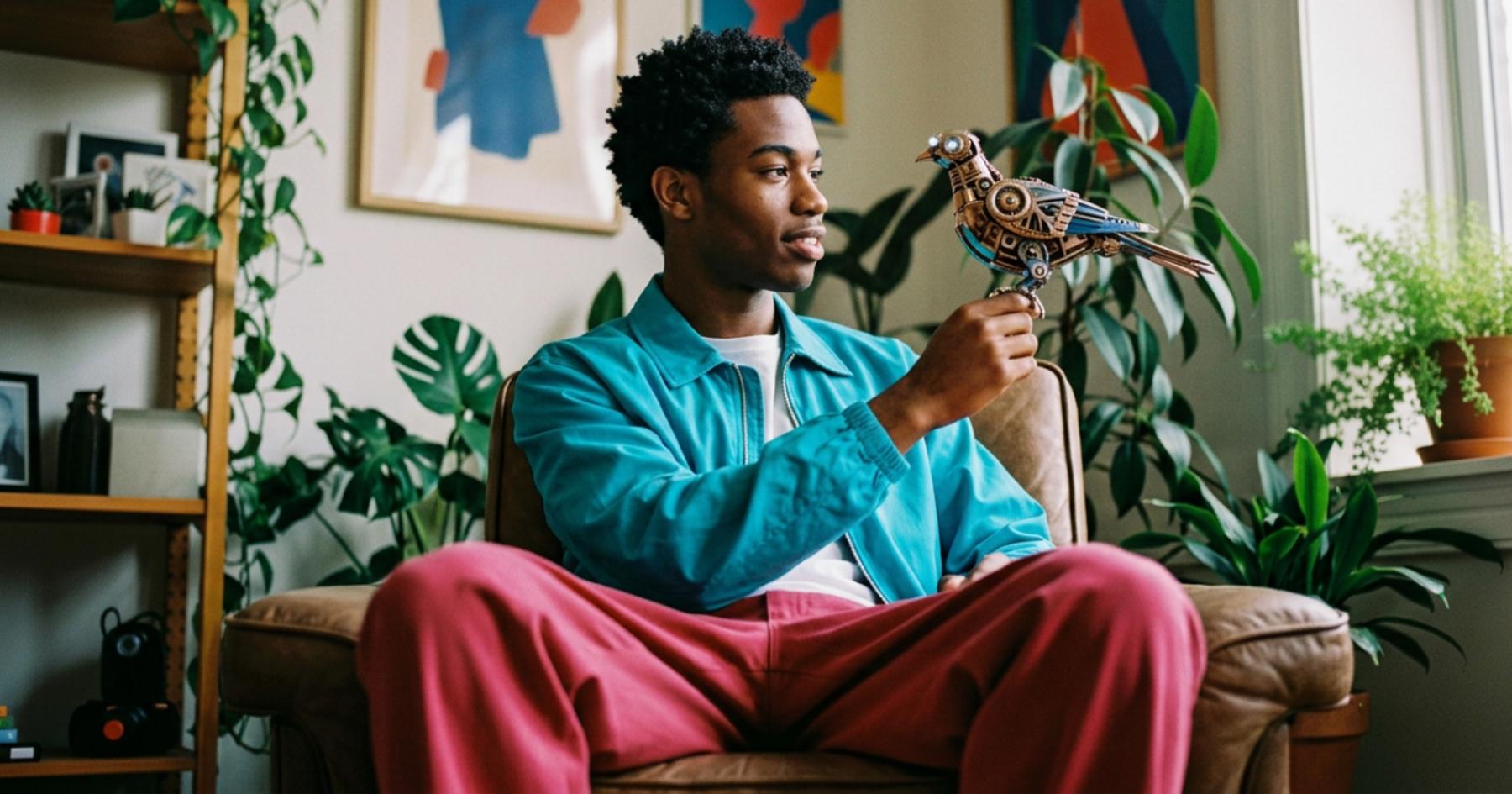
Franz Kafka once wrote, “A cage went in search of a bird.” It examines the central notion of what we’re becoming: we built a system that rewards simulation, and now the simulation wins.
AI is already a hot topic because companies are adopting it as a meat grinder for jobs across industries. Goldman Sachs projected that 300 million jobs globally could be affected by automation. But as this technology spreads, what happens when it comes for the parts of our lives we assumed were insulated? We’ve already seen fights boil over in movies, television, and music — so why would social media get a pass?
We’re already seeing AI influencers. AI scripts. AI voiceovers. What happens when the emotional intimacy people seek from creators gets twisted because AI becomes stronger — or at least more optimized — than flawed human reality?
This isn’t theoretical. As of 2024, more than 50% of long-form posts on LinkedIn are estimated to be AI-generated or AI-assisted.
The uncomfortable truth is that social media platforms were never optimized for authenticity; they were optimized for engagement. If AI can generate content that earns more clicks, more shares, more time-on-screen — and it increasingly can — then by the platform’s own logic, it is the better creator.
That’s the Indictment Buried in the Question
We’ve spent a decade building ecosystems that reward the simulacrum over the real thing, and now we’re surprised the machine learned to simulate. On YouTube, more than 70% of watch time is driven by algorithmic recommendations. The average American spends about 2 hours and 24 minutes per day on social media. On TikTok’s “For You” page, most of what users see comes from people they don’t follow. A Washington Post analysis found that users see posts from accounts they follow only about 10% of the time.
The rest is prediction.
One part rarely said out loud: platforms aren’t benevolent places for community. They never wanted authenticity — they wanted engagement. They wanted you inside the ecosystem.
We confused the two for a decade because humans were the only engine available.
The Making it Work Era is Over
The math is parasitic. AI learned from creators. It compressed years of work into models that can produce results faster and more cheaply. If the equation becomes money versus output versus moral entanglement, the system doesn’t hesitate.
Jean Baudrillard said it best: “The simulacrum is never that which conceals the truth — it is the truth which conceals that there is none.”
Dark? Sure. But it’s the paradox we’re living.
Do you lean harder into authenticity? Prove how human you are? Deepen the parasocial bond so followers feel you’re real? Or is that a losing strategy because it still plays to the algorithm’s logic?
As AI becomes more embedded in our lives, it turns into a chicken-and-egg scenario. For some, it’s a tool — a supplement, a way to sharpen talent. For others, it’s a copy-and-paste monster. On the creator side, we’re already seeing thirsty dudes liking AI-generated women on Instagram. There’s already an AI actress, Tilly Norwood, and many actors see that as a direct attack on their craft.
Roger Avary, co-writer of Pulp Fiction, recently admitted on The Joe Rogan Experience that getting traditional films made is almost impossible — but attach the word “AI” to a project, and investors line up. “I go out there and try to get stuff made, and it’s almost impossible,” Avary said. “And then I built a technology company over the last year, basically making AI movies, and all of a sudden, boom, like that, money gets thrown at it.”
That’s not a cultural shift. That’s capital chasing leverage.
And yes — Manychat is part of this uncomfortable acknowledgment. Automation tools give creators time back. Lets them scale. Helps small creators punch above their weight. The promise is real.
But every time we automate a touchpoint — the welcome DM, the comment reply, the follow-up sequence — there’s a trade-off. For every creator who does the work of personalizing their automations and using the time they get back to deepen connections where it matters, others try to bend the policies to maximize their returns. That’s what gives automation a bad rap.
AI content is just all of this turned up to 11.
For the humans reading this, living out your humanity can feel like a dystopian catch-22. You need a verifiable presence. Proof you’re lived-in. On the ground. A body in a room.
We’re going to see a widening split between the pro-AI and anti-AI camps, and that tension will define the next decade of culture. Creators will need to show why what they make is specific — why only they are worth following, worth engaging with, worth celebrating.
Otherwise, Kafka’s cage doesn’t need birds anymore.

Originally published: Mar 11, 2026, Updated: Mar 11, 2026
More stories worth reading
More content that's too good to miss