Talent Management for Creators: When’s The Right Time to Hire a Manager?

If you finally have enough brand opportunities coming your way that managing them is becoming a job in itself, you might be wondering whether it’s time to hire a manager.
Giving someone up to 20% of your income is a pretty major business decision, so it’s definitely worth considering carefully. And to help you determine whether it’s the right decision for you, I spoke with Annie Moore, co-founder and managing partner of Imperio Chaos, an advisory firm specializing in reputation management and digital advocacy.
Annie’s work has included managing influencer and creator partnerships from the brand side, giving her a close-up view of what good representation looks like, how managers protect both creators and brands, and where those relationships can go wrong.
You’ll also hear from Angela Arena (@itsangelaactually) and Bret Shuford (one half of @broadwayhusbands), two creators who have both worked with talent managers to support their careers.
TL;DR
- You should get a manager when the business side of being a creator starts getting in the way of the creating part. There’s no magic follower threshold for this.
- A good manager will do more than answer your emails. Any ol’ person can handle admin work for you. A good manager will do that and proactively pitch and negotiate with brands on your behalf.
- Finding the right manager is important. A great strategy for this is peer shopping: look at creators around your size landing the kinds of deals you want, see who represents them, and start there.
- Treat it like what it is: a business relationship. Look at how your talent manager will get paid, where you fit on their roster, and exactly what the contract says. Be especially careful about commission, exclusivity, usage rights, and increasingly, rights to your likeness (AI is getting out of hand).
What Can a Talent Manager Do For Content Creators?

At a high level, a talent manager acts as a business partner for creators and influencers. They handle negotiations with brands and keep partnerships moving along so the creator can focus on making content.
Here are some of the typical responsibilities a talent manager might take on for a creator:
- Pitching new brand deals
- Answering inbound deals
- Negotiating rates and creative deliverables
- Reviewing contracts and usage rights
- Following up with brands that ghost you
- Keeping campaigns and deliverables organized
- Providing content or brand strategy
Truthfully, it depends on the talent manager/agency and the nature of the relationship they’ve established with the creator, though.
Annie says the difference between a good and a bad talent manager comes down to how proactive they are. “Are they bringing you brand deals, or are they just managing the deals that are coming in from your own social media?” she says.
“The best agents are the ones that are like, ‘I'm going to make more money if they make more money, so I'm going to go out and pitch them for [brand] because I think they'd be a great fit for this type of campaign.’”
On the creator side, Bret says that having a manager helped him stay organized and keep up with communications around brand deals. He and his husband, Steven Hanna, reached a point where they needed to outsource some of that work to someone besides themselves.
“We had a baby, and I also have a coaching business, and we're traveling, and we're working as actors. So hiring a manager just felt like the next step. It felt like 20% or whatever that manager would ask for would be worth it, regarding us saving that time,” says Bret.
When Should a Creator Get a Talent Manager?

Annie has a pretty straightforward answer to this question: “If you're getting to a threshold where you feel like you can quit your full-time job to be a creator, that's when you're close.”
“A manager is going to take a cut, so you need to be comfortable with whatever they negotiate (usually between 10 and 20%),” she says.
Annie makes the point that if you estimate that your creator career could bring in $100k annually, you have to ask yourself if you’d be okay with taking $80k. “Maybe you can make more content or better content, but if they're not bringing you new deals, are you comfortable with what your pay range would be to have somebody on staff for you?”
Angela points to a specific situation that drove her to realize she needed to hire a talent manager. “I get inbound requests, but I also am big on sliding into the DMs of my dream brands.”
“So, I'd get all these contacts, and I’d be like, okay…I have 300 contacts. But now I actually have to send them an email. And that's where I kind of hit a wall and was like, if I could just give this list to somebody and have them mass-send out a pitch, it would change the game.”
Signs that it’s time to hire a talent manager
If there’s something to learn from Bret, Angela, and Annie, it’s this: you don’t need to hit a specific follower count before hiring a manager. Instead, look for signs that managing the business side of your creator career is becoming more than you can (or want) to handle on your own.
- Your inbox is getting out of control: Brand inquiries are coming in faster than you can respond to, follow up on, or keep track of them.
- Negotiations are eating up your time: You’re spending hours going back and forth over rates, deliverables, usage rights, and payment terms.
- You’re making consistent brand revenue: Sponsored content has become a reliable source of income rather than the occasional one-off deal.
- Brands are coming to you: You’re getting regular inbound interest because brands see value in your content and audience.
- Contracts are getting complicated: You’re encountering exclusivity clauses, usage rights, long payment terms, and other conditions you don’t feel confident negotiating.
- You suspect you’re undercharging: You’re not sure what your content is worth, or you struggle to advocate for yourself.
- You want to grow beyond brand deals: You’re thinking about merchandise, a podcast, a book, your own products, or other ways to turn your audience into a bigger business.
- You need a strategic partner: You want someone who can help you make decisions about where your creator career goes next.
How Should Creators Go About Finding a Talent Manager?

So, you’ve decided you’re ready for a talent manager. Now you just have to find one. Easy, right?
Not exactly. Annie recommends doing a little ‘peer shopping’ before you start filling out applications. Look for creators around your size who are landing the kinds of partnerships you’d like to land, then figure out who represents them.
“I would look at influencers that you like and that you want to be like, and see who they're represented by,” she says. “If you find somebody who has a similar following size to you and it seems like they're doing the types of brand deals that you want to do, I think that's the best way to do it.”
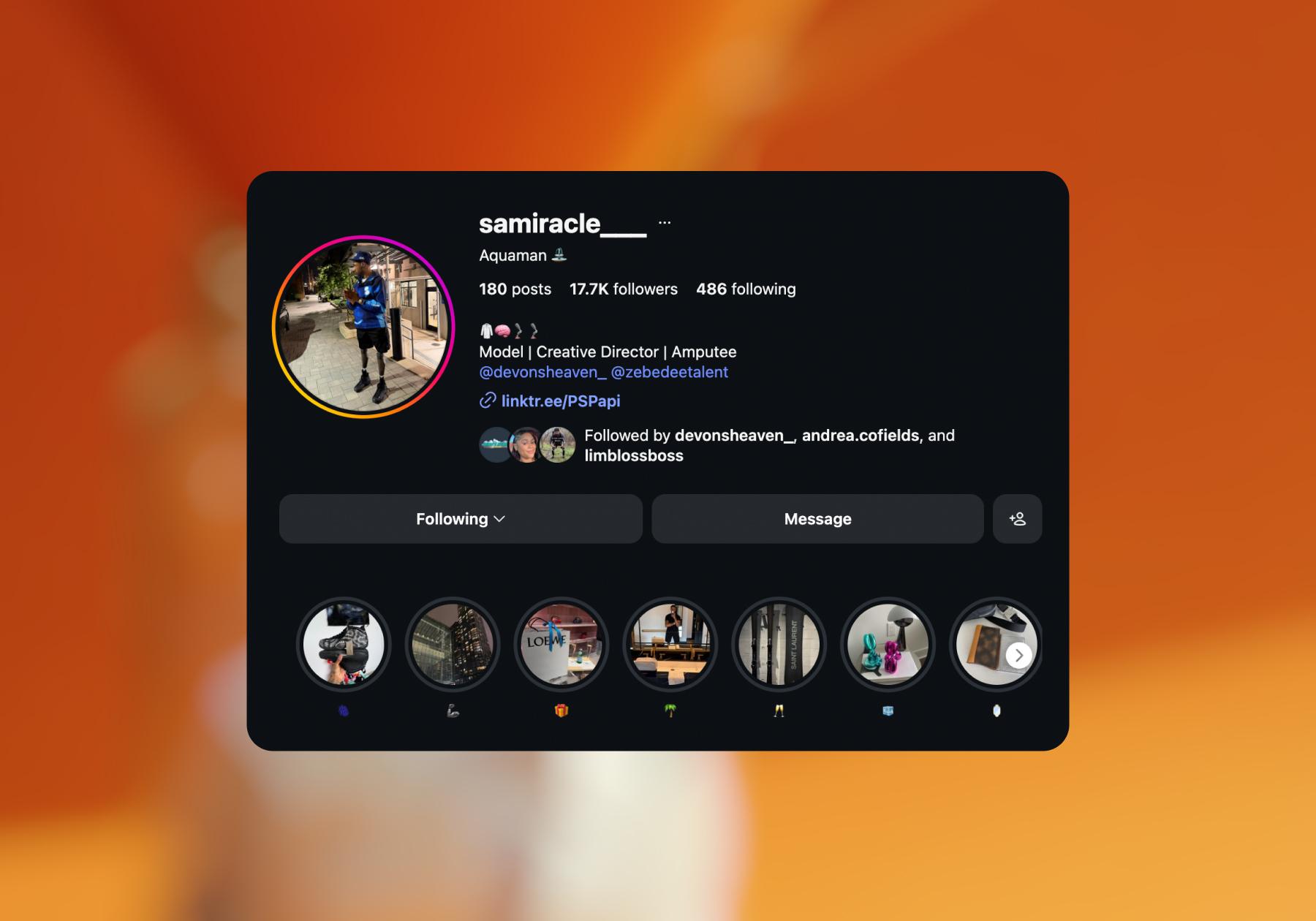
Annie suggests checking the creator’s bio for a hint as to who is managing them. Many creators list a management or brand partnership email in their bio or under the ‘Contact’ section of their landing page, which can help you identify their agency.
From there, Annie recommends going through the agency’s standard application process rather than cold emailing someone on the team.
This approach is much better than asking Google or ChatGPT what the best talent management agencies are, because if you do that, all you’re going to get is a list of companies that are great at SEO/AEO (but hey, props to them for that!).
Once you’ve found an agency and gone through the application process, don’t feel like you have to say yes to the first manager or agency you reach out to.
“If you're thinking of hiring a manager, I would definitely interview a bunch,” Bret says. “Don't just meet one person and agree to work with them.”
Bret suggests proposing a trial period (either 30, 60, or 90 days) before committing to a long-term relationship with an agency. “I don't think it's fair to lock you in if the relationship isn't going to work past 90 days.”
Angela says that she once met with a talent management company that didn’t offer her a contract on the spot. Instead, they told her they wanted to discuss the fit internally before bringing her on. She saw this as a green flag — the management side should consider whether you’re a good addition to their roster.
“About a week later, they offered me a spot,” she says. Annie felt like the process was very intentional compared with her first experience with a talent management agency, where it felt like they just wanted to sign on as many creators as possible.
What should creators look for in a talent manager?
While you’re shopping around for talent management agencies, you might find a company with a huge influencer roster and an impressive list of brand connections. Resist the temptation to commit prematurely; you need to know whether you can get what you want from partnering up with an agency.
Look closely at who the agency already represents and consider where you would fit within that roster. Ideally, the talent management agency you end up with has relationships with the kinds of brands you want to work with and not that many creators like you.
“If you can, [be] the odd man out in whatever shape or form at your agency,” Annie says.
For example, if an agency you’re considering working with already represents several lifestyle creators with content similar to yours, that’s not a good thing. But if you bring something different to the roster — say, you're more of a pet creator — there will be less competition for opportunities that come up within that niche.
Bret says he ended up going with a smaller, solo manager, even though larger agencies had approached him.
“I think the larger agencies might have relationships with bigger brands, but I don't want to get lost,” Bret says. “The people with millions of followers on social media are going to get more attention from the management team than someone like us (Broadway Dads) who has a good-size audience, but it's not in the millions.”
Sure, there are exceptions: an agency that's particularly well established in your niche may receive enough relevant opportunities that having similar creators on its roster isn't a problem.
TL;DR: Look at the agency's reputation, existing talent, brand relationships, and consider where you fit into that mix rather than judging the roster on size alone.
🚩Red flags to watch out for
Finding someone interested in representing you is exciting, but don't let that excitement lead you to sign something you haven't fully vetted. Be wary of anyone who claims they can deliver results (like ‘your dream brand deal in six months’) that they can’t actually control.
Angela also recommends paying attention to how the manager gets paid. Her first manager wasn't working on commission, so she felt their incentives weren't aligned.“When somebody doesn’t have skin in the game as far as money, they don’t necessarily care,” she says. “Any brand deal is a good brand deal in their eyes.”
Other red flags include poor communication, pressure to sign quickly, and a lack of visibility into the conversations happening on your behalf.
And then there's the contract itself. You need to read it closely.
Beyond the commission and exclusivity terms in your management agreement, Annie says creators should pay particular attention to the usage rights being negotiated in their brand contracts.“If a brand is paying you for a piece of content, how can they use it? How long can they use it?” she says.
Ideally, a contract should specify exactly how long a brand can use your content and include an opportunity to renegotiate if they want to continue using it. Annie says creators should also think about something that's becoming increasingly important: what brands are allowed to do with your likeness using AI.
“You want to make sure that you own the rights to your digital self, not just the content you send them,” she says.
Finally, remember that hiring a manager isn't permanent just because you signed on the dotted line. Give the relationship enough time to work, but pay attention to whether you're actually getting what you signed up for.
Bret recommends treating it like any other business relationship: measure the results, have honest conversations when something isn't working, and don't be afraid to move on if the partnership isn't delivering.
“You want to treat it professionally even though sometimes it can feel very personal,” he says. “Having ways to measure whether or not the partnership is working is super important.”
How much do talent managers typically charge creators?
Expect to give up a percentage of the brand deals your manager handles. Most talent managers work on commission, typically taking between 10% and 20% of what you earn from a brand deal.
Retainers can come into play depending on the agency and how much support you need, but percentage-based arrangements are more typical for creators who primarily need help managing brand deals.
Pay attention to what commissions are applied to when you’re shopping for management. Some management agreements are exclusive, meaning your manager may earn commission on every brand deal you land (including inbound opportunities and deals you source yourself). Other arrangements are non-exclusive and give creators more freedom to handle certain opportunities independently.
BTW, We Love to Work With Creators ❤️

Hopefully, this guide helped you understand whether you could benefit from hiring a talent manager and what to consider when shopping around for one. If you want even more on this topic, check out this video from the Chronically Online Magazine (COM) YouTube channel:
Speaking of Chronically Online, we love interviewing creators and featuring them in stories, so don’t hesitate to reach out on Instagram or Substack if you’re interested.
Or, if you’re a Manychat user, you can join the Partner Program and start earning your own commission. Just want to keep it casual? Keep in touch with us over at the Manychat Community, where we’re hosting events and fellow users are sharing tips about how they’re using the product.
Not a Manychat user? Let’s fix that.
Note: The interview referenced in this article and shown in the video above was conducted with Bret Shuford before his unfortunate passing in January 2026. Our hearts go out to Bret’s family.
Frequently asked questions
It depends on the contract. Under an exclusive arrangement, the manager may receive their commission on inbound deals and opportunities you sourced yourself. Non-exclusive arrangements can be structured differently.
Usually, but the conditions depend entirely on your agreement. Look closely at contract duration, termination notice, auto-renewal, and whether the manager remains entitled to commission on deals negotiated before termination.
There is no universally agreed-upon number of followers you need to have to hire a talent manager. Consider your deal activity, income, workload, and business potential as a creator, not just audience size.
It can be, if the time, negotiation help, deal sourcing, and business support you're getting are worth the percentage you're giving up.
Yes. Smaller creators with strong engagement, a desirable niche, consistent paid partnerships, or clear potential may work with agencies. Annie mentioned that Imperio Chaos works with nano and micro creators from time to time.


Originally published: Sep 9, 2026
More stories worth reading
More content that's too good to miss