Eight years ago, “UGC” (user-generated content) was a term used to describe photos that someone uploaded to Facebook, Instagram, or Yelp. I know that because I was a social media manager at the time, and it was my job to collect them to use in posts for small businesses.
But as influencer marketing and social media have evolved and grown in popularity over the last decade, so has UGC. And today, the term encompasses much more, including full-blown ad campaigns featuring creators.
If you’re a content creator and you want to explore UGC as a monetization option, keep scrolling, because I talked to Danielle Ryan (@itsdanielleryan), a TikTok influencer and UGC creator, to get her advice on the topic.
Why UGC is an Appealing Monetization Path for Content Creators

Before becoming a full-time creator, Danielle Ryan was running a private yoga studio in Ontario. It was 2020, and TikTok was taking off. So, Danielle downloaded the app and started making content around what it was like to own a business.
“Brands were also new to TikTok at that time. So they started reaching out to me, being like, ‘Hey, could you help us with our TikTok content?’”
Danielle has been making videos since she was 11 years old, so when she came across a listing on Indeed for a part-time content creator position, she applied, got the job, and started working with brands in all kinds of niches — from tech to tea to BBQ sauce.
“Flash forward another year, that's when I decided I wanted to move across the country. I didn't want to teach yoga anymore. So, I figured I would close the studio and then just see if there was an opportunity for me to do this freelance content thing full-time.”
It worked. Danielle relocated to Vancouver and has been a full-time content creator ever since.
Here’s why UGC has always been a part of how she earns money as a creator:
- Flexibility: UGC can be a relatively flexible way to start monetizing content creation because you don’t have to jump straight into doing it full-time. Danielle started making UGC while she was still running her yoga studio, and she recommends that aspiring creators do the same — build their UGC business alongside a full-time job or other business.
This approach gives you time to develop your skills, find clients, and build more predictable income before making the leap. As Danielle puts it, “I do think you need that experience, build the portfolio, and have a consistent roster of retainer clients before you can do it as your full-time thing.” - Portfolio building: On that note, unlike brand deals, you don’t have to have a significant following to get started with UGC. What matters more is demonstrating that you know how to create compelling content. That means you can practice by making sample videos and gradually turn that experience into paid work.
Danielle recommends treating content creation like any other skill: “Really just remember that this is a skill, put in the reps, and then eventually as you become more experienced, you can pitch yourself or do whatever.”
She also says that whether you demonstrate your skills through “a website, a portfolio, or your own personal social media accounts,” it doesn’t really matter; you just need a way to show brands what you can do. - Separation from your personal profile: With a traditional brand deal, a creator is personally recommending a product to the audience they’ve built. UGC adds a layer of separation between the content and the endorsement; typically, with UGC, a brand hires you to create an asset it can use on its own channels or in ads.
Danielle says, “With UGC, you’re basically like an internet actor. They’re hiring you as Jane Doe to promote their product or service. With sponsored content, you as the individual are personally endorsing whatever the product is.”
That separation can open up more monetization opportunities without turning your personal feed into a string of sponsorships. There is a caveat, though: Danielle points out that people can still recognize you in UGC ads, so she only accepts work she’d be comfortable being publicly associated with.
How brand deals differ from UGC
Brand deals and UGC look similar on the surface because both involve a creator being featured in content about a brand. The difference is in the distribution. With brand deals, you’re posting content on your profile for your personal audience; with UGC, your content is posted on the brand’s profile or used in ads.
That distinction matters when choosing which brands to work with. For instance, Danielle says her UGC clients don’t always have to fit neatly within the niche she’s in as a TikTok creator (small business/entrepreneurship). She’s made content for lifestyle and home-goods brands in the past, but she still draws a firm line around anything that conflicts with her values or could be misleading.
Example: Danielle turned down an opportunity from a weight-loss supplement company that wanted her to imply its product was responsible for her appearance. She’s also rejected offers from predatory lending companies.
“Is this something that I would be comfortable being publicly associated with?” is what she asks herself when an opportunity comes along. And if the answer is no, she moves on.
Another way brand deals and UGC differ is in how much creators can charge for them. Danielle’s minimum rate for a single UGC video is $250, with additional fees for extended ad usage.
For sponsored content on her own TikTok account, however, her base rate starts at $1,200 — nearly five times as much. The reason for that jump is that a brand deal isn’t just paying for Danielle’s ability to make a good video; the company is also buying access to the audience she’s spent years building and the trust she’s established with those followers. “If you’re going to leverage my audience and the trust that I’ve built with them, that costs five to 10 times what it would cost for me to just make an ad as Jane Doe that you can run on your own channel,” she says.
For either type of content, paid ad usage can further increase the price. Danielle says her standard is to charge an additional 30% of the negotiated base rate for each 30-day period the brand wants to run the content as an ad.
How to Set Yourself Up for UGC Deals
Danielle has 80k+ followers on TikTok; she does brand deals and UGC, and she also runs a consulting business. She’s a great resource if you’re interested in becoming an entrepreneur, and she sometimes shares insights into being a creator, too.
Follow her if you want info straight from the source. But here’s what Danielle had to say when I asked her how creators can set themselves up to land UGC deals.
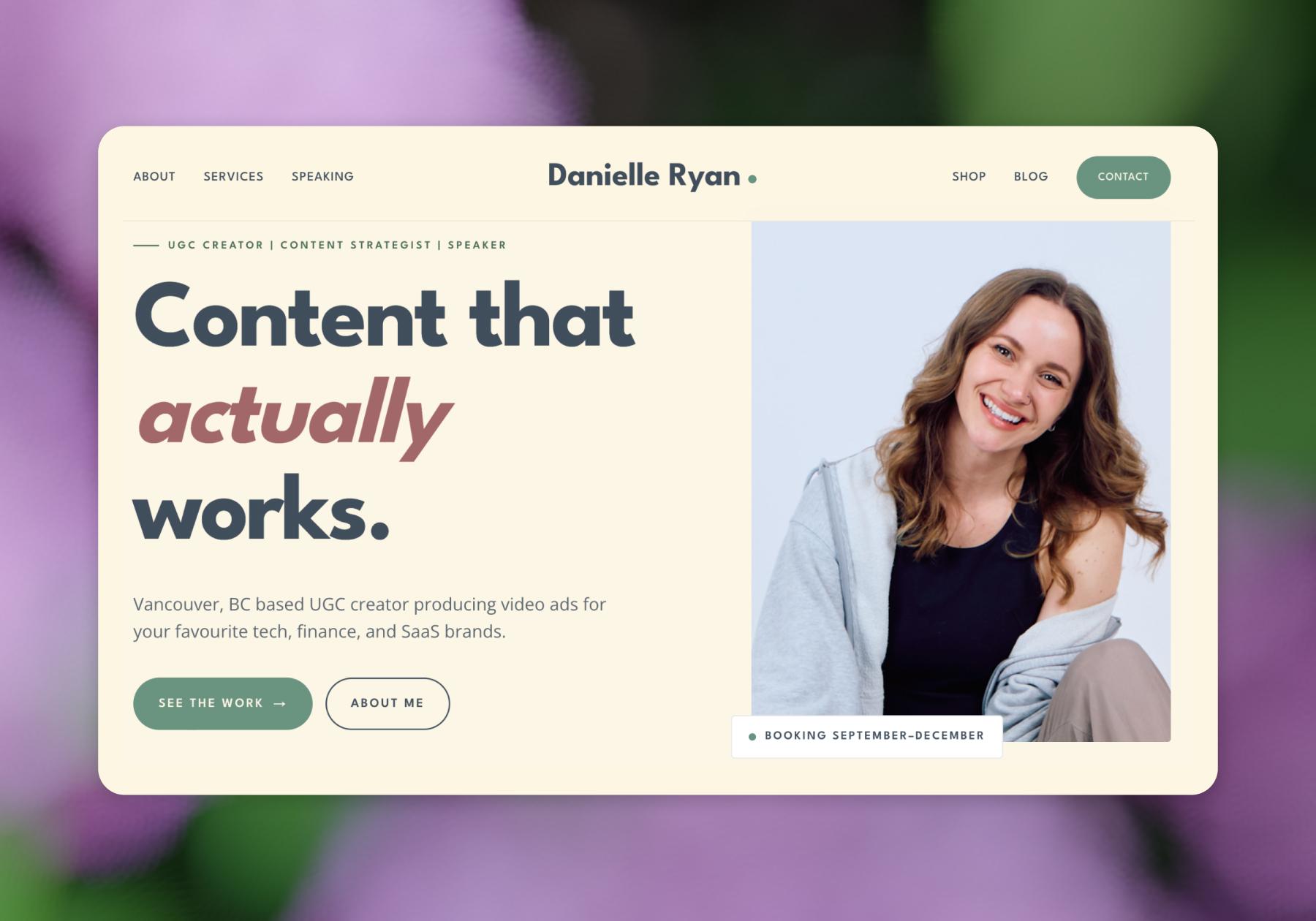
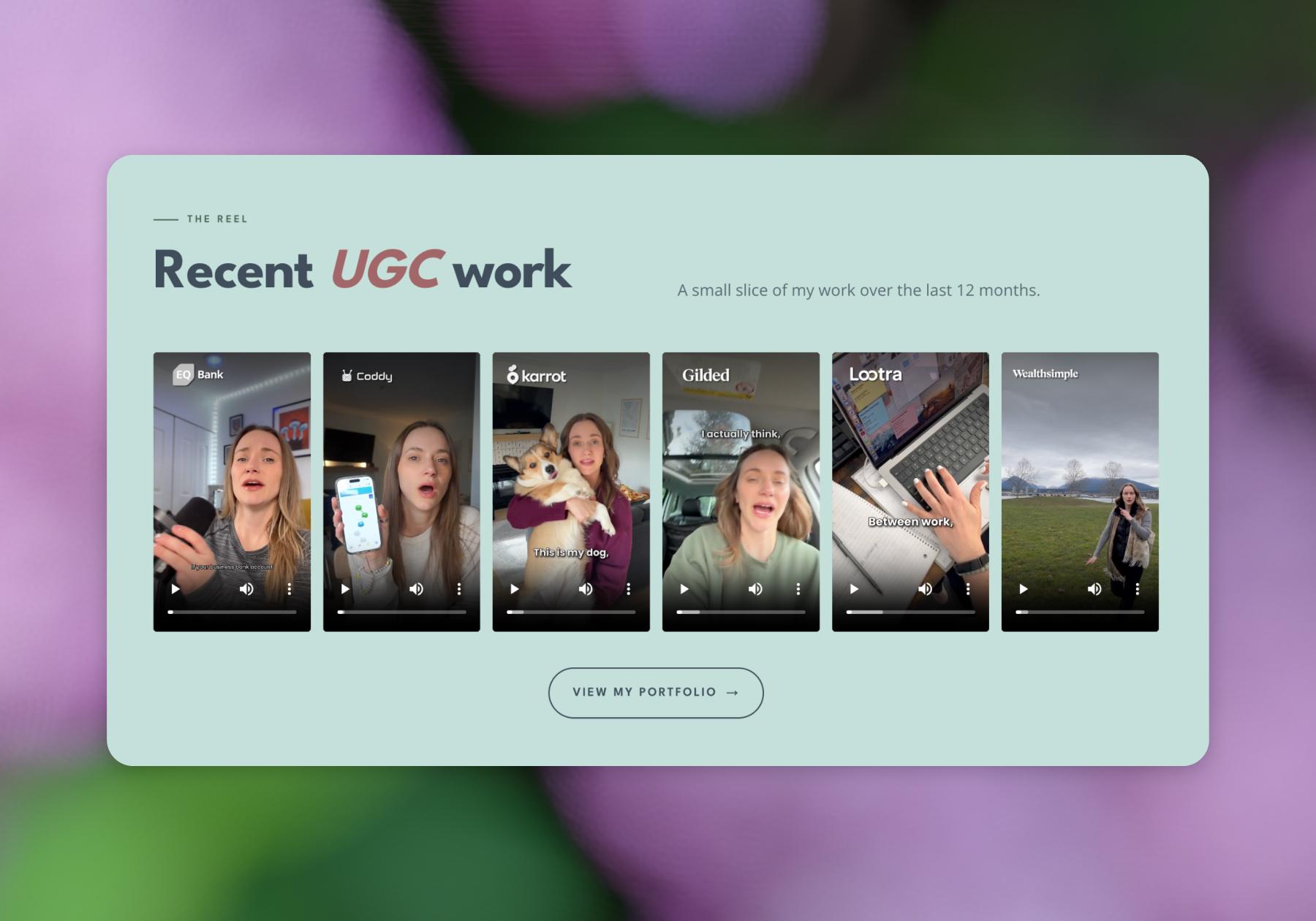
- Build a portfolio even if you don’t have clients yet. Brands need to see that you can create engaging content, and Danielle says you can do this through a website, a portfolio, or your personal social media accounts. Here’s what Danielle’s online portfolio looks like:
If you don’t have paid work to showcase yet, create sample content for your portfolio. Danielle recommends studying successful ads in Meta’s Ad Library, analyzing their hooks and what keeps viewers watching, and saving great content you come across for inspiration. The idea isn’t to copy what other creators are doing, but to practice the skill and learn what makes good content work.
Check out our media kit generator if you need help putting together a pitch-worthy portfolio.
- Build a network of other creators. This is one of Danielle’s biggest pieces of advice — especially because other creators can help you figure out what your work is worth. Early in her career, Danielle charged a multibillion-dollar company just $200 for two ads with six months of usage because she didn’t know anyone she could ask about pricing. “If I had advice for anyone, it would be to build a network of people who are doing what you want to do so that you can ask those questions,” she says.
“You don’t even have to pay for it. Just make friends with people who are doing it and be willing to have those open conversations because that helped me dramatically when I was first starting.”
Danielle recommends connecting with other UGC creators on X, TikTok, Threads, or wherever they’re active by commenting on their posts and starting conversations. “I think people forget that the point of social media is to be social,” she says. “If you don’t have friends, how do you make friends? You go and say hi to someone, so just do it through your phone.” - Put yourself where brands are looking for creators. Once you’ve practiced your skills and have work to show, start applying for opportunities. Danielle says UGC jobs are regularly posted on creator platforms like Collabstr and Cohley and social networks like X and TikTok. Beginners can also consider free or gifted collaborations to get experience and portfolio material, provided they have the means to do so and aren’t being exploited for free labor.
Ultimately, Danielle’s advice is to approach UGC like any other professional skill: put in the reps, show what you can do, and talk openly with people who are already doing it. Those creator relationships can be especially valuable when it comes time to decide what to charge, what belongs in a contract, and whether a deal is actually worth taking.
3 UGC Traps to Avoid
UGC can be a relatively accessible way to start earning money as a creator, but that doesn’t mean every opportunity is a good one. Danielle says newer creators should be particularly careful about the following traps:
1. Deals that rely too heavily on performance
Danielle warns creators about Canvas UGC, a company that follows a high-volume content model where videos are published on fresh, brand-dedicated ambassador accounts that look like authentic consumer profiles, and creators get paid per view on those videos.
Under this model, a brand might pay a creator around $500 per month to create and post a new video every day, with the promise of performance bonuses if those videos take off.
The problem is that creators can control the quality of their work, but they can’t guarantee the algorithm will reward it. “I still need to be compensated for my time,” Danielle explains.
And while low-paying opportunities can seem like a way for beginners to get their foot in the door, Danielle doesn’t think “experience” is a good enough reason to accept an exploitative arrangement: “There are other ways to get experience than to be exploited by a company for your skillset.”
2. Contract terms like “perpetuity” and “exclusivity”
Read the fine print before signing a UGC contract. Danielle specifically recommends watching for terms such as “perpetuity” and “exclusivity,” which can be much more valuable to a brand than creators realize.
As Danielle explains, “Perpetuity means they have rights to the ad content forever.” For her, that’s a nonstarter: “I don’t want to be associated with anyone for the rest of time.”
Exclusivity is different, but it can also cost you money. If a contract prevents you from working with competitors for a certain period, you’re potentially giving up other paid opportunities.
Danielle’s advice is to make sure your rate reflects that sacrifice: “If you’ve signed off exclusivity to one brand, then you’re sacrificing the opportunity to work with another in that timeframe. So always make sure that you’re getting compensated for that if you are agreeing to it.”
3. Underpricing yourself because you don’t know what to charge
One of the easiest mistakes to make when you’re new to UGC is simply not knowing what your work is worth. Danielle learned that lesson firsthand with her first brand deal. As mentioned earlier, Danielle charged a company worth around $2 billion just $200 for two ads that ran for six months. At the time, she was thrilled that someone wanted to pay her to create content; looking back, she knows she could have charged much more.
That experience is also why she puts so much emphasis on building a network of other creators and talking openly about money. Before accepting a deal, ask other creators what they’ve charged for similar deliverables, usage rights, or clients. Danielle even tells creators who are approached by brands she’s worked with to message her: “As long as it’s not in the contract that I can’t disclose it, I’ll tell you how much they’ve paid me.”
Is Becoming a UGC Creator Worth It?

If there’s one takeaway from Danielle’s experience, it’s that you don’t need a huge following or years of brand partnerships to give UGC a shot. You do, however, need to be willing to practice the craft, put yourself out there, and treat your work like a skill worth paying for.
“If you have a creative inkling and you want to try something, I think there is a space in content creation for everyone,” Danielle says. “But you do have to be willing to put in the time and realize that, despite what people on the internet say, it’s not fast, easy money. There’s a lot of work and effort that goes into it.”
So, start small. Make the portfolio. Talk to other creators. Apply for the gig. And when a brand finally slides into your inbox, remember: getting paid to make content is exciting — but knowing what your work is worth is even better.
Frequently asked questions
A UGC creator makes content for brands to publish on their own social media channels or use in advertising. That content might include product demos, testimonials, tutorials, unboxings, or other short-form videos designed to feel native to platforms like TikTok and Instagram.
The key distinction is that UGC creators are being paid for their content creation skills, not necessarily access to their audience: A brand hires you to appear in its content, but you don’t necessarily have to post that content to your personal profile.
No. Having an existing following can make it easier for brands to discover you, but you don’t need a large audience to land UGC deals. What matters more is demonstrating that you can create compelling content.
Danielle says creators can show brands what they’re capable of through a website, portfolio, or their own personal social media accounts. If you don’t have previous clients, you can create sample videos specifically for your portfolio.
There isn’t one standard UGC rate. What you can charge depends on factors like your experience, the number and type of deliverables, and how the brand plans to use your content.
For context, Danielle charges a minimum of $250 for one UGC video, with additional fees for extended ad usage. She charges an additional 30% of the negotiated base rate for each 30-day period a brand wants to run the content as an ad.
And don’t overlook the fine print when setting your rate. Terms such as exclusivity and perpetuity can make a deal considerably more valuable to a brand, so Danielle recommends making sure you’re compensated appropriately for any additional rights you give up.
Start by building a portfolio that demonstrates your content creation skills, even if that means making sample videos before you have paying clients. Danielle recommends studying successful ads, analyzing their hooks and what keeps viewers engaged, and using what you learn to improve your own work.
Once you have work to show, put yourself where brands are looking for creators. Danielle recommends creator platforms as well as social networks like X and TikTok, where UGC opportunities are regularly posted.
She also strongly recommends networking with other UGC creators. Those relationships can help you learn about opportunities, compare rates, and get a second opinion before agreeing to a deal.
Yes. You have to start somewhere, and your first portfolio pieces don’t have to come from paying clients. You can create sample content to demonstrate how you’d approach a real UGC project and use those videos to start applying for opportunities.
Danielle’s advice is to think of content creation as a skill that improves with practice. Beginners can study ads that have been running successfully for months, break down their hooks and structure, and practice applying those techniques to their own videos. As you build your skills and portfolio, you can start applying for paid gigs and gradually work your way up to larger or longer-term clients.


Originally published: Aug 24, 2026
More stories worth reading
More content that's too good to miss