The Fitness and Wellness Niche: How It Works and Where to Start
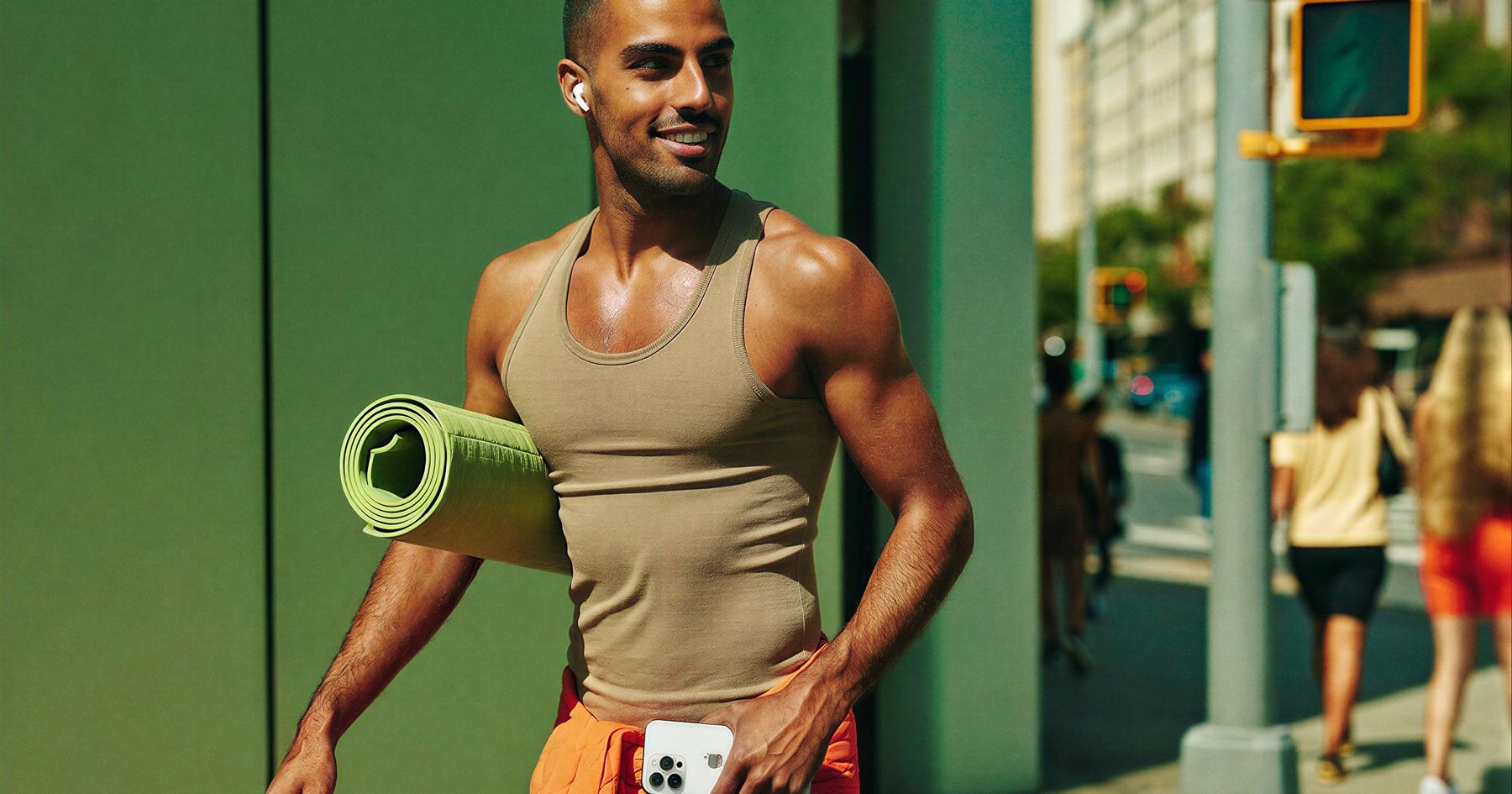
The fitness and wellness niche covers content about movement, nutrition, recovery, mindfulness, and other ways people pursue well-being. Within it, you’ll find everyone from qualified instructors teaching technique to beginners documenting their first trip to the gym.
That breadth gives creators plenty of directions to explore, but figuring out your place can be tricky. Who do you want to reach? What can you contribute? And how could your content become a business?
To explore those questions, I looked at research from Pew, Collabstr, and Uscreen and interviewed creators Amie Wiley and Gustavo “Gus” Padron about their content, audiences, and businesses. Their experiences show how different your place in this niche can look, and how it can change over time.
TL;DR
- Fitness and wellness is a broad social media category with a substantial audience, thousands of creators, and spending across products, coaching, and paid content.
- Amie Wiley and Gus Padron built audiences around their perspectives and experiences, from strength and mindfulness to yoga and navigating heartbreak.
- Both earn through multiple offerings and use content to connect interested followers with relevant services or resources.
- To find your place, research a specific community, contribute within your expertise, and use audience questions to guide what you create next.
The Current State of The Fitness and Wellness Niche
Where do things stand with fitness and wellness now? Let’s get into it.
1. A sizable audience is looking for content related to fitness and general well-being
In May 2026, Pew Research Center reported that half of U.S. adults under 50 get health and wellness information from social media influencers or podcasts. Across all U.S. adults, that figure is 40%. For many of these scrollers, the reason they’re looking for this content is simple: they want to make a lifestyle change and are seeking information, inspiration, or a mix of both to make that happen.
Among people who get health and wellness information from influencers or podcasts, 41% say making a health or lifestyle change is a major reason they do so; 42% say it’s a minor reason.
The next most common reason people consumed this kind of content was for entertainment, which isn’t all that surprising, since many creators in this niche post lifestyle or comedic content alongside inspirational/educational content. (More on that later.)
2. Thousands of creators make up this niche
An analysis by the influencer marketing company Kyra offers insight into how many creators are active in this space. A snapshot of more than 2 million organic TikTok posts published between October 2025 and September 2026 included content from 31,000+ U.S. and UK fitness and health creators. By that account, we can assume there are tens of thousands of creators out there who fall into this category. (Likely many more since this sample only includes the U.S. and UK.)
Pew’s October 2026 analysis helps show how those interests vary across the broader wellness niche. Among the health and wellness influencers it studied, 25% focused more on fitness than on any other topic, 10% primarily on nutrition, and 5% on mental health.
In reality, the fitness and wellness niche is incredibly broad. Workouts and nutrition are part of it, but so are gut health, sleep, recovery, and mental and spiritual well-being. Sports can even be considered a part of this category, which would put professional athletes like Cristiano Ronaldo and Ilona Maher in this niche.
And when you’re talking about the breadth of a niche, it’s also important to mention depth. So with the sports example, Ilona Maher would be considered an expert since she’s a professional rugby player, but there’s probably a creator out there who makes content about being a beginner rugby player. The same kind of spectrum exists for every subniche you can think of.
3. The niche has turned into a genuine commercial market
There are many brands out there that operate in the wellness niche, whether directly or by working with creators in it. Popular examples that come to mind include Poppi, the prebiotic soda company, Bloom Nutrition, a supplement brand, and Red Bull, which partners with athletes on most of its content.
Brands are also investing in influencers in the fitness niche. Collabstr’s 2026 Influencer Marketing Report analyzed 2.3 million searches on its platform to identify the creator niches brands were most interested in; health and fitness ranked fourth, behind lifestyle, beauty, and fashion.
Then, there’s consumer spending. E-commerce analytics platform Charm reports that U.S. TikTok Shop Health sales totaled $1.1 billion in 2025, representing 44.2 million items sold. “Nutrition & Wellness” products accounted for approximately $1 billion of that total (so, almost all of it).
In addition to physical products, people are spending money on content like courses, programs, workout guides, recipes, and more. For example, Amie offers an online program called the Academy that has sold out several times.
And Uscreen, a platform that helps creators sell video memberships, reports that yoga, pilates, and fitness businesses using its platform generated $116.8 million in revenue in 2025.
For creators, these figures point to several possible business models: partnering with brands, offering coaching, selling resources, or building a paid membership. Amie and Gus have each developed a different mix around what their audiences come to them for.
How Two Creators Found Their Place in the Fitness and Wellness Niche
If you’re considering becoming a creator in this niche, it can help to understand how others have made it. The best way to do this is to network and make friends with other creators, but if you can’t make that happen, you can still get an insider’s perspective (actually, two), because we’re about to dive into both Amie’s and Gus’s stories.
Amie Wiley grew up in Ireland and spent much of her early life playing camogie, a traditional Gaelic game she describes as a mixture of field hockey, rugby, and lacrosse. Amie joined a gym in high school to improve her camogie performance, and when she went to college, she actually missed the packed training schedule.
“It was the first time in my life where I had no rigid structure,” she says. “[Before that,] I was training five, six times a week.”
So, Amie created an Instagram account to help keep herself accountable. It was 2017, and at the time, she mostly shared her day-to-day workouts, meals, and habits. “It was never meant to be what it is now,” she says. “It was literally an accountability journal for me.”
Within three months, the account had reached 10,000 followers, and some of those people started asking her for their own programs and plans. But Amie wanted qualifications to back up her experience before offering coaching services, so she waited. Then, by her third year of college, she had earned certifications in personal training and sports nutrition and was ready to get to business.
Gus Padron’s journey to becoming a creator was a little different. He originally started posting on Instagram to get the word out about his yoga classes in Austin. “It was a way for me to market my classes, but also it became a way for me to connect beyond the classroom,” he says.
As Gus grew and changed as a person, his content did too. He started sharing about things other than yoga, like weight training, running, and his day-to-day life. At the same time, he was teaching classes online through Black Swan TV (an on-demand platform for Black Swan Yoga, the studio where he taught), an experience that helped him land his current gig as a platform instructor for Glo in 2019.
Working for Glo affected how Gus viewed his social presence. “When I saw how well established they were, it inspired me to establish my own brand, my own voice, because I knew that social media wasn't going to go anywhere,” he says.
How they give people a reason to follow
There’s no lack of fitness content on Instagram, so what is it about Amie and Gus that resonates with people? Let’s talk about it.
In 2017, Amie shared before-and-after photos celebrating a weight gain, something that, let’s be honest, is still counterculture today. Amie’s perspective was that eating more and lifting weights had helped her feel healthier and happier. Her posts attracted media coverage, including features in Cosmopolitan, Glamour, and The Irish Post.
Today, Amie still focuses on aspects of wellness beyond weight, like mental and physical strength and resilience. “My mind has always been programmed for performance,” she says. “So it’s like, what can my body do? How much stronger can I get? How can I fuel my body for this?”
This performance-first perspective has helped women connect with her content since the early days. And over time, that connection with her audience has allowed her to build multiple businesses.
For Gus, what draws people to his content is his vulnerability. His profile isn’t just a highlight reel; it’s just real. “People can relate to the fun trip and the fun products and this and that, but they really need to see the human behind the screen,” he says.
Gus shares openly about his life, including the imperfect parts, like struggling to touch his toes when he first started yoga and rebuilding his life after a seven-year relationship. Gus actually created a TikTok account in 2025 to share even more openly. It’s a little over a year since he started posting on it, and he already has 80k followers.
“I feel like I can show up more freely and authentically on TikTok because I'm like, well, nobody knows me really here. I don't know people in person, whereas on Instagram, I have a lot of my colleagues, a lot of my friends, my family.”
“Talking about my heartbreak and healing, that has been very personal for me, but it's also allowed me to connect with a lot more people in a deeper way,” he says.
How they monetize
After graduating from college in 2021, Amie launched Active with Amie, a coaching company for women centered at the intersection of movement and mindfulness. Through Active with Amie, she offers an online program called the Academy, as well as one-on-one coaching.
Amie is also working on a new business, a clothing brand called tonnta that’s an ode to her Irish heritage.
While Amie has her own brands to promote, she also works with other brands on content and ads. But she’s just not saying yes to every opportunity that comes her way; she’s worked too hard to build trust with the audience she has.
“I just know the importance of community, trust, authenticity, and that comes from having an organic brand. I work with brands; I do paid sponsorships, and I do ads, and they're all in alignment with all of those characteristics too.”
Like Amie, Gus has several sources of income. He offers yoga and meditation classes through Glo, works with private clients, and does brand deals. He also sells a digital guide on Gumroad, Hurt. Heal. Happy., for people navigating a breakup.
Gus created the Hurt. Heal. Happy. guide for his TikTok audience. “If people are already asking me for tips or they’re asking me for advice, I thought…let me just create a guide,” he says.
Gus had followed a similar path with his Grounded Practice journal, something he doesn’t sell anymore but did for years.
“I published it when I was at a season of my life where I needed more discipline and groundedness to create the next thing. I stopped selling it, but I have a few copies left. Some people have asked if I will bring it back — maybe, maybe,” he says.
Gus’s mix of work helps him navigate income that can vary from month to month. He says Glo now pays him an hourly rate per class, giving him a steadier income source alongside brand partnerships.
“Which, it’s the same thing with content creation,” he says. “There are some months where you have a couple of deals, and then there are months where it’s crickets.”
How they turn followers into customers
We know how Amie and Gus make money, but there’s an important middle part to talk about: how they get people to actually act on those offers.
For Amie, Instagram is the main source of clients, alongside referrals from women who’ve already worked with her. She says she has never had to use paid advertising to bring clients into Active with Amie.
When Amie does have something to promote — like The Academy opening up — she takes an educational approach with her content, explaining her coaching philosophy and sharing past clients’ experiences. Most of that content is created for the business’s account (@activewithamie), but she uses the collaborative post feature with her personal account to reach more people during launch weeks.
Amie has also introduced a waitlist to gauge demand before opening enrollment to the public. This waitlist gives interested people early access via email; some sign up before the launch even reaches the public.
As interest grew, handling it became a job of its own. Amie says inquiries had previously involved a lot of manual work. She began using Manychat for automation and hired a part-time virtual assistant to help with operations and systems, freeing up time for coaching and content.
“I probably hired them a year later than I should have,” she says. “I should have done it way sooner.”
Like Amie, Gus says he hasn’t had to run ads to sell his breakup guide. Instead, he uses his TikTok to promote his breakup guide. This works well because he established that audience around that subject matter.
“I'll create a video like, 'Here are three things I wish I knew when I was going through my breakup,’ and if you need more assistance or more support, check out my guide.”
He also has the link to the Hurt. Heal. Happy. guide in his TikTok bio.
Gus also makes content about his career with Glo, which helps further establish him as an instructor for the brand.
What the future holds for them
Amie is currently working on an Active with Amie app. She describes the app as a “holistic hub for movement and mindfulness.” Her vision is for accessible pricing and content.
“I have a lot of friends that are in C-suite, for example. They're super busy people. How do we make it accessible for them? What about a mother with a newborn child who's now been cleared to exercise? How do we make it accessible for her? I want to have an app that encapsulates it all,” she says.
For Gus, figuring out what comes next has meant giving himself room to explore. Since moving from Austin to Mexico City, he’s been taking time to reflect on what he wants from his work and his life.
“I don’t have a concrete answer as to what is next just yet, but I do have some projects down the pipeline,” he says.
One ambition he’s putting out there: teaching for Peloton. Gus has years of experience teaching online, making it a natural next step. He also hopes to split his time between Mexico City and New York, a city he’s long wanted to call home.
Whatever comes next, he wants to preserve the freedom his work gives him. “Something that is a core value in my life is freedom and flexibility,” he says. “Being able to be like, 'You know what? I'm going to take a Pilates class at 2 p.m. on Wednesday, or I'm going to go grab coffee with a friend at 10:30 in the morning.’"
Their next steps reflect different ambitions: Amie wants to make her approach available to people who need a more affordable, flexible option than coaching. Gus wants to reach more students while preserving the freedom to choose where and how he lives. But both are considering how their work can support the lives they want, and the people they want to reach.
How to Find Your Place in the Fitness and Wellness Niche
There’s a lot of opportunity within the fitness and wellness niche. If you’re ready to start creating fitness and wellness content (or you want to get clearer about the direction of your existing account), here’s where to begin.
Find out what people are watching within your focus area
Pick a few subjects that interest you, then explore them across social platforms. Be specific when you search. Something like “strength training for beginners” will give you a clearer starting point than typing in “fitness.”
- On YouTube, search for tutorials, routines, and explainers. Look at recent uploads alongside popular videos, and read the comments to understand what viewers find helpful and what questions they still have. Notice how creators organize their playlists, design their thumbnails, and structure their videos.
- On TikTok, explore searches related to your subject. Notice what comes up for different phrases and whether certain topics or formats appear repeatedly across creators’ accounts. If a format is making the rounds, consider how you could adapt it and add your perspective.
- On Instagram, search for content related to your subjects. Explore the reels and carousels you find, read the comments, and notice which brands and creators keep appearing. Think about how you could bring your own style to the conversations and formats you’re seeing.
Write down who you want to reach, what they likely want to know, and what experience or expertise you can bring to the conversation. Use those notes to plan your first few posts.
Give people a reason to hear your take
As you research, think about whom you want to reach and what you can contribute.
If you’re an expert with the qualifications to speak on certain topics, you can go the educational route (there are plenty of doctors on TikTok and Instagram), but there’s also room for beginners and people whose health journeys are a work in progress; documenting your experience can help others feel less alone in theirs.
Decide where you fit into the niche based on your background and credibility. Personal experience can make compelling content, but it doesn’t automatically qualify you to give individualized fitness, nutrition, or mental health advice.
Become part of the conversation
Integrate yourself into the niche by following creators and brands you want to learn from. Leave thoughtful comments when you have something to add, and respond to people who engage with your posts.
And post: try a few repeatable formats, like a weekly progress update, a common-question series, or a look at how a habit fits into your day. Pay attention to what prompts conversations and requests for more information. As Amie and Gus both found, those responses can help you decide what to create next.
You don’t need your entire creator career mapped out on day one. Start with something you want to connect with other people over and leave yourself room to grow from there.
Next, learn how Manychat helps creators like Amie.
Frequently asked questions
Fitness and wellness subniches include strength training, running, yoga, mobility, nutrition, sleep, recovery, and mindfulness. You can narrow your focus further by audience, experience level, or goal, such as strength training for beginners or mobility for runners. Amie Wiley combines movement and mindfulness for women, while Gus Padron’s content has evolved from yoga into broader wellness topics, including navigating heartbreak.
Start with the overlap between your experience, interests, expertise, and the people you want to reach. What can you help them understand or do? Amie’s sporting background shaped her focus on strength and fueling her body, while Gus’s experiences have influenced what he shares about mindfulness and starting over. Publish content, listen to the questions people ask, and refine your focus as you learn what connects with them.
Sharing your personal fitness journey is different from providing professional advice or paid services. Be transparent about your background, distinguish personal experience from professional guidance, and stay within your expertise. Amie waited until she had qualifications in personal training and sports nutrition before offering coaching. Qualifications, professional scope, and local requirements matter when deciding which services you can provide.
Fitness and wellness is a crowded category, but it contains many communities with different needs. A specific audience and a recognizable perspective can give people a reason to follow you. Amie found an audience for her emphasis on strength, fueling, and mindfulness. Gus connected with people by sharing his experiences openly, including the challenges of starting over. Research existing content and audience questions to identify where your contribution could be useful.

Originally published: Nov 2, 2026
More stories worth reading
More content that's too good to miss