I still don’t understand NFTs, crypto, or DAOs. No idea. When people explain it to me, it sounds like word salad. What I do understand is that everything branded as “Web3” was supposed to change our lives. And so far, nothing has.
Sad trombone.
According to Google, a DAO is “a member-owned, blockchain-based entity with no central authority, governed by transparent rules encoded as smart contracts…using token-based voting for collective decision-making.”
Bro — what?
Whatever that means, it sounds like the guy at the bar pounding Michelob Lights while mansplaining the Joe Rogan universe and asking if you want to spar as a first date. Still, people really wanted me to believe. For years, acquaintances, many of whom I wouldn’t trust to change my oil, explained that I just didn’t grasp the future yet. These markets, they promised, would change my life.
Six years later, I’m still waiting on the revolution.
A Brief History of the Internet’s Most Recent Promises

For a brief, loud stretch between 2021 and 2022, creator DAOs were everywhere. Discords filled up overnight. Tokens got minted. “Community ownership” became the magic phrase, paired with the promise that creators could finally escape platforms that fed on their labor and left them one algorithm tweak away from disaster. It was liberation talk — and in hindsight, a big, fat nothing burger.
Then crypto winter hit. NFTs went from future-facing to radioactive. The NFT market collapsed by roughly 70% from its peak, weekly sales fell from the billions to the tens of millions, and more than half of the cryptocurrencies launched since 2021 turned into ghost towns. Tokens collapsed. Treasuries dried up.
DAO discourse vanished almost overnight.
But the problem DAOs were trying to solve didn’t disappear with them. Platforms are still being extracted. Creators are still precarious. The only thing that croaked was the hype. Which leaves the uncomfortable question no one wants to answer: if creator DAOs failed as a moment, did the core idea — shared ownership, collective leverage, creators having real equity — actually fail too?
The premise behind DAOs wasn’t stupid. At its core, it wasn’t crypto weirdness; it was a labor problem. Creators are independent contractors with no protections, businesses without equity, and brands with almost no leverage. Meanwhile, platforms deliver algorithmic whiplash, monetization roulette, and endless “build a community” rhetoric that masks extraction.
DAOs promised shared upside, collective bargaining power, and ownership that a platform update couldn’t suddenly take away. That wasn’t delusion. It was a rational response to a broken system.
So why did they fall apart so fast?
Death by Committee (or Lack Thereof)
DAOs didn’t collapse because people stopped believing in community. They collapsed because most people never showed up. Voter participation routinely hovered in the single digits, often failing to reach 10%, meaning decisions were made either by a tiny, hyper-engaged minority or stalled out entirely. And despite all the talk of decentralization, power quickly concentrated in the hands of “whales,” with a fraction of token holders — sometimes less than 1% — controlling most of the voting power.
Plutocracy, but with better branding.
Operationally, the model was a mess. Consensus-based governance is slow and clunky, totally unsuited for businesses that need to make fast, real-world decisions. Add incentive misalignment, participants treating tokens like scratch-off tickets instead of long-term commitments, plus governance exploits, treasury raids, and vote manipulation. The whole thing started to resemble a financial Hunger Games. Layer on legal gray zones around liability and taxes, along with interfaces so hostile that only the most crypto-literate could navigate them, and it becomes obvious why so many DAOs didn’t fail dramatically. They just stopped working.
What hasn’t gone away is the reality that creators still don’t own the land they’ve settled on. They rent it.
The long-fantasized “creator union” isn’t coming — at least not the cinematic version where YouTube, TikTok, and Twitch are brought to their knees by a coordinated strike. That fantasy assumes creators have leverage they don’t, solidarity they can’t afford, and time they aren’t being paid for.
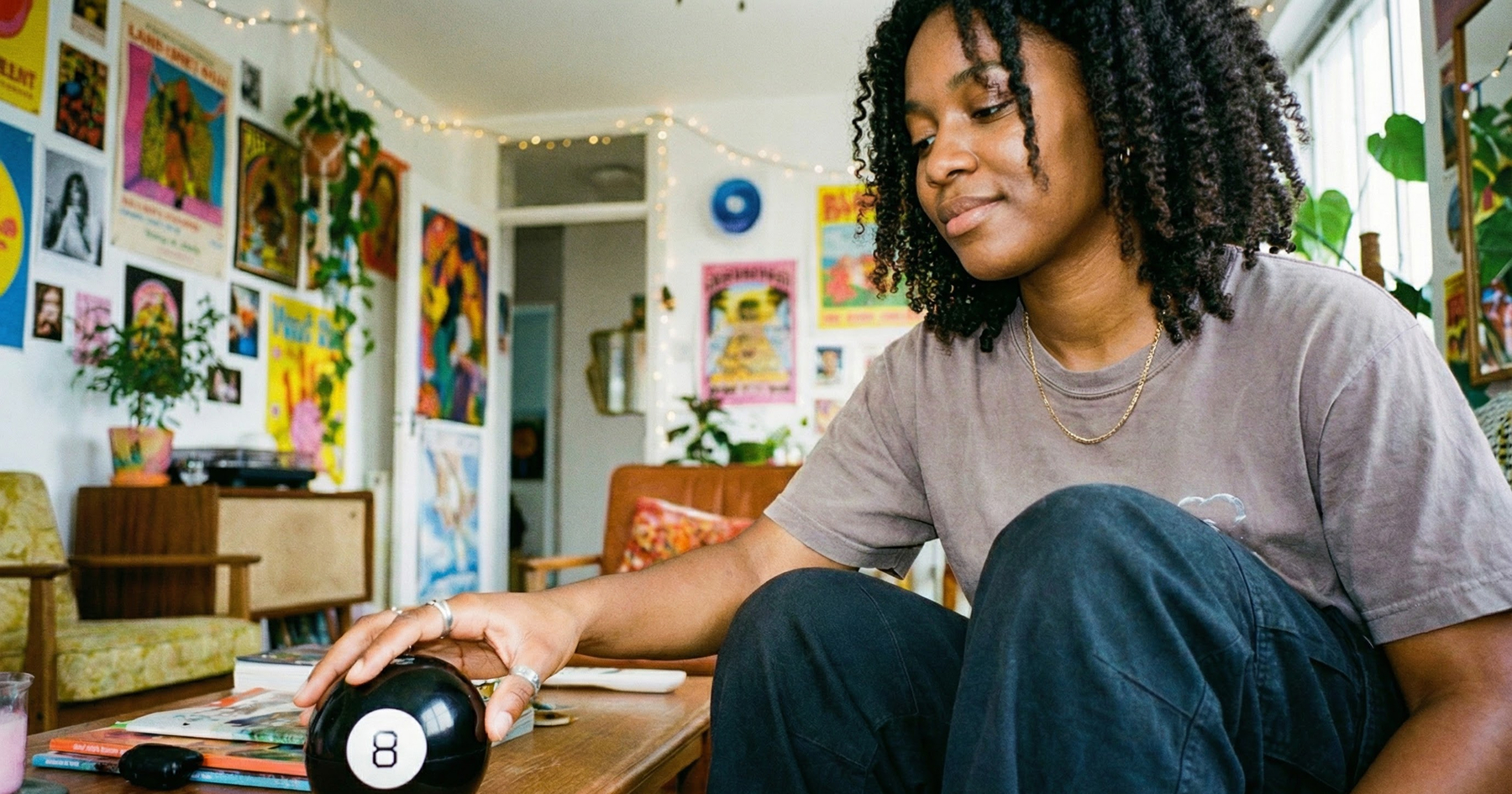
Magic 8 Ball Says…Outlook (Still) Good
What is emerging is smaller, slower, and far less sexy. Co-ops pooling resources for healthcare. Hybrid collectives negotiating bulk rates with accountants and lawyers. Platform-agnostic ownership structures that let creators take their audience data and walk (note: build that email list). It’s not a revolution. It’s plumbing.
The shift happening now isn’t “we’re reinventing everything.” It’s “we’re fixing the worst parts.” That means boring, necessary stuff: portable subscriber lists, transparent monetization rules, real contracts instead of terms of service you click through at 2 a.m. It means creator-led funds that help people survive demonetization appeals. Infrastructure that doesn’t require a TEDx talk to justify.
This works precisely because it doesn’t require everyone. A dozen podcasters can form a co-op. Fifty writers can build a health insurance pool. Three hundred creators can fund an emergency strike fund. You don’t need consensus; you need people who are tired enough to try something that isn’t individually heroic.
Governance is labor. DAO life meant votes, proposals, meetings — more unpaid work layered onto already exhausted people. Creators don’t have time to attend the 3 p.m. Tuesday governance calls. They’re editing videos, answering emails, and figuring out how to make rent. Bad ideas didn’t kill the models that died. They died because they demanded too much from people who already give everything to platforms they don’t own.
What might actually work looks boring by comparison: revenue-sharing pools that resemble old-school record label partnerships. Creator-owned distribution networks where the people doing the work own the infrastructure. Platforms where equity vests based on contribution, not capital investment.
Thanks for reading. There will not be a quiz because I still don’t understand NFTs — or DAOS, broksi.