Trying to Make Sense of AI in Influencer Marketing? Start Here
It’s safe to say we’ve hit the point of no return; AI is officially part of everyday life. There’s a good chance it even played a role in how you found this blog… 🫣
But today, we’re going to talk about what that means for influencer marketing. If you’re here, you’ve probably got questions: How is AI actually being used in influencer marketing in 2026? As a creator, what’s the best way to keep up? And: why do AI influencers look like that?
Don’t worry — we’ve got answers. Here’s what’s really happening with AI in influencer marketing right now, based on data from Manychat’s 2026 creator report (and a few other sources).
Creators and Brands Are Using AI To Speed Up Everyday Tasks
Both creators and brands primarily use AI to handle the day-to-day work involved with influencer marketing campaigns.
For creators, that means brainstorming ideas, writing scripts and captions, and editing content. For brands, that means finding the right creators for each campaign and analyzing and predicting campaign performance as data becomes available.
How creators use AI today
Even those who like to create (AKA creators) find AI to be a huge help for brainstorming, research, and prepping content to post.
According to our report, creators are using AI to:
- Brainstorm ideas (60%)
- Write captions (56%)
- Research (46%)
- Edit videos and/or images (43%)
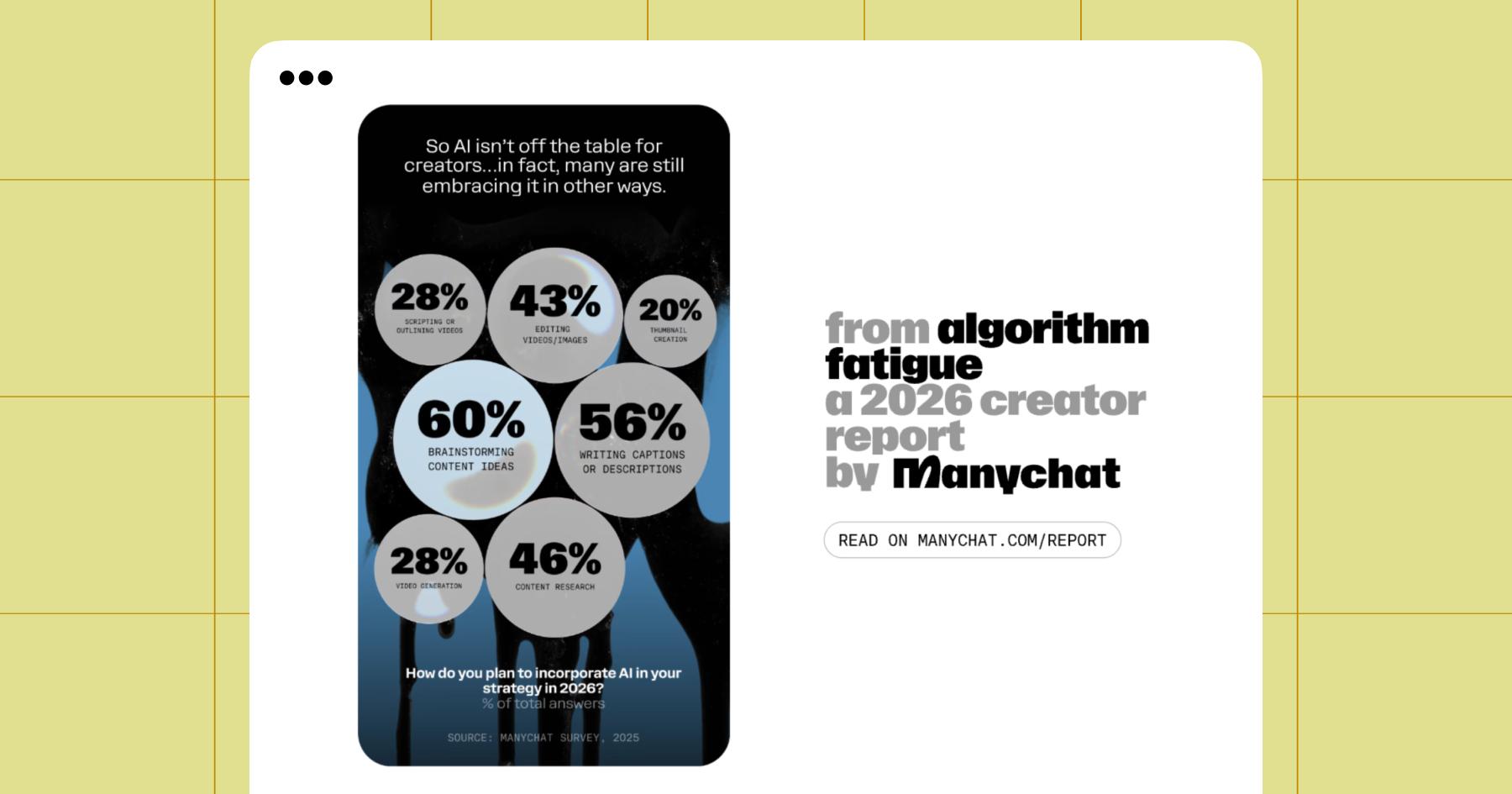
Less than a third of creators are using AI for video (28%) or thumbnail (20%) generation, suggesting that AI-generated content is not the most appealing use case for creators.
If you’re looking to start outsourcing some of these tasks to AI, there are a few different kinds of tools you can use to do so. An LLM like ChatGPT or Claude can help you brainstorm, research, and write captions, and video and audio editing tools like OpusClip, Meta AI, and Descript can help you prepare your content for posting.
How brands are using AI today
92% percent of brands are already using or are open to using AI for influencer marketing. (I’m not great at math, but that feels like almost all of them.)
Brands are taking advantage of AI in this way because the ROI is proven. Later says that 77% of brands report better campaign performance with AI-assisted influencer marketing; 37% cite more efficient targeting and reach as their top improvement areas.
On that note, the top AI use cases for brands right now are:
- Finding the right creators without scrolling through endless profiles
- Predicting which content will actually perform
- Tracking influencer campaign performance across channels
A lot of this work gets done through AI-powered influencer marketplace features, many of which are built into the social platforms themselves (like the Instagram Creator Marketplace, TikTok One, and YouTube’s BrandConnect).
AI-generated influencer content and virtual influencers are also in the mix, but the majority of brands aren’t going there right now. Which is a great segue.
Audiences are Skeptical of Fully AI Creators (Brands, Too)
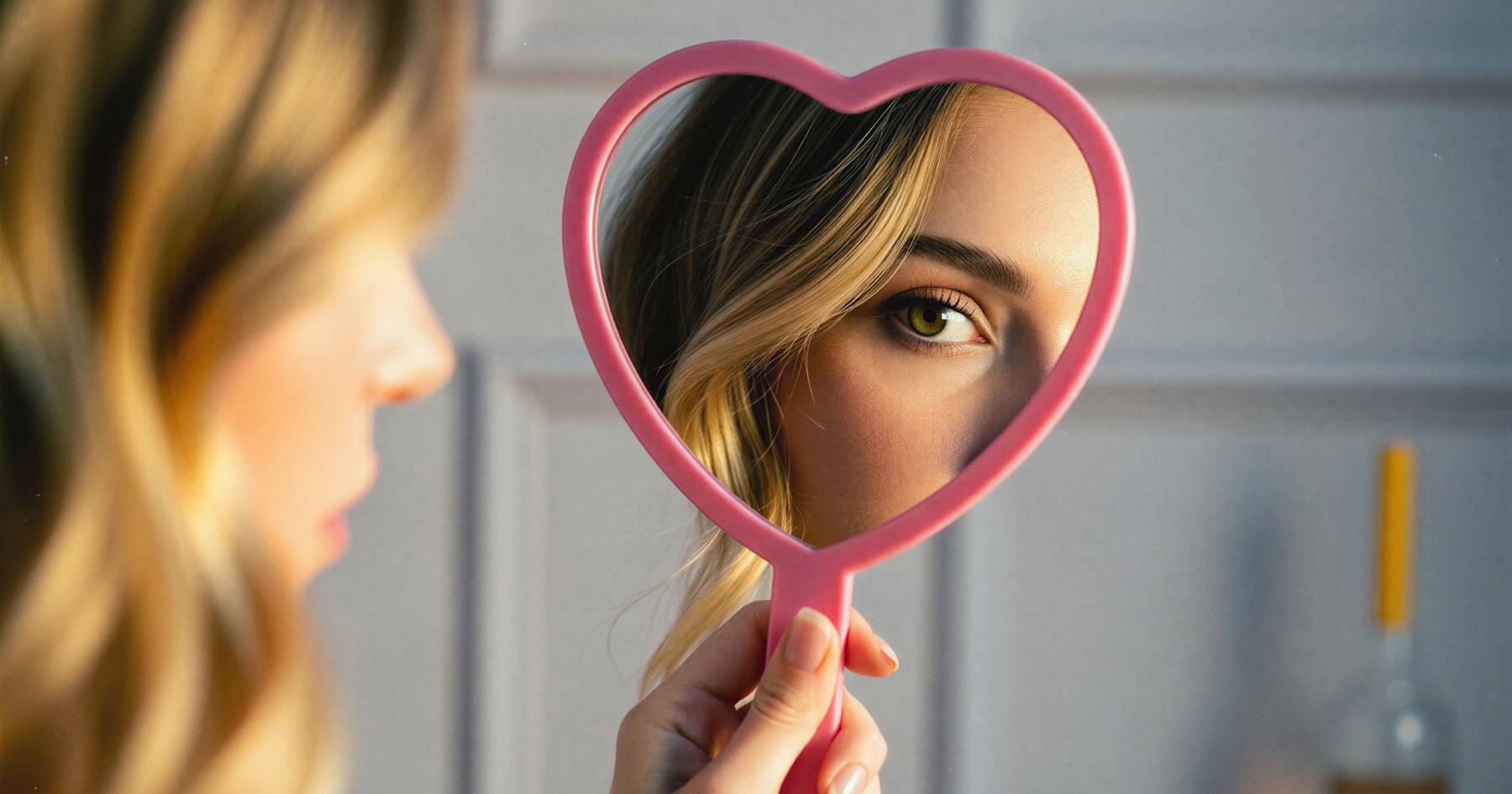
AI influencers always come up in conversations about the future of influencer marketing. They’re certainly around (see: Mia Zelu, Lu do Magalu, Lil Miquela, and more).
Some sources suggest that AI influencers cost about half as much as human creators… but are the savings worth it?
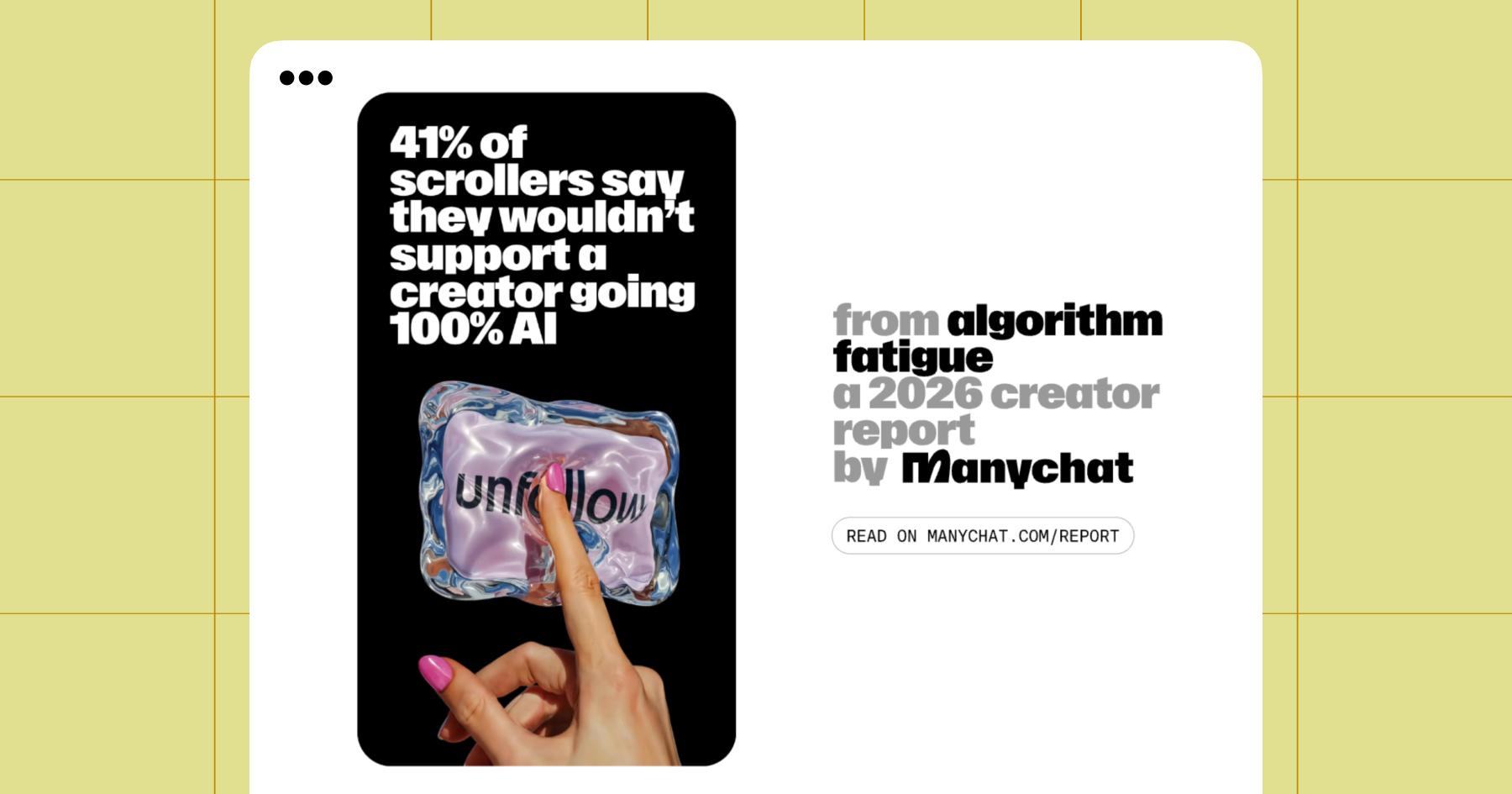
Probably not: 41% of scrollers say they wouldn’t support a creator going fully AI, and brands are also against it — 89% of marketers say they won’t work with AI-generated influencers in 2026.
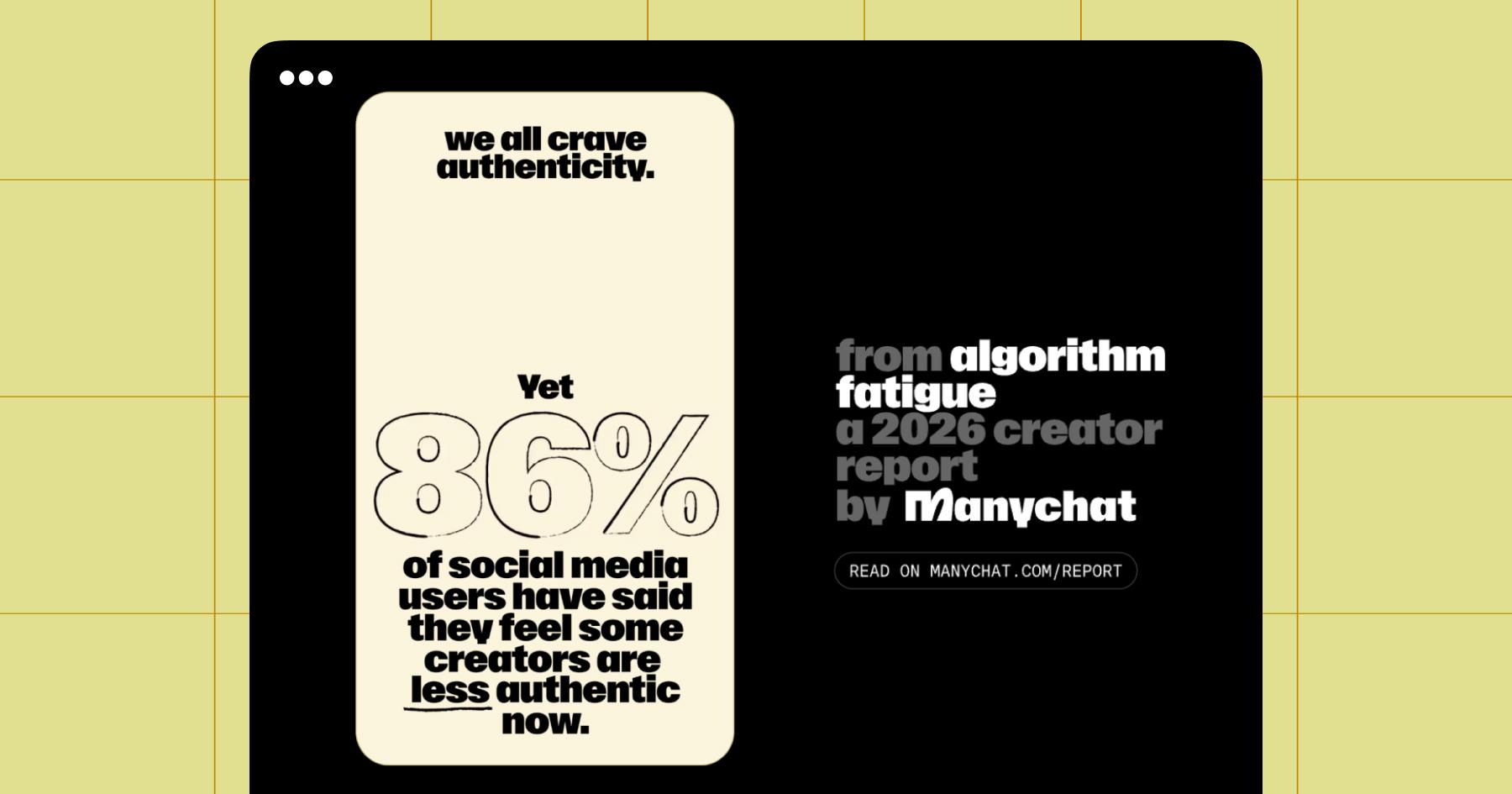
Why? Because everyone knows that authenticity is what scrollers want more than anything else in 2026, and it’s really hard to convey authenticity via a fully fabricated person.
AI Isn’t Taking Your Job (It’s Just Changing It)
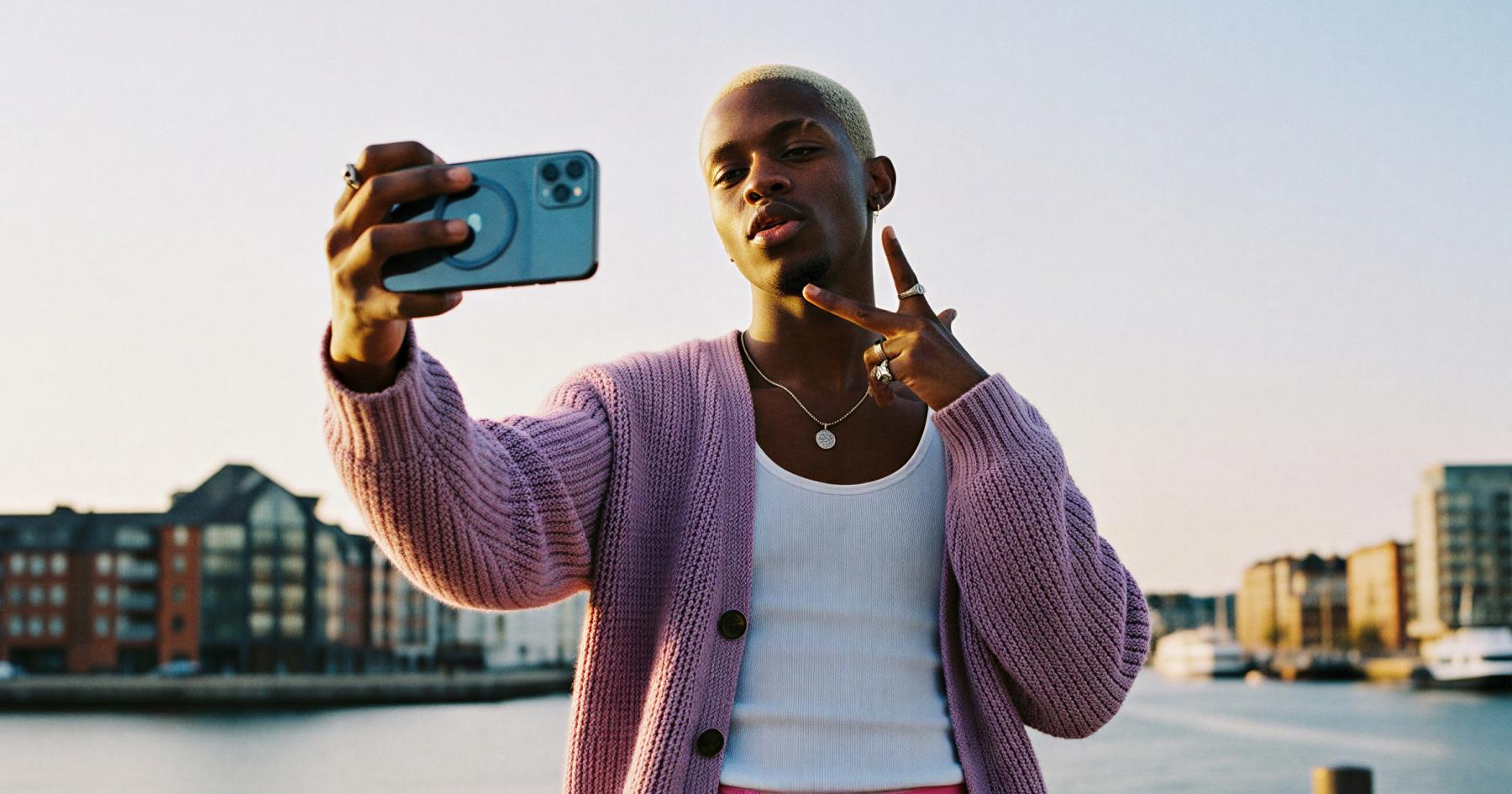
Right now, AI is helping brands and creators get work done faster. It’s not replacing creators. It’s also not replacing the people hiring creators. (Have you met Jacob, Manychat’s influencer manager? He’s a real guy.)
If you look at how creators actually spend their time, it’s clear why they’re turning to AI for help speeding things up.
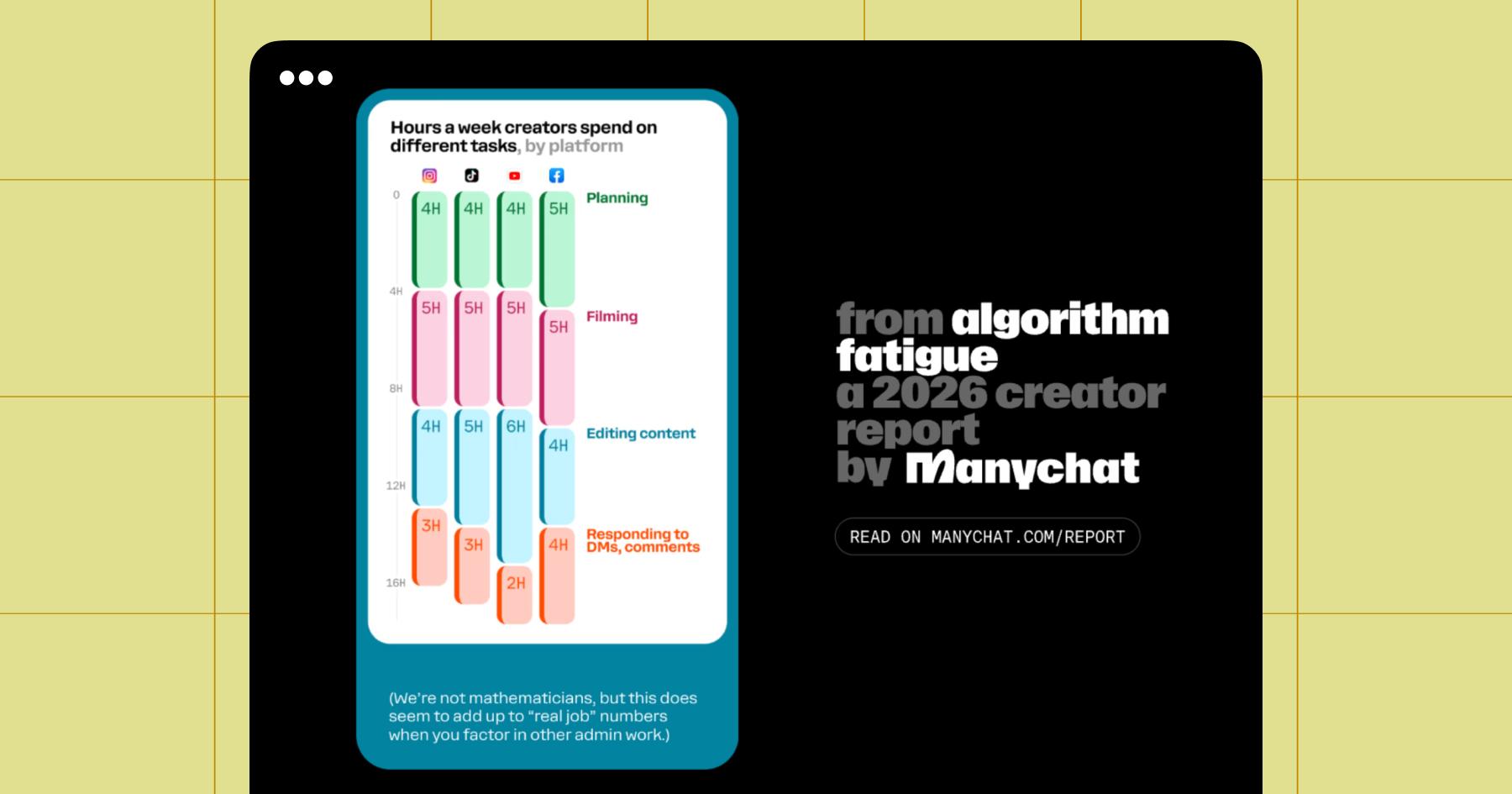
Between planning, filming, editing, and responding to comments and DMs, creators are easily putting in 15+ hours a week just to keep up. And many of these people have a full-time job on top of creating.
All this to say, there’s a lot of potential for AI to help creators get time back in their week, and the use cases we’ve discussed so far are only the beginning.
If you’re looking to make progress today, one thing you can do is sign up for Manychat.
With Manychat, you can spend less time responding to DMs and comments. It takes just a few minutes to set up automations that can greet new followers, grow your email list, and send links.
To get started, explore our Manychat for Beginners YouTube playlist. Here’s a little preview of what these videos are all about:
Frequently asked questions
AI is mostly being used behind the scenes to make influencer marketing faster and more efficient.
For brands, that means using AI to:
– Find the right creators faster
– Predict which content will perform best
– Track and analyze campaign performance
For creators, it looks like:
– Brainstorming ideas
– Writing captions or scripts
– Researching trends
– Editing videos and images
AI is helping both creators and brands spend less time on repetitive tasks and more time on creating content that actually connects.
The “30% rule” is often used as a rough guideline for how creators and marketers use AI. The idea is that AI can handle roughly 70% of the work — such as ideation, drafting, and basic editing — while the remaining 30% still requires human input, creativity, and judgment. As Forbes explains it, “When AI absorbs that 70%, something valuable can happen: time returns.”
AI influencers can be effective in certain cases, especially for brands that want full control over messaging or need to produce content at scale. But overall, they’re still not as trusted as human creators.
Many consumers are skeptical of fully AI-generated personalities, and most brands aren’t fully on board either. In fact, a large percentage of marketers say they don’t plan to work with AI-generated influencers at all.
Yes, but with limits. Most creators are already using AI to support their workflow, whether that’s brainstorming ideas, writing captions, or speeding up editing. Used this way, AI can save time and help maintain consistency.
Where it gets tricky is relying too much on AI. Fully AI-generated content can feel generic, and audiences are quick to notice when something doesn’t feel authentic.

Originally published: Apr 21, 2026, Updated: Apr 24, 2026
More stories worth reading
More content that's too good to miss