Ever notice you don’t hear the term “girlboss” much these days? Instead, everything is based around the title of “content creator,” a broader term based on content output and style rather than a one-lane idea of self.
What appeared to be personal branding and influence has quietly metamorphosed into a new form of small business ownership. Creators juggle marketing, distribution, partnerships, and community building while maintaining the illusion of authenticity in a saturated, always-on economy.
Who needs sleep when you’ve got dopamine?
Or, you could just say what everyone is thinking: the girl boss is pushing up daisies, and now it’s all about the “creator capitalist.” (Kinda gross name, tbh.)
Content is the new currency, and everyone is always trying to craft more, but how did we end up here? What’s empowerment through entrepreneurship? Literally, everything for the movement. How did this change happen? It’s more blatant than you might be thinking — because usually, everything is.
The Girlboss Era (2010s)
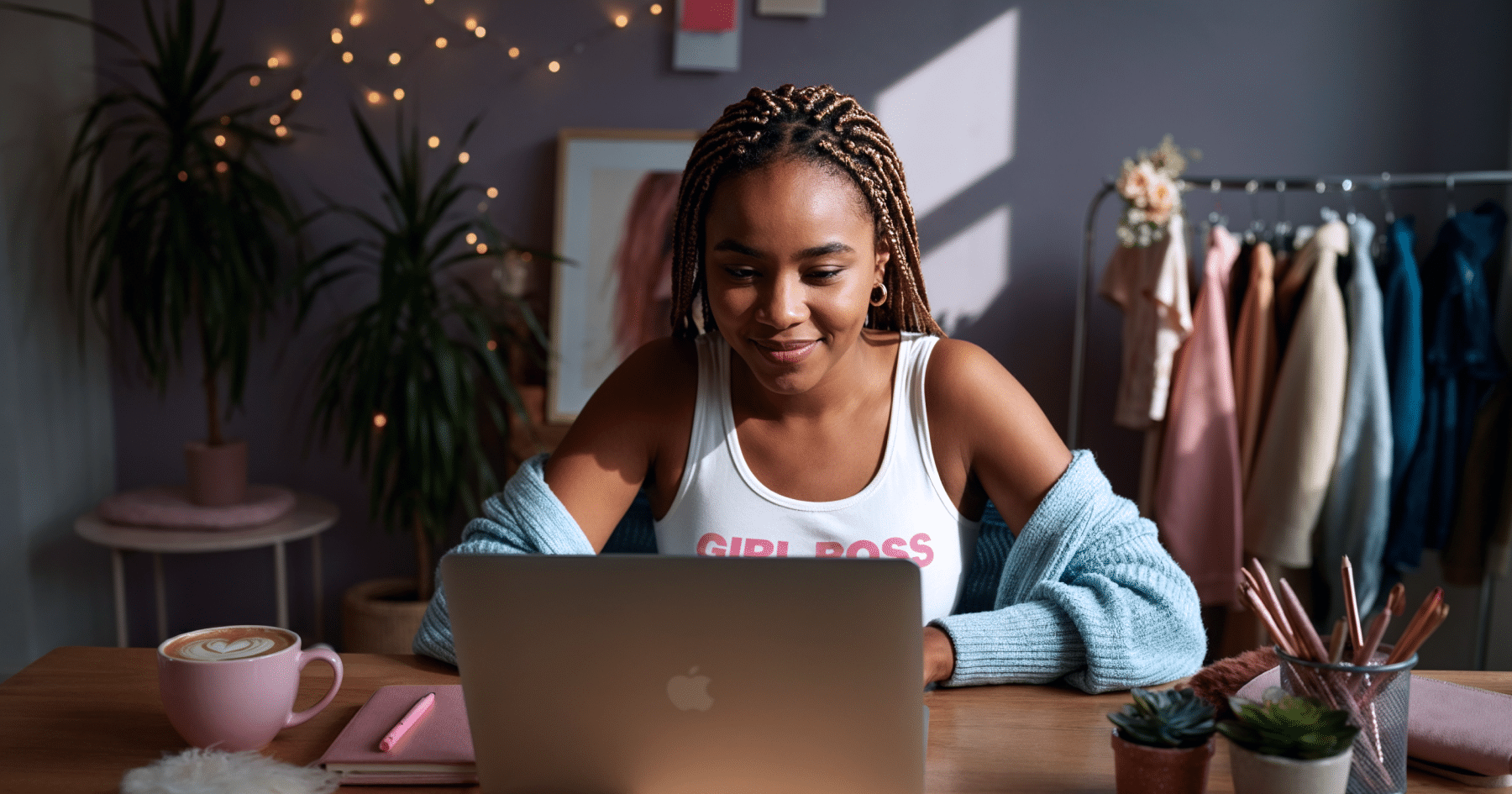
The term girlboss first kicked its way into the zeitgeist in the early 2010s, largely tied to Sophia Amoruso, the founder of Nasty Gal and later Girlboss Media. Amoruso’s memoir #GIRLBOSS (2014) reframed her story of hustling on eBay and scaling it into a multimillion-dollar business as proof that young women could be disruptive leaders in a world still dominated by men in suits.
Other figures, like Sheryl Sandberg with Lean In, became wrestled into the same cultural moment, even if they came from different corporate worlds. Together, they helped create an ethos that mixed entrepreneurial swagger with (arguably faux) feminist branding. 💅
The girlboss manifesto was simple: empowerment through hustle. The narrative was that women could claim power and independence not by rejecting capitalism’s structures but by mastering them: by starting companies, climbing corporate ladders, and branding themselves as fearless leaders. It wasn’t revolution so much as reinvention, swapping out the old boy’s club with a pink, millennial-coded version.
The aesthetic was instantly recognizable: bold fonts, pastel palettes, cheeky affirmations like “You got this” or “Boss Babe” stamped on mugs and Instagram posts. Culturally, it drew on the rise of Instagram and Pinterest as aspirational platforms. Empowerment got expressed through highly curated lifestyles: perfectly organized desks, designer coffee, and hustle culture reframed as glamorous rather than exhausting. (Think a lot of love for Legally Blonde.)
The timing was crucial. In the wake of the 2008 financial crisis, young people, especially women, struggled with low wages, debt, and precarious work. (It sucked.) The girlboss aesthetic offered optimism: the idea that self-branding, side hustles, and entrepreneurial grit could be an escape route.
Combined with the rapid rise of social media, it spread like a new Stanley Cup color dropping, resonating with an audience eager for financial independence and an empowering identity to attach to it.
And then it went out, just as surely as the colorful cups will.
The Quiet Transformation
By the late 2010s, the language of empowerment began to shift. The girlboss archetype, rooted in influence, aesthetics, and the idea of hustling one’s way to the top, gave way to something more pragmatic: the social media-driven big money hustling. Once success was measured in Instagram likes or a book deal; then it became about how much cash a creator could generate, how well they could scale an audience into a small business, aka cashing in.
Platform changes accelerated this transition. Instagram rolled out Shopping features and affiliate links, TikTok launched its Creator Fund and later ad-revenue programs, and YouTube doubled down on Partner Program earnings. These tools reframed influence not as an intangible currency but as an income stream, something measurable, pitchable, and repeatable.
The result was the professionalization of content creation. Creators built teams, negotiated contracts, and diversified revenue across merch, Patreon, or sponsored posts. In the process, the lofty, pastel-pink promises of girlboss empowerment evolved into a starker, more entrepreneurial reality: creators weren’t just symbols of influence, but small business owners in a digital economy.
Creator Capitalism Defined

What separates today’s creator economy from old-school influencing is the infrastructure built around it. In the past, influence was about reach and visibility: how many followers and people liked your posts. Now, creators have dashboards that track analytics, conversion rates, and customer acquisition costs. Success isn’t measured by vague “influence” but by ROI: how efficiently you can turn attention into revenue.
Will people buy whatever you’re selling? If a thousand will, that’s better than ten thousand who won’t.
This shift is also reflected in diversified income streams. Instead of relying solely on sponsored posts or a single brand deal, creators now launch product lines, sell services, teach courses, and build paid communities on platforms like Patreon, Discord, or Substack. Each stream creates more stability and expands the creator’s brand into a business with multiple revenue pillars.
Behind the curated, “authentic” content sits a growing operation. Many creators employ teams — managers, video editors, and brand strategists — while running calendars, contracts, and customer pipelines. The polished authenticity on the feed is supported by the unglamorous machinery of small business ownership, marking a sharp break from the early, looser days of influencing.
The Small Business Reality
Behind the glossy veneer of content creation lies a reality that looks a lot like running any small business. Tax implications and business registration are among the first hurdles. Many creators set up LLCs or S-corps to handle income properly, but with that comes quarterly taxes, bookkeeping, and compliance — things few Instagram tutorials prepare you for.
Customer service and fulfillment add another layer. Selling merch, e-books, or courses means managing orders, refunds, and troubleshooting, often without the buffer of a big company. Handling complaints directly can be especially draining for creators who trade on their persona.
The market is also more crowded than ever. With millions of aspiring influencers competing across platforms, differentiation requires sharper branding and constant innovation. That competition feeds into bigger economic pressures: algorithms shift overnight, ad rates fluctuate, and audience attention is fickle. Sustainability becomes the central question. Can creators maintain steady income, protect their mental health, and avoid burnout while treating their platforms like full-fledged businesses?
The answer often depends less on influence than on operational resilience.
Cultural and Economic Implications
The rise of the creator economy has reshaped not only how people earn money online but also how they think about work itself. Traditional employment models — steady jobs with benefits — now compete with the allure of independent digital careers. For some, content creation represents liberation from dystopian workplaces; for others, it’s a shoot-from-the-hip gamble without a safety net. (That’s Showbiz, Baby!)
This shift has sparked a debate: is the creator economy a democratizing force, opening doors for anyone with a phone and Wi-Fi, or is it a new form of exploitation that shifts risk from companies onto individuals? The low barrier to entry is real, but so is the instability.
Gender dynamics add another layer. The creator economy builds on the aesthetics of lifestyle blogging and influencer culture, spaces often feminized and dismissed as “not serious work,” even while generating billions in revenue. At the same time, women and marginalized creators face harassment, algorithmic bias, and pay gaps that echo offline inequalities.
Sustainability remains the big question. Can creators build careers that last decades, or will most burn out after a few viral peaks? The churn of content, platform dependence, and mental health toll all point to fragility in the model.
So What’s This All Mean?
For future creators, entering this space means balancing opportunity with realism. The tension between “authenticity” and the behind-the-scenes machinery of business operations will only grow sharper.
At a broader level, the creator economy signals a cultural shift in how we define work: blurred boundaries between self-expression and labor, personal identity and product. But it is important to remember that despite the trillion-dollar projections, 96% of creators earn less than $100K annually, and only half of full-time creators make enough to support themselves.
Whether it becomes a sustainable alternative to traditional employment or another chapter in precarious gig work will depend on regulation, platform responsibility, and creators insisting on protections that match the scale of their influence.
Or in the wise words of our ancestral girlboss Elle Woods, “Whoever said orange is the new pink was seriously disturbed.”

Originally published: Oct 9, 2025
More stories worth reading
More content that's too good to miss