On this International Women’s Day, I wondered: Is burnout different for women and men in creative roles? And more specifically, is it worse for women?
Historically, data from sources like the CDC, Mayo Clinic, and National Library of Medicine have shown that women are almost twice as likely to suffer from major depression as men. It’s the same for anxiety; as the University of Cambridge puts it,“women are far more anxious than men.”
As a diagnosed anxious person who identifies as a woman, that narrative doesn’t surprise me.
But I interviewed a few creators and dug into the data behind Manychat’s 2026 Creator Report, and now I’m not so sure that women are outright more burnt out than men. The pressure is different for everyone, regardless of gender identity.
The Reality: Everyone’s a Little Cooked, but We’re in it Together
Two of my very talented coworkers — Mady Lanni and Sarah Parker — surveyed 1,000 content creators for Algorithm Fatigue: 2026 Creator Report On Breaking Through The Scroll.
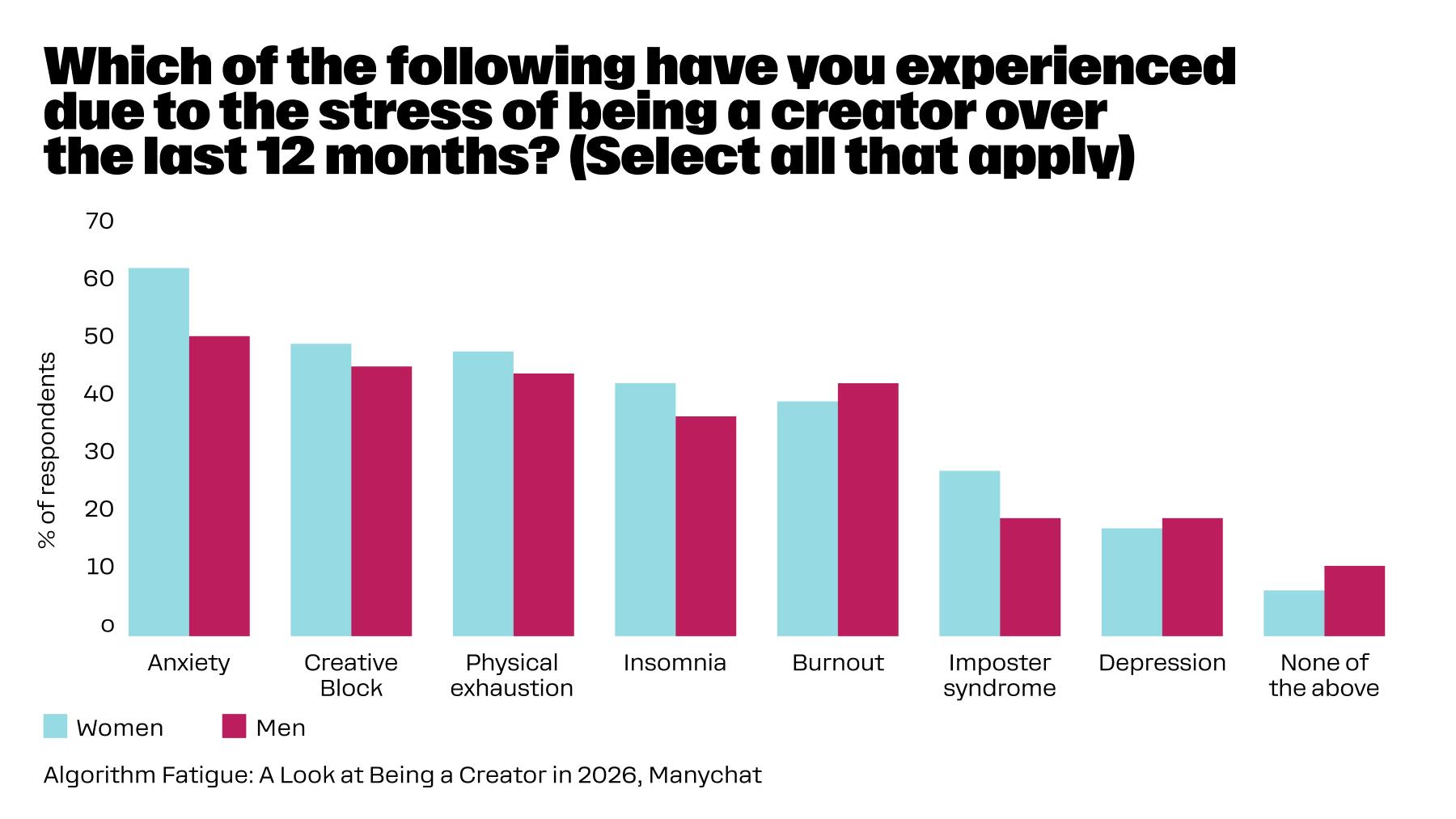
A closer look at the data suggests that women do report higher levels of anxiety than men (61% compared to 50%). But, half of the men surveyed also reported anxiety, implying that stress is widespread in the creator space.
Burnout was nearly identical across genders, with men reporting it at slightly higher rates.
Note: A small number of nonbinary creators responded to the survey, but the sample size was too small to draw publishable conclusions. That said, their responses reflect the same broader pattern of elevated stress reported across the industry.
Interestingly, women were less likely than men to report having considered quitting in the past year.
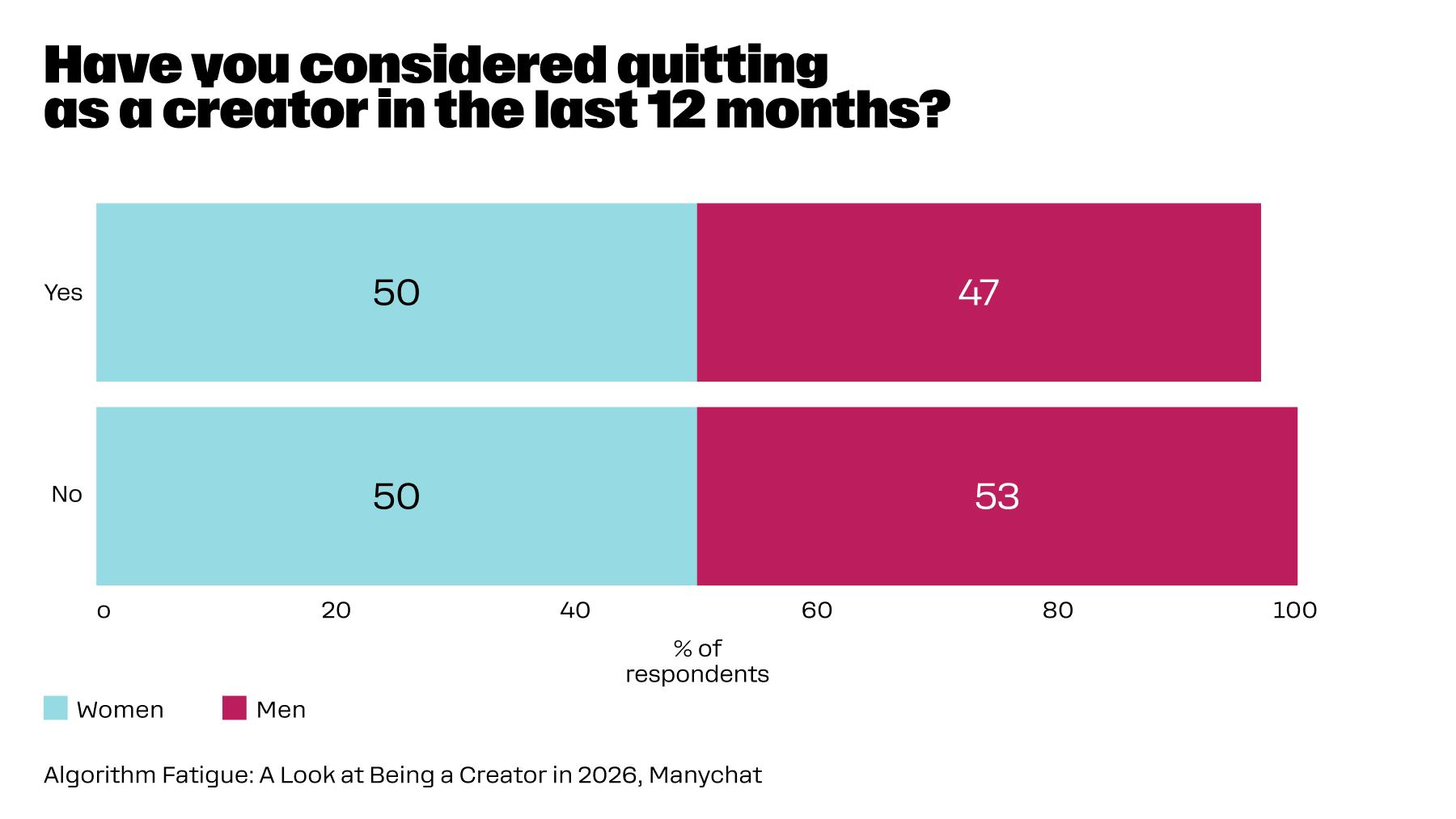
The biggest differences came from why they considered quitting. Men were more likely to cite insufficient income as the primary reason (32% vs. 18%), while women were more likely to point to lack of growth and creative burnout.
One interesting thing from the data: Women are more likely than men to see themselves as a brand.
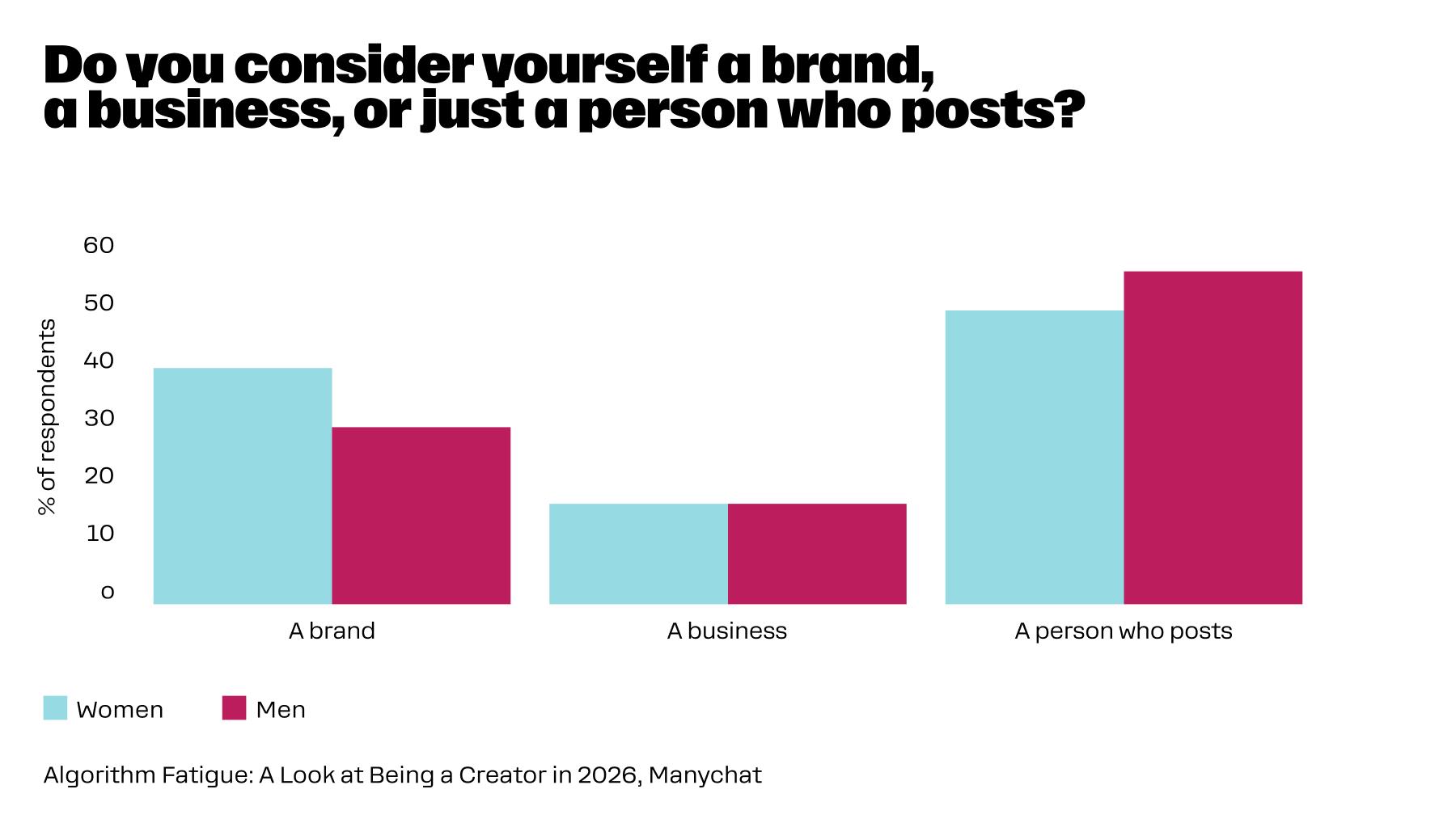
On the surface, that sounds great — empowering, even. But it takes practice to separate your self-worth from your brand’s performance.
When You’re in Your Feels, Authenticity is The Answer
So, we know everyone’s prone to stress and wanting to quit to some extent, regardless of gender. But we also know that, as a creator, you’re told to just keep posting to grow your audience and, in turn, earn enough money to have a good life.
So, what do you do when shit happens, and you’re just not feeling it? You get real.
Content creator Libby Amber Shayo got started posting skit comedy on TikTok. She has a background in acting, which helps her tap into different characters. Her skits often make light of dynamics in modern Jewish families.
“I started posting content as a persona and as a character. I’m pretty sure nobody heard my real voice for a full year,” she says.
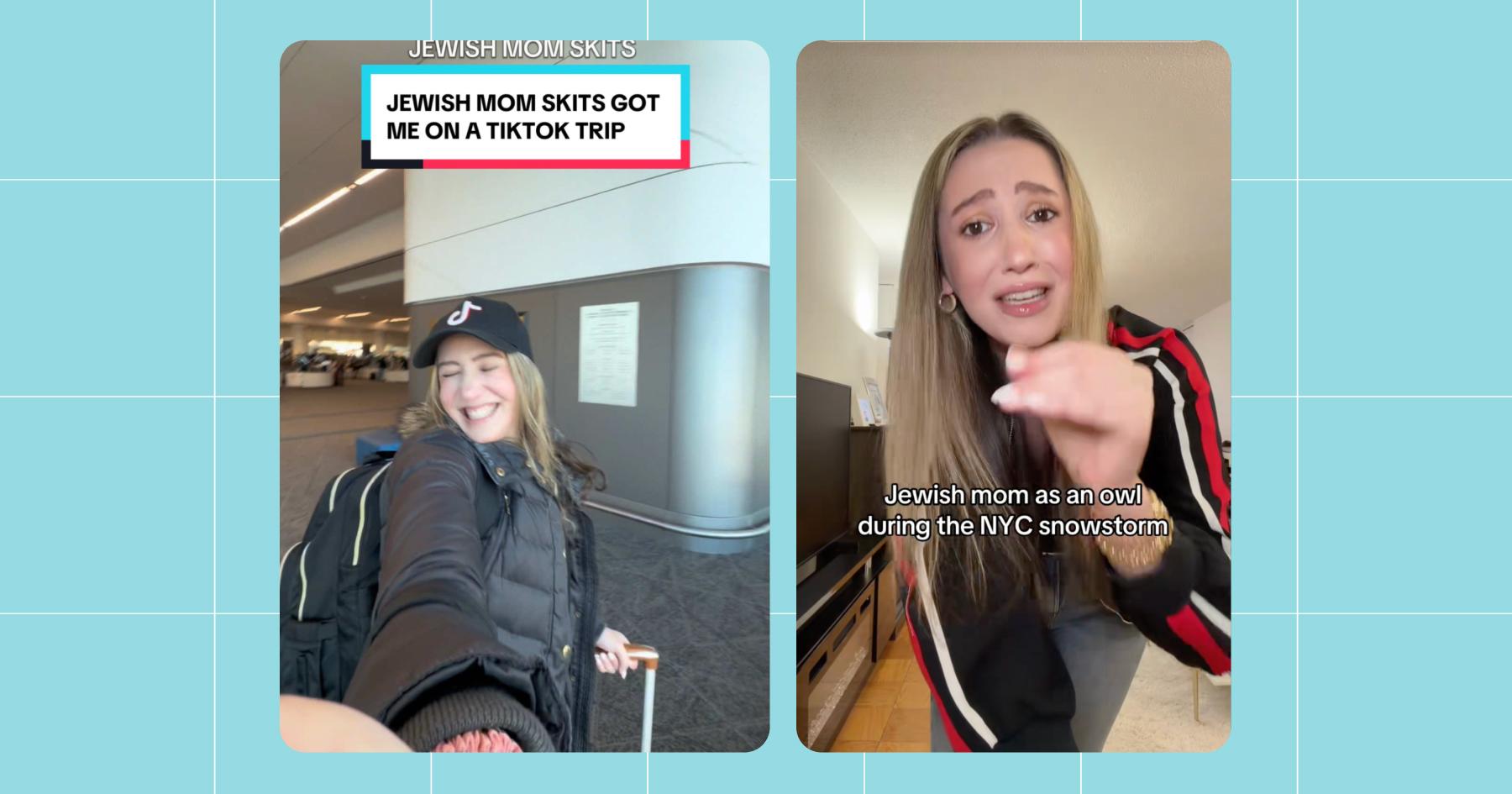
For her, characters provided some separation between who she was on- and off-camera. “It was kind of church and state — separating the two. It took time to figure out what I wanted [my audience] to know about me versus the characters I played.”
Libby’s been a creator for six years now. She’s very active, sometimes posting up to three TikToks a day (and keeping up with Instagram, YouTube, LinkedIn, and her consulting business).
But she’s a real person, and she’s navigating life stuff behind the screen.
“There’s been death and grief in the family over the last year, and sometimes, I don’t feel like being funny.”
“When my grandma passed away, I made a video of all the voicemails she left me, with a compilation of videos, pictures, and everything. The response was really special — I got to learn a lot about my followers and their grandmas because I decided to be vulnerable.”
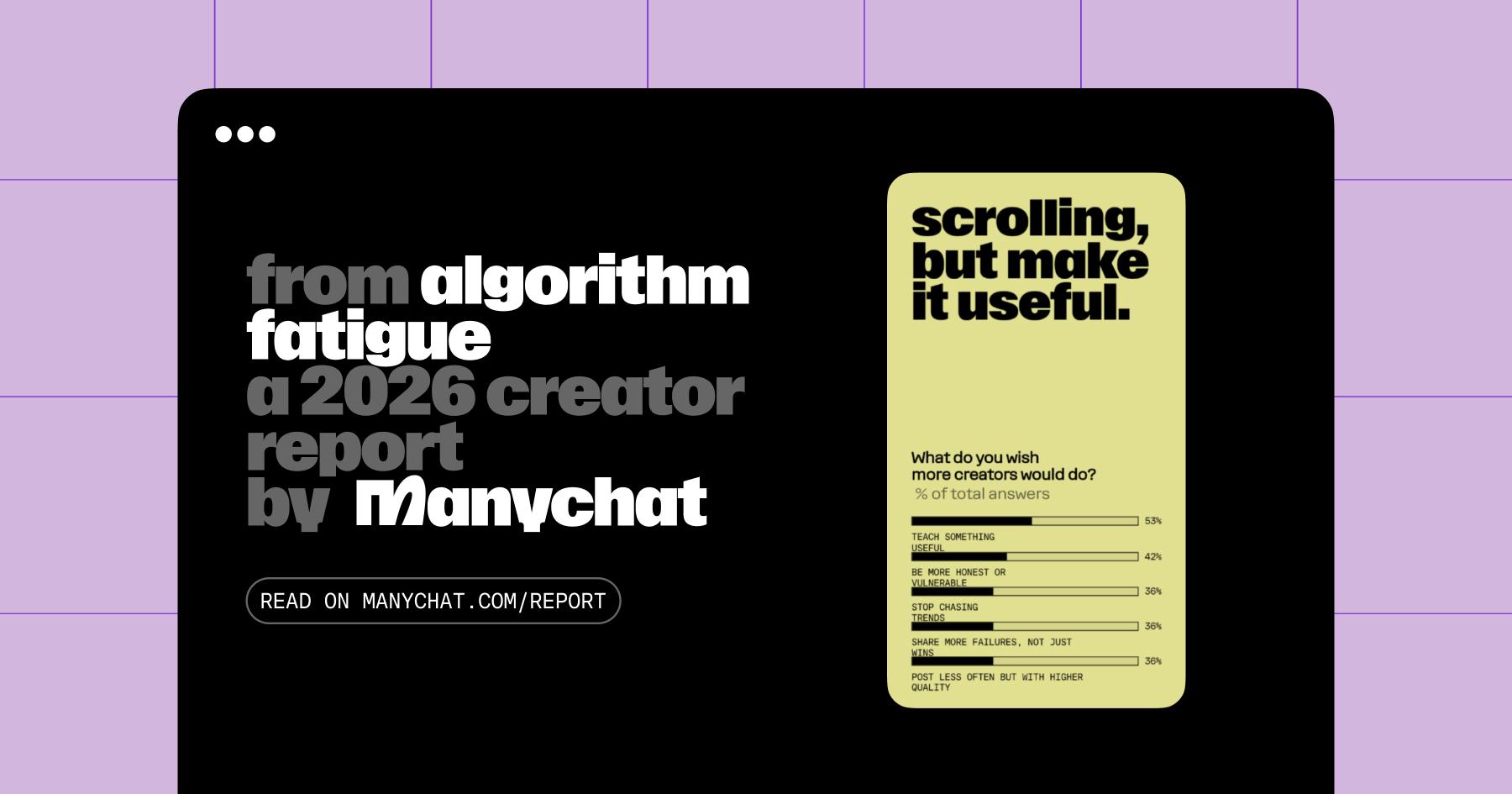
Libby still makes Jewish skit comedy, but it’s mixed in with glimpses of her real life, including her wedding and relationship, childhood, and career. “This is who I am. This is the full picture,” she says. And luckily, the full picture is exactly what scrollers want to see these days:
…but also, set some boundaries
If authenticity is one way to survive burnout, boundaries are another.
Gigi Robinson is a creator and the founder of Hosts of Influence. Gigi is her brand, but a good amount of her content is educational, which helps her maintain a layer of separation between her real life and her online persona.
She often shares about living with a chronic illness and different aspects of being an entrepreneur and author, from trademarking to putting together book proposals.
“I’m providing value to the audience that isn’t about me,” she explains.
Gigi says that whenever she’s talking to people about whether they want to become creators, she tells them to think about how involved they want to be in the content.
“Vulnerability is such a personal choice,” she says. “Do you want to build a business around a hardship you’ve been through, or do you want it to just be a joyful platform? Do you want to show all areas of your life, or make it super specific?”
The answers to these questions will differ for everyone, and they might change over time (as they did for Libby).
Creators: If you need to hit the panic button, repost
Are you in the thick of it right now? This section is for you.
Realistically, yes — you do need to post consistently to find success as a creator. But when you can’t bring yourself to hit record, reposting is a valid option.
“On the days that you don’t want to create content, there should be a backlog of something that you can repost,” says Gigi. “Nobody is keeping tabs on whether you’ve reposted something or not.”
That might look like recycling posts across platforms, re-editing high-performing videos, turning a Reel into a carousel, or finally publishing drafts that never made it to the feed. The idea is to conserve as much creative energy as possible while still showing up.
And if all else fails, you can use Instagram and TikTok’s repost features to share another account’s content. It’ll show up in your followers’ feeds and become part of your repost grid.
The Big Question: Does Gender Play a Role in Creator Burnout?

I came into this article thinking it would, but when I dug into the data, I found more similarities than differences between men and women.
Sure, there are some subtle ways in which women and men creators experience burnout and stress differently, but not enough so to say that one gender is significantly more affected than another.
Alyssa Mairanz, a licensed therapist and the founder of Empower Your Mind Therapy, says that “…from a Dialectical Behavior Therapy (DBT) perspective, burnout is a sign that emotional needs are not met and sufficient emotional support isn’t available.”
If burnout is a sign that emotional needs aren’t being met, then forcing yourself to create something new while depleted might just make things worse. It’s normal to need time away from your phone and your work, so take that space when you need it.
“It’s important to remember that you are doing the best you can. If things are becoming too overwhelming, or it seems burnout has no end in sight, you may want to seek professional help to move you through it,” Alyssa says.
Great advice, and on that note, I’m going to touch grass.
Happy International Women’s Day, and thank you to the women whose work contributed to this article: Alyssa Mairanz, Gigi Robinson, Libby Amber Shayo, Sarah Parker, Mady Lanni, and Catherine Dorosheva.
Like this? You should visit Chronically Online Magazine.
Originally published: Mar 6, 2026, Updated: Mar 6, 2026
More stories worth reading
More content that's too good to miss