Advanced Targeting in Manychat: How to Send Leads Targeted Offers

If you’ve been using Comment-to-DM to send out links but not taking advantage of the fact that you have someone in your DMs, now’s the time to change that. When someone’s directly engaging with you, you have an opportunity to learn what they’re interested in, what they need, and how ready they are to take action. And instead of sending the same automation to every contact (no shame), you can use that information to personalize what happens next.
Advanced targeting in Manychat means using information about a contact (such as their interests, responses, behavior, or stage in the customer journey) to determine which messages, offers, and automations they receive. Tags, Custom Fields, Conditions, and Segments help you collect those signals and turn them into more relevant customer journeys.
And you don't need a CRM or complicated lead-scoring system to get started. You can begin by collecting just a few useful pieces of information and get more sophisticated as your strategy grows.
Why Use Advanced Targeting in Manychat?

Let’s say you’re an entrepreneur and a course creator. Your business is helping other people launch their first business, and you’ve packaged your expertise into a $29 guide, a $299 course, and $2,000 one-on-one coaching sessions.
Someone who has just discovered your Instagram account probably shouldn't receive the same message as someone who has already bought your course or told you they're ready to sign up for coaching sessions.
Advanced targeting helps you tell the difference between new leads and people you’ve already interacted with. Instead of treating your entire audience the same, you can learn about individual contacts and use that information to determine the most relevant next step for them.
That might mean:
- recommending a product based on someone's interests
- sending beginners and advanced users different resources
- identifying high-intent leads for your sales team
- following up differently based on someone's previous actions
- avoiding sending people content or offers they've already received
- sending a targeted campaign to a specific audience segment
Not a Manychat user yet? Sign up for free and get started.
How advanced targeting works in Manychat
Three of the most useful building blocks for targeting in Manychat are Custom Fields, Tags, and Conditions.
The easiest way to remember their roles is:
Fields capture the signal → Tags organize the signal → Conditions act on the signal
Tool | What it does | Best for |
Custom Fields | Stores specific data about a contact | Goals, preferences, budgets, dates, scores, and other information you want to reference later |
Tags | Applies a label to a contact | Tracking behaviors, interests, status, or membership in a useful group |
Conditions | Checks contact information and branches your automation | Sending different contacts down different paths |
Custom fields: What do I know about this person?
Custom Fields store specific information about an individual contact. For example, you might ask someone: “What's your main goal right now?”
If they select Grow my business, you can save:
- Goal = Grow my business
You could do the same for information like:
- Experience Level = Beginner
- Budget = $2,000
- Timeline = This month
Instead of treating every DM interaction as if it's the first time you've met, you now have information that can help determine what happens later. Custom Fields are especially useful when the value itself matters, like if it’s information you need to compare, reference, update, or use elsewhere in an automation.
Tags: What useful group does this person belong to?
Tags are labels attached to contacts based on something meaningful about them or something they've done. For example:
- Downloaded Freebie
- Webinar Attendee
- Interested in Coaching
- Existing Customer
- High-Intent Lead
Tags are useful when the important thing isn't necessarily the underlying piece of data; it's what that data or behavior means for your marketing.
That's why Fields and Tags can work well together.
Suppose you've collected:
- Budget = $2,000+
- Timeline = This month
- Interest = Coaching
Those Fields contain the underlying information. Together, however, they might tell you something more useful: this person looks like a strong coaching prospect.
You could therefore apply:
- High-Intent Coaching Lead
The Fields hold the details. The Tag marks their significance.
You don't always need both. For simple automations, Custom Fields and Conditions may be enough. Tags become particularly useful when you want to turn information or behavior into a reusable audience signal.
Conditions: Given what I know, what should happen next?
Conditions are where targeting turns into action. A Condition checks information about a contact and determines which path they should take.
For example:
- IF Goal = Grow my business AND Experience Level = Beginner → Recommend beginner course.
- ELSE IF Interest = Coaching AND Timeline = This month → Offer consultation
- ELSE → Send free guide
Instead of building one automation for everybody, you're building one conversation that adapts based on what Manychat knows about the person having it.
What information should you use for targeting?
More data doesn't automatically mean better targeting. Before adding a Tag or Custom Field, ask yourself: Will knowing this change what I send, recommend, or do next? If the answer is no, you probably don't need to collect it.
Most useful targeting signals fall into a few categories.
Interest
What does this person care about?
For example:
- Interest = Instagram growth
- Interest = Email marketing
- Interest = Coaching
Interest data can help you determine which content, freebie, product, or offer is most relevant.
Intent
What has this person done that suggests they might take action? They might have requested pricing information, clicked an offer, attended a webinar, asked about coaching, or said they're ready to get started. Not every interaction signals the same level of intent.
Fit
Is this person a good match for the product or service you're offering? Depending on your business, useful qualification information could include budget, experience level, business type, needs, location, or timeline.
Behavior
What has this person already done? For example:
- Downloaded Freebie
- Attended Webinar
- Clicked Course Offer
- Purchased Course
Behavioral information can be especially useful for avoiding repetitive customer experiences.
If someone has already downloaded your beginner guide, for example, your next automation could recommend something new instead of giving them the same resource again.
Customer journey stage
Finally, think about where someone is in their relationship with you. A brand-new contact, engaged prospect, qualified lead, and existing customer shouldn't necessarily receive the same communication. Even simple distinctions can make your targeting much smarter.
How to Build an Advanced Targeting Flow in Manychat

Let's build a flow based on the entrepreneur example from earlier. We talked about three offers:
- a free guide
- a $299 course
- and $2,000 coaching sessions
You publish an Instagram Reel asking people to comment GROW if they want help choosing their next step.
Step 1: Start the conversation
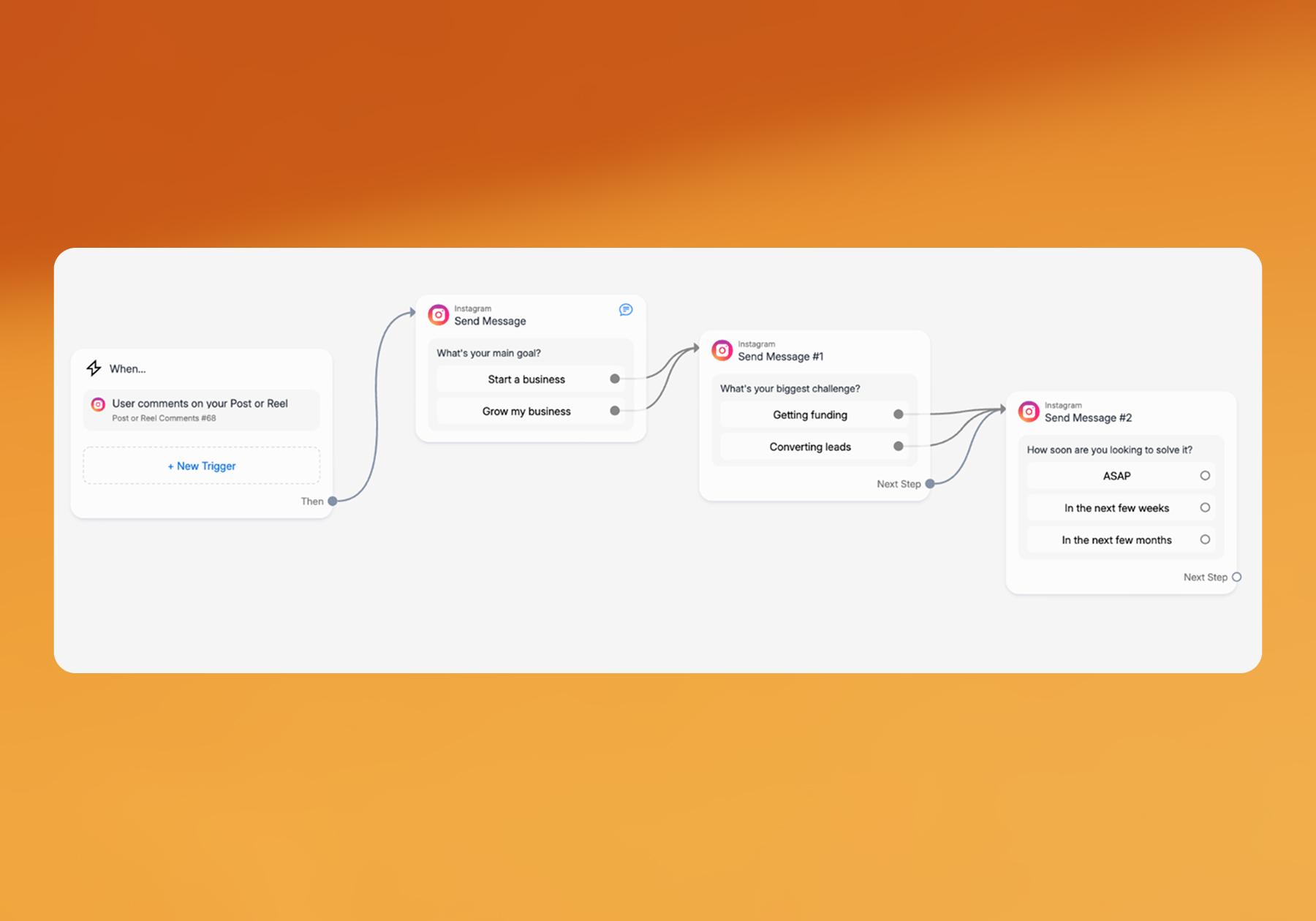
Someone comments GROW and enters your Manychat automation. Rather than immediately sending them an offer, you ask a few questions:
- What's your main goal?
- What's your biggest challenge?
- How soon are you looking to solve it?
Step 2: Save useful answers in Custom Fields
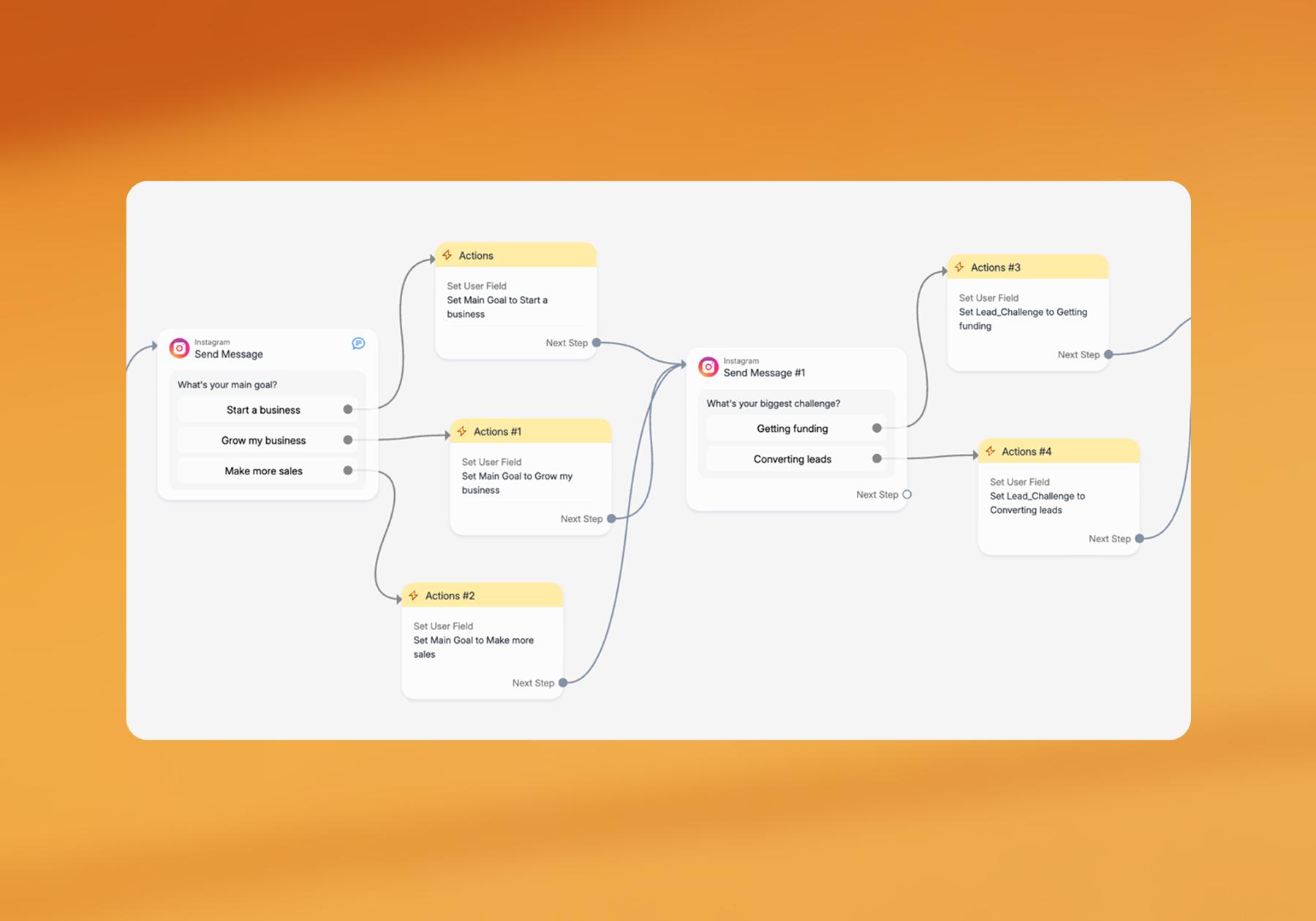
Their responses become information you can use later:
- Goal = Grow my business
- Challenge = Converting followers
- Timeline = ASAP
This is your data collection and qualification stage.
Step 3: Use Conditions to interpret the information
Next, your automation evaluates those answers. For example:
IF Timeline = ASAP AND Challenge = Getting funding → Add Tag High-Intent New Lead
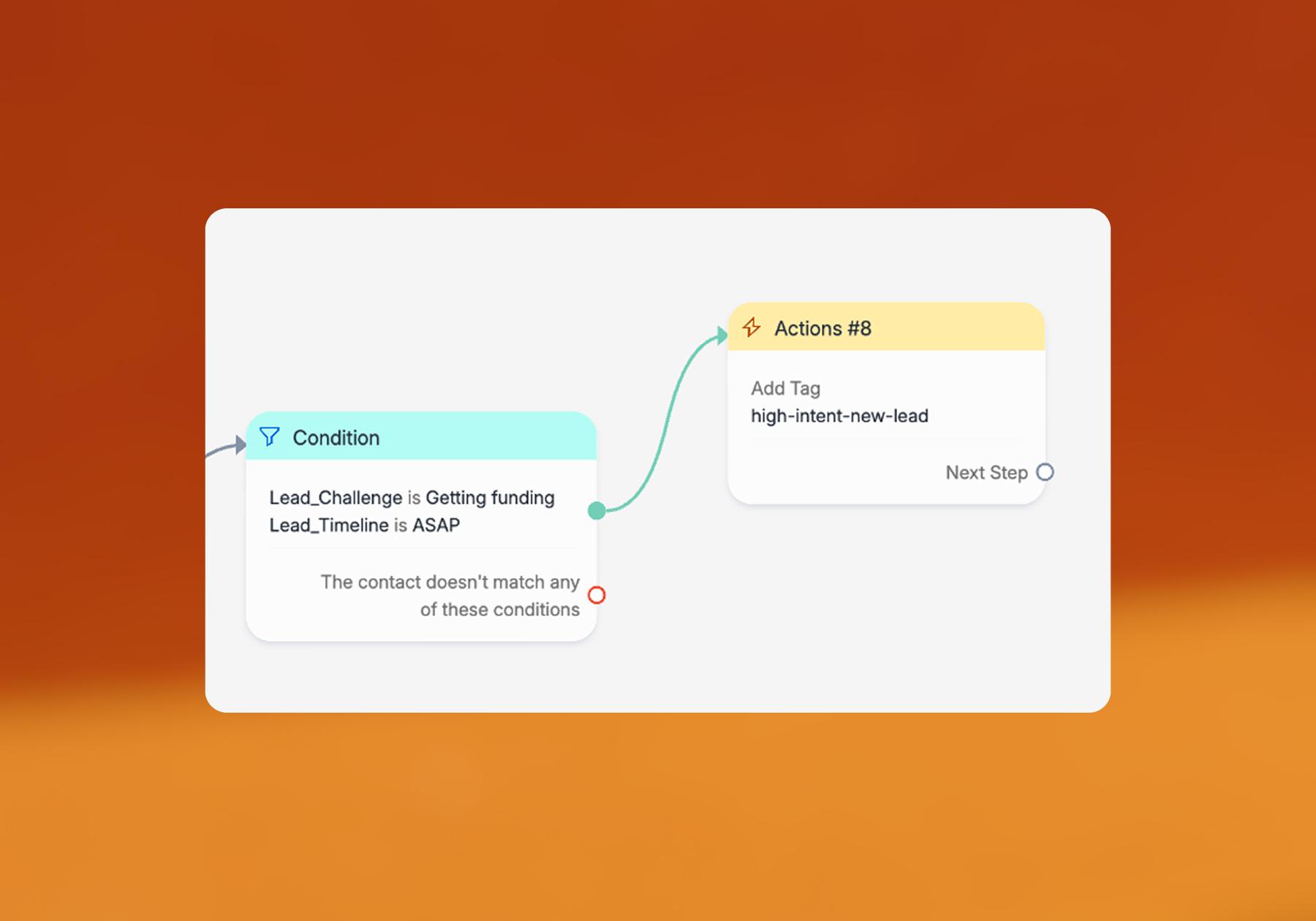
Of course, you’ll need to create tags for different kinds of leads and customers. In this example, you could add another condition: IF Challenge is Converting leads AND Timeline is ASAP → Add Tag High-Intent Current Business Owner.
Step 4: Personalize the next step
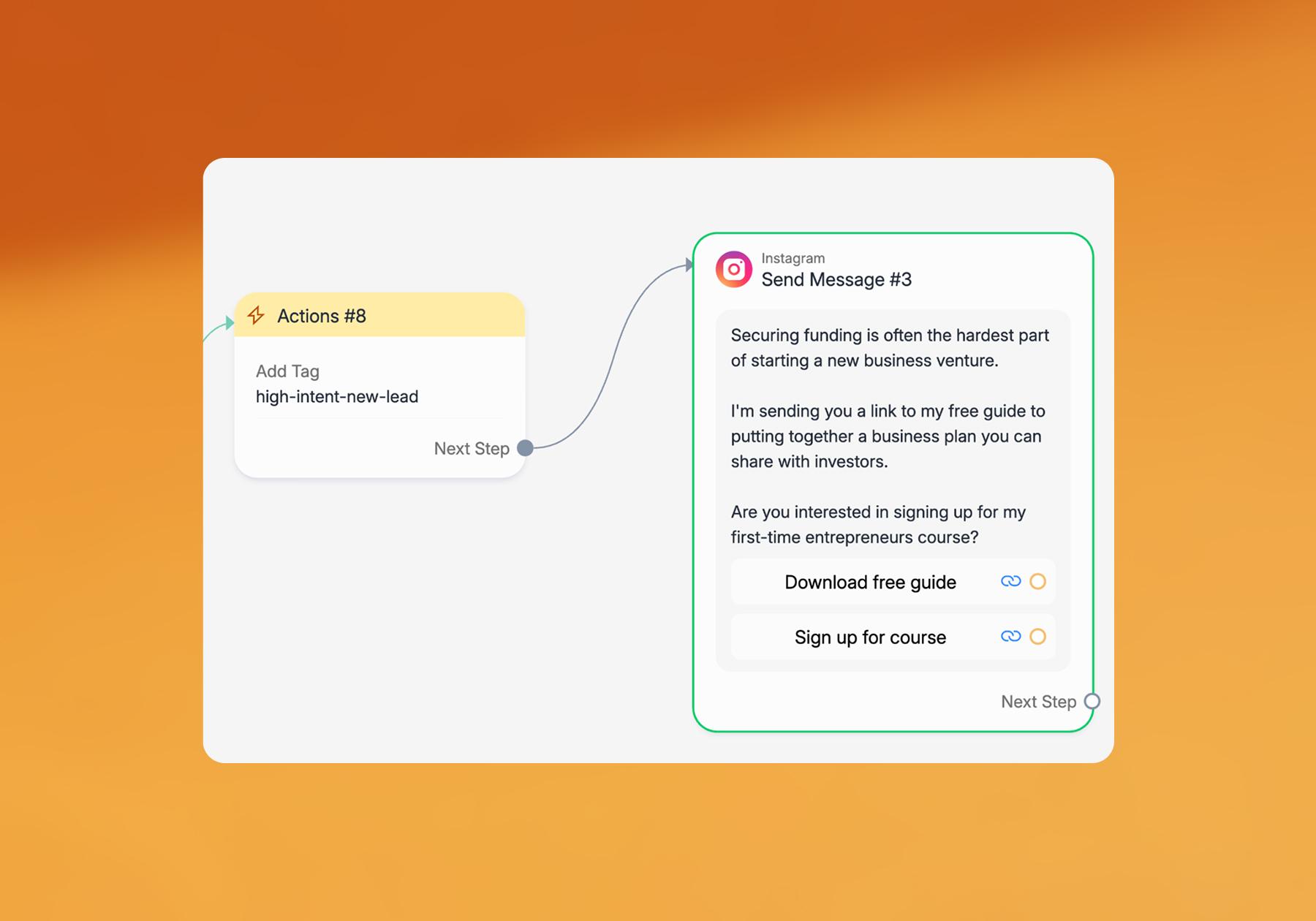
Now the experience branches. A high-intent new lead could receive a message with your free guide and an offer to sign up for your course.
A current business owner could receive an invitation to book a consultation to see whether one-on-one coaching is right for them. The idea is to take the same entry point (a comment on your reel) and turn it into three different customer experiences.
Frequently asked questions
Advanced targeting uses information about your contacts — like their interests, behaviors, and responses — to personalize what happens next. With Tags, Custom Fields, Conditions, and Segments, you can send more relevant messages and offers instead of giving everyone the same experience.
Custom Fields store specific information about a contact, such as their goal, budget, or experience level. Tags act as labels that identify useful behaviors or groups, such as Webinar Attendee or High-Intent Lead.
Conditions are decision points in an automation. They check information such as Tags or Custom Field values and route contacts down different paths based on whether they meet your criteria.
You can segment contacts using criteria such as Tags, Custom Fields, behaviors, and other contact data. Save combinations of these criteria as Segments to create reusable audiences for targeting.
No. You can start with Custom Fields, Tags, and Conditions to qualify and target contacts. Lead scoring becomes useful when you want to combine multiple signals into a single measure of a contact’s fit or intent.
Yes. You can use the same targeting strategy across Manychat’s supported channels, although each channel has different messaging rules and capabilities. Contacts also aren't automatically recognized as the same person across different channels.
Yes. You can use Conditions to check what you know about a contact and route them toward different messages, offers, or automations. For example, a high-intent lead could receive a consultation offer while someone earlier in their journey receives a free guide.


Originally published: Nov 21, 2019, Updated: Sep 18, 2026
More stories worth reading
More content that's too good to miss