
From Pantry Bins to Passive Income: A Professional Organizer vs. 40 Million Views

Nadine Wissing is not supposed to exist. At least, not according to the version of “work” most people grew up with.
She’s a former professional organizer from Germany. The daughter of a farmer. A mom of two kids under two. She works very limited, highly focused hours. She doesn’t sell courses about becoming rich. She doesn’t even tell her parents how much money she makes.
She’s just wildly good at finding Amazon products that make daily life easier, and turning that interest into actual revenue without living inside her inbox.
Nadine runs The Organized by Nadine, based in Hamburg, Germany, where she posts stylish, practical home organization ideas and “Amazon finds” that scratch the same itch as watching someone decant pantry staples into perfect jars.
And proof matters to her. Because in her world, a product only makes it into her content after she’s ordered it, tested it at home, and can show it working on camera.
Because this is her whole thing: “The proof is always a video.”
Organizing as a Business and Instagram as the Megaphone

Nadine’s creator era began the way many real businesses start: not with a dream of fame, but with a need. In 2020, she started working as a professional home organizer and used Instagram to explain what that job even was.
“My plan was to win more clients with social media and show them what professional organizing was, because in Germany, it was not really that common,” Nadine said.
So she posted “before and after pictures,” behind-the-scenes content, and real-life projects. People loved watching her transform homes. The audience was there. The engagement was there. And then something happened that many service-based creators deal with: the audience started caring less about the service and more about the stuff.
“People were more interested in the products than in my service, so they were always asking where the products I was featuring were from,” Nadine said.
So she started sharing links. And for a long time, she did it for free.
But at some point, the math became insulting. People were basically yelling “take my money!” in her comment section, and Instagram said: “Cool, here’s no clickable links in captions. Figure it out!”
When “Too Annoying” Became a Business Risk
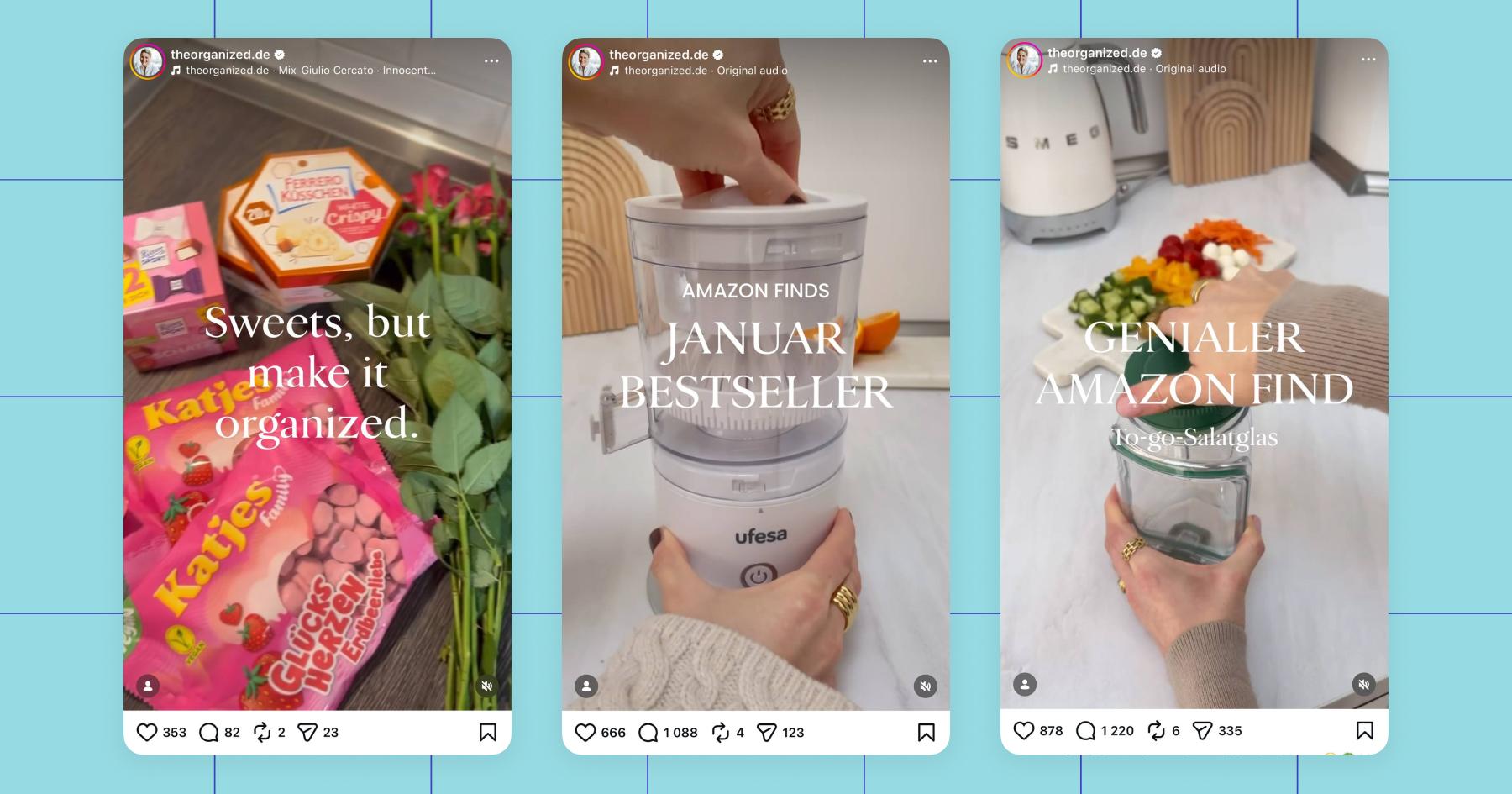
Nadine’s Reels were performing very well. The demand was obvious. But fulfilling that demand manually is the kind of task that looks manageable until it suddenly becomes a full-time job you didn’t apply for.
She needed a way to do what creators always say they want to do: keep engagement high, keep the interaction personal enough, and monetize without staying glued to the phone.
Nadine heard about Manychat the way half of the world does now: from someone else. That was it. She tested it. And she felt the difference immediately.
“It was a big game changer. Sending all the links manually was getting too annoying to sustain.”
She has yet to look back.
The Use Case That Made her Money: Comment to DM Automation
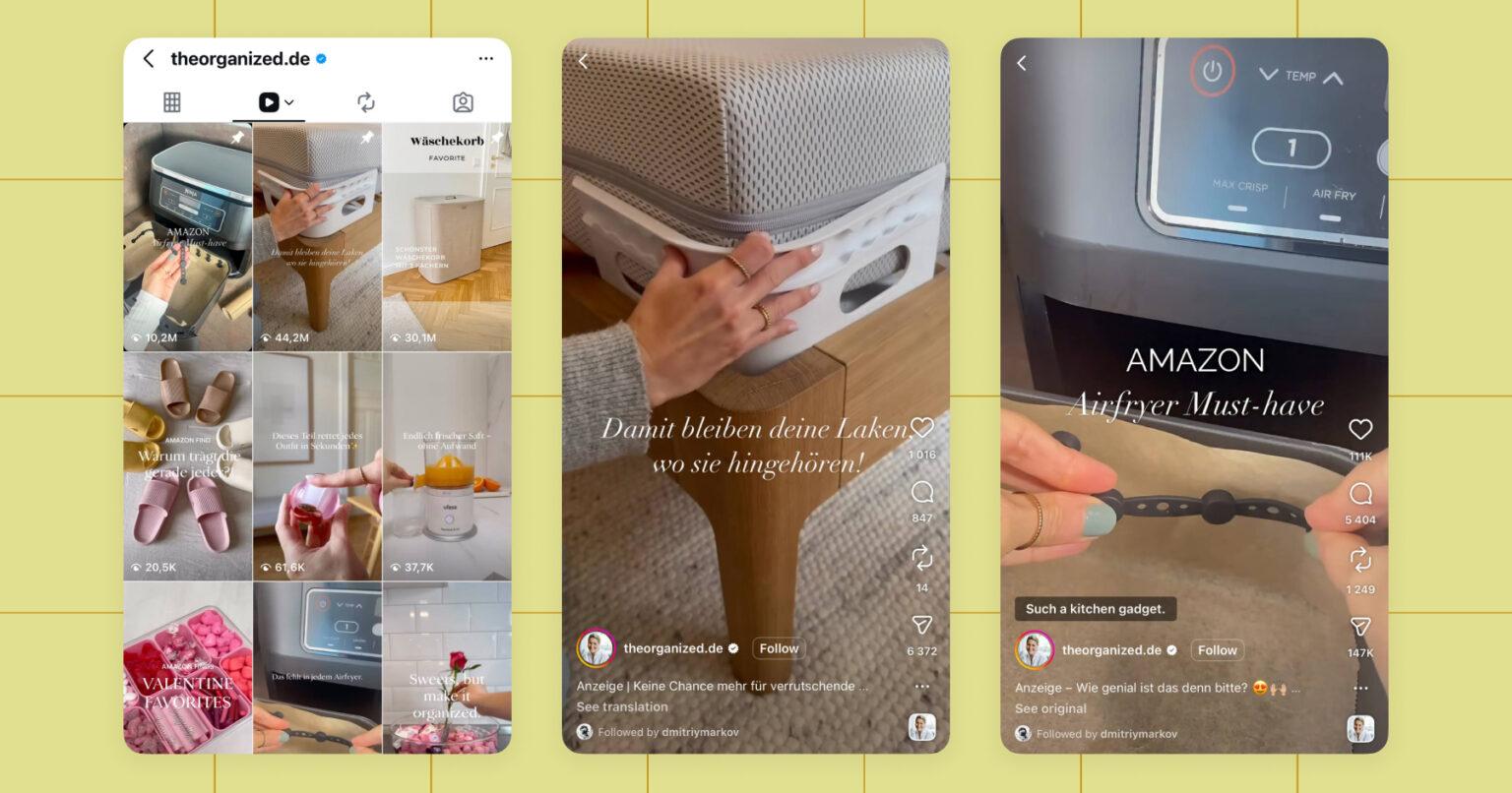
Nadine’s main engine is simple: people comment, and they automatically get the product link in their DMs. That’s comment to DM automation.
And this is where the story flips from “smart workflow” to “holy sh*t.”
Because when the content hits, it hits.
“I have Reels with tens of millions of views. If I didn’t already have Manychat set up, there’d have been no way for me to keep up,” Nadine said.
Those views brought comments. And comments turned into DMs. And DMs turned into affiliate clicks. And clicks turned into revenue.
Translation: if you go viral and you can’t deliver what people are asking for, you’re basically throwing money into the sea and waving goodbye.
But Wait — Germany Wasn’t Ready for it (at First)

One of the most interesting parts of Nadine’s story isn’t the numbers, but the culture shift. When she started using Manychat, she wasn’t seeing it widely used. She was early, especially for creators in Germany.
“I got the feeling that I was one of the first creators in Germany using Manychat…”
And early adopters always pay a tax: you get the win, and you get the confusion. People weren’t used to automations. Some assumed she was trying to game the algorithm. So she did the thing most creators avoid: she explained it like an adult and stayed transparent. She didn’t pretend the messages were hand-typed by her at 2:30 a.m. She didn’t roleplay as a human bot. She made it clear what was happening, and then she made the experience feel personal anyway.
There’s a fear among creators that automation will make them feel cold or fake. Nadine’s take is refreshingly direct: don’t fake it. Make it good.
Her approach is basically: build a system, but don’t make it soulless. She doesn’t have two canned replies. She has an extensive library, and she tweaks them constantly so they feel relevant to the content.
“I try to make them a little bit more personal, and I use some emojis,” she said. “When it’s about a shoe organizer, I include shoe emojis.”
Nadine is never trying to trick followers into thinking every message is handcrafted. She’s making the experience feel like her — and that’s what people respond to. Even when it’s automated, people still reply.
“They’re always answering, ‘thank you… and yeah, by the way, I like your content.’”
Automation helps her ensure people get what they came for without having to wait.
The Plot Twist: Motherhood Changed Everything (and Made the System Non-Negotiable)
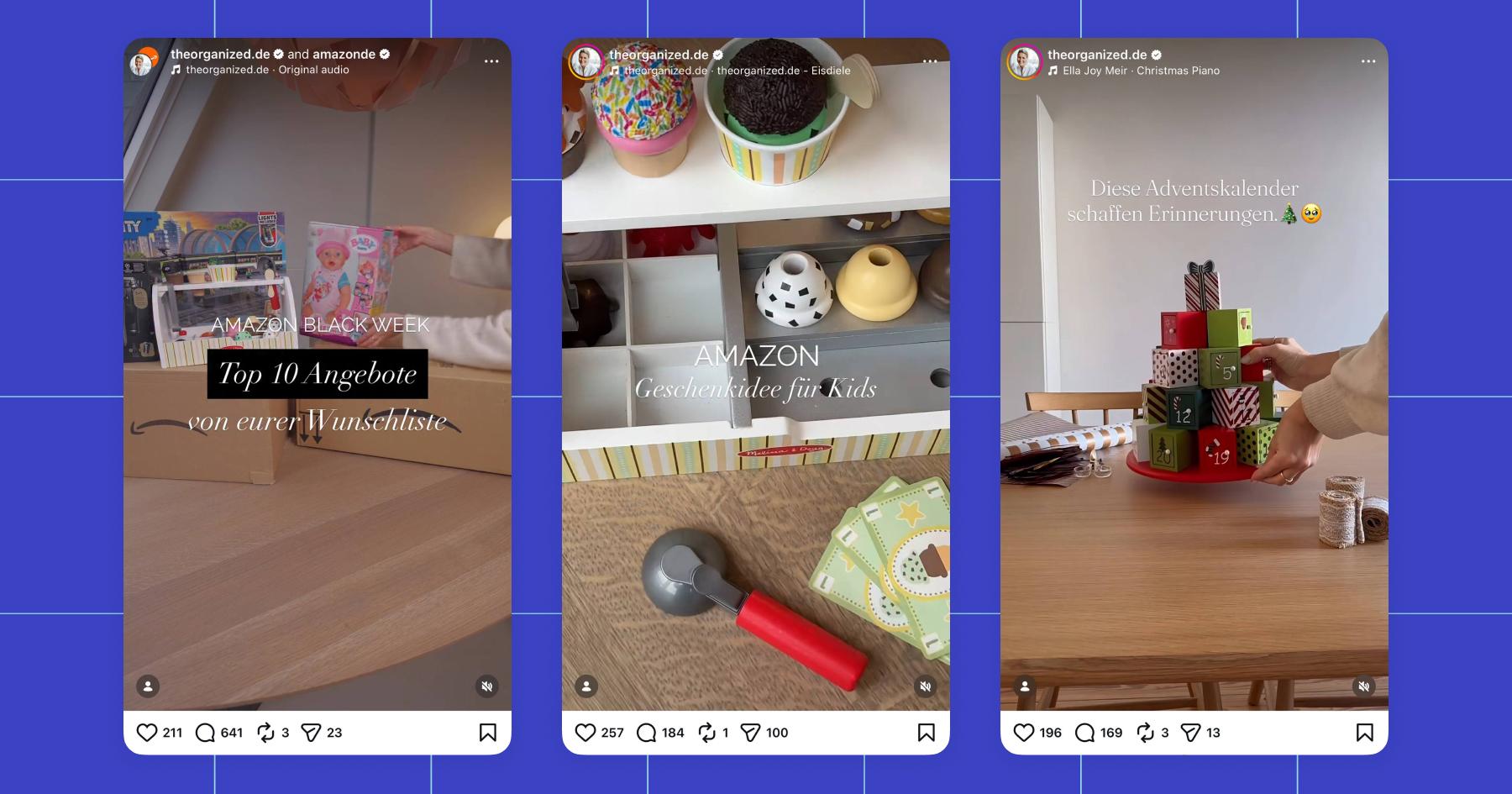
Two years ago, Nadine’s life forever changed.
“I became a mom. Now, I’m the mom of two little children.”
She stopped doing professional organizing in-person and moved fully into content + affiliate work. Now she’s running the business from home, and making content around products she personally tests, in a niche her audience already trusts her in. And she’s doing it with extremely limited working time.
“I work on this about two hours per day,” Nadine said. “So in these two hours, I’m really focusing on what I have to do on my own, and what I can automate.”
This is where Manychat becomes infrastructure. When your time is that limited, every manual task is a tax. Every moment you spend copy-pasting links is time you’re not filming, scripting, testing, or living your life.
So she leaned harder into systems, not just automation, but workflows, routines, and repeatable content structures.
“I have tons of workflows and checklists.”
Nadine also avoids the classic creator trap: constantly copying other creators instead of refining what works.
“Don’t get distracted. Stick to the plan.”
Her main content strategy is pattern recognition. She watches early velocity and early comment volume.
“Over 100 views in the first few hours is always a good sign. When it’s over 500 comments in the first few hours, I know it will perform.”
Nadine’s engine depends on turning engagement into a deliverable experience, and Manychat helps her do that without breaking.
What she almost didn’t say out loud
Despite having a baby last September and taking time off, she said 2025 was a seven-figure year.
And she’s almost embarrassed by it, not because she’s ashamed, but because it feels surreal against the backdrop of her upbringing.
“My dad is a farmer. He has worked super hard every day his entire life. And I’m doing what I’m doing and making so much money with it.”
But she keeps it grounded. Saves. Invests. Doesn’t blow it on status symbols.
She’s building infrastructure that holds up even when algorithms don’t.
A calmer 2026 on the horizon
Nadine is not trying to double revenue this year. She plans to keep it steady and to reduce stress.
“I don’t want to do more,” she said. “I just want to carry on and to make sure I have a good work-life balance. I’d like to reach the same financial milestone with less stress getting there.”
Although Comment to DM is her main use case, Nadine is expanding into deeper flows and experimenting with richer messages.
“A few weeks ago, I started to send this affiliate link card you can send pictures with. That worked really, really well.”
She’s also building more two-way communication, including email collection.
“I started to make more automation flows, like collecting emails for my newsletter.”
Nadine’s building a system that outlives algorithm volatility. As everyone should.
The Ethics of Affiliate Marketing (and Why Her Audience Trusts Her)
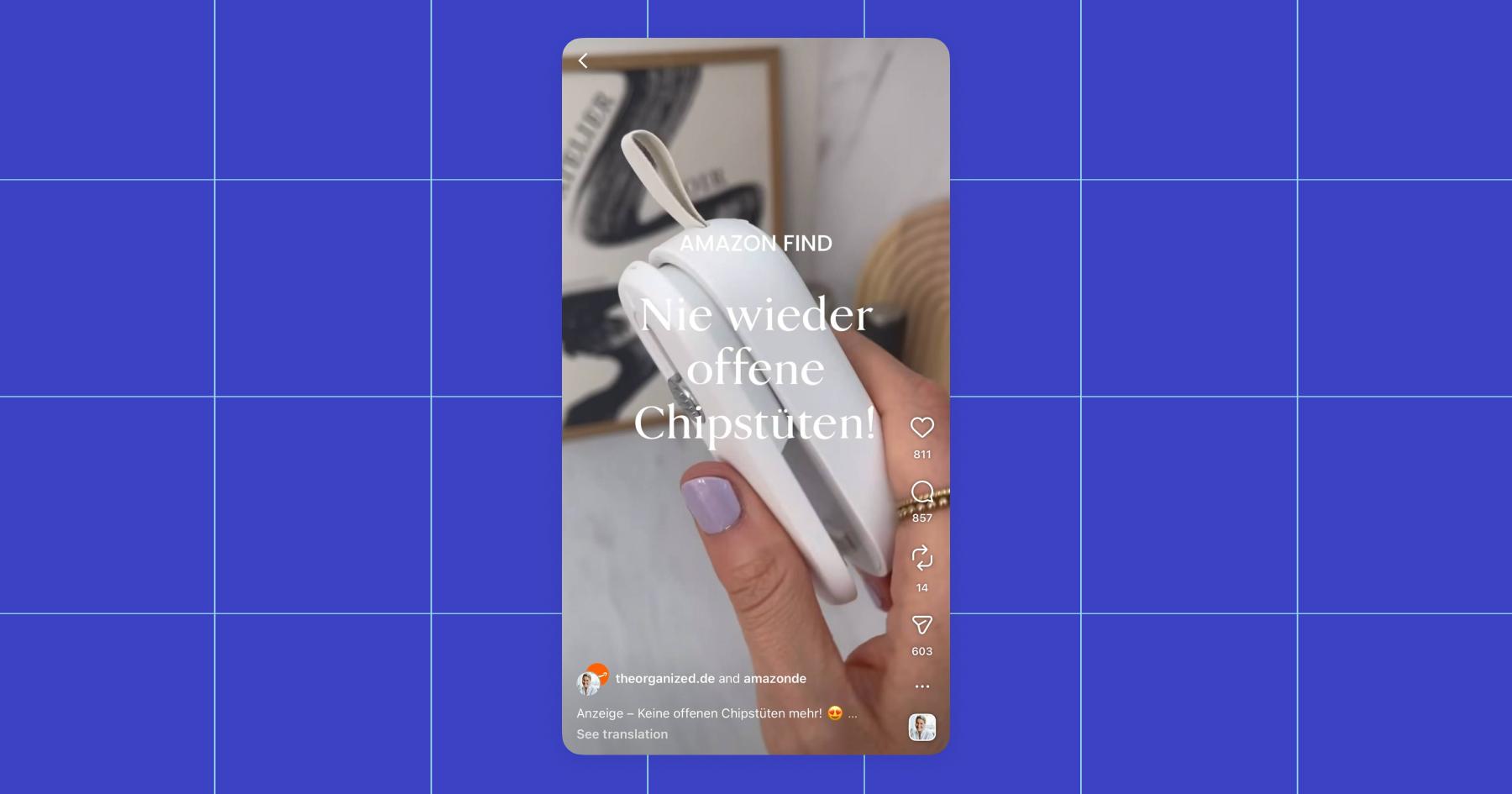
Affiliate marketing gets a bad rep because a lot of people treat it like a vending machine: shove links, collect money, and disappear. Nadine’s approach is the opposite. She filters hard, tests everything, and only promotes what she’s willing to stand behind.
“I’m ordering all the products, and I’m really checking everything here at home.”
Then she ties it back to something many creators ignore: sustainability requires genuine interest.
“You need to be passionate about what you’re doing. Get genuinely curious about the products you’re testing.”
She frames her niche as “finding gadgets for your everyday problems,” as that still connects back to her organizing roots.
And in case you’re wondering, not everything she orders works out. She described a candle warmer that sounded promising in theory but was basically a self-sabotaging appliance.
“This stupid candle warmer was always switching off as soon as it got hot.”
And she’s willing to demonstrate those fails on video. As a result, trust compounds.
The True Flex isn’t the Revenue
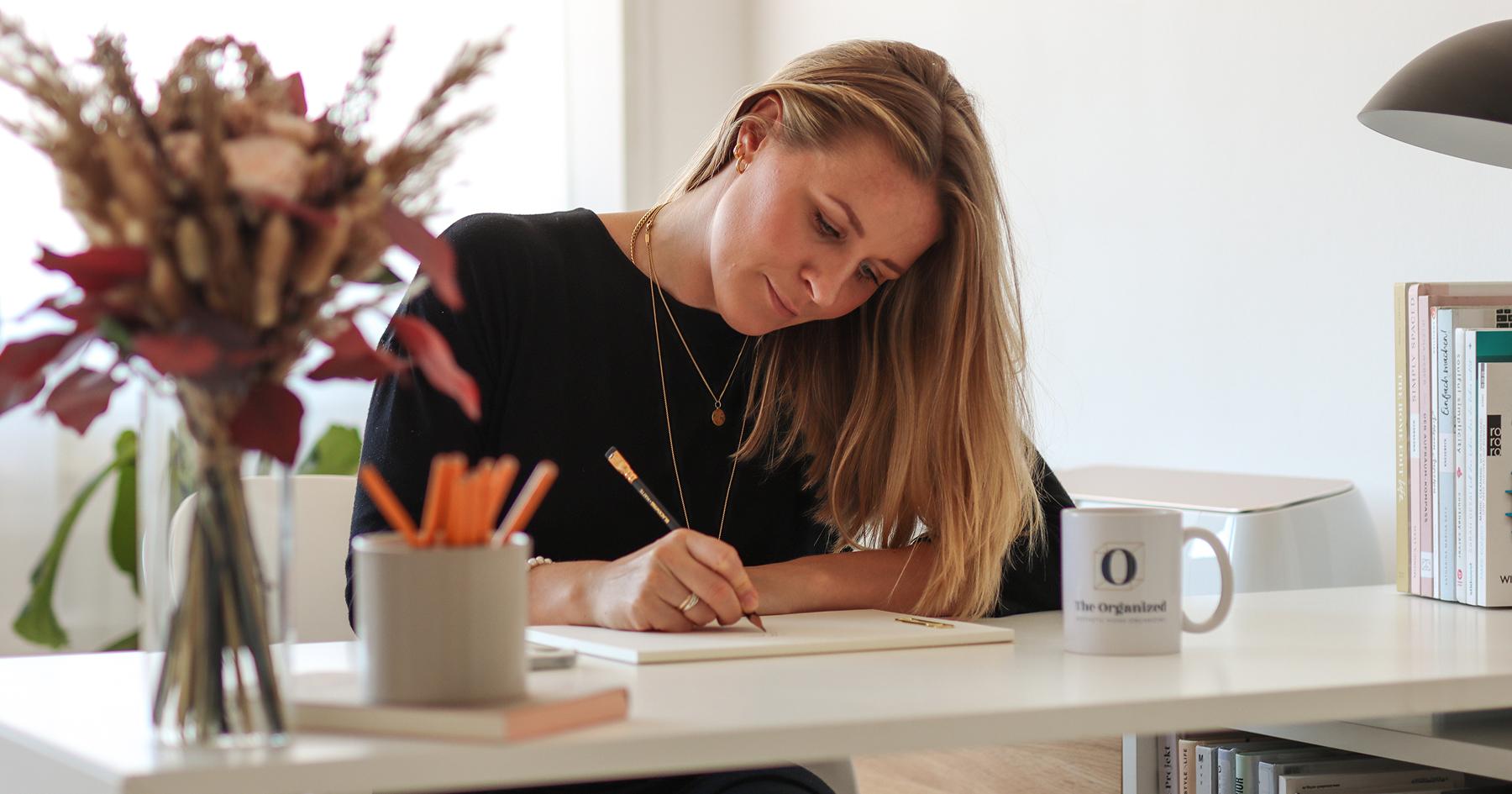
Nadine’s story isn’t “automation made me rich.” It’s: her content already performed, her audience already asked for products, and her time was already limited, so she built a system that could scale the demand without scaling her workload.
When her content went viral, she was ready. When her time disappeared, the system stayed. When the comments exploded, the links still went out.
In a creator economy obsessed with visibility, Nadine optimized for absence. And you can, too!
Ready to build your own automations? Start free with Manychat.