You may or may not know the name, Ralph Waldo Emerson, but the world-renowned thinker had some profound thoughts on what the human condition was capable of as we discover ourselves: “All life is an experiment. The more experiments you make, the better.”
How this point of view shifts over your life depends on your perspective. For some, it’s a matter of making moves, while for others, it’s how keeping the lights on drives everything.
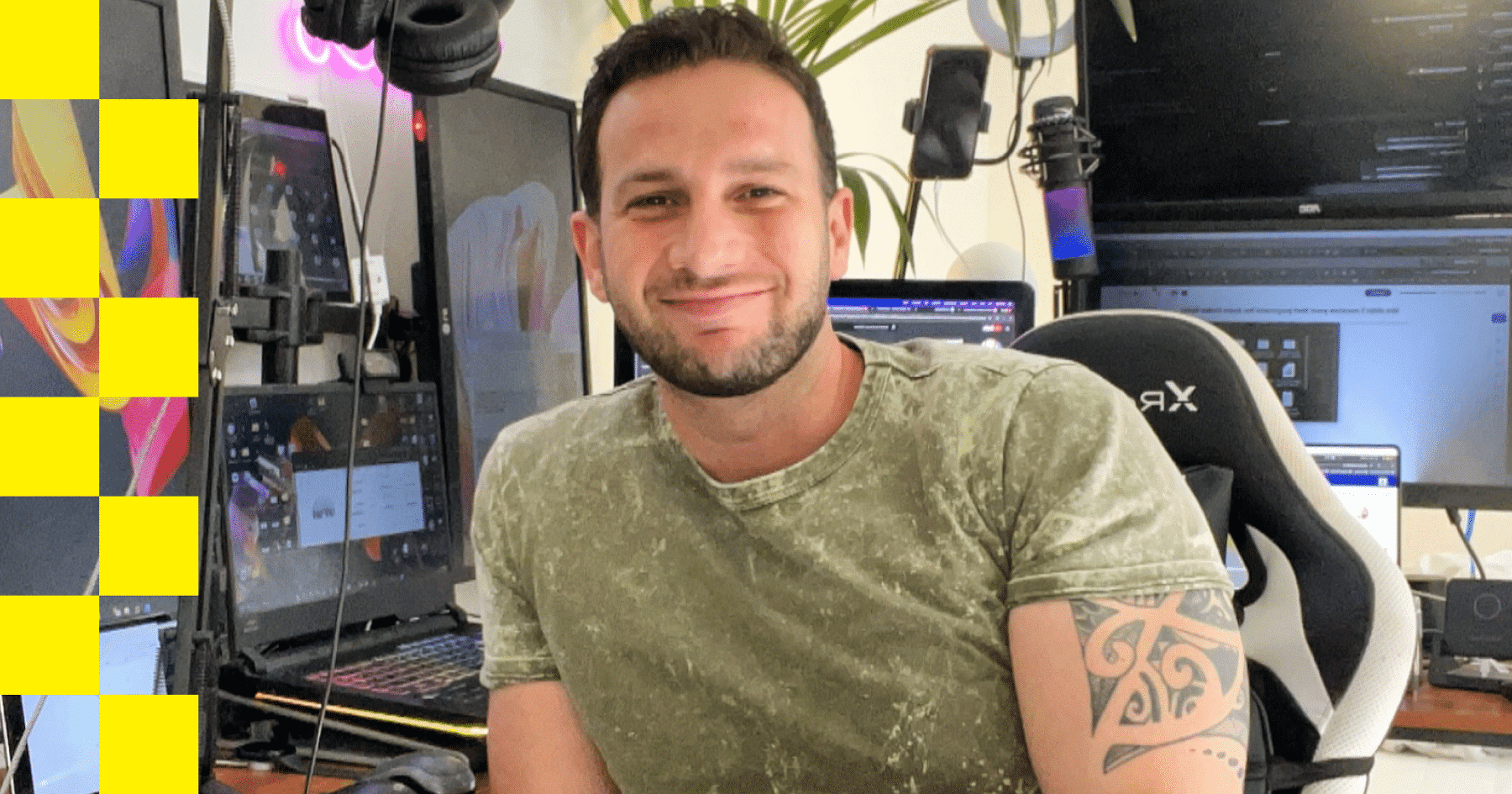
Meet Akin Yilmaz

He calls himself an “accidental automation prophet,” and it’s not far off. Akin Yilmaz didn’t stumble onto customer service automation because he was an engineer or another Silicon Valley savant; he did it out of necessity during hard times. Faced with five employees whose canned replies weren’t connecting with customers, he swapped out the entire team with a fifteen-minute Manychat flow.
That single script has been running nonstop for three years, quietly handling thousands of daily interactions without missing a beat. What started as a quick fix revealed something much bigger: the future of business operations wasn’t in throwing more people at the problem, but in designing more innovative, leaner systems.
From there, Yilmaz’s path bent toward reinvention. A London-based entrepreneur who cut his teeth in e-commerce, he leaned into automation not as a gimmick but as survival. His system didn’t just save money; it improved customer trust, boosted sales, and gave him back his time. He’s candid about the pitfalls along the way, burned investments, near-collapse from burnout, and the long walks that pulled him back from the edge.
Today, he frames success less around revenue and more around impact: being present for his kids, giving to charity, and proving that necessity, not genius, is often what drives real innovation.
The Breaking Point
“I think it was about three years ago, during the pandemic, when everything started breaking down for me on Instagram,” recalls Yilmaz. “I was selling e-commerce products, and every day I’d get maybe a thousand questions: How do I do this one? How do I do that one? I hired five people to answer them, but it didn’t work. They just pushed people to buy something without giving real solutions, and my sales went down badly. I’ve always believed you need to help first, then sell, but what I saw was the opposite. That’s when I knew I had to figure out a better way.”
He stumbled into Manychat almost by accident. “At first I built a simple sales funnel, and suddenly things clicked,” he says. “I had about 20,000 Instagram followers, and when I put up a few reels, the system would automatically reply to every comment, 24/7. It worked better than five people sitting there. Customers started to trust me because they could hear my voice, get real solutions, and if they still needed more, I’d just drop my calendar and close the deal in minutes. I tried everything: AI integrations, different sales tactics, but nothing beat the Manychat flow I created. That’s when I realized I’d replaced an entire team with one 15-minute automation that’s been running for over three years.”
The Secret to Sales
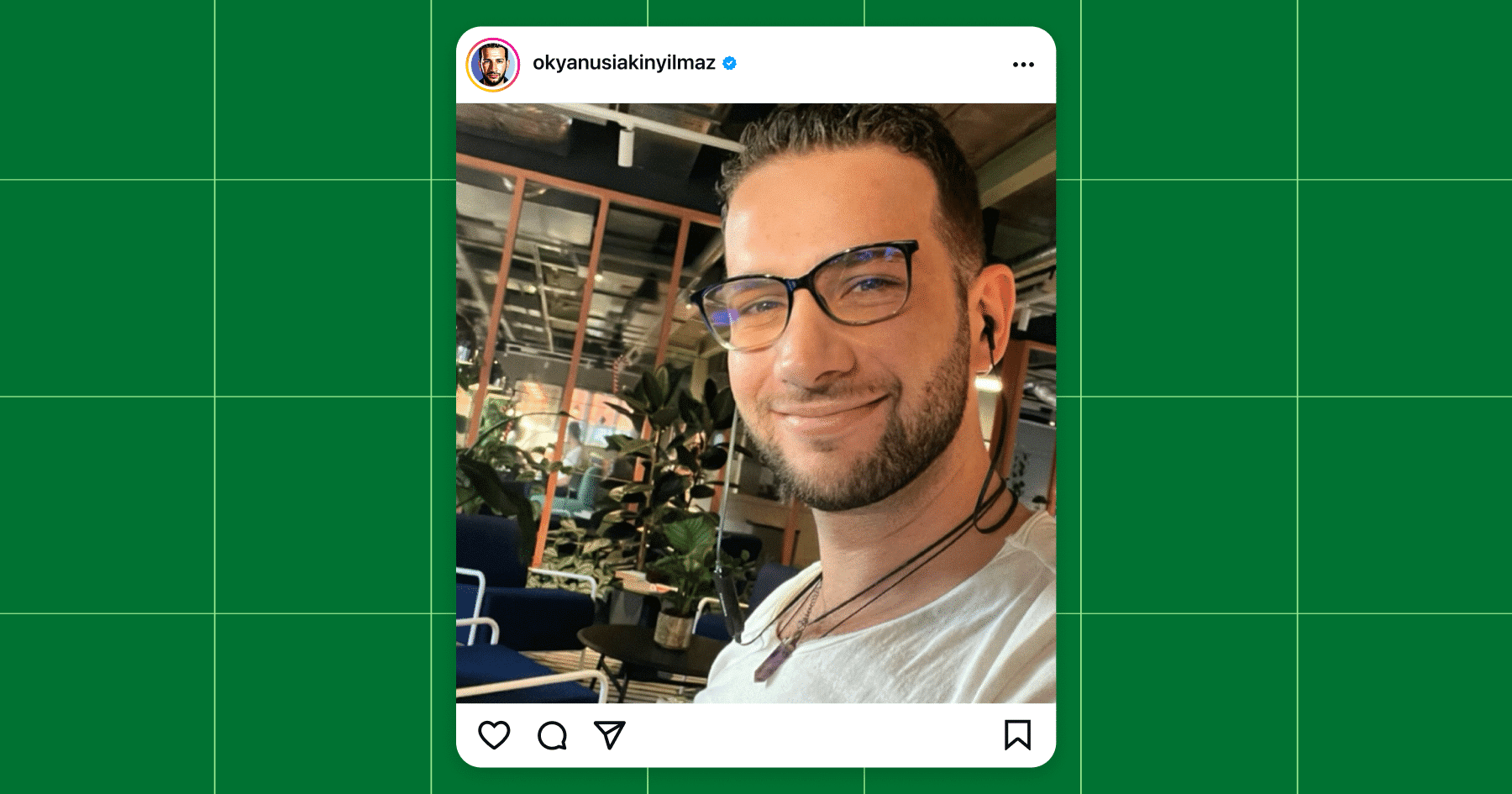
For me, the first thing people need to understand, whether they’re using Manychat or any other platform, is what they’re selling, how they’re selling it, and what the customer really needs,” says Yilmaz. “If you can’t answer those three things, the tech won’t save you. Whatever you provide, you should aim to be the best in the world at it, not just ‘good enough.’ That’s why people choose Manychat. Not because it’s slightly better, but because it’s the best.” (We obviously love this. We swear we didn’t put him up to saying it either.)
He stresses the importance of experimentation and iteration. “You have to try everything; some customers want the hotel-style service, some want the hard push, some just want attention. I tested a hundred different flows before I found what really worked. Even with AI, I integrated systems that pulled data from my site and YouTube channel into Manychat. They worked, but not as well as the system I built myself. The point is: you have to test, refine, and figure out what your customers actually respond to. That’s the only way you’ll get results.”
Industry data shows that the average lift on experiments that reach statistical significance is 61% — meaning the successful variations you uncover can dramatically outperform what came before. This means that, on average, when a test works, the winning version performs about 61% better than what you had before — so, trying and trying and trying works.
What About Mistakes?

One of the things we must endure, as those continually pushing the boundaries of possibility, is understanding that there will be a lot of mistakes. Things will go wrong, and you will be licking your wounds. Yilmaz has taken those professional hits, made his mark, and grown wiser because he keeps pushing through.
“I wish I knew before,” he says. “Back then, I had so much pain trying to answer every question, working basically 24/7 with a team. Then I built a Manychat flow in fifteen minutes, and it’s been running nonstop for three years. I tried everything: coding in Python, hacking together systems, managing dozens of Instagram and TikTok channels. Some things worked, some didn’t. Even with AI, it wasn’t always what I needed. And I’ve had bigger losses, too. I once invested in two software companies, and both were stolen from me on the same day. I lost nearly half a million dollars. That was my dream, gone. I remember sitting in a café, writing in my notebook: What should I do now? I launched a new idea, and in one month, we erased the debt. That was the hardest and best time at once. I learned you can’t just trust blindly. You have to fall, rebuild, and keep developing yourself — and the business.”
The Ongoing Balance

Keeping your head in the game is hard. For any level of success, finding peace amid the strife of business is a constant challenge. Growth demands learning, and that lesson is even sharper for small business owners — or one guy trying to do his best. Yilmaz reflects on his journey with humility, never taking his place for granted.
“Every day when I wake up, I tell myself, thanks for today,” he says. “I always ask, if I knew something about tomorrow — like the lottery numbers, or a new idea with AI — what would I do with that knowledge? No one can see the future, but if you believe enough, sometimes it starts to reveal itself. I’ve been doing this for almost 20 years, since I was 17, and I’m still in sales, still pushing. If I could go back, I’d tell myself not to waste so much time worrying. Eventually, you figure it out, you gain the skills, and you’ll find financial freedom. Business is like learning guitar or learning a language; you just keep practicing, keep learning from the right people, and it comes. At 20, all I wanted was to be a millionaire. At 30, I just wanted to be 20 again. Now I understand: I should have enjoyed those years more. Because the money will come, but the time won’t come back.”
When asked how he deals with burnout, Yilmaz doesn’t hesitate. “When I was 27, I was divorced and lost everything,” he recalls. “I had spent seven, eight years working nonstop, and in one day it was all gone; money, family, the kids, everything. That moment changed my mindset. I realized that if you’re burning out, it means you’re still resisting instead of letting go. I even named my company Phoenix, because I learned you have to rise from what’s left behind.”
For him, burnout is best met with action, not avoidance. “If you feel that stress, you can’t just run from it on a holiday. You need balance. For me, I walk — ten kilometers, sometimes twenty — in the forest. By the end, I always find the solution. That same day, I go back and fix it.”
AI is a Fantastic Tool, but it doesn’t Understand Your Customers Like You Do

While the business world breaks its necks, running toward AI solutions (and sometimes outright trickery), Yilmaz offers a contrarian perspective that might make executives pause. Despite testing AI integrations that pulled data from his website and YouTube channel, he found that his simple chatbot flows consistently outperformed sophisticated AI systems.
“AI is supposed to be better,” he says, “but whatever I tried, my basic flow worked better than all of them. People expect AI to manage everything, but in my experience, you still need to know precisely what customers want and how to deliver it. The technology doesn’t replace understanding your business fundamentals.” (Want to learn how to use Manychat’s AI capabilities effectively? We’ve got you covered.)
As for happiness, his answer is immediate. “Animals make me happy. My kids make me proud. My son is almost 20 now, he codes, he builds websites, he has this imagination I never had at his age. Seeing that makes me so happy. I also give back, through charity and by helping kids with education. Even in my company, I make sure some part of what we build goes toward something small that makes others happy. Helping people and seeing my dreams come true, that’s what really brings me joy.”

Originally published: Oct 22, 2025, Updated: Oct 22, 2025
More stories worth reading
More content that's too good to miss