

In the engagement economy, comments are currency (along with likes, shares, and follows). They’re a key signal Facebook uses to decide what content gets shown in feeds. The more comments you get, the more reach the algorithm rewards you with.
But here’s the problem: Keeping up with comments and DMs across Facebook, Instagram, and TikTok can feel like an endless task. Whether you’re a creator or a brand manager, manually liking every comment and replying to every “can you send me the link?” just isn’t sustainable.
But don’t throw your phone in the ocean just yet. Manychat can automate the basics for you — things like answering FAQs, collecting emails, and sending links via Messenger. It’s a win-win-win: You save hours of busywork, your audience feels heard right away, and your posts get the attention they deserve.
Let’s talk about it.
What is the Facebook Comments Trigger?

The Facebook comments trigger is a Manychat tool that automatically responds when someone comments on your Facebook post, either via a Messenger DM, a public reply to the comment, or a like.
The Facebook comments trigger now lives inside Quick Automations (alongside other triggers like Follow to DM and Story-share-to-DM), making it part of a bigger toolkit to keep conversations flowing.
How the comment trigger works
It’s not magic, even if it might feel like it.
Here’s the simple flow:
- Someone comments on your Facebook post or ad.
- The Facebook Comments Trigger activates.
From there, you choose what happens next:- Send the commenter a DM.
- Post a public reply under their comment.
- Auto-like their comment.
- If the person engages with your reply (either by clicking a button or responding), they’re added to your Messenger List, and a 24-hour window opens for follow-ups.
So…where can you use it?
This trigger is designed for Facebook Business Pages (it won’t work on personal profiles or inside Facebook Groups).
You’ll need to connect your Page to Manychat to use it, but once it’s set up, you can use the trigger on a variety of post types:
- Published posts: The comment trigger works with most Facebook post formats, including text, photo, video, or Live posts on your Page. For best results, upload photos and videos directly from your device when creating the post. If you use media already stored in your Page’s library, the trigger may not fire correctly.
⚠️ FYI: The trigger does not support Event posts, Offer posts, Job posts, or reposted content from other Pages.
- Scheduled posts: If you schedule a post on your Page, the trigger will automatically activate as soon as the post goes live.
- Promotable posts (ads and boosted content): Ads, dark posts, and boosted posts are all supported. Always select ad posts directly from the “Promotable posts” tab in Manychat, as this helps you avoid errors with invalid post IDs and ensures proper tracking.
- Posts with multiple pictures: If you create a post by uploading multiple photos directly in your feed, the trigger will only fire on comments left under the main post or under the first photo in the set. Likewise, if Facebook auto-generates a post from an album update, the trigger will only fire on comments left under the post itself. It will not respond to comments on the individual pictures in the album.
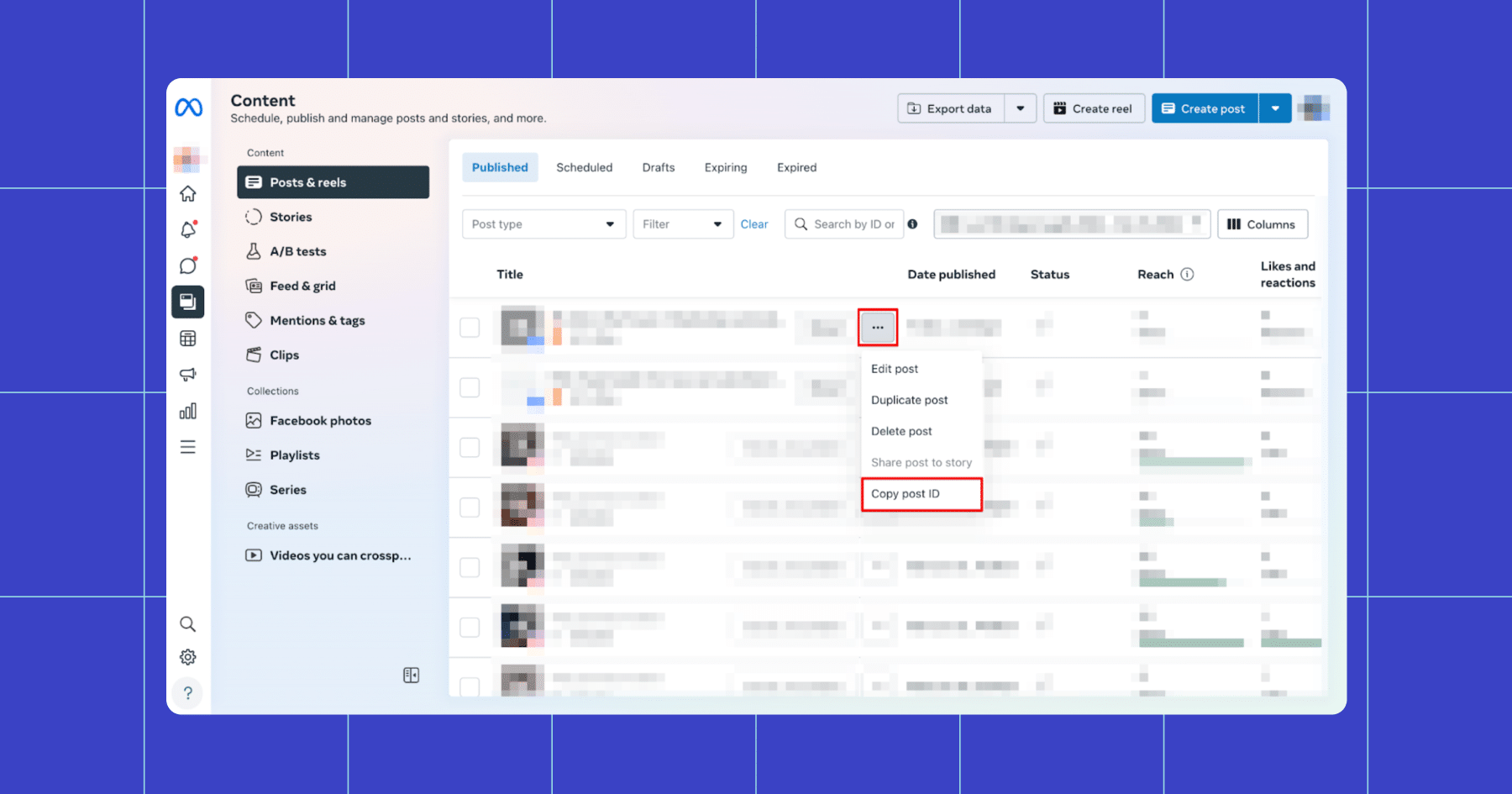
- Custom posts: You can manually connect a post by entering its URL or post ID into Manychat (see below). Even so, this method is best used as a fallback option.
5 Ways Creators and Businesses Use the Comments Trigger

Here are some of the most common use cases for creators and brands using the Facebook comment trigger:
1. Delivering links
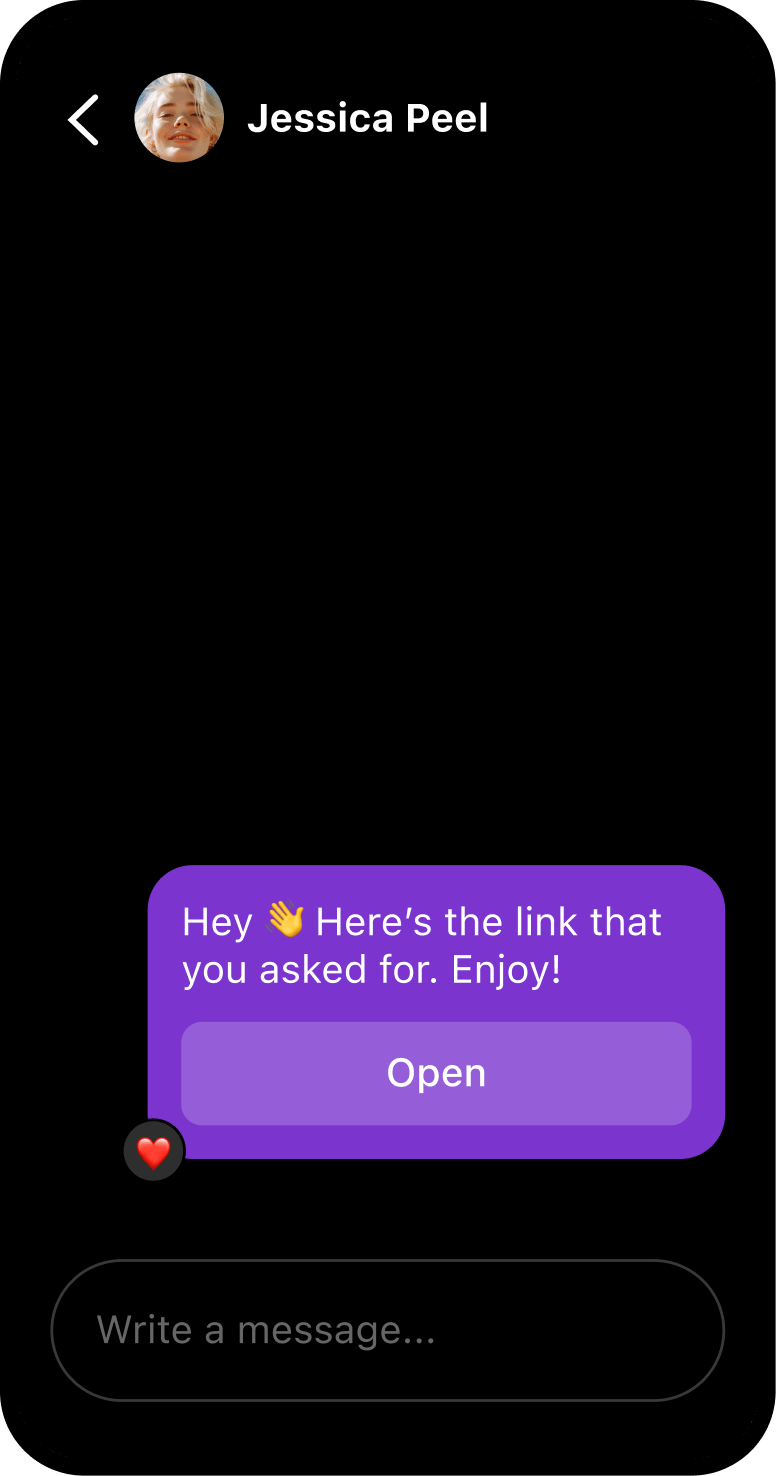
This is one of the top use cases for Manychat, period. Whether someone’s looking for your website, Substack, Etsy shop, booking form, or otherwise, you can send them straight there with the comment trigger. The easiest way to do this is with keywords or the Main Menu function.
2. Boosting engagement
You can set up the trigger to auto-like or reply to comments to give your posts an extra lift in the algorithm.
Facebook’s algorithm rewards posts with higher engagement (likes, replies, back-and-forth conversation) by showing them to more people. When your post racks up more visible interactions, it signals to the algorithm that the content is worth amplifying, leading the algorithm to give it a little extra reach.
3. Answering FAQs
Imagine how many hours you could save if you didn’t have to copy and paste the same answers to dozens of commenters every day. With the comments trigger, you can instantly DM responses to questions about pricing, shipping, business hours — anything really. You can do this by using the keyword function to set up automated responses for certain phrases, like “return policy” or “booking form.”
4. Collecting leads
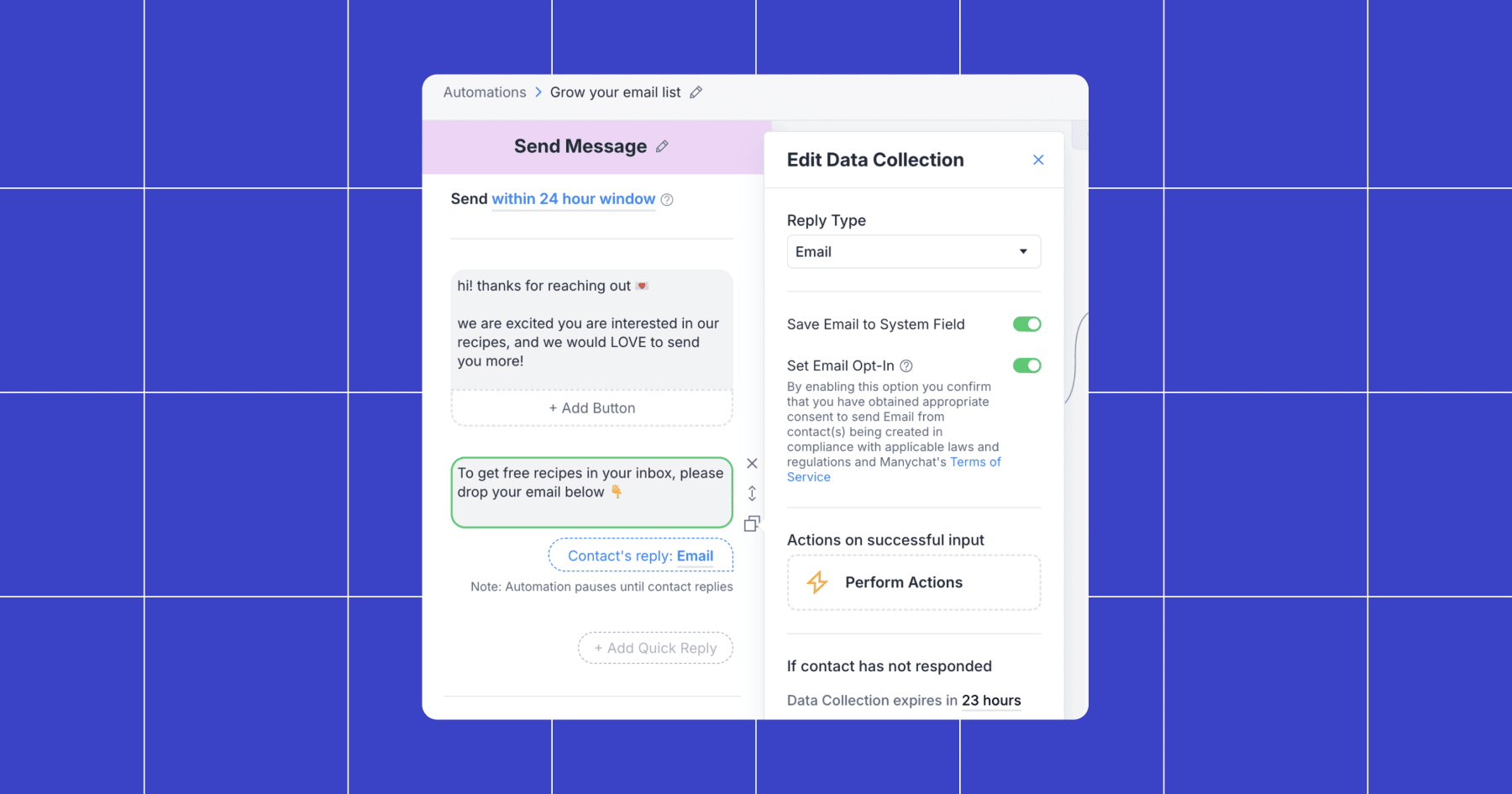
Turning comments into contacts is one of the most powerful ways to use the comments trigger. Instead of just responding to someone’s comment, you can start a conversation with them in Messenger and collect their email or phone number (without things getting weird).
To set this up, create a Facebook comments trigger flow and add a Data Collection block (shown below).
5. Running campaigns and giveaways
Giveaways are one of the easiest ways to acquire new followers and generate a wave of engagement, but managing entries manually can become messy fast.
You can use the comments trigger to auto-enter users who comment a keyword like “win” or “enter.” When someone drops the magic word, the trigger will DM them an entry confirmation and collect their contact info (email or phone number).
You can also use Manychat’s Randomizer to automatically select a winner, saving you from scrolling through hundreds of entries.
How to Build a Flow with the Facebook Comments Trigger

Using the comments trigger in Manychat is straightforward. Here’s how to do it:
- Go to Automations in your Manychat dashboard.
- Click + New Automation.
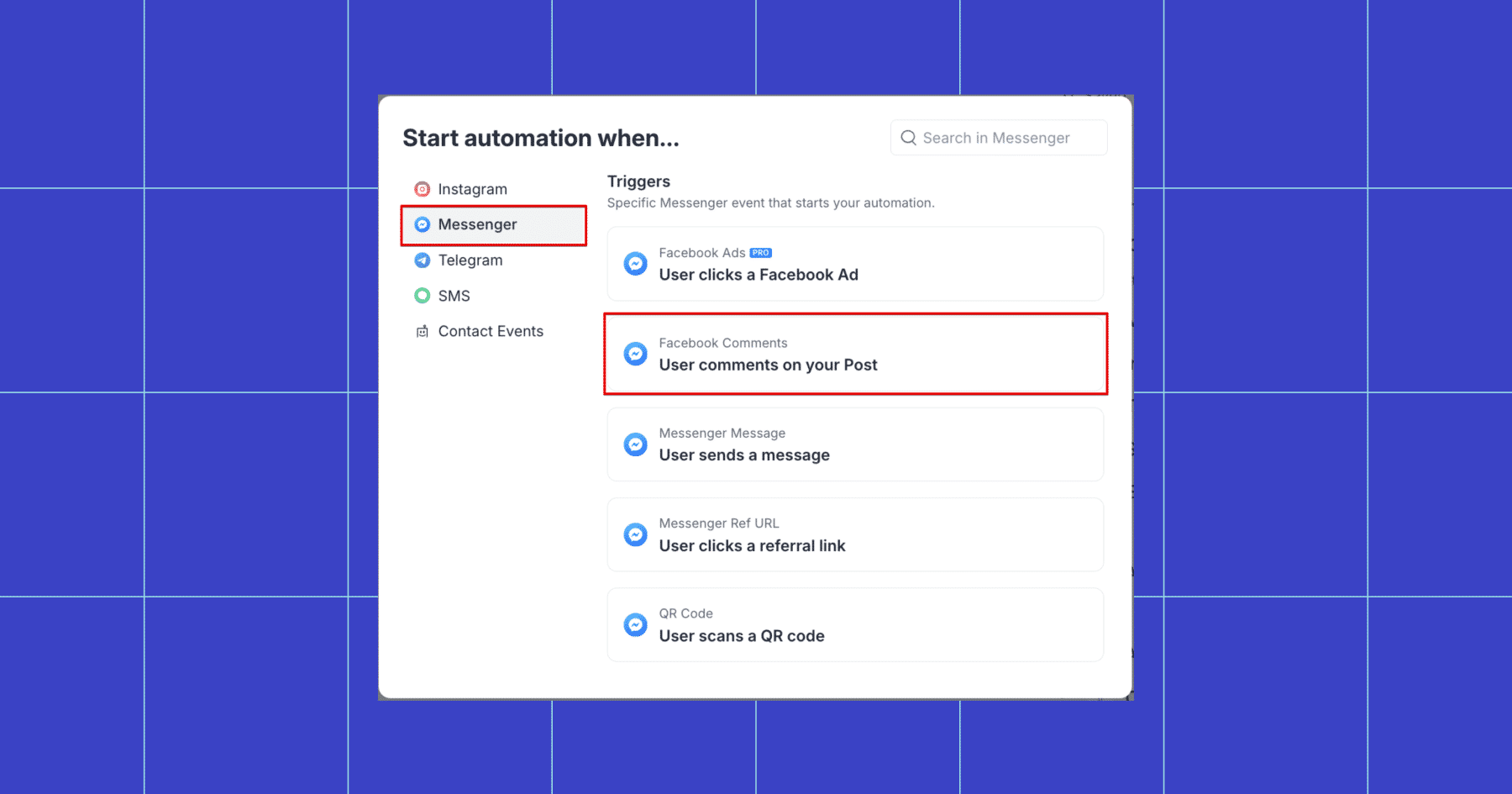
- Add a Facebook Trigger → Post comments.
- Select the post(s) you want the trigger applied to.
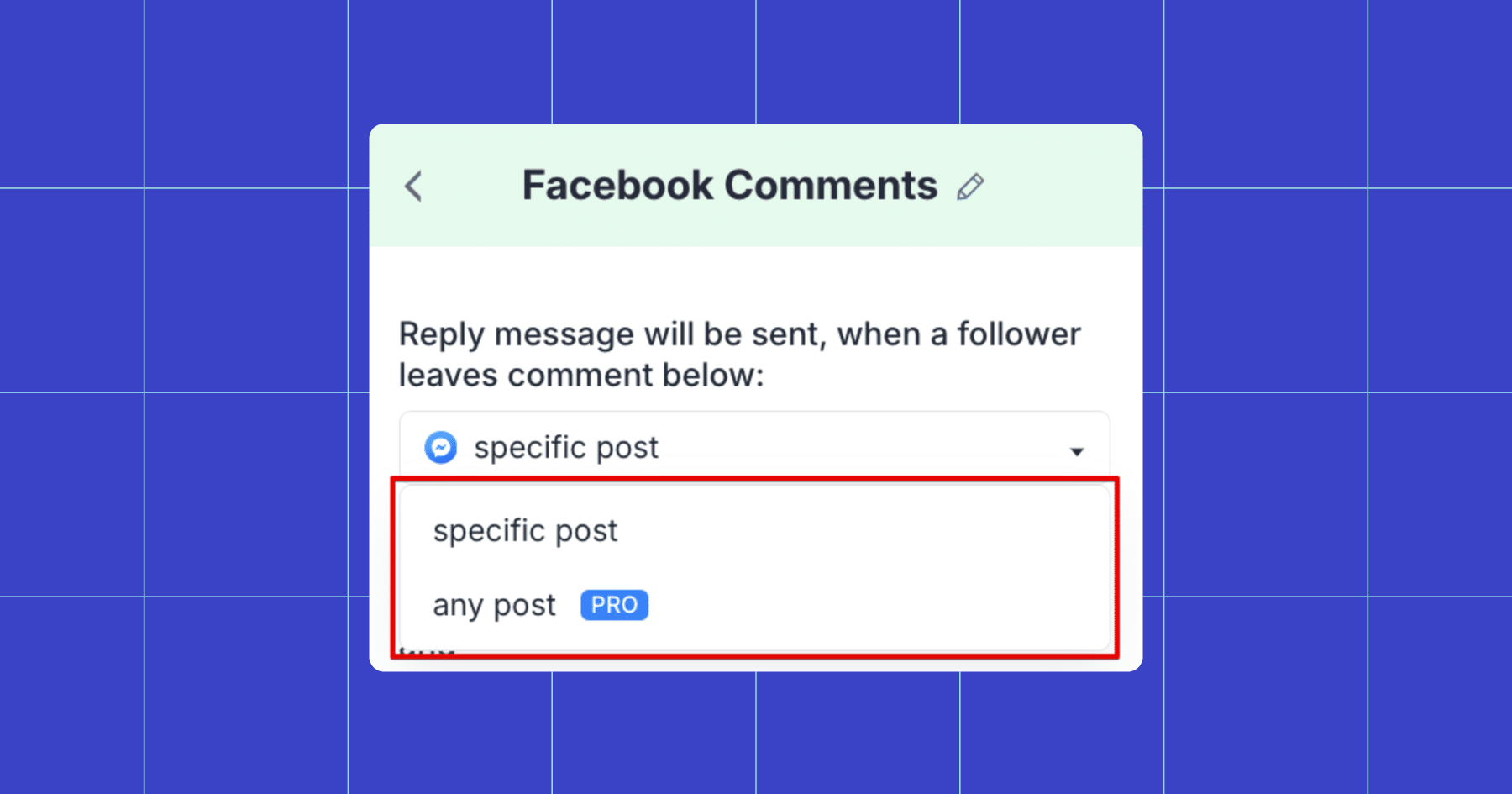
- Decide whether you want the automation to fire on all comments or only when specific keywords are used.
At this point, you can also choose whether to respond only to first-level comments (direct comments on your post) or replies to those comments as well (second-level comments).
- Write the DM or comments you’ll send. Keep it human here — it should sound like you, even if it’s an automated reply. Also, check the Like comments box so that everyone feels seen, whether they drop a 🔥emoji or launch a full-blown discussion.
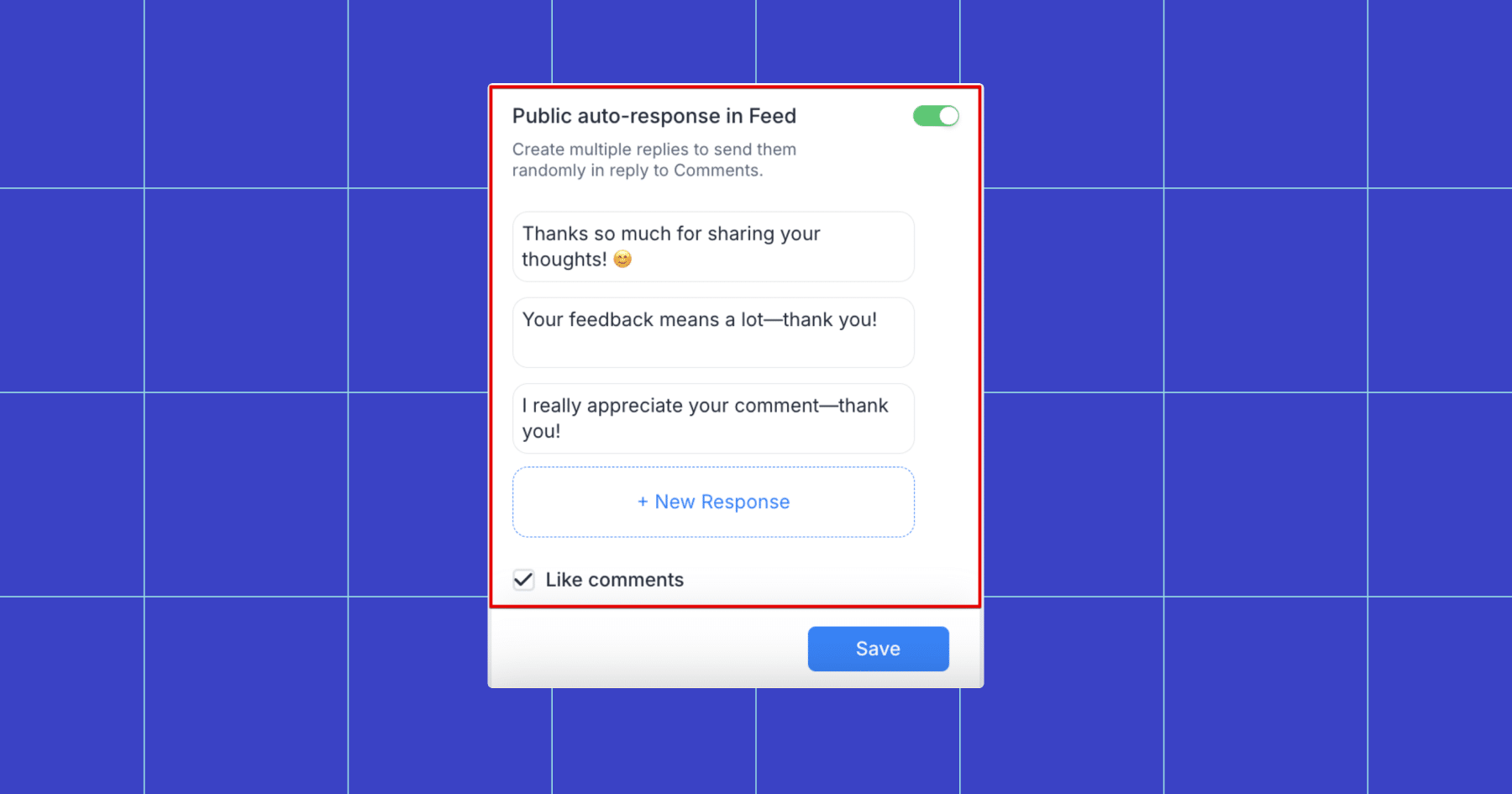
- ⚠️ Mark your first message as a “Comment Reply.” (This is required to stay compliant with Meta’s 24-hour messaging rule.)
- Activate the flow. Done!
Hold Up, Do You Not Use Manychat? 😧

If you made it this far and you’re not using Manychat, we’re flattered (and also, a little worried).
The Facebook comments trigger lets you offload one of the most time-consuming parts of social media — communicating with followers. It’s an easy way to stay responsive without being glued to your phone. And it’s only the tip of the iceberg when it comes to what Manychat can do.
Next, learn how to grow your followers with Manychat.
Or, jump in — sign up for Manychat.
✋Frequently Asked Questions (FAQs)
1. Do I need a Facebook Business Page to use the comments trigger?
Yes. To use Manychat, you have to have a Facebook Business Page.
2. Why do I have to tag the first message as a “Comment Reply”?
Meta requires it for compliance. Without this tag, your flow won’t publish, and you could risk violating Facebook’s 24-hour messaging rule.
For more information on the 24-hour rule, check out: Meta’s 24 Hour Rule for DM Automation | Manychat for Instagram or watch below.
3. Can I stop the automation from firing on random or irrelevant comments?
Yes. The best way to do this is to use keyword filters. For example, you can set the trigger to respond only when someone comments “info” or “price,” and ignore generic comments like “Nice post!”
4. How do I make sure automation doesn’t feel spammy?
Keep replies short, friendly, and natural. Pair a public reply (boosts the algorithm) with a DM (starts the real conversation), and always make sure there’s clear value for the person commenting — otherwise, you’re better off just liking their comment and moving on.


Originally published: Dec 3, 2020, Updated: Nov 13, 2025