
Most Manychat users set up one basic flow (likely, Comment-to-DM), send it live, and call it a day. No judgment here; Comment-to-DM can help you accomplish a lot. But you can do a whole lot more with Manychat, even if you never use the Flow Builder.
For instance, there’s a library of Quick Automations and Always-On Automations that are worth your time. And once you set up a few of those, you’re not that far from jumping in and creating your own flows, especially with this guide on your side.
TL;DR
- Learn the best ways to get started with Manychat, whether you want to set up recurring or situational automations.
- Find out which best practices are essential for success, from writing personalized messages and testing your automations to using specific Manychat features like AI replies and fields.
Where to Start with Manychat

If you don’t have a Manychat account, get one: Sign up for Manychat and connect at least one channel to start.
Now, let’s talk about two of the best and easiest ways to use Manychat without having to build your own automations:
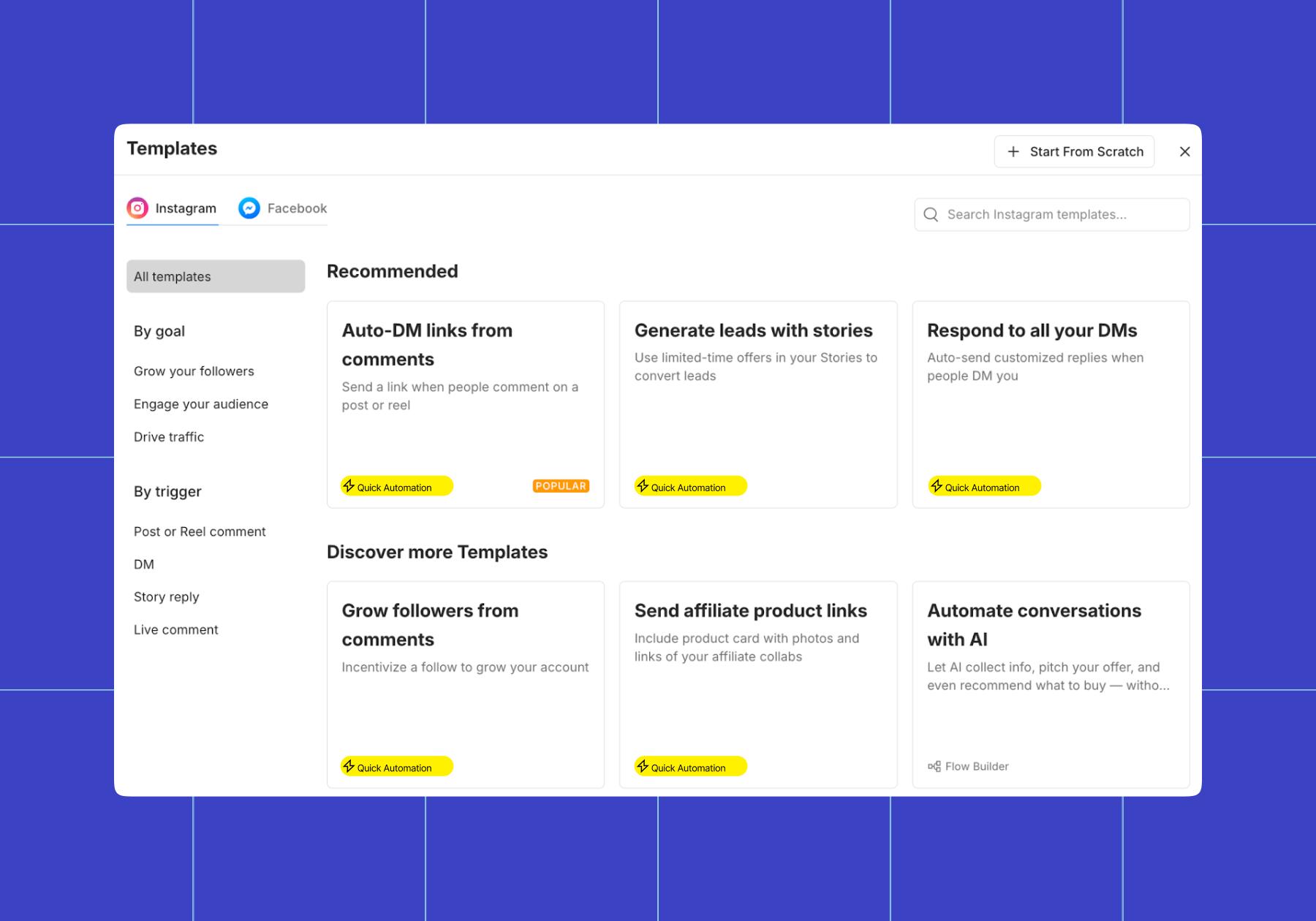
- Quick Automations: these templates are found in the Automations section of Manychat. They are designed around common use cases, like automatically sending a DM when someone comments on an Instagram post. For example, Comment-to-DM is a Quick Automation named Auto-DM links from comments.
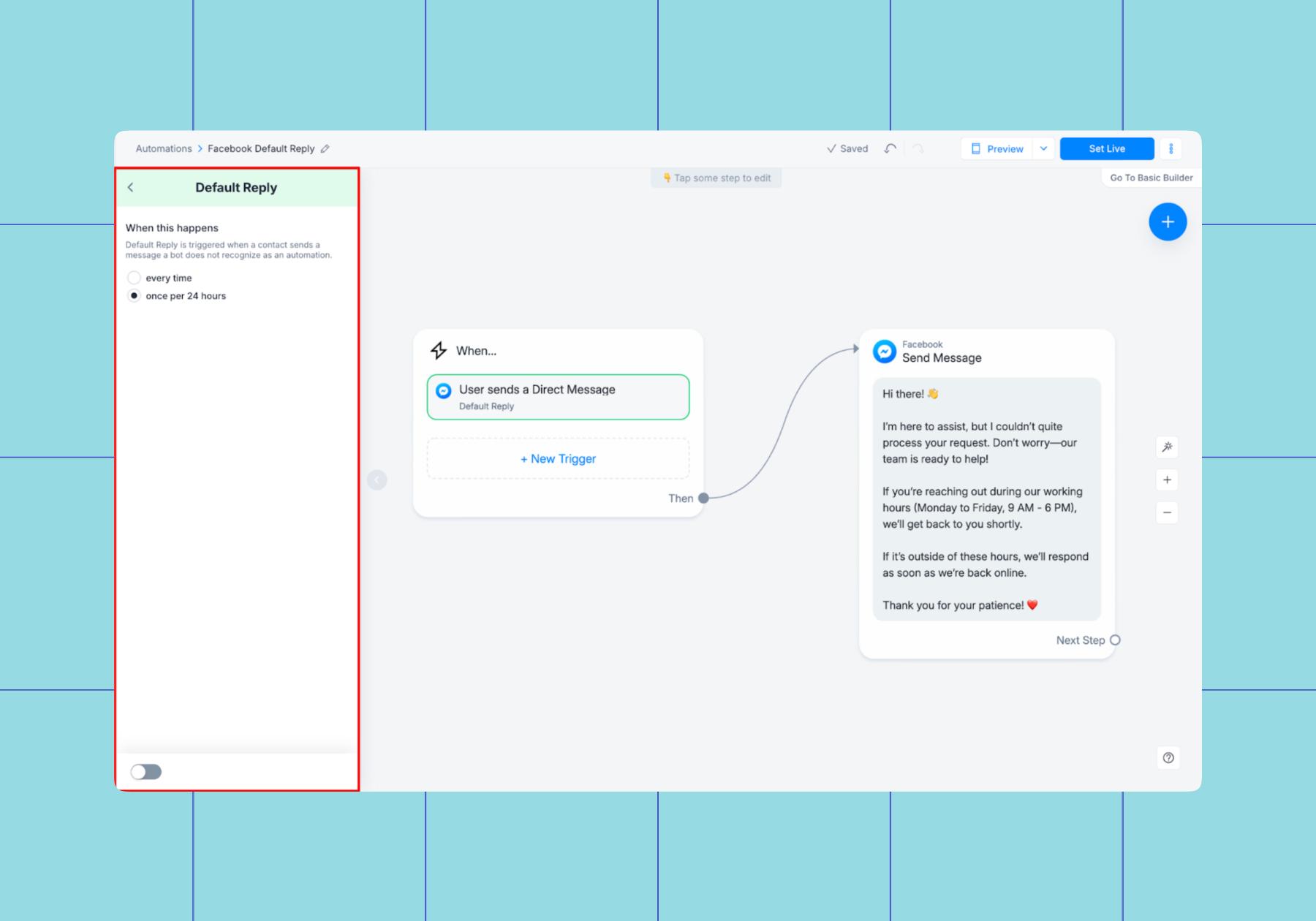
- Always-On Automations: these automations are found in the Settings section of Manychat. Once you set them up, they stay active in the background (that’s why they’re named “Always-On”). One of the most popular Always-On Automations is called Default Reply, which you can use to make sure everyone gets acknowledged, even if they don’t send a keyword that triggers one of your automations.
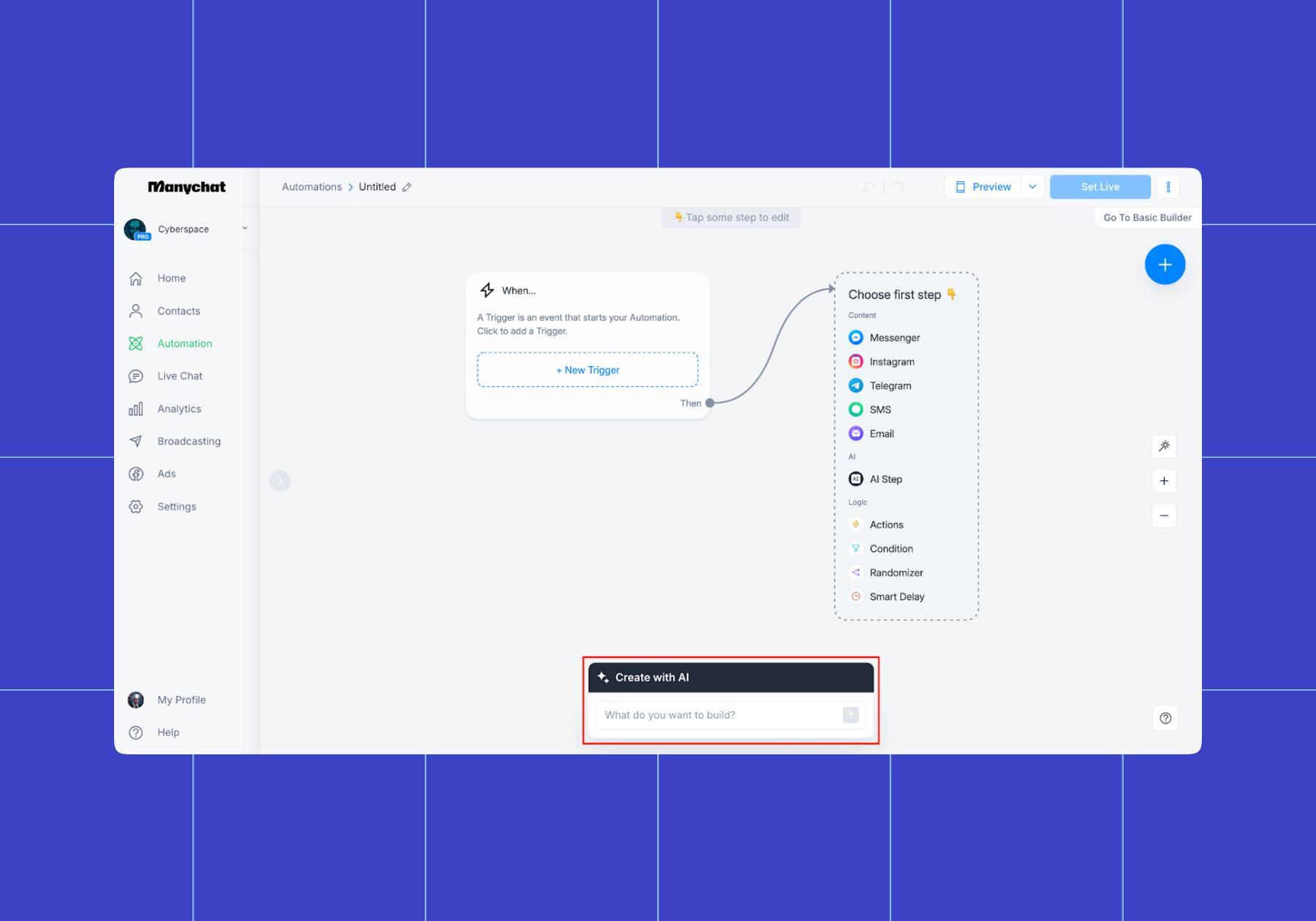
- Flow Builder (intermediate - advanced): Once you’ve outgrown the Quick and Always-On Automations, you should start using the Flow Builder, Manychat’s visual workspace for creating multi-step customer journeys using messages, conditions, actions, and follow-ups. To get to the Flow Builder, you have to choose the Start from scratch option in the Automations menu. Once you’re in, the AI Flow Builder assistant can help you get started. Tell it your goals, keep each branch focused, and test every possible path a customer could take before you send the automation live to your audience.
9 Best Practices for New Manychat Users

You’re in Manychat. You know how it works (for the most part). But before you go sending automations live, make sure you understand these best practices.
1. Give each automation one clear goal
Each of your automations should be designed around one specific outcome, such as delivering a lead magnet, answering a common question, collecting email addresses, or directing someone to a product page. A clear goal gives you a simple way to measure whether the automation is working. (If the goal of your automation is to collect email addresses, and you get a few, it’s working.)
2. Use friendly, conversational writing
Your automations should sound like you wrote them. Write in the same tone you would use when replying to someone yourself. Use short messages, simple language, and clear calls to action. Read the messages in your flows out loud before publishing; if it sounds awkward, it will probably feel awkward in a DM too.
Need this? How to Personalize Your Automated Replies (So They Sound Like YOU, Not a Robot)
3. Test entry points and every flow path
There are many ways users can trigger automations (comments, keywords, Story replies, QR codes, ads, and/or direct messages).
Test the entry points you set up as triggers before you promote any flows to followers and follow every possible branch in the flow, including less common answers, error messages, and fallback routes, to make sure nobody reaches a dead end.
4. Use Custom User Fields and Bot Fields correctly
Two kinds of fields are key to creating personalized, accurate automations.
- Custom User Fields (CUFS): Use these to store information that is different for each contact, such as their preferred service, location, order number, or experience level.
- Bot Fields: Use these for account-wide information that can be reused across automations, such as business hours, a booking link, a promotion end date, or a support email address.
Keeping these two types of information separate makes automations easier to update and reduces the risk of showing someone incorrect details.
5. Use the Randomizer for A/B testing
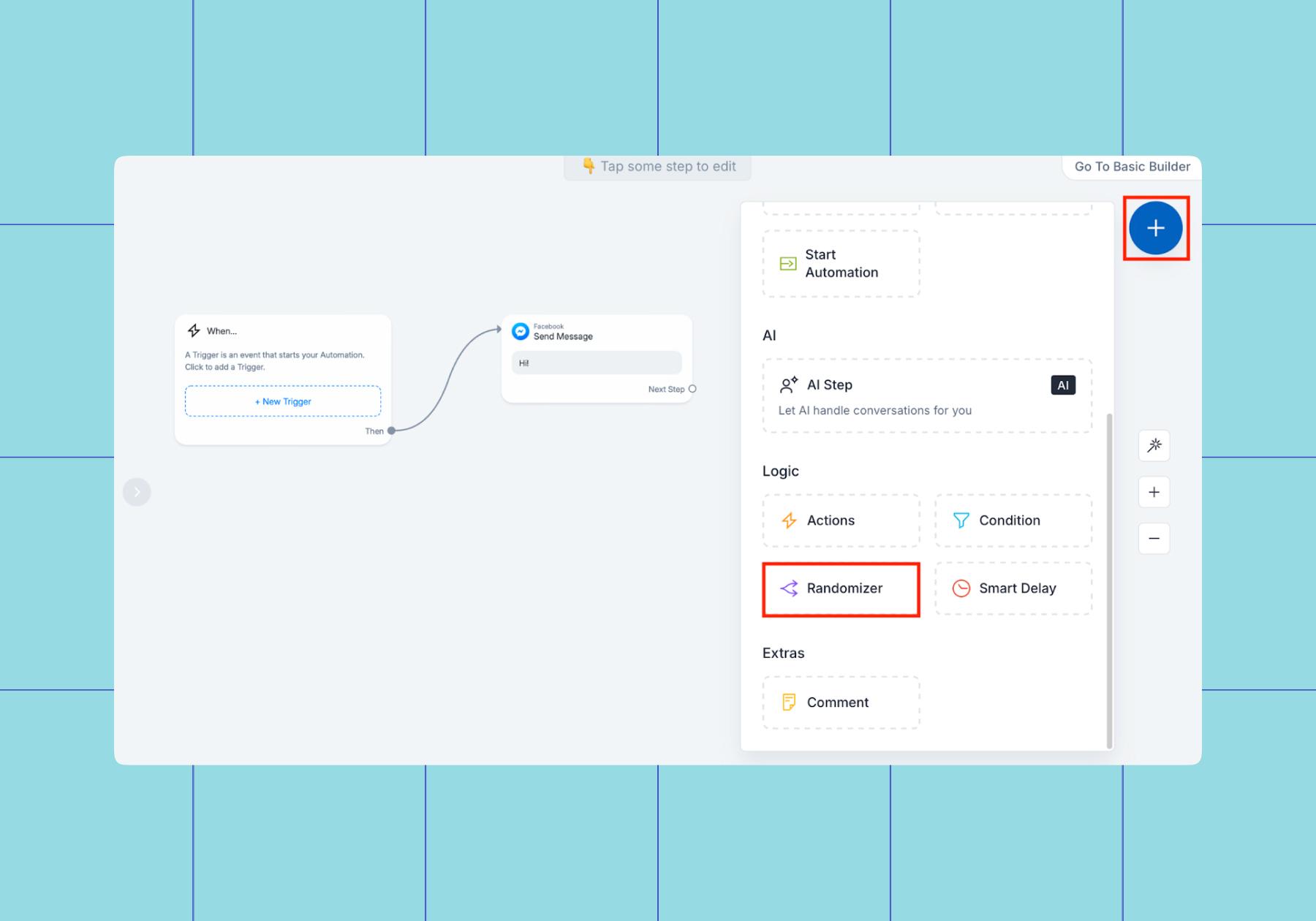
Manychat’s Randomizer feature lets you send contacts down different paths so you can compare how well different messages, offers, or calls to action perform.
To add it, double-click an empty area in the Flow Builder and select the Randomizer, then choose how traffic should be divided between the variations.
Test one meaningful difference at a time so you can understand what caused the result.
6. Segment contacts by behavior and interests
Segmentation helps you send more relevant messages by grouping contacts based on what they have done or said in the past. You can create segments based on actions such as clicking a link, choosing a topic, completing a flow, buying a product, or showing interest in a particular service. Segmentation can be done simply by clicking on a contact in Manychat and adding a tag:
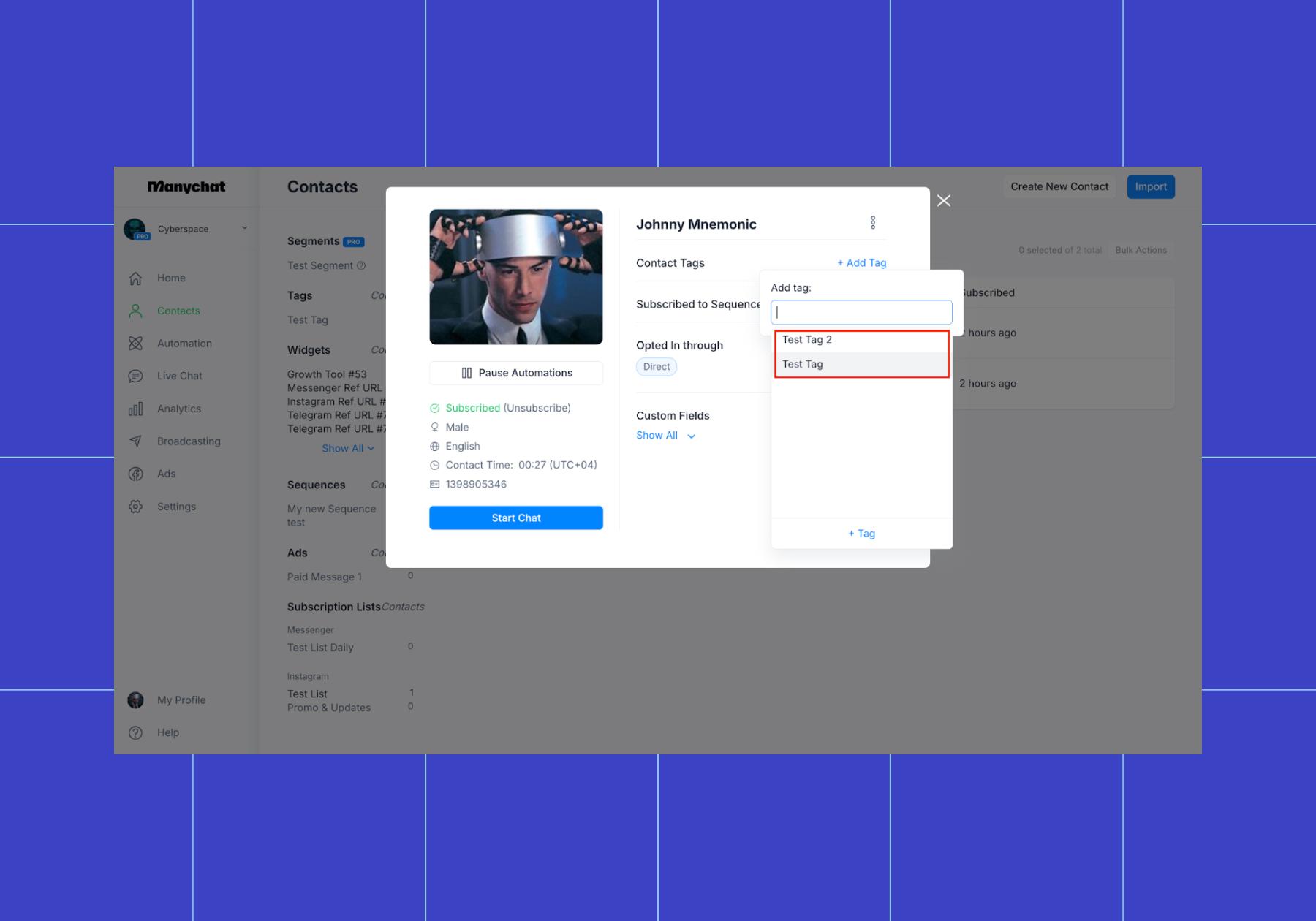
Use those signals to tailor follow-ups rather than sending the same message to every contact.
7. Keep the AI Knowledge library current
If you’re going to use one of Manychat’s AI features, like AI Replies, you need to keep your AI Knowledge base up to date. AI-generated answers are only as reliable as the information available to the AI. Regularly review the Knowledge library and update details such as frequently asked questions. Also, remove outdated or conflicting information so the AI does not give customers inconsistent answers.
8. Test on mobile and remove expired content
Most people will experience your automation on a phone, so review every message, image, button, and link on mobile before sending the automation live. Make sure:
- The messages are easy to scan
- The buttons work
- Links from the flow load correctly
- The whole experience is quick
Schedule regular reviews to remove outdated information about your offerings.
9. Combine automation with human support
Automation is effective for repetitive questions and predictable journeys, but some conversations require judgment, empathy, or detailed problem-solving.
For that reason, you need to create clear points where a person can take over, especially for complaints, unusual requests, high-value leads, billing issues, or sensitive customer situations.
Learn more about the balance between automation and human touch:
- To Automate or Not? Here’s How to Respond to Comments on Instagram
- Instagram Bots Unveiled: Balancing Automation with Authentic Engagement for Growth
You’re On Your Way to Becoming a Manychat Power User

Here’s the gist: effective automations are focused, useful, accurate, and easy for customers to navigate. They’re also always backed by a person who can step in when the situation calls for it. You can do that, right? Right. (I believe in you.)
Subscribe to the Manychat YouTube channel for access to tutorials, webinars, and other content that’ll help you get to power user status:
Or if you’re already way into Manychat, consider joining our affiliate program: Join the Official Manychat Partner Program.
Frequently asked questions
Manychat is an automation platform that automates DM replies, comment responses, lead capture, and sales across Instagram, WhatsApp, TikTok, Messenger, Telegram, SMS, and email so you can grow your business without living in your inbox.
You can upgrade to Pro directly from your Manychat dashboard by heading to Settings, then Billing, and selecting the Pro plan, which starts at $39/month for up to 2,500 active contacts when billed monthly. Pro removes branding, adds WhatsApp, and unlocks the more advanced automation tools you'll want as you scale.
The most common mistake is building long, complicated flows before testing a simple one. Start with a single automation that solves one problem, prove it works, then build from there.
Most high-performing flows have three to five messages before delivering a payoff — a link, a coupon, an answer — anything longer risks losing the subscriber's attention. If your flow feels like a survey, trim it down.
Yes. Manychat lets you connect Instagram, WhatsApp, Messenger, SMS, and email from a single account, so you can build cross-channel flows that follow subscribers wherever they prefer to chat: one subscriber profile, every channel, no duplicate work.


Originally published: Feb 18, 2022, Updated: Aug 10, 2026
More stories worth reading
More content that's too good to miss