
How STËLZ let 65,000 People Invent its Next Flavor (Without Melting Down its Instagram Inbox)

Most brands ask for customer feedback after the product already exists. STËLZ decided that was backward.
Instead of spending months debating flavors in meeting rooms, commissioning another survey, or testing concepts behind closed doors, the Dutch hard seltzer brand handed product development to Instagram.
“If you could create the next STËLZ flavor, what would it be?”
Then things got interesting.
More than 65,000 people poured into the brand's Instagram DMs, submitting everything from genuinely delicious ideas to flavors that sounded like they belonged in the snack aisle of an Amsterdam gas station. Each submission triggered a personalized conversation powered by Manychat. Participants watched AI transform their idea into artwork for a personalized STËLZ can that they could immediately share on their Stories.
And somewhere in those tens of thousands of conversations, STËLZ stumbled onto a better way to build community.
Community isn't Something You Say; It's Something You Let People Do
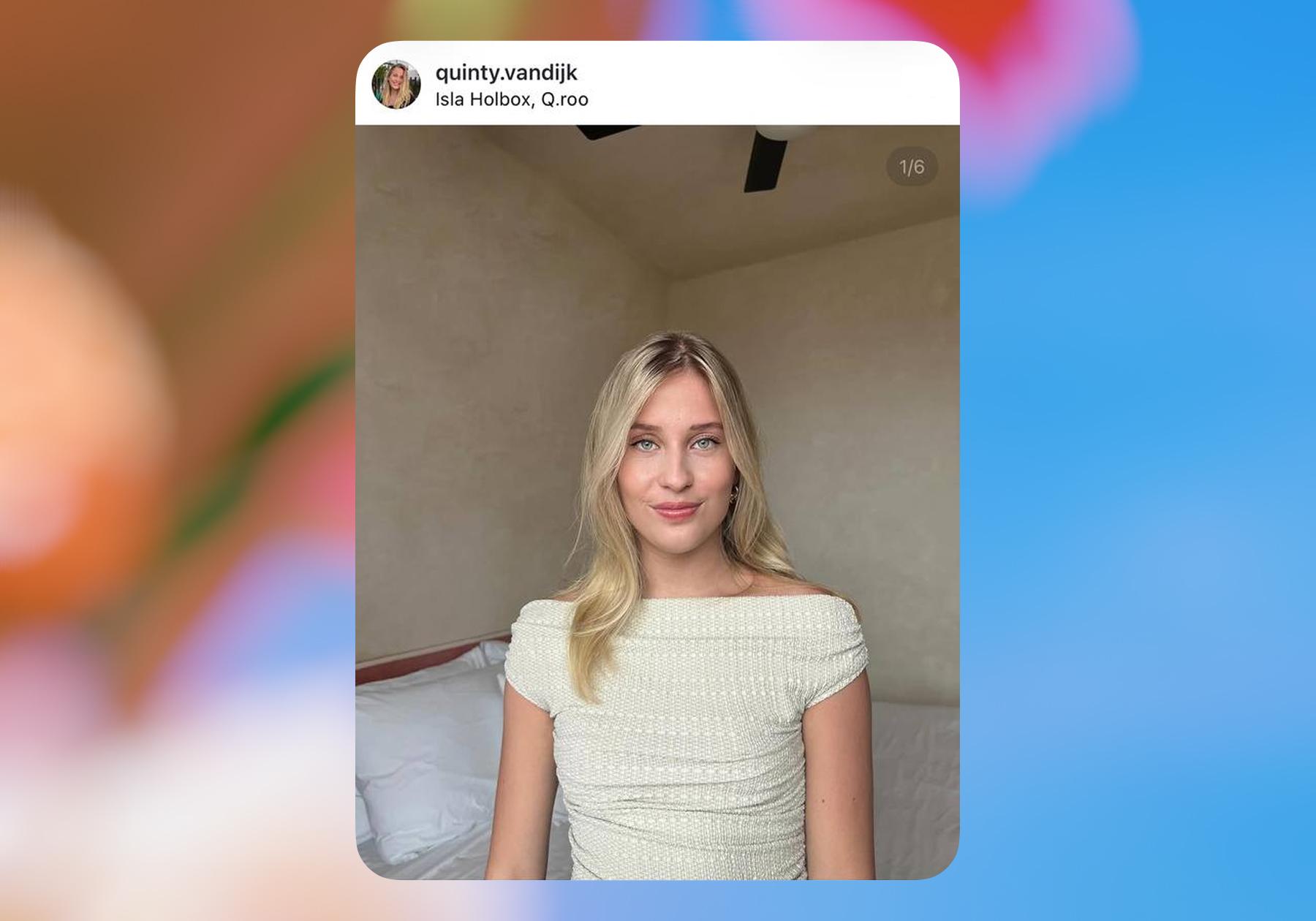
For Quinty van Dijk, Brand & Content Manager at STËLZ, the campaign was never just about launching another SKU.
"The goal of the campaign was to let our community help decide what the next STËLZ flavor should be," she explained. "Instead of launching a new flavor in a traditional top-down way, we wanted to make our audience part of the process from the very beginning."
That's easy for brands to say. It's much harder to actually do.
"As we become bigger, we wanted to bring it back to the community," Quinty said during our interview, explaining that one of the biggest goals was making people feel like they still had a seat at the table as the brand grew.
Flavor was the perfect excuse.
"Flavor is something people have strong opinions about," she told us. "It gave our community a voice, created excitement around the brand, and helped us understand what people actually wanted to drink."
Notice what wasn't on that list:
- Conversions
- Clicks
- CTR
This wasn't a campaign asking people to consume content, but to create it.
How it Worked
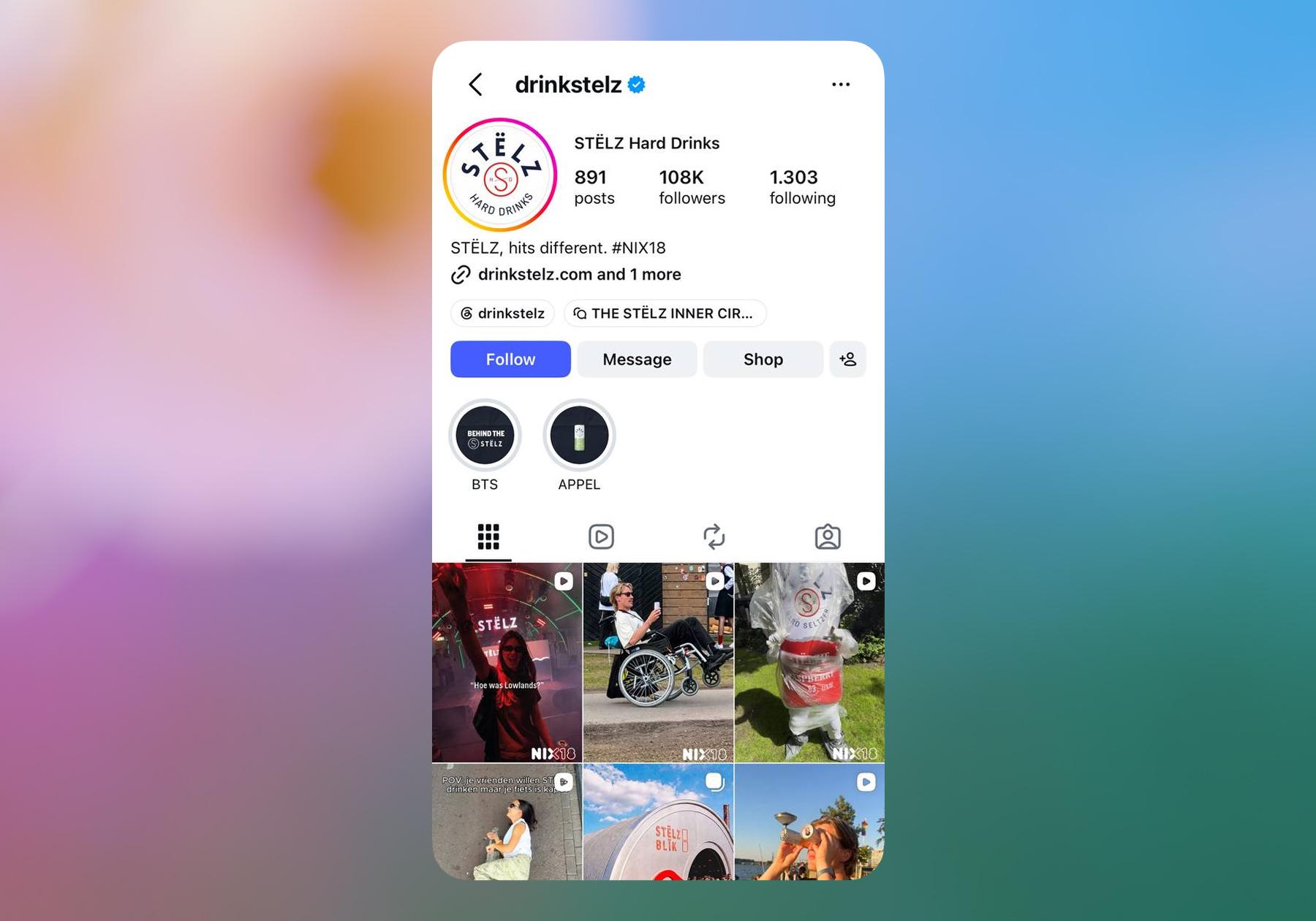
On paper, there were easier ways to run this. A landing page, a Google Form, a poll, and an email signup are all perfectly functional.
They’re also all perfectly forgettable.
STËLZ intentionally kept the experience inside Instagram.
Why they chose IG DMs instead of another boring form
"Instagram is where our community already is, so it felt like the most natural place to run the campaign," Quinty said. "We didn't want to send people to a separate landing page or make the process feel too formal. DM felt personal, easy, and low-barrier."
After all, every extra click is another opportunity for someone to disappear. Every platform switch makes an interaction feel more transactional.
Instead, participants stayed exactly where they already were — not filling out paperwork and having a conversation.
How AI came out to play
Simply collecting submissions wasn't fun enough. After participants entered their flavor idea, Manychat triggered an experience that generated AI artwork of what their custom STËLZ could look like.
It transformed a text submission into something visual, so naturally, something worth showing off.
"We wanted people to really create their own can," Quinty said.
Participants also received a downloadable shipping-style sticker featuring their personalized flavor concept, a small detail that made the interaction feel like they were walking away with something tangible.
People started sharing their AI cans in Instagram Stories, and STËLZ didn’t even have to ask.
That's the difference between marketing to your audience and giving them something they'll market for you.
What 65,000 conversations actually look like
Campaigns that work create problems. Good problems.
65,000 people don't trickle in. Without automation, that quickly becomes a logistical nightmare. Running a campaign with this many participants requires infrastructure that can keep every interaction fast, personal, and consistent.
Manychat became the foundation that enabled STËLZ to deliver the same polished experience to every participant, regardless of whether 10 people entered the flow or 10,000.
As Quinty put it: "You could never do this manually at this scale."
Rather than spending weeks manually replying to Instagram messages, the team could focus on the campaign itself while every participant received an immediate response.
Every participant received the same polished experience instantly, regardless of whether there were 10 people in the flow or 10,000. This means there was no need for a social manager to live inside Instagram for three weeks, tending to an impossible backlog of unread messages.
The most stressful part had nothing to do with marketing
Before launch, everyone became a tester. The team ran through the automation again. And again. And again. Because they knew what was coming.
Several influencers, including Dutch television presenter and former vlogger and DJ, Monica Geuze, were about to point millions of combined followers toward the campaign at roughly the same time.
"We were like, 'Okay... this is going to go live,'" Quinty said. "'Let's hope nothing crashes.'"
Fortunately, the system handled the demand, and every participant received the experience as intended.
The internet picked lychee, not the industry
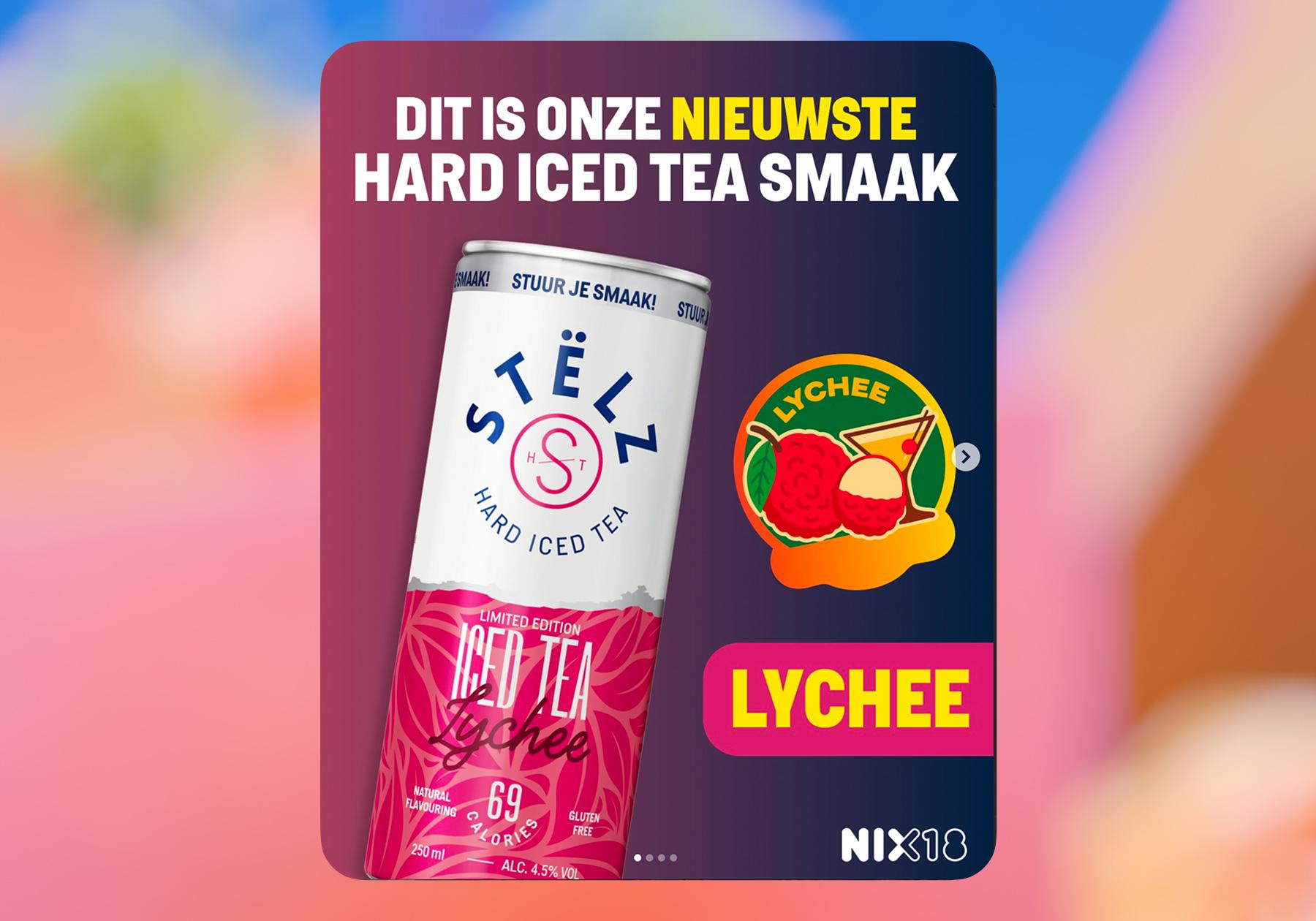
Interestingly, the community selected lychee as the winning flavor — a direction that differed from STËLZ's retail intelligence.
"The community spoke differently than the retail intelligence," Quinty said.
Traditional market research tries to predict demand. This campaign lets demand introduce itself. The team ultimately refined the recipe through product testing before launch, but the direction itself came from the community.
Some people suggested candy. Others suggested chips. The submissions themselves were half the entertainment.
People suggested Dutch snack flavors. Rare candies. Completely unexpected combinations.
Quinty still laughs, remembering ideas like Joppie, inspired by a beloved Dutch chip flavor, and Knettersuiker, a popping candy that somehow found its way into the conversation.
Not every submission was intended to become a finished product. The creativity itself became part of the experience. People weren't treating it like homework; they were playing, which was exactly the plan.
The Results

When marketers talk about engagement, they usually mean clicks. Quinty meant something else.
She worried people would start the experience… and leave.
The AI-generated can takes a few seconds to render. Would people wait? Would they get bored? Would they abandon the flow halfway through?
"We were scared people would just drop out," she admitted.
The metric they were most nervous about wasn't open rate
They stuck around. They wanted to see their creations come to life. Keeping someone's attention for 30 seconds on social media is difficult. Keeping it while a computer generates personalized artwork? Even harder.
Yes, the campaign generated more than 65,000 responses. Yes, open rates exceeded 95%. Yes, STËLZ gained roughly 20,000 Instagram followers during the campaign.
But those aren't the first things Quinty talks about.
Instead, she remembers three moments.
- The participation.
- The positive sentiment.
- And the overwhelming relief that nobody had to answer tens of thousands of Instagram messages manually.
"We were happy with the amount of participation," she said. "We were happy the server didn't crash... and that we didn't have to get someone to text thousands and tens of thousands of people."
That's a pretty good day at work.
Standing Out in a Competitive Landscape
Hard seltzer is a crowded market. Everyone has seasonal flavors. Everyone works with influencers. Everyone makes social content.
STËLZ decided the differentiator was in the conversation.
"People say they want community," Quinty told us. "But then there's no community communication."
Manychat gave the brand a way to actually have one with tens of thousands of users. And they did it without making the experience feel robotic, or forcing people onto another platform, or drowning the marketing team in DMs.
This campaign is proof that Instagram doesn't have to be where brands broadcast messages. It can be where they build products alongside the people who buy them.
Or, as Quinty put it best: "The biggest success was not only the amount of interaction, but the fact that it felt like a true two-way conversation with our community."
That's a much harder thing to manufacture than engagement. And a much more valuable thing to earn.