How to Create an Instagram Content Calendar (and 6 Top Tools)
If you’ve ever stared at your phone late at night thinking, “I should’ve posted something today…” you already know the problem: you’re winging it.
Winging your content is fine until it’s not, and then you’re stuck in a cycle of inconsistent posting, half-baked ideas, and the uneasy feeling that your followers have forgotten you exist. 🫠
Posting consistently does play a role in whether you can grow and monetize as a creator. But the people behind the Instagram accounts crushing it RN aren’t necessarily more disciplined than you — they just have a system. And I’m willing to bet that system involves an Instagram content calendar.
This guide walks you through how to create an Instagram content calendar. Whether you’re a solo creator or you’re managing a small team, the goal is for you to leave here with a plan that actually sticks.
TL;DR
- An Instagram content calendar keeps your posting consistent, and your content mix intentional — no more last-minute scrambling.
- Every calendar needs a few core fields: date, content type (Reel, carousel, Story), caption, hashtags, and status.
- Content pillars give you a repeatable system for deciding what to post, so you’re never staring at a blank screen.
How a Content Calendar Helps Your Instagram Grow

The sheer number of Instagram posts you need to keep your profile growing can feel like a full-time job. (If you’re a creator, it is one.) Planning posts ahead of time can help you avoid burnout when you create content on the same day you plan to post.
Let’s talk more about why having a content calendar is a good idea.
- Consistency actually makes a difference. Brands that post consistently have nearly twice the engagement rates as those that post sporadically. Further, Meta has said that the Instagram algorithm rewards accounts that show up regularly, so a calendar isn’t just an organizational tool; it’s a growth strategy.
- Planning prevents burnout. When you batch your ideas and map them to dates, you stop living in reactive mode. You and/or your team have more time to create quality assets, write captions that don’t feel rushed, and actually get things approved before publish day.
- Calendars reveal gaps. When everything lives in one place, you can spot problems — like three product promos in a row with zero educational content, or a whole week without a single reel.
- Teams stay aligned. If your videos need editing and someone else writes the captions, a content calendar keeps everyone informed. No more Slack messages saying “Sorry, what are we posting tomorrow?” 😬
What should go in a content calendar
This is where most people overcomplicate things (or, worse, undercomplicate them and end up with a calendar that’s just slop copied over from somebody’s Notes app). Your calendar needs to have enough detail to be useful without becoming a burden to maintain.
Here are the core fields every content calendar for Instagram should include:
- Date and time: When is the post going live? Include the time if you’re targeting specific windows.
Related: Stop Guessing: Here’s Exactly When to Post on Instagram
- Content type: Is the post a reel, carousel, Story, feed post, or Instagram Live?
- Topic or caption draft: At minimum, add a one-line description. Ideally, a rough caption you can polish later.
- Hashtags: Research hashtags ahead of time and create sets of two or three you can return to so you’re not scrambling at publish time.
- CTA: What do you want people to do? Comment a keyword? Visit a link? Save the post?
- Visual asset status: Is the graphic done? Is the reel edited? Track it here.
- Publish status: Draft, scheduled, published, or needs revision.
Fields for creators vs. teams
If you’re a solo creator, you might not need a lot of these. For example, you’d never need an “assignee” column or a formal approval workflow. You could probably get by with a simple feed planner that includes the date, content type, and a general description of the post.
If you’re running a team, you’ll probably need to add columns for who’s responsible, approval status, and any notes for the designer or editor. The goal is for anyone working on social content to open the calendar and know exactly what’s happening without asking a single question.
Pro tip: build some content pillars
Content pillars are just recurring themes or formats that make up your content mix — two or more topics you rotate through so you always know what to post, even when inspiration is nowhere to be found.
For example, a fitness creator’s pillars might include workouts, nutrition tips, client transformations, day-in-the-life, and product promos. A skincare brand might go with ingredient education, before-and-after photos, BTS content, user-generated content, and new product drops.
This replaces the “what do I post today?” question with “which pillar should I post about today?”, which is usually much easier to answer.
6 Content Calendar Tools for Instagram

Enough theory — here are six content calendar tools that creators and brands are actually using today.
1. Later
Later is one of the most Instagram-friendly tools on the market, and its content calendar reflects that. It has a visual, drag-and-drop calendar that allows you to see how your Instagram grid will look before publishing.
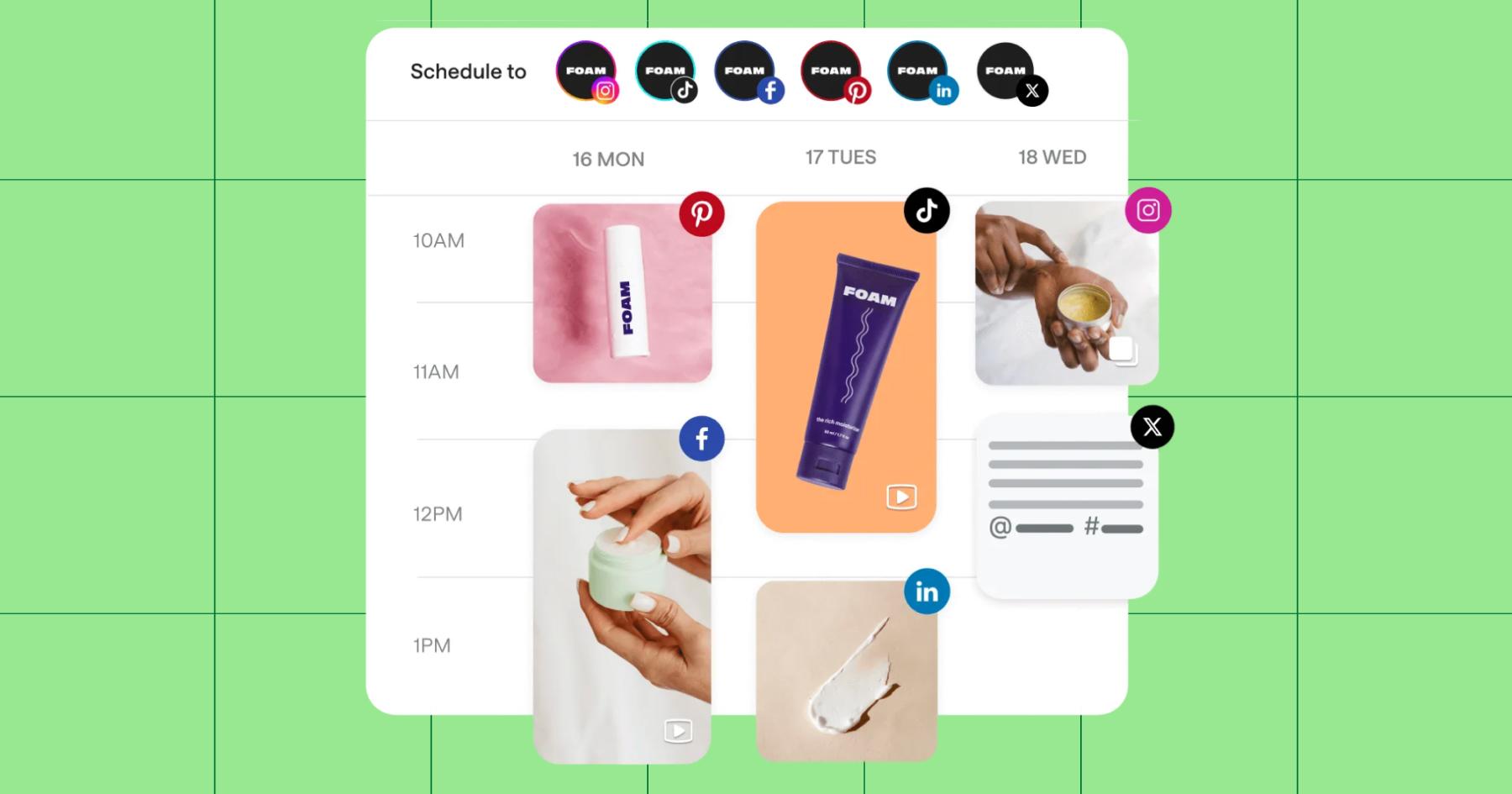
You can upload media, rearrange posts, and schedule everything directly from the calendar, making it especially useful for people who care about aesthetics and having a cohesive feed. It also suggests optimal posting times and lets you store captions and hashtags alongside each post.
2. Hootsuite
Hootsuite’s publishing tool is more robust and less visual than Later’s, but a far better option for agencies and brands. It offers a centralized publishing calendar for scheduling posts across multiple platforms (Instagram, Facebook, YouTube, TikTok, LinkedIn, Threads, and more).
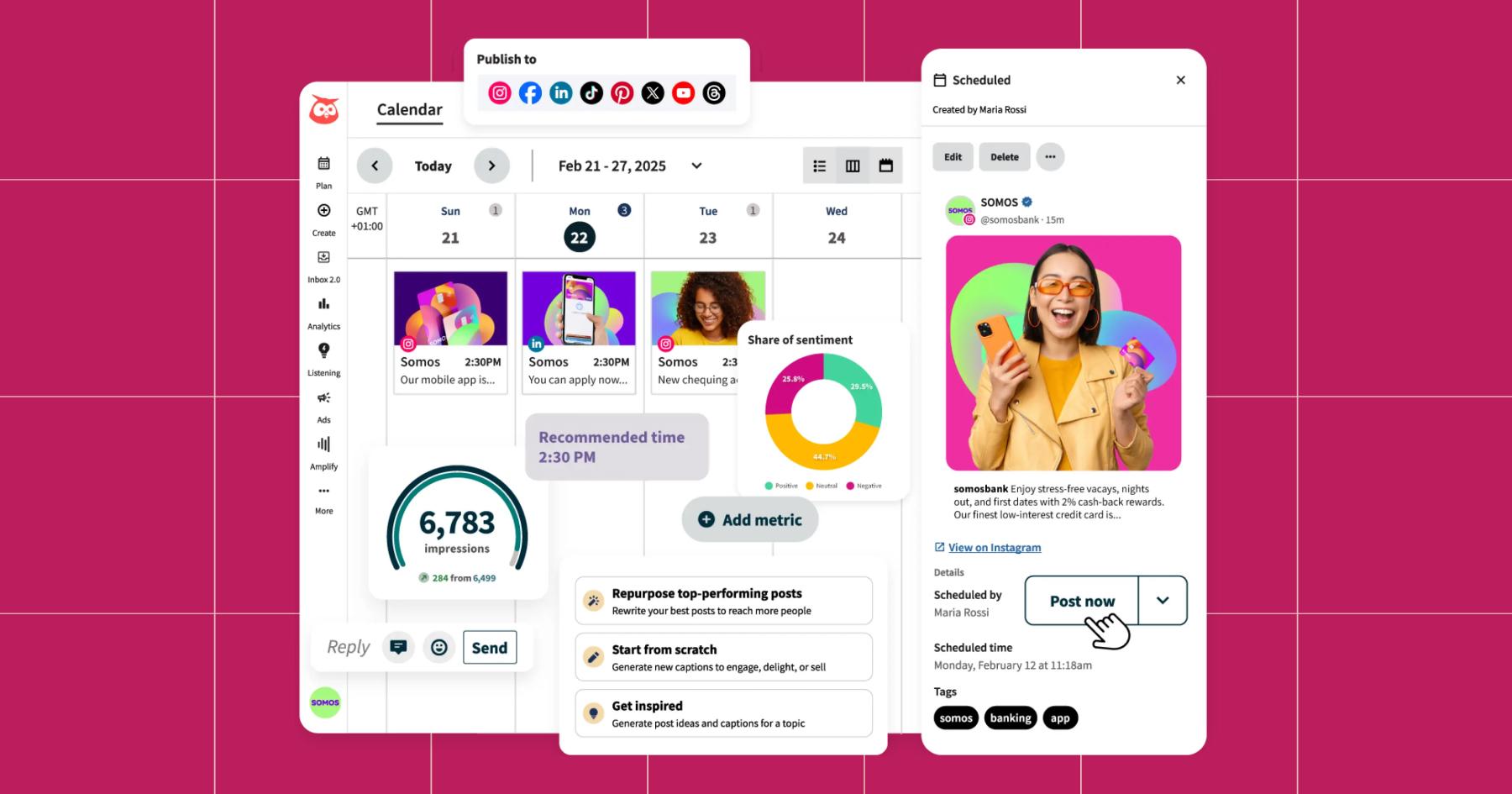
It also offers advanced features such as analytics dashboards, social listening, and AI-assisted content creation. But it’s also pretty expensive: plans start around $199 per month.
3. Google Sheets
Google Sheets isn’t a social media tool, but many people use it as a manual content calendar. You can use Sheets to build your own calendar layout (weekly, monthly, or campaign-based), track captions, hashtags, posting dates, and approvals.
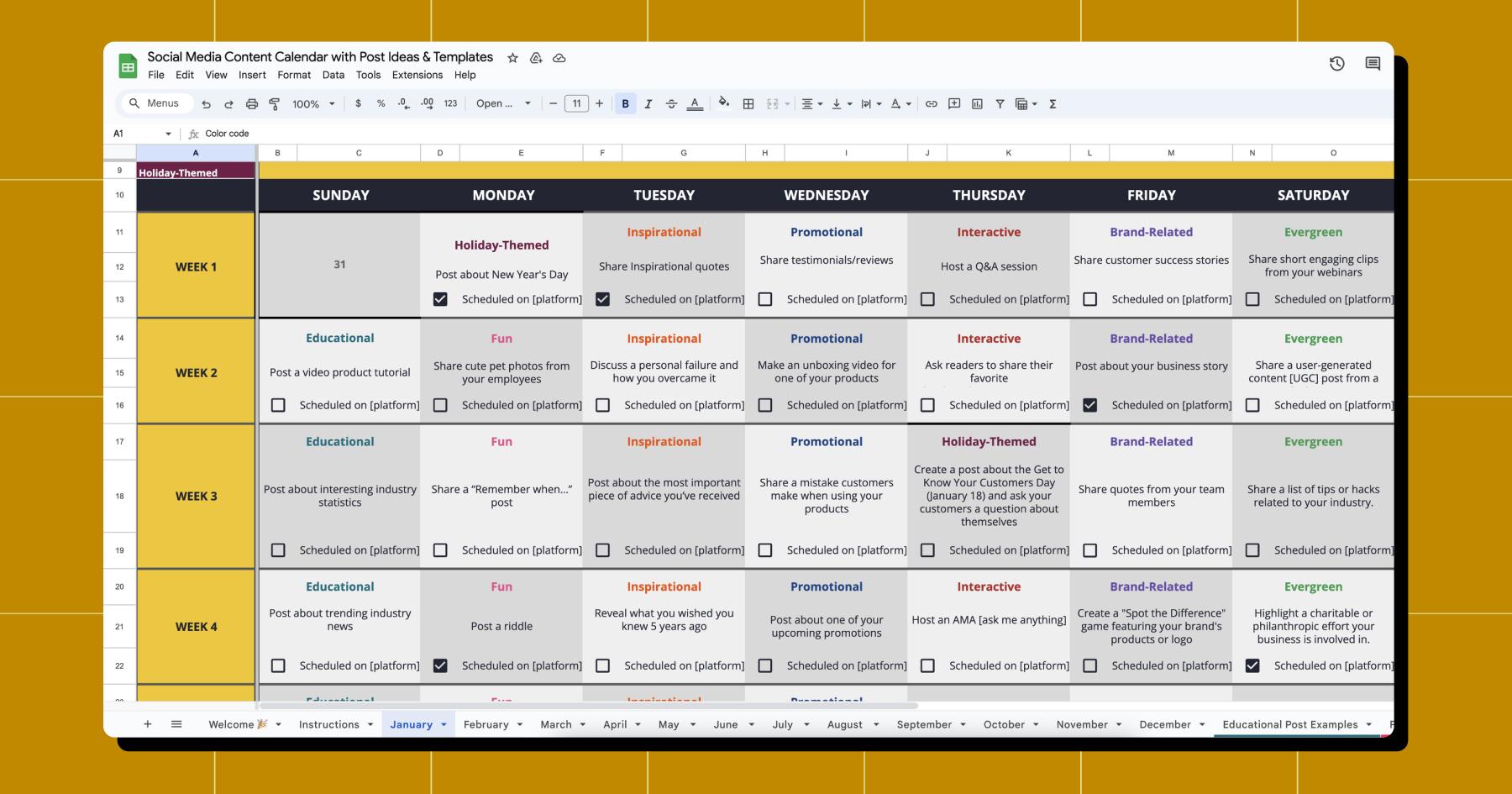
This approach is popular with creators and budget-conscious brands because it’s completely free and flexible, but there are some notable downsides to using Google Sheets as a content calendar: scheduling and publishing must be done manually, and you won’t have access to analytics (while you would in a tool like Hootsuite). You’ll also have to build the calendar yourself or find a template.
Spoiler alert: There’s a link to a free Google Sheets social calendar template from HubSpot a few scrolls away.
4. Metricool
Metricool offers content planning and analytics in a single dashboard. Its calendar feature allows you to plan, schedule, and visualize posts across 10+ platforms (including Instagram) with a clear timeline view. You can drag and drop posts, preview content, and track performance in one place, which makes it easier to optimize future posts.
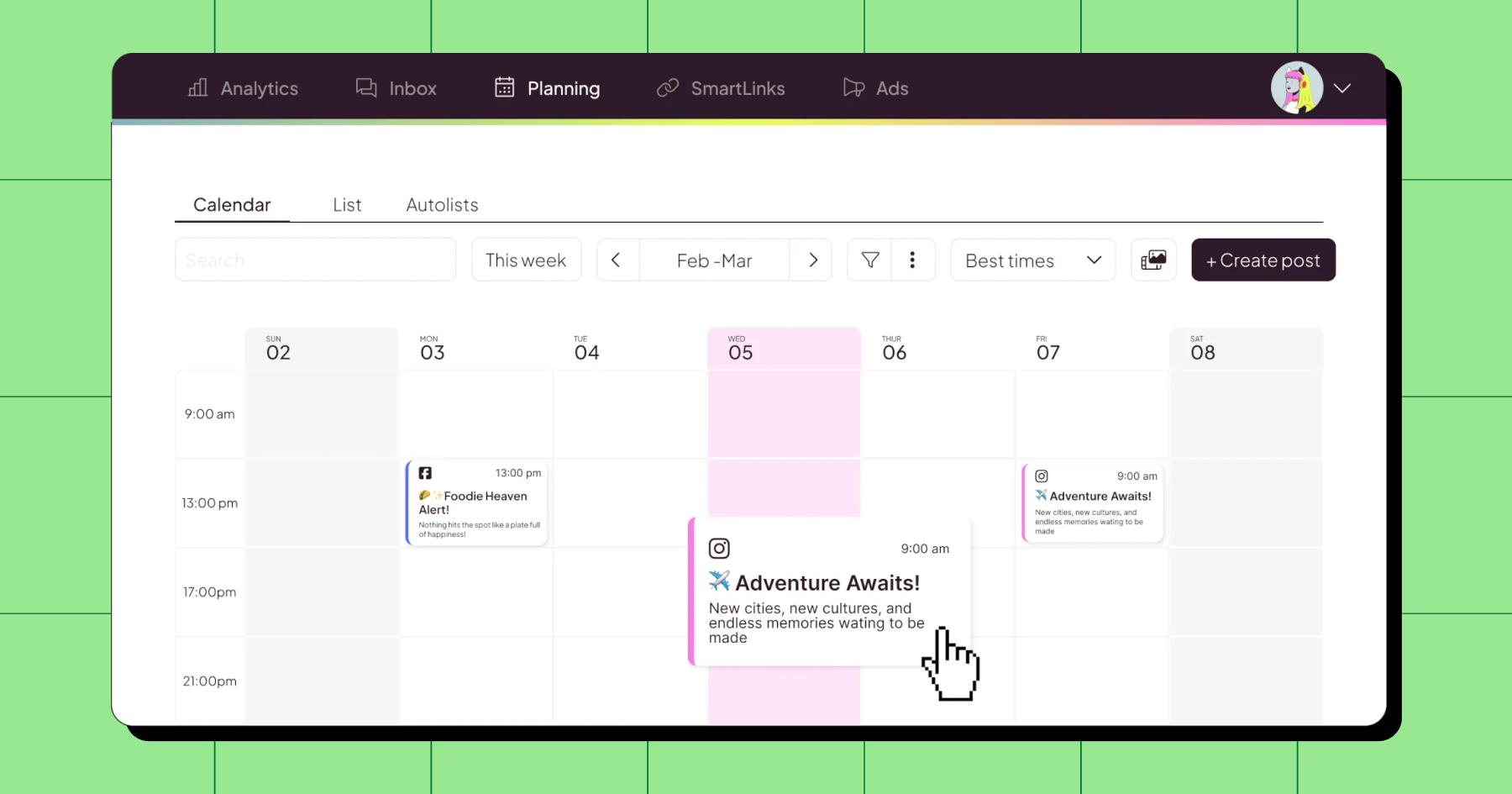
Both creators and brands use Metricool. There is a free plan available that lets you schedule up to 20 posts a month, so it’s worth trying out.
5. Buffer
Buffer offers a completely free social media scheduler. The tool uses a queue-based scheduling system: you set posting times in advance, then drop content into a pipeline that automatically publishes it.
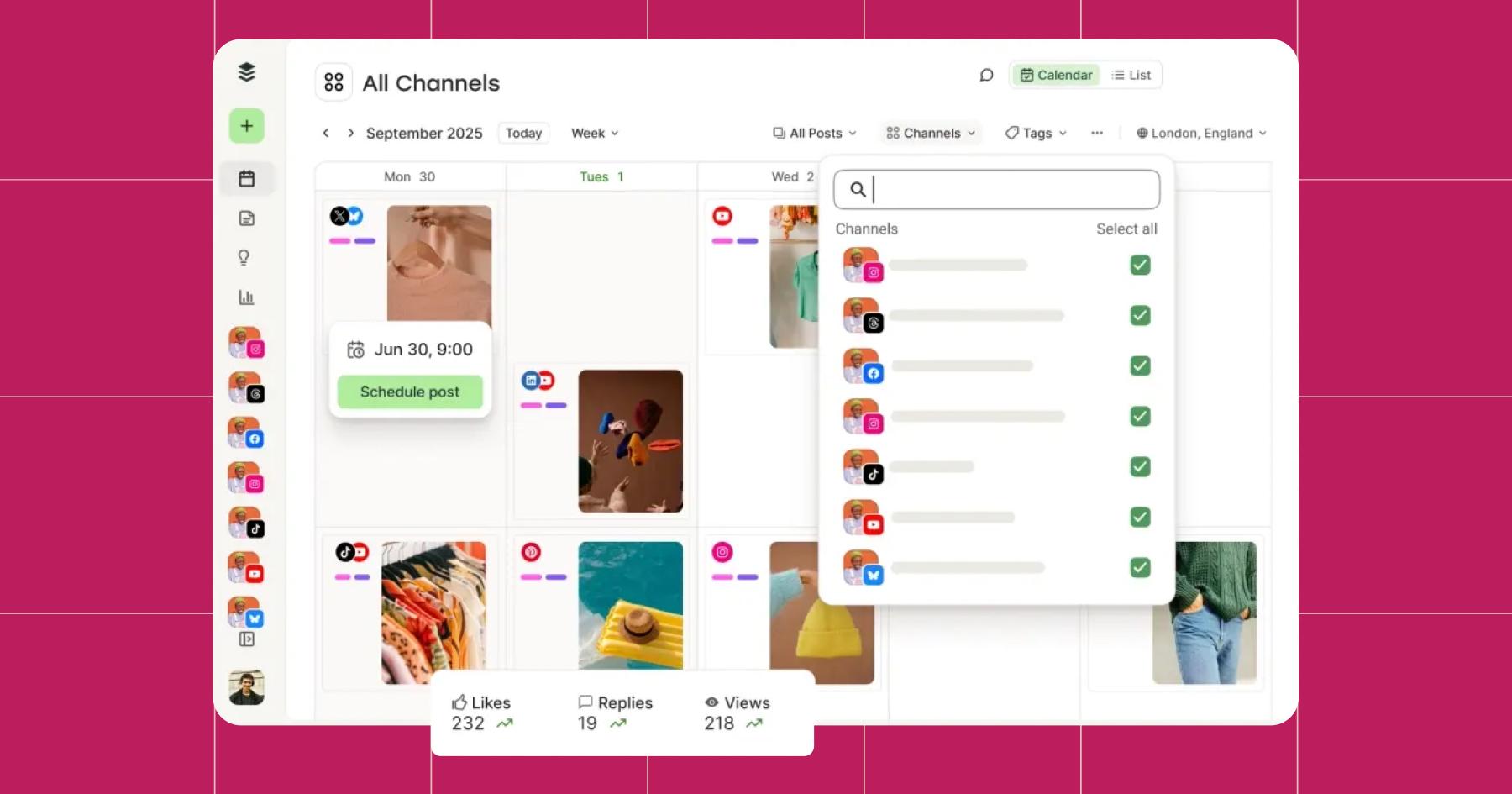
With the free plan, you can post on up to three platforms (10 posts per platform per month). It also includes basic analytics, AI-assisted content, and collaboration features such as approvals and shared calendars.
6. HubSpot
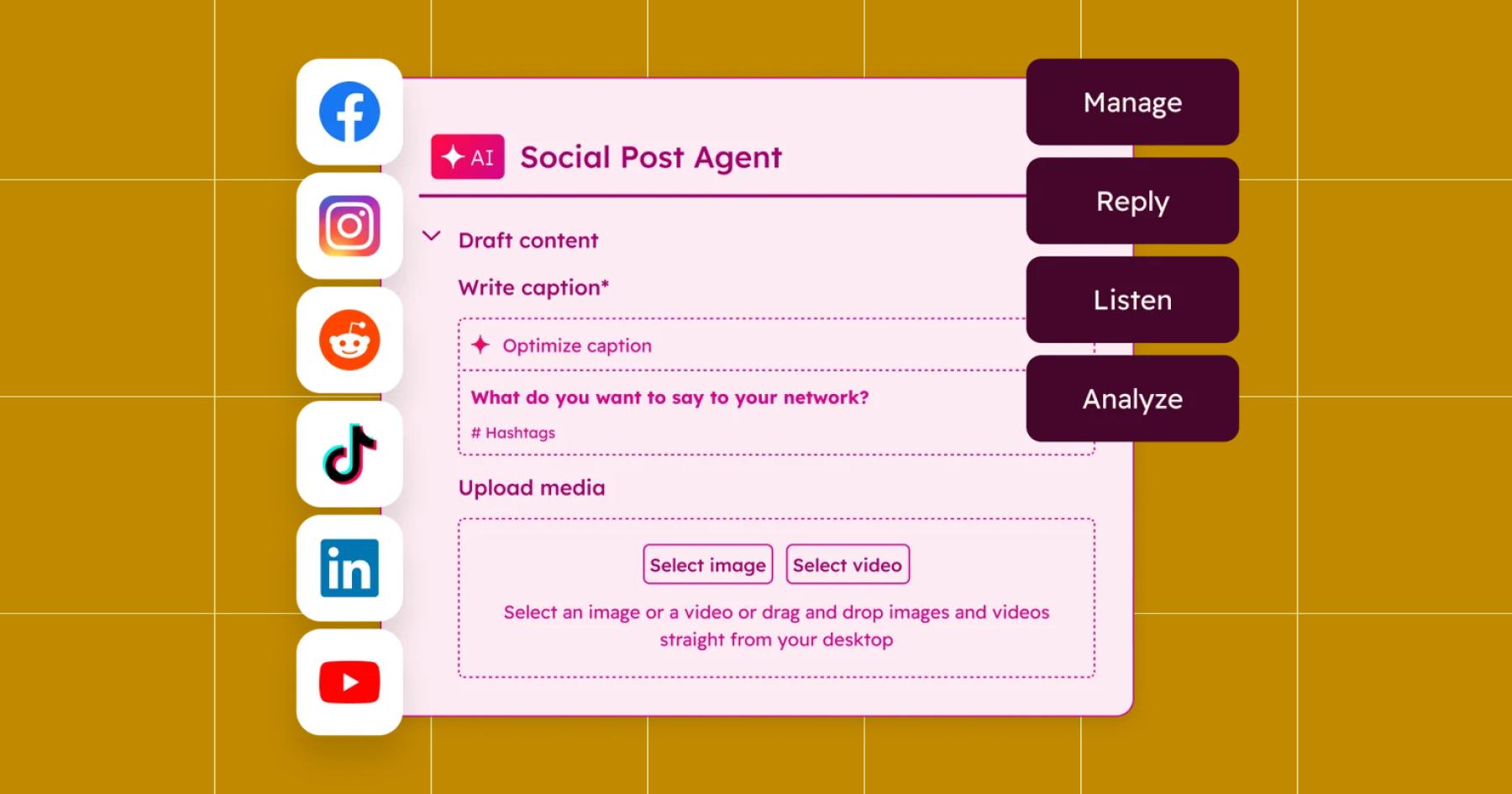
HubSpot is a marketing platform primarily used by brands and businesses. It includes a publishing tool in its Social Inbox software that lets you schedule social content tied to specific marketing campaigns. If you run a lot of campaigns across different social platforms, HubSpot’s Social Inbox tool is a good fit for you.
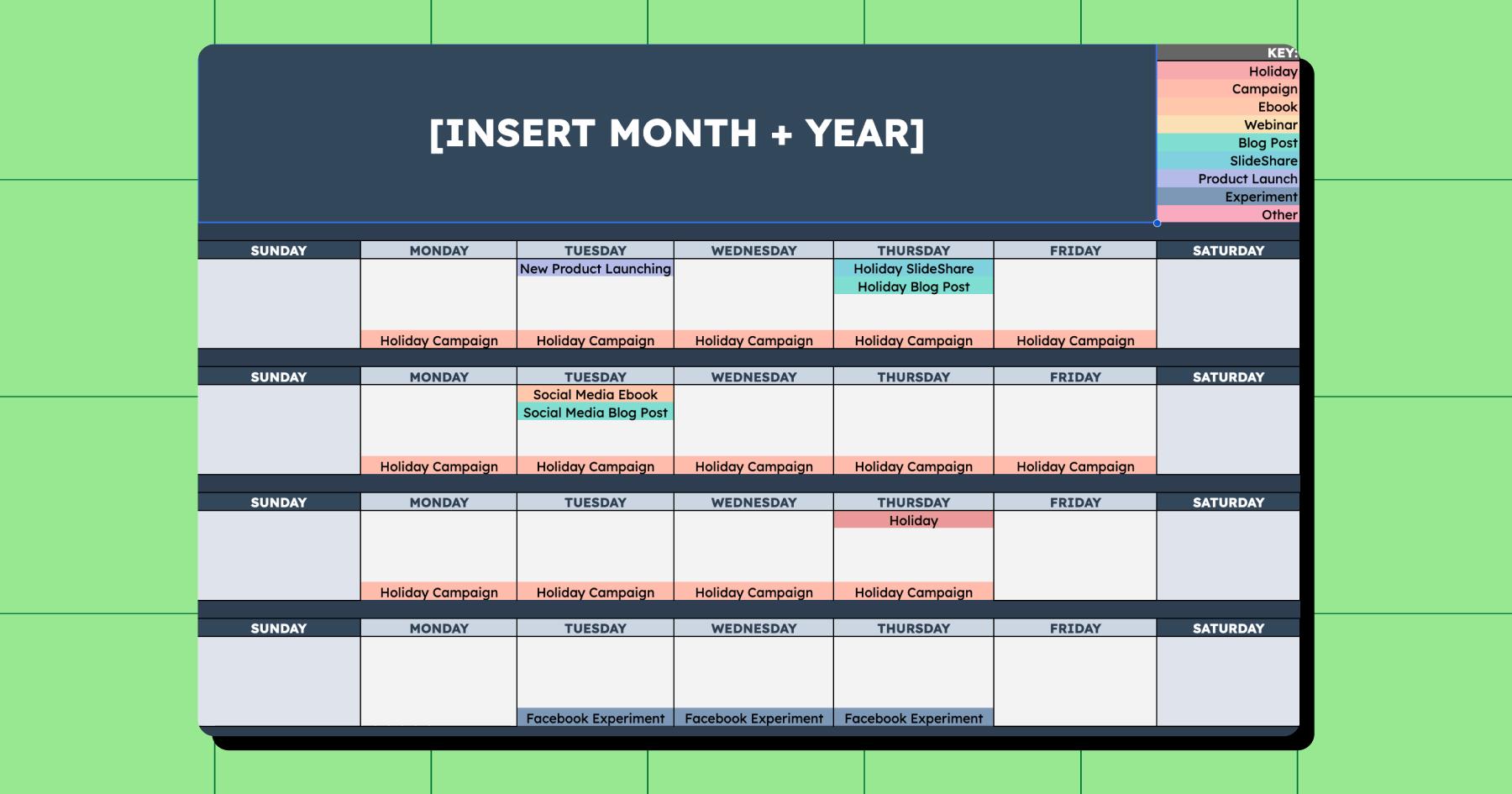
HubSpot also offers a free social media content calendar template you can download from its website in exchange for your email address.
You can turn the template into a Google Sheet or Excel spreadsheet. It has many tabs, including a monthly campaign planning calendar, platform-specific calendars (including Instagram), and a content repository for storing captions, links, and creative assets.
While it doesn’t offer built-in analytics or real-time publishing on its own, it gives you a clear, organized foundation for your Instagram (and broader social) content strategy. It’s a good choice for those who want a free, customizable alternative to paid tools. Notably, you can upload the completed template to HubSpot (if you use it) to automatically turn your plan into scheduled posts.
How to Build Your Content Calendar

Once you choose a content calendar, here’s what to do next.
- Audit your past content. Look at what you’ve already posted and note what performed well.
Open Instagram Insights and look at your last 30 to 90 days. Which posts got the most saves? Which reels had the highest reach? Are there patterns in the content types or topics that consistently outperform? - Define your content pillars. Pick two to three recurring themes or content formats that perform well for your account.
- Choose your posting frequency. Decide how many posts per week you can realistically sustain.
- Batch your content creation. Set aside one day (or even a few hours) per week as your content day. Shoot a few Instagram reels, write captions, and prep your graphics/photos. Then all you have to do is hit post or let your scheduling tool handle it.
- Fill in two weeks at a time. Plan far enough ahead to batch, but not so far that everything feels stale.
- Review and adjust weekly. Check what’s working, swap what isn’t, and keep the calendar alive.
Advanced: Add Manychat to the Mix
Imagine this: your content calendar is working, you aren’t stressed, your account is active (and growing), and you’re ready to optimize further.
If you find yourself basking in that euphoric feeling, sign up for Manychat and set up your first automation. (Might I suggest Follow to DM to greet any new followers who find you from your content?)
Manychat can be used to answer those questions you always get in the DMs, send links to people automatically, capture email addresses, and more — no automation experience required.
Manychat is free, like a lot of the great tools mentioned in this article, and an official Meta Business Partner, so you’ll never have to worry about whether your Instagram account is going to get flagged for bot-like behavior.
Not convinced? Let us show you how easy it is: Always-On Automations: Put Manychat to Work While You Sleep.
Frequently asked questions
Two weeks ahead works well for most creators and small businesses. That gives you enough runway to batch content and stay consistent without locking yourself into posts that feel stale by the time they go live. If you’re running a specific campaign or product launch, plan that further out, but keep your day-to-day content on a shorter horizon.
Absolutely. Google Sheets, HubSpot, and Metricool all offer free tools for building and maintaining a content calendar. You don’t need a paid scheduling tool to get organized — though tools like Later or Hootsuite can save time if you want to schedule posts directly from your calendar.
Most people use the terms interchangeably. If there is a distinction, it’s that a content calendar focuses on when you’ll post, while a “planner” sometimes includes the brainstorming and strategy phase too.
Add a content type column to your calendar and tag each entry as a Reel, Story, carousel, or feed post. This lets you see your format mix at a glance and ensure you’re not leaning too heavily on any one type.
Side note: for Stories, you don’t need to plan every single one. Stories are primarily shown to existing followers and have always been designed as snippets of your day (they expire after 24 hours). For those reasons, planning Instagram Story ideas isn’t necessary.


Originally published: Apr 3, 2026, Updated: Apr 10, 2026
More stories worth reading
More content that's too good to miss