You snap a photo. The lighting is decent. The composition is there. But still, it feels like something’s missing. So what do you do? You slap a filter on it.
Filters have been around since the launch of the Instagram app in 2010. And despite the rise of more elaborate editing apps and presets, Instagram’s native filters are still pretty popular. (Plus, Meta keeps creating new ones for us all to try.)
If you’re one of the many creators who don’t have time to obsess over every detail of your photos and videos in Lightroom, you can fake it by using the best of Instagram’s filters. But…which ones are those, exactly? Keep scrolling to find out.
How Instagram Filters Work
If you’ve somehow avoided the Instagram app for the last 16 years, here’s a recap: Instagram filters are presets that automatically adjust visual elements of your photo or video with a single tap.
Essentially, filters offer an editing shortcut. You don’t need to manually drag five different sliders to adjust things like brightness, contrast, saturation, warmth, and shadow intensity in a separate editing app; you can just tap on an Instagram filter and get a more aesthetic look in seconds without ever leaving the app.
Instagram post filters vs. Instagram Story filters
Important disclaimer: There are two types of filters in the Instagram app — post filters and Story filters.
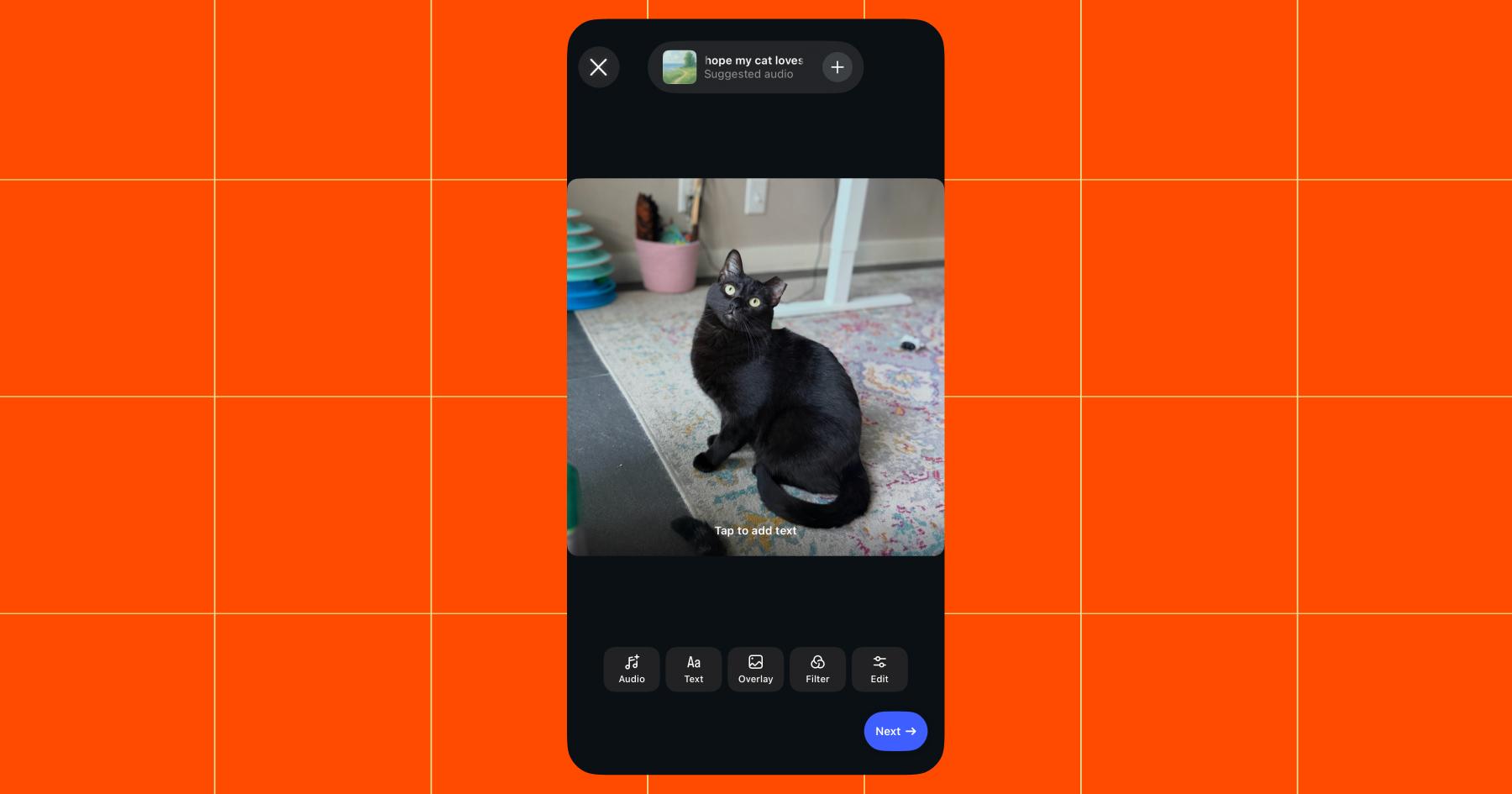
- Post filters (like Clarendon, Valencia, Gingham, and the rest of the classic lineup) are applied to photos and videos before you share them to your grid. They’re static adjustments — no motion, no interactivity, just a consistent color grade. These are the filters that define your overall aesthetic and feed cohesion.
- Story filters, on the other hand, are a whole different kind of feature. These are the AR (augmented reality) effects you see in the Instagram camera when you go to post a Story — the face filters, color washes, animated overlays, and interactive effects that respond to your movements in real time.
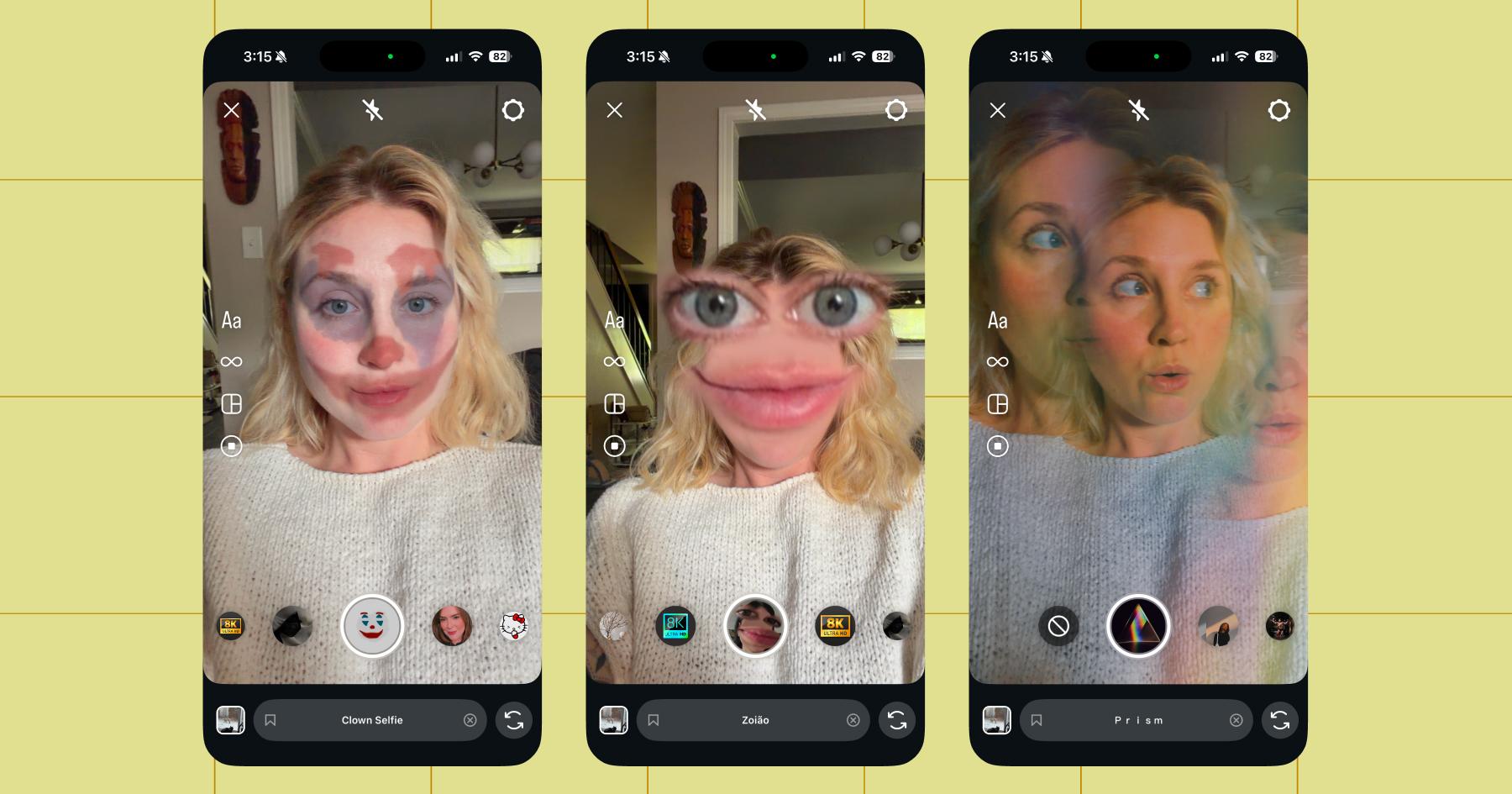
Instagram Story filters changed significantly in early 2025, when Meta shut down Spark AR Studio, its third-party creator platform. All user-generated AR effects from Instagram, Facebook, and Messenger have since been removed. Today, only filters created and owned by Meta are available to use.
Notably, you can’t apply a Story filter to a feed post (although you could post a Story with the filter, download it, and upload it again as a reel or photo).
You can apply some post filters to Stories, but not all of them. Only a few of the classics (like Jakarta, Paris, and Los Angeles) are available to add to Stories.
How to find trending Instagram Story filters
Much like TikTok filters, Instagram Story filters fluctuate in popularity and are tied to trends. Luckily, it’s super easy to find out which Story filters are trending at any given time.
- Open the Instagram app.
- Hit + and tap Story.
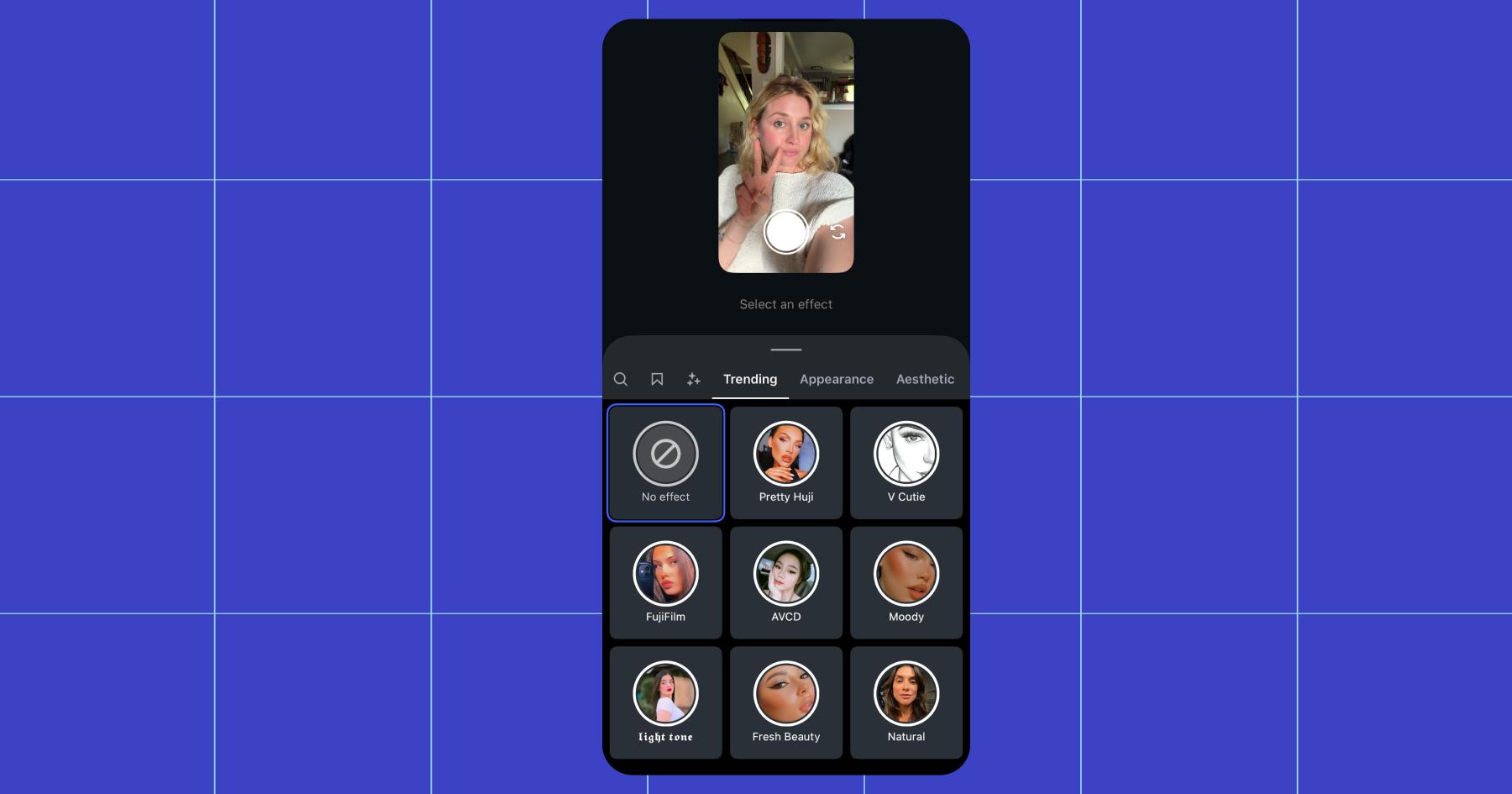
- Swipe through the filters at the bottom of the screen until you get to the search option.
- Tap the 🔎as if you’re going to search.
A screen will pop up with a lot of different filters, including a trending section:
Related reading: Need Instagram Story Ideas? We’ve Got ‘Em
The 5 Most Popular Instagram Filters Today
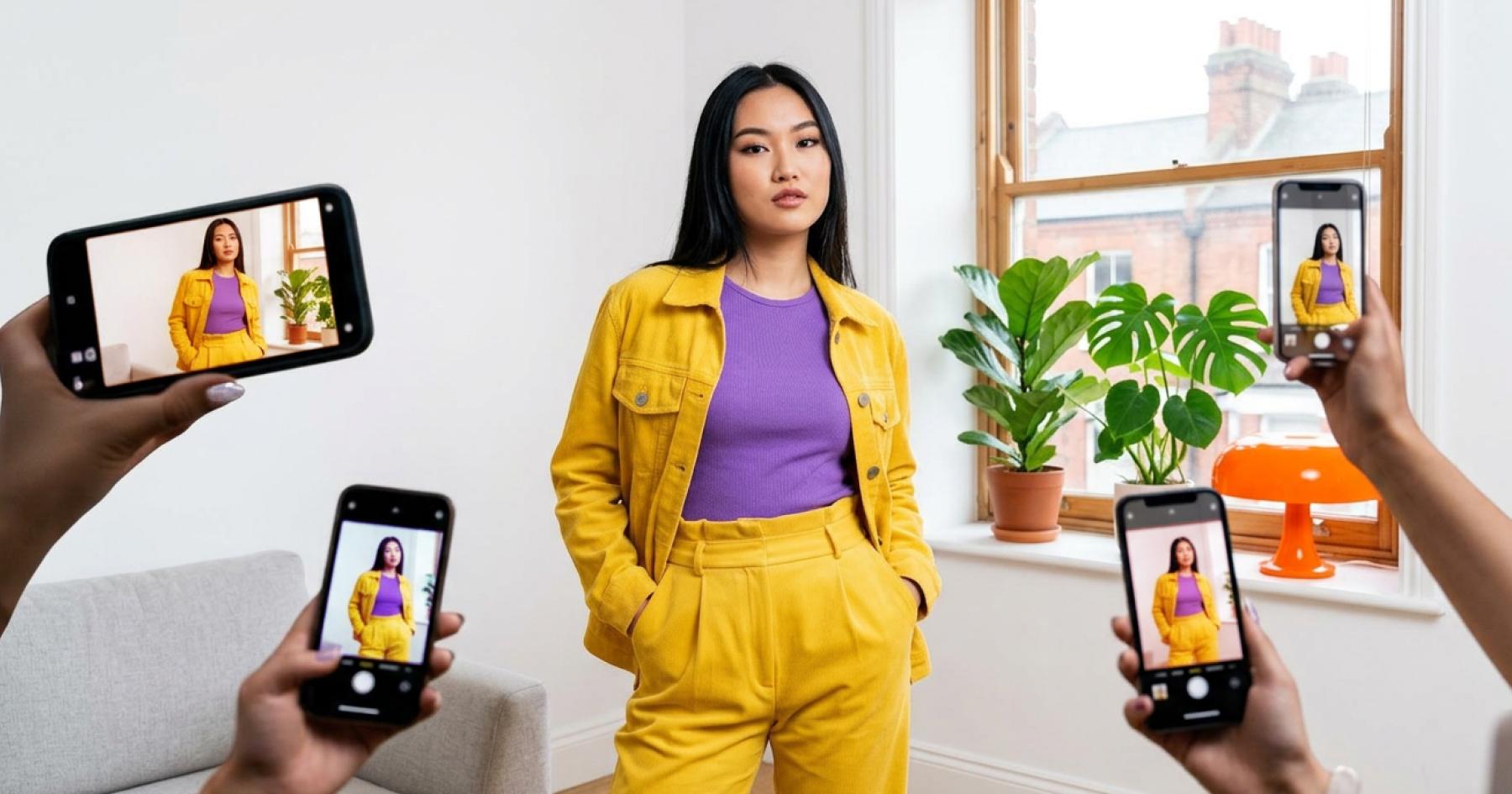
Now for the winners: the five most-used Instagram filters across the world.
Canva recently analyzed more than 1 million Instagram photos tagged with #nature, #fashion, #food, and #selfie to see which filters were used. The results of their findings — a.k.a. the best Instagram filters according to social media users worldwide — are below.
1. Clarendon: Crisp, blue tones
Canva’s research revealed that Clarendon is the most popular Instagram filter worldwide. In 119 countries, it is by far the most used filter.
Clarendon is designed to increase image contrast and saturation while applying a cool, blue tint to shadows and highlights. When applied, the result is a vibrant, crisp, cool-toned image.
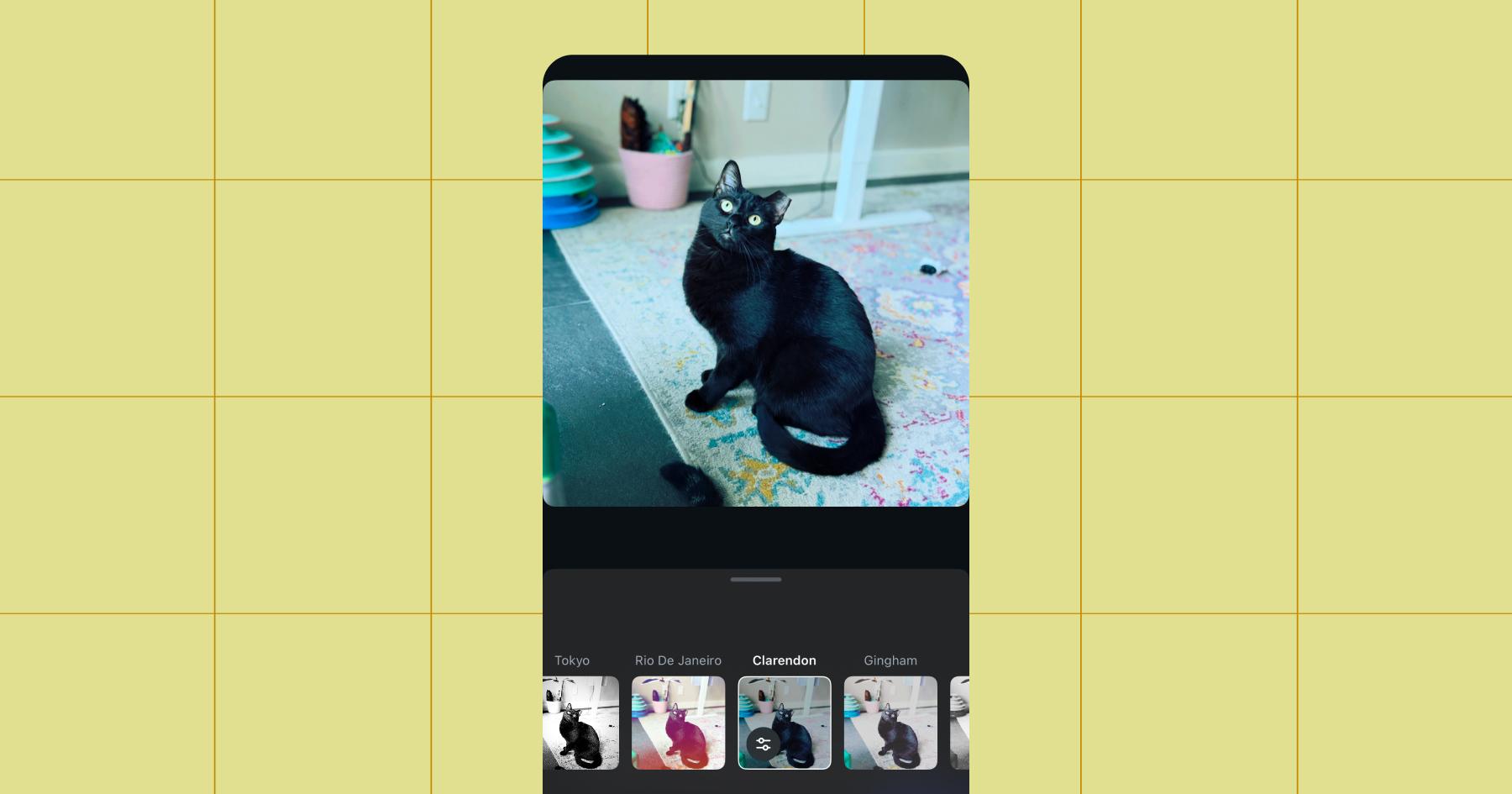
By all accounts, it’s a great all-purpose filter for portraits, landscapes, and more.
Best for: All-around use — portraits, landscapes, food, travel
2. Valencia: Warm, vintage vibes
Valencia is a filter that gives photos a warm and nostalgic look. It does this by adding a slightly yellow/sepia glow to photos and increasing overall exposure. The resulting images and videos are reminiscent of analog film (warm and fuzzy).
Globally, Valencia ranks as the second-favorite filter in 29 countries, including much of South America and central Europe.
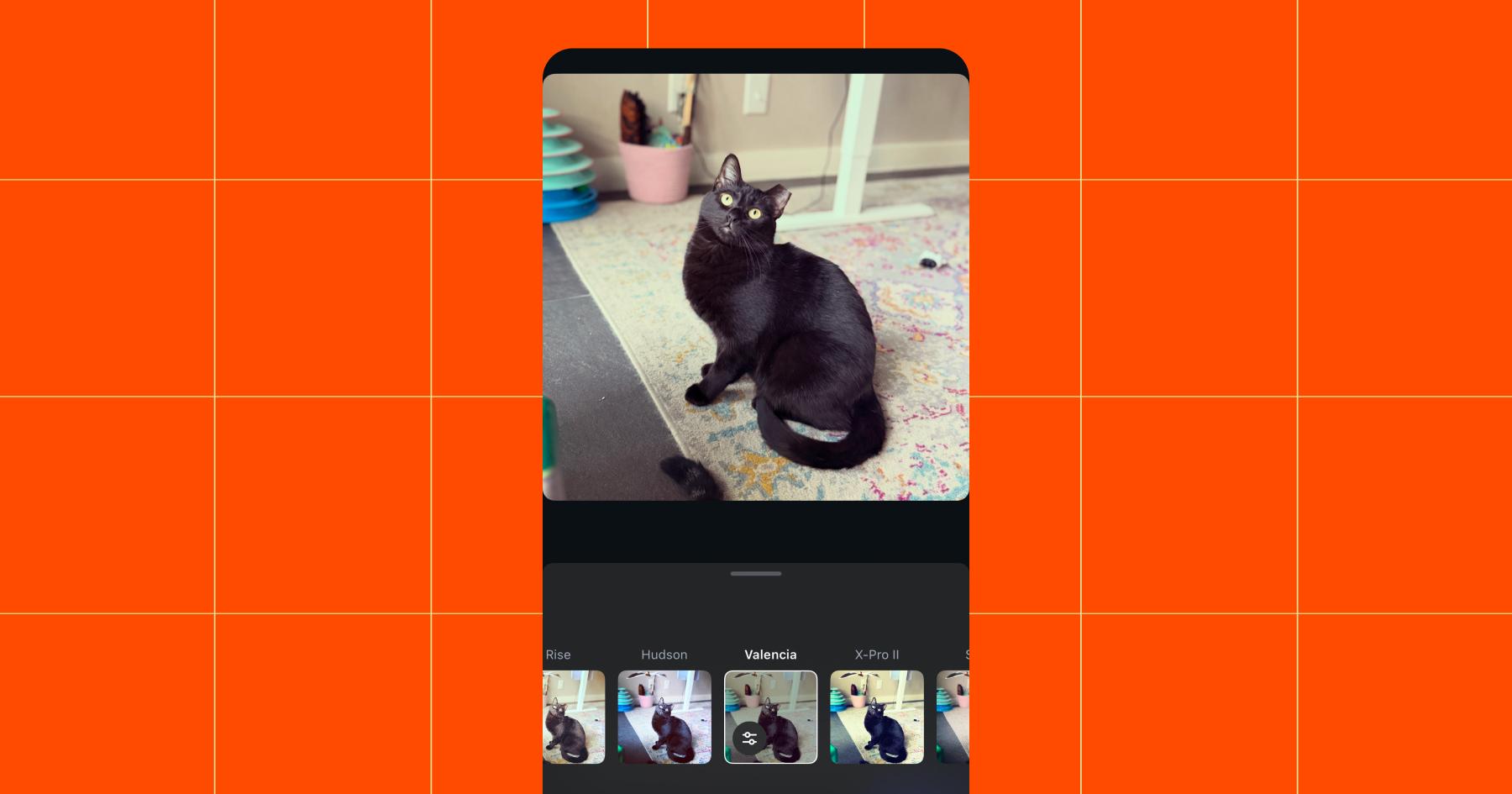
Best for: Travel, fashion, lifestyle, golden-hour shots
3. Gingham: Retro cool (literally)
Much like Valencia, the Gingham filter creates a vintage aesthetic by washing out colors. Gingham reduces highlights by nearly half, which creates a soft, hazy, retro look. It also reduces saturation and layers in magenta and yellow tones, but interestingly, it creates a much less warm tone than Valencia.
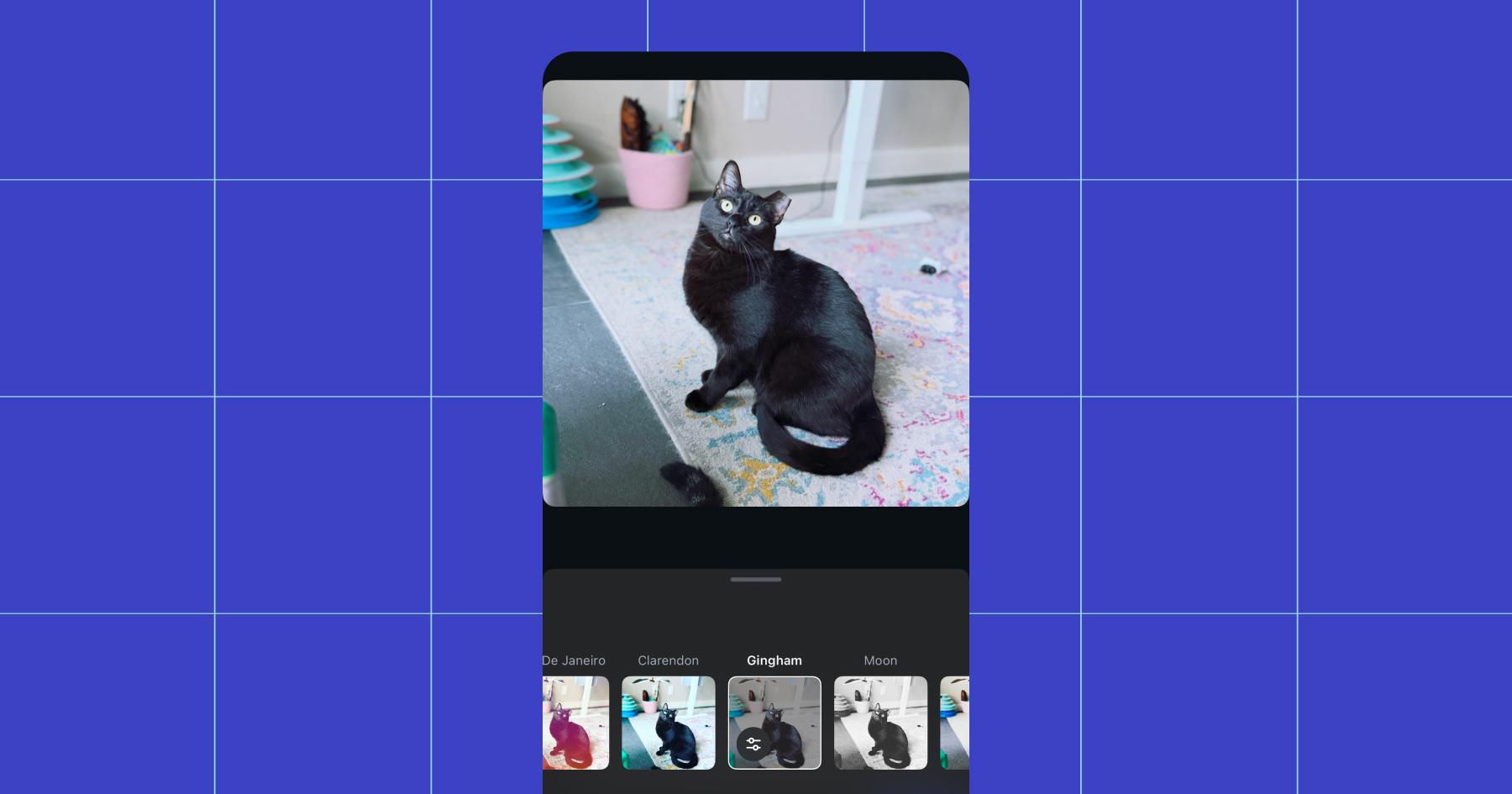
Globally, Gingham consistently ranks among the top three most-used Instagram filters. It’s particularly popular in the Pacific Northwest and Midwest regions of the U.S.
Best for: Flat lays, minimalist content, vintage or retro aesthetics
4. Juno: Moody, but make it flattering
The Juno filter works well for colorful, well-lit images. It sharpens details and increases contrast and saturation. Juno highlights red, yellow, and orange tones. Shadows look darker, and details are smoothed over.
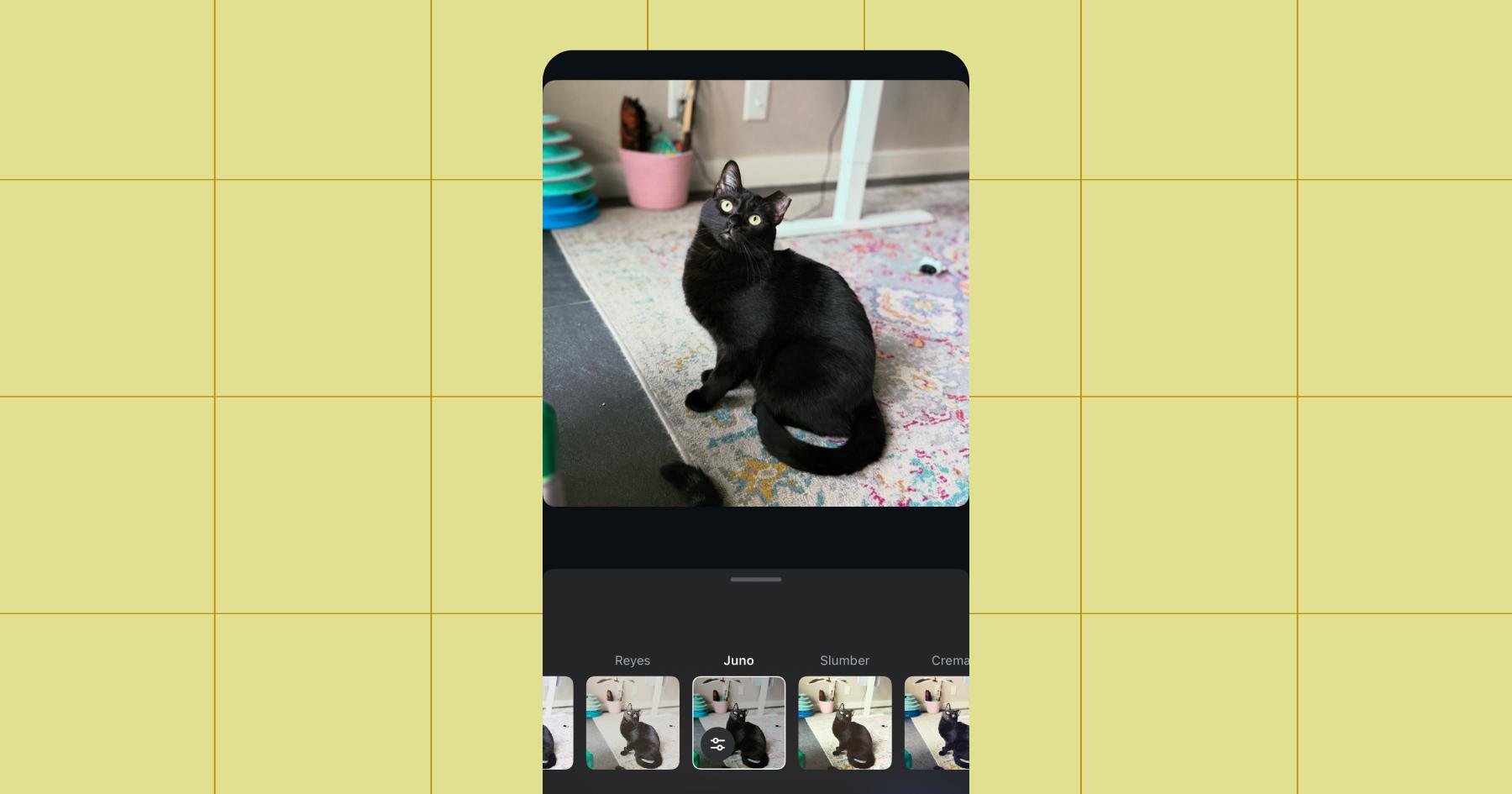
One study published by the National Library of Medicine found that using Juno increases the probability that a photo will be perceived as more flattering by 69%. In the study, participants chose Juno as the most flattering filter on Instagram, with Lark (which we’ll get to next) coming in second.
Best for: Food, flowers, selfies, city photography, portraits
5. Lark: Airy and editorial
Lark pales reds and highlights blues, producing a soft yet bright aesthetic that works well for minimal, lifestyle photography. It’s great for interiors, fashion flatlays, and nature photos that call for a clean, editorial look.
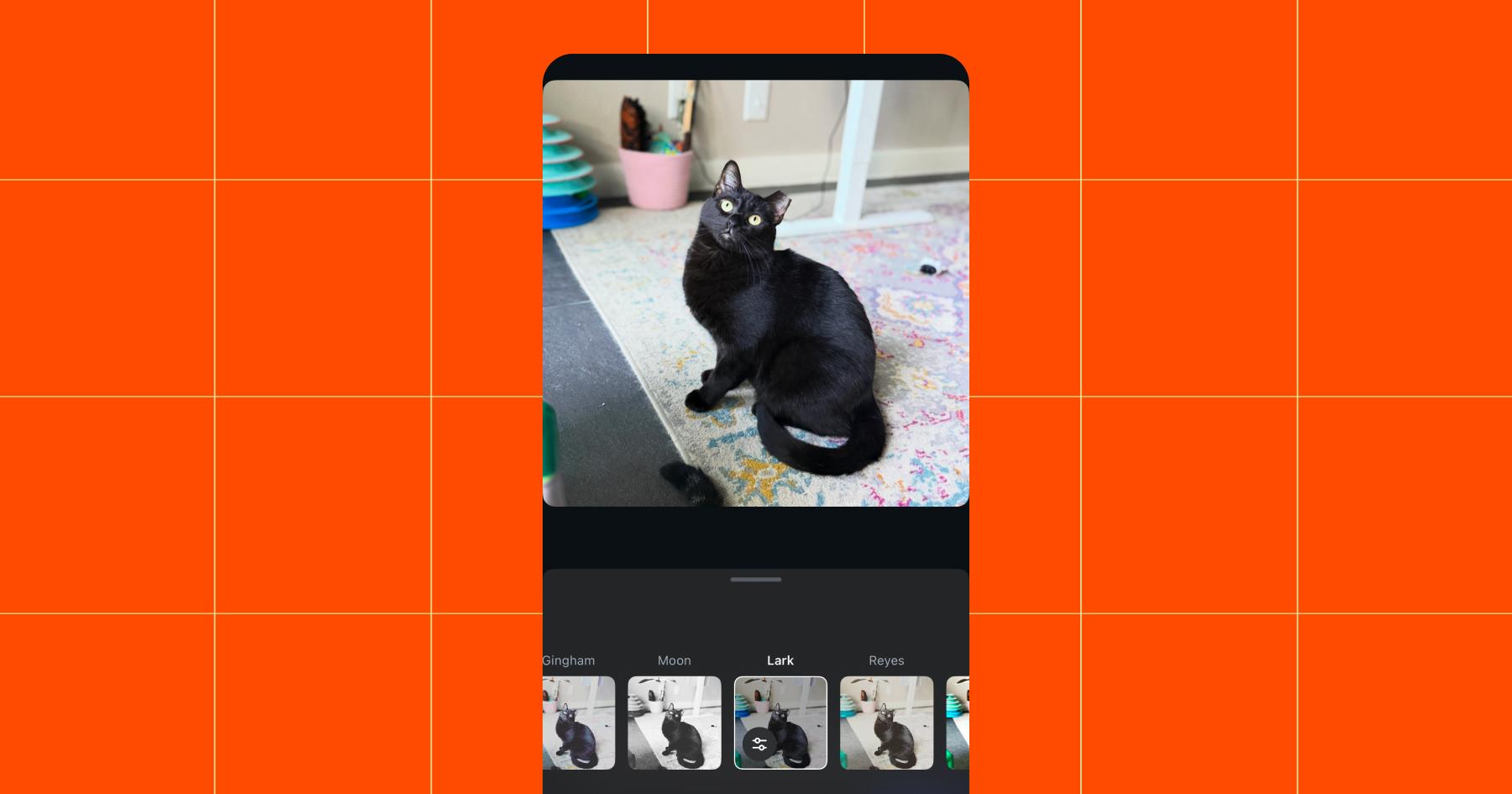
Lark consistently ranks among the top five most-used filters globally, and is especially popular on the West Coast of the U.S., where outdoor and nature content thrives.
Best for: Nature, interiors, fashion, selfies, bright lifestyle content
More Ways to Make Your Content Pop (Off)

Filters are great, but they’re not going to help you grow your Instagram account. To do that, you need a full strategy that starts with the following best practices.
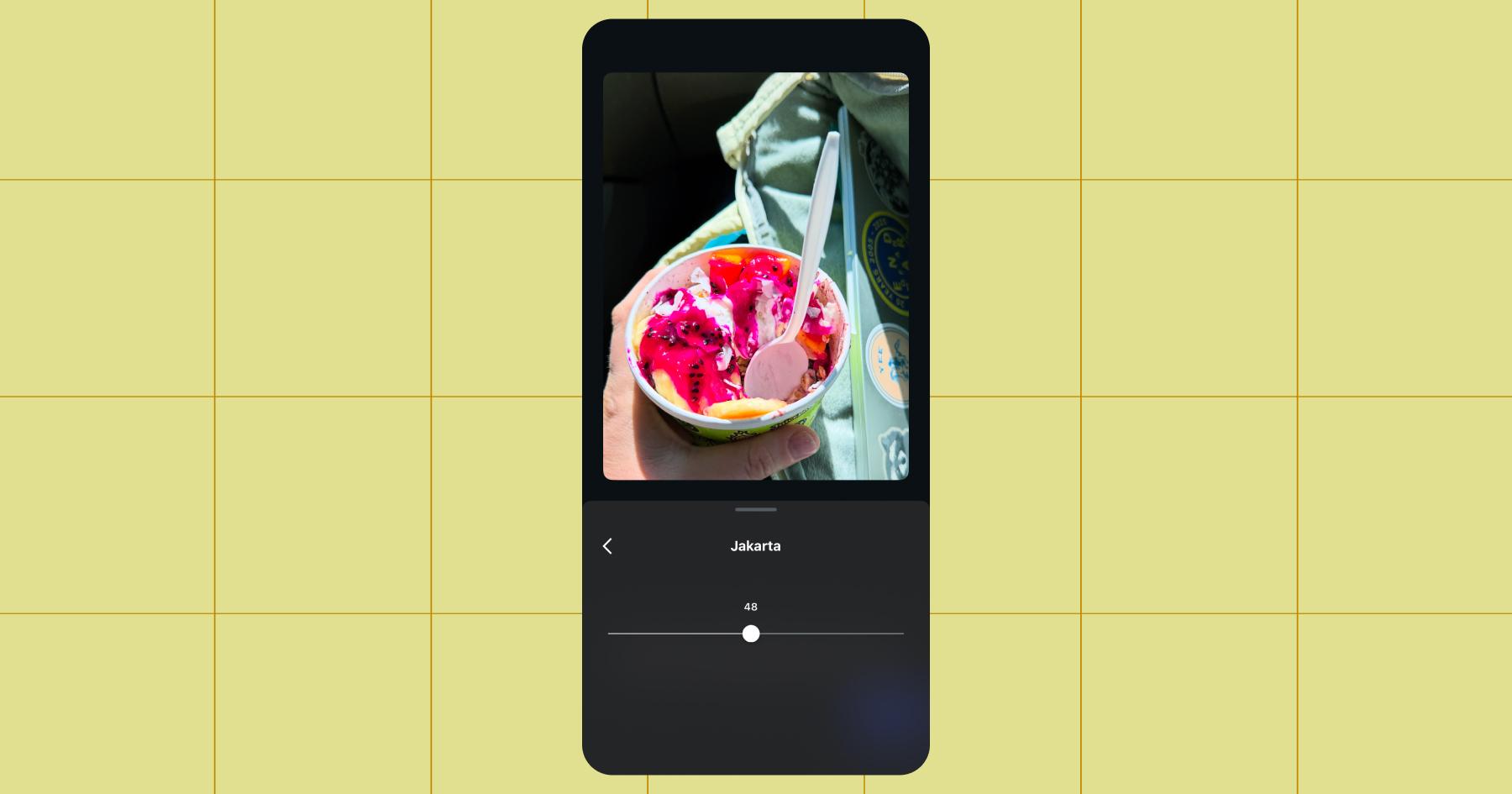
- Adjust the intensity of filters: If you want to use one of these filters but it feels like too much at 100%, dial it back. After applying the filter, tap on the name again (Clarendon, for example) to reveal an intensity slider. Slide until you reach your desired level of filtered, whether that’s 10% or 95%.
- Post all formats (especially Stories and reels). Photos, carousels, reels, and Stories all serve different purposes and reach different segments of your audience.
If you’re going to prioritize two formats, make it Stories and reels. Reels are the best way to reach new people on Instagram. Stories, meanwhile, keep you top of mind with the audience you already have.
Carousel, Reel, or Feed Post? When to Use Each Instagram Content Format
- Always include a hook in your content. Whether it’s a reel, carousel, or Story, the first frame is doing the heavy lifting. A strong hook is the difference between someone stopping to watch and engage, or scrolling on by.
- Use trending songs. When you add a trending song to your post, Instagram’s algorithm is more likely to serve your content to users who’ve already engaged with that audio. It’s a great way to get a little extra reach.
How to Find and Use Trending Songs for Instagram Reels
- Post when your audience is online. A beautifully edited reel with a great hook posted at 2 a.m. on a Tuesday is going to underperform. Check Instagram Insights to find your peak engagement windows, and build your posting schedule around those.
Stop Guessing: Here’s Exactly When to Post on Instagram
- Engage with comments early on. The first hour after posting is go-time. Make it a habit to be present right after you post. Instagram interprets early engagement as a signal that your content is worth showing to more people, so responding to comments quickly tells the algorithm to keep pushing the post.
And on that note, I suggest using Manychat to set up some simple automations. It’s the easiest way to capture every opportunity to connect, whether it’s a comment, a DM, a Story reply, or a new follower.
Frequently asked questions
A filter is helping your content if it:
– Improves clarity (details are easier to see, not muddier)
– Matches the lighting conditions of your original photo (e.g., cool filters like Clarendon work better with neutral lighting, not already blue-toned images)
– Keeps skin tones and key subjects looking natural
It’s hurting if:
– It overcorrects (blown-out highlights, crushed shadows)
– It changes the feeling of the content (e.g., warm lifestyle content made cold and sterile)
– It reduces scroll-stopping contrast in the first frame
If you’re focusing on the filter instead of the photo’s subject, dial back the filter using the intensity slider.
Don’t worry about sticking to one filter for everything you post. Instead, aim for similar lighting conditions and consistent subject matter across your grid.
Filters don’t help with reach or growth. A perfectly filtered post with a weak hook will still flop.
Content performance is primarily driven by:
– The hook (first frame)
– Format (reels are best for reach)
– Early engagement signals (first hour matters most)
– Audio and timing (trending sounds/when you post)
Prioritize these things above finding the perfect filter.



Originally published: Apr 7, 2026, Updated: Apr 10, 2026
More stories worth reading
More content that's too good to miss